Steel is everywhere, from cars to buildings. But making it pollutes the air. The steel industry creates 7% of the world’s carbon emissions. That’s a big problem for the climate.
Good news: firms racing to deliver “green steel” by 2030 are changing the game. They’re using clean energy and hydrogen to cut pollution. H2 Green Steel plans to make 5 million tons yearly without coal.
Want to know who’s leading the charge? Keep reading.
Key Takeaways
- H2 Green Steel aims to produce 5 million tons of green steel yearly by 2030 using hydrogen-based tech, cutting CO2 emissions by 95%. Their Swedish plant will start deliveries by 2025.
- ArcelorMittal invests in hydrogen-powered DRI units and hybrid electric arc furnaces, partnering with governments to meet decarbonization goals under policies like the EU’s Carbon Border Adjustment Mechanism.
- Hybrit shipped the world’s first fossil-free steel prototypes to Volvo and plans full commercial production by 2026, replacing coal with green hydrogen in iron-making.
- The SteelZero Initiative pushes firms to commit to 50% lower emissions by 2030 and net-zero steel by 2050, with members like Mercedes-Benz targeting 200,000 tons of CO2-reduced steel yearly.
- First Movers Coalition, including GM and Volvo, drives demand by pledging to buy 10% near-zero carbon steel by 2030, accelerating clean tech like H2-DRI and renewable-powered EAFs.
H2 Green Steel
H2 Green Steel aims to churn out 5 million tons of green steel yearly by 2030. Their secret weapon? Hydrogen-based tech that slashes carbon emissions like a hot knife through butter.
This Swedish startup isn’t just talking the talk—they’re building Europe’s first large-scale, hydrogen-powered steel plant. Imagine steel made without coal, just clean hydrogen and renewable electricity.
Game changer.
Targeting 5 million tons of green steel annually by 2030
H2 Green Steel wants to make 5 million tons of green steel every year by 2030. They use hydrogen-based tech to cut CO2 emissions. First batches will roll out by 2025, showing big scale-up plans.
Their process skips traditional blast furnaces. Instead, they rely on green hydrogen and renewable electricity. This slashes greenhouse gas emissions from steel production. The goal is clear, hit mass output fast without breaking the climate bank.
Use of hydrogen-based reduction technology
H2 Green Steel plans to cut emissions by 95% at its Swedish plant. It uses hydrogen-based direct reduced iron (DRI) tech, where hydrogen reacts with iron ore in a tower. The process leaves only water vapor as waste, no CO₂.
The hydrogen comes from electrolysis, powered by renewable energy and local river water. This green steel method skips fossil fuels entirely, unlike traditional blast furnaces. Big players like ArcelorMittal and HYBRIT are betting on similar tech to hit net-zero goals fast.
Costs remain high, but scaling up could make it the norm by 2030.
ArcelorMittal
ArcelorMittal is betting big on hydrogen-powered DRI plants to slash emissions. The steel giant also taps hybrid electric arc furnaces running on clean energy.
Investment in DRI units and hybrid EAF systems
ArcelorMittal is putting money into Direct Reduced Iron (DRI) units and hybrid Electric Arc Furnaces (EAFs) to slash carbon emissions. DRI tech cuts reliance on coal, while EAFs melt scrap steel using renewable energy.
The steel giant’s move aims for cleaner production. Hybrid EAF systems blend recycled materials with low-carbon iron, cutting the carbon footprint of each ton made. This shift supports global decarbonization goals without sacrificing output.
Collaboration with governments for decarbonization
ArcelorMittal is working closely with governments to cut carbon emissions. The EU’s Carbon Border Adjustment Mechanism raises costs for imports of non-green steel, pushing local producers toward cleaner solutions.
This policy helps companies like ArcelorMittal compete fairly while hitting climate goals.
Consumer demand and green policies are speeding up the shift to low-carbon steel. Partnerships with officials ensure funding for hydrogen-based tech and carbon capture. It’s a team effort—businesses and lawmakers are driving the change together.
Hybrit
Hybrit already shipped fossil-free steel samples to Volvo, proving green steel can work today. By 2026, this Swedish venture aims to flip the switch to full-scale production, swapping coal for hydrogen in the iron-making process.
The company’s pilot plant runs on clean energy and water electrolysis technology—no blast furnace smokestacks here. If their model catches on, steel could shed its dirty reputation faster than you’d think.
Delivered fossil-free steel prototypes to Volvo
Hybrit made history by delivering the first batch of fossil-free steel to Volvo. The steel was used for prototypes, marking a major step toward cleaner production. Instead of coal, Hybrit uses green hydrogen in its process, cutting carbon emissions drastically.
Volvo aims to build cars with this low-carbon steel by 2026. The shift could reshape auto manufacturing while fighting climate change. No coke oven gas or blast furnaces are needed, just clean electricity and hydrogen-based tech.
A game-changer for heavy industry!
Plans for commercial production by 2026
Hybrit aims to roll out commercial green steel production by 2026. The company already delivered fossil-free steel prototypes to Volvo, proving hydrogen-based reduction works.
This push puts Hybrit ahead of many competitors in the race for low-carbon steel. The shift hinges on scaling hydrogen production and securing clean energy sources. Costs and infrastructure remain hurdles, but the 2026 target shows serious momentum.
Baosteel
Baosteel plans to roll out low-carbon steel for Chinese markets starting in 2024. The company focuses on hydrogen-based tech and cleaner production methods to cut emissions.
Gradual supply of low-carbon steel starting in 2024
Baosteel plans to roll out low-carbon steel slowly from 2024. This move targets the Chinese market, where demand for cleaner materials is growing. The company aims to cut carbon emissions by using advanced methods like electric arc furnaces and hydrogen-based processes.
The shift supports China’s push for greener industries. Steel production often relies on coal, but Baosteel’s approach leans on renewable energy and recycling. Lowering the carbon footprint of steel helps fight climate change while meeting global standards.
Other firms watch closely as this could set a trend in sustainable manufacturing.
Focus on the Chinese market for green steel adoption
China is pushing hard for low-carbon steel. Baosteel plans to start supplying it by 2024. The country aims to cut carbon emissions in its massive steel industry.
Green hydrogen and electric arc furnaces will play a big role. China’s demand for steel is high, making it a key market for cleaner production. The shift could set an example for other regions.
Mercedes-Benz
Mercedes-Benz is building a greener supply chain, with plans to use CO2-reduced steel in its cars by 2025. The automaker partners with green steel producers, like H2 Green Steel, to cut emissions fast.
The company bets on hydrogen-based DRI and electric arc furnaces for cleaner metal—proving luxury doesn’t have to cost the planet. Volvo already tested similar steel, so Mercedes isn’t reinventing the wheel here.
Developing a sustainable steel supply chain
Mercedes-Benz is pushing hard to build a cleaner steel supply chain. The automaker plans to use over 200,000 tons of CO2-reduced steel yearly by 2030.
Green steel relies on hydrogen-based ironmaking and electric arc furnaces. These methods slash emissions by using renewable energy. Companies like H2 Green Steel are key partners, supplying nearly zero-emissions steel to meet these goals.
Commitment to using CO2-reduced steel in vehicles
Mercedes-Benz plans to cut its carbon footprint by using over 200,000 tons of CO2-reduced steel yearly by 2030. This move slashes emissions in car production while supporting the auto industry’s green transition.
The company targets low-carbon steel made with hydrogen-based tech and recycled materials. By shifting supply chains, it aims for cleaner air and climate-neutral vehicles without sacrificing quality or safety.
Partnerships with green steel producers help meet these bold goals faster.
SteelZero Initiative
The SteelZero Initiative pushes companies to switch to low-emissions steel, setting bold targets for carbon neutrality by 2050. Big brands join forces, using their buying power to speed up the shift to cleaner steel production.
Encouraging firms to commit to low-emissions steel
SteelZero pushes companies to cut steel emissions fast. Big names like Volvo and Polestar joined, pledging 50% lower emissions by 2030, net-zero by 2050.
The initiative drives demand for low-carbon steel through buying power. It links automakers, builders, and manufacturers to speed up green steel adoption globally. Firms must swap traditional methods for hydrogen-based tech or recycled materials.
Every ton counts in this race against climate change.
Setting targets for carbon-neutral steel by 2050
SteelZero pushes companies to go green. Members must hit net-zero steel production by 2050, cutting carbon emissions from the steel industry.
Big names like Mercedes-Benz and Baosteel back the plan. They aim for low-carbon steel using hydrogen-based tech and recycled materials. Costs and infrastructure remain hurdles, but progress is speeding up.
First Movers Coalition
Big companies are teaming up to buy green steel, pushing suppliers to go green faster. This buying power acts like a turbo boost for clean steel tech.
Think of it as carmakers and builders joining forces to rewrite the rules of steel shopping—with their wallets doing the talking.
Driving demand for green steel through purchasing power
The First Movers Coalition (FMC) pushes companies to buy green steel early. Over 95 firms, including GM, Ford, and Volvo, joined after COP26 in 2021. Their goal is simple: purchase at least 10% near-zero carbon steel by 2030.
This creates demand for cleaner production methods like hydrogen-based DRI and electric arc furnaces.
Automakers and manufacturers hold major buying power in the steel industry. By committing to low-carbon options, they push suppliers to innovate faster. The FMC proves that collective purchasing can speed up decarbonization efforts without waiting for policy changes alone.
Cost remains a hurdle, but big buyers signal market readiness for greener alternatives like fossil-free steel and recycled materials.
Collaboration between automakers and manufacturers
Big names like GM, Ford, and Volvo are teaming up with steel producers through the First Movers Coalition. Their goal? To boost demand for green steel by using their buying power to push for cleaner options.
Automakers want low-carbon steel for cars, while manufacturers aim to cut emissions. Together, they’re speeding up the shift to hydrogen-based production and electric arc furnaces powered by renewables.
This partnership helps make green steel more affordable and available by 2030.
Innovations Driving Green Steel Production
New tech is shaking up steelmaking, with hydrogen-based DRI and electric arc furnaces stealing the spotlight. Companies are betting big on renewables to power these cleaner methods, turning old-school smelters into lean, green machines.
Hydrogen-based Direct Reduced Iron (H2-DRI)
Hydrogen-based Direct Reduced Iron (H2-DRI) is a game-changer for green steel. It replaces coal with hydrogen to cut emissions. In this process, hydrogen reacts with iron ore in a DRI tower, leaving just water vapor as waste.
Companies like H2 Green Steel use electrolysis to make hydrogen from water and renewable power.
The technology slashes carbon footprints by skipping fossil fuels. Unlike traditional methods, it avoids CO₂-heavy blast furnaces. Renewable energy powers the electric arc furnaces that melt the iron.
This combo—clean hydrogen and green electricity—puts low-carbon steel within reach by 2030.
Electric Arc Furnaces (EAF) powered by renewable energy
Electric Arc Furnaces (EAF) melt scrap steel using renewable electricity, cutting carbon emissions. Unlike traditional blast furnaces, they don’t burn coal, making them cleaner for green steel production.
H2 Green Steel’s plant in Boden, Sweden, runs entirely on renewable power, showing how EAFs can slash CO₂ emissions.
These furnaces work fast and fit well with wind and solar energy. Paired with hydrogen-based reduction tech or recycled steel, EAFs help create low-carbon steel faster. The challenge? High costs and needing steady clean power.
But as grids go greener, so will the steel industry.
Recycling and circularity initiatives
Steel recycling cuts carbon emissions and boosts the circular economy. KIRCHHOFF and H2 Green Steel plan to feed at least 30% of scrap steel back into electric arc furnaces, slashing waste and energy use.
Old steel gets a second life, reducing the need for new raw materials. This lowers the carbon footprint of production while saving costs. Scrap melts faster in furnaces, needing less power.
It’s a win for green energy goals and cleaner steel manufacturing.
Challenges in Scaling Green Steel
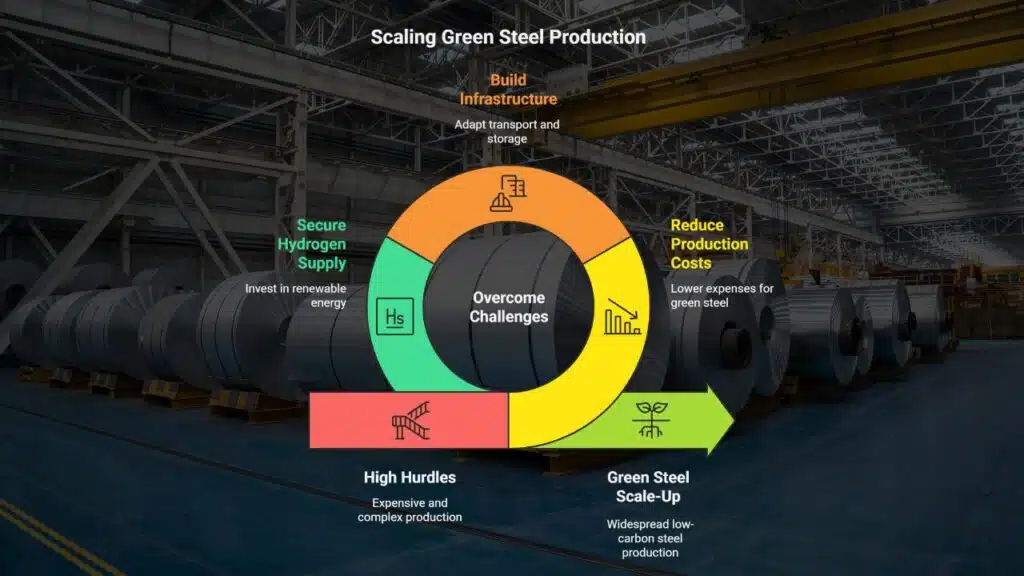
Making green steel isn’t cheap, and high production costs still slow down progress. Finding enough hydrogen and building new infrastructure also stand in the way of scaling up fast.
High production costs
Making green steel isn’t cheap. The tech needed, like hydrogen-based direct reduced iron (H2-DRI) and electric arc furnaces (EAF), costs way more than traditional methods. Clean energy inputs, like green hydrogen or renewable electricity, also drive prices up compared to fossil fuels.
Securing enough low-carbon hydrogen adds another hurdle. Right now, producing it through steam methane reforming with carbon capture or electrolysis is expensive without subsidies.
Smaller firms face tough competition from big players who can afford the high capital expenditure for scaling up fast. The European Green Deal helps but doesn’t erase the gap overnight.
Prices must drop before green steel can compete globally against cheaper, dirtier options tied to volatile oil prices or OPEC+ supply chains.
Infrastructure requirements
Green steel needs big changes in infrastructure. Factories must switch to hydrogen-based reduction tech and electric arc furnaces powered by renewable electricity. New facilities require massive investments, like H2 Green Steel’s $3 billion plant in Sweden.
Transport and storage of green hydrogen add another hurdle. Pipelines and ports must adapt to handle this clean fuel. Countries like Germany and China are already upgrading grids and storage to support low-carbon steel production.
Without these fixes, scaling up remains tough.
Securing hydrogen supply
Hydrogen supply is a major hurdle for green steel production. Making enough hydrogen from renewable energy, like solar or wind power, requires massive investments in electrolyzers and infrastructure.
Without it, companies can’t replace fossil fuels in processes like Direct Reduced Iron (DRI) production.
Countries and firms are racing to scale up green hydrogen projects, but costs remain high. Some producers rely on carbon capture and storage (CCS) with natural gas as a stopgap. The goal? Shift fully to clean hydrogen by 2030 to cut carbon emissions in steelmaking for good.
Takeaways
The race for green steel is heating up, with eight firms leading the charge. These companies use hydrogen, renewable power, and smart tech to slash emissions. Costs remain high, but partnerships and new laws are speeding up progress.
Every ton of green steel cuts global carbon footprints. The shift won’t be easy, but the payoff is huge. The future of steel is green, and it’s coming fast.
FAQs
1. What is green steel?
Green steel is a low-carbon steel made using renewable energy, like wind or solar power, instead of fossil fuels. It helps cut carbon emissions in the steel industry.
2. How does green hydrogen help make green steel?
Green hydrogen, produced using renewable electricity, replaces coal in steel production. It reacts with iron ore to make sponge iron, slashing the carbon footprint.
3. Which companies are leading the race for green steel by 2030?
Big steel manufacturers and energy firms, like Shell and Saudi Aramco, are investing in direct reduced iron (DRI) tech and carbon capture to decarbonize steel.
4. Why is green steel important for fighting climate change?
Steel production causes heavy carbon emissions. Switching to fossil-free steel with green hydrogen and electric furnaces helps reach net-zero emissions faster.
5. Can carbon pricing speed up green steel adoption?
Yes. Carbon pricing makes dirty steel costlier, pushing companies to use renewable electricity and hydrogen content in steelmaking. Policies like the Inflation Reduction Act help too.