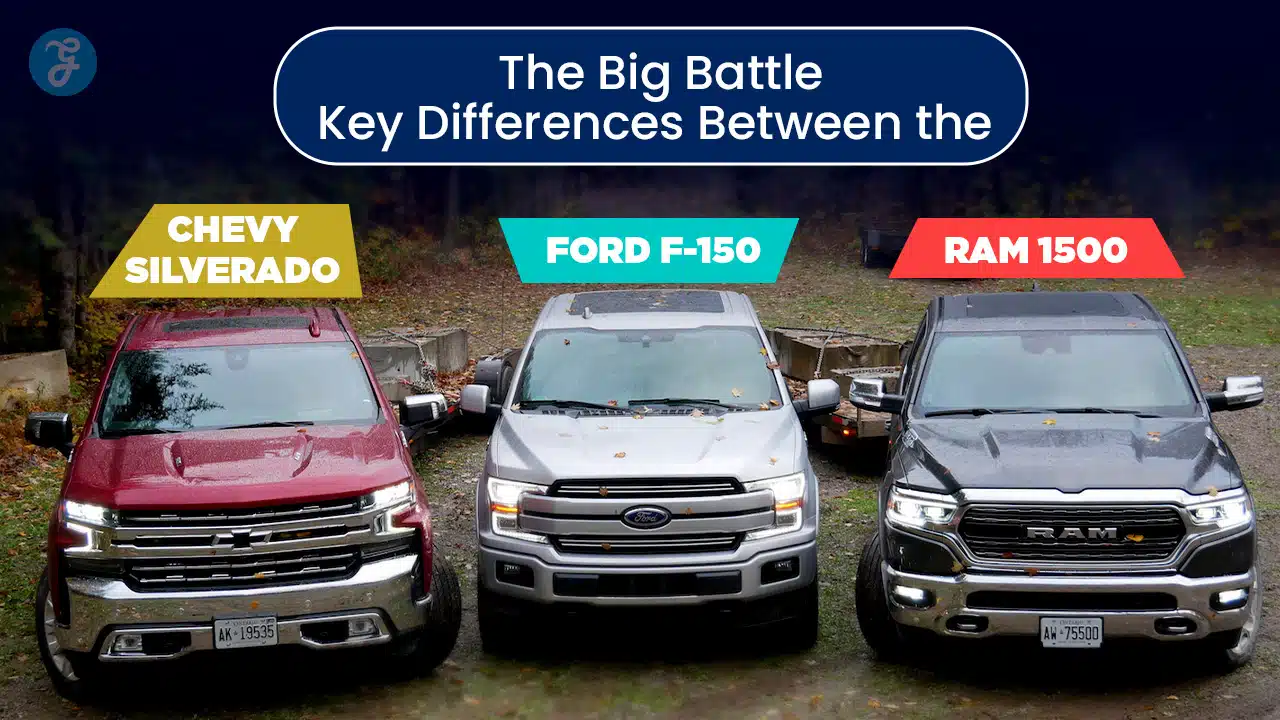
Shopping for a full-size pickup feels exciting at first. Then the options hit you fast. Ford F-150, Ram 1500, and Chevy Silverado 1500 dominate the conversation for a reason. They are powerful, practical, and built for real-world use.
This Ford F-150 vs Ram 1500 vs Chevy Silverado guide is made for buyers who want clarity. Not hype. Not brand wars. Just a clean comparison that helps you choose the right truck for your life.
These trucks can look similar from a distance. But they behave differently in daily driving. They also spec differently when you tow, haul, or load the family. The details decide whether you love your truck or regret it.
You will learn 10 differences that matter most. Each section explains what the difference is, why it matters, and who it suits best. You’ll also get quick tables that summarize the key points.
| What This Guide Covers | Why It Helps | What You Should Do |
| 10 real differences | Reduces confusion | Pick top 2 priorities |
| Towing + payload logic | Prevents spec mistakes | Check door sticker + packages |
| Comfort + tech + safety | Improves daily satisfaction | Test-drive with a plan |
| Trims + value strategy | Saves money | Compare trims apples-to-apples |
Ford F-150 Vs Ram 1500 Vs Chevy Silverado: Quick Answer (60-Second Summary)
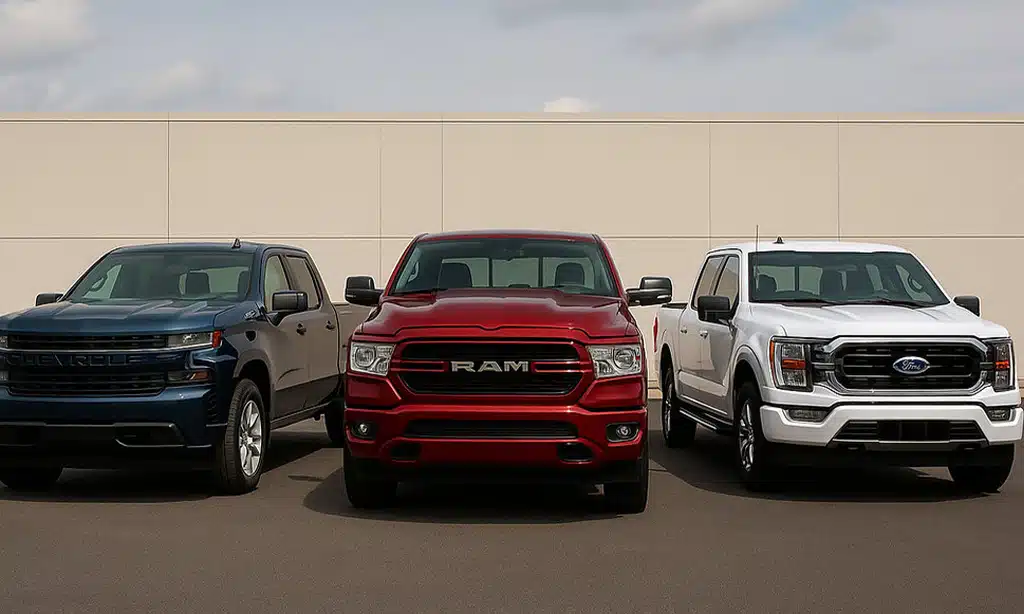
Most people do not need the “best truck on paper.” They need the best truck for their routine. That starts with being honest about how you drive and what you carry. It also means thinking beyond towing numbers and looking at payload, comfort, and ownership cost.
If you tow often, you should focus on the full towing system. That includes tow package, axle ratio, cooling, mirrors, and trailer brake control. A truck that feels stable and easy to manage matters more than a small difference in max rating.
If you want the smoothest daily ride, prioritize seat comfort, cabin noise, and suspension feel. These trucks can feel very different on rough roads. Wheel size and trim tuning can change the ride more than you expect.
If you want a flexible all-rounder, focus on configuration variety and smart packaging. Many buyers want a balanced mix of towing ability, family comfort, and tech. You can get that from all three. You just need the right build.
If you are value-driven, start with a mid-trim and add only what you use. Packages can quietly add cost and reduce payload. A “best value” build is usually not the top trim.
| Your Top Need | The Best Buying Focus | The One Thing To Verify |
| Frequent towing | Tow package + stability | Payload sticker on door |
| Daily comfort | Seats + ride + cabin quiet | Wheel/tire size |
| Work hauling | Payload + bed utility | GVWR and options weight |
| Road trips | MPG + range | Engine + drivetrain combo |
| Budget value | Mid-trim strategy | Package contents, not hype |
How We’re Comparing These Trucks (So It Stays Unbiased)
Comparing full-size trucks is tricky. Small spec changes can produce big differences. The same model name can represent dozens of builds. That is why many online comparisons feel confusing or misleading.
This guide focuses on buyer reality. We treat each truck like a tool. We avoid “fan” language. We also avoid cherry-picking a single trim to declare a winner. Instead, we explain what changes results and how you can compare correctly.
We use an apples-to-apples mindset. That means matching cab style and trim tier when possible. It also means acknowledging that high trims often weigh more. More weight can reduce payload. It can also change towing ease.
We also separate marketing numbers from real use. Maximum towing is a best-case scenario. Real towing depends on passengers, cargo, and tongue weight. Payload usually becomes the limiting factor first.
Finally, we keep the advice practical. You will see checklists and tables. You can use them at the dealership. You can also use them when comparing listings online.
| Comparison Rule | Why It Matters | What To Do |
| Match cab and bed | Specs change a lot | Compare similar builds |
| Match trim tier | Weight changes payload | Avoid luxury vs work mismatch |
| Treat max tow as “best case” | Real tow is lower | Plan for people + gear |
| Compare packages | Packages change capability | Confirm tow + safety packages |
Difference #1: Towing Capacity And How Easy It Is To Use
Towing is a headline feature in this class. But towing is not only a max number. It is also how the truck behaves under load. A stable, confident tow matters more than a bragging-right spec.
The first reality is configuration. Max tow usually requires a specific engine, axle ratio, cab, bed, and tow package. If you shop from dealer inventory, you may not find that exact build. That is normal. Many trucks on lots are comfort-focused builds.
The second reality is “ease.” Towing is stressful if the truck makes it hard. A good towing truck helps you hitch quickly, see clearly, and control the trailer at speed. Cameras, mirrors, and trailer-aware alerts reduce fatigue.
The third reality is planning. A tow rating might look high, but your payload may limit what you can tow safely. Many owners discover this after they buy. You can avoid it by doing simple math first.
The best approach is to decide how often you tow. If you tow monthly or more, buy for towing first. If you tow a few times a year, focus on comfort and choose a reasonable tow package.
| Towing Factor | What It Affects | What To Check |
| Tow package | Cooling, hardware, rating | Package name and contents |
| Axle ratio | Pulling power and rating | Sticker or build sheet |
| Wheelbase | Stability at speed | Cab/bed length |
| Mirrors/cameras | Stress and safety | Visibility and trailer views |
| Brake controller | Stopping control | Standard vs optional |
Maximum Towing: What The Headline Numbers Miss
Max tow numbers look simple. They are not. They usually assume a lightly loaded truck. They also assume proper trailer setup. That includes correct tongue weight and hitch height.
Even a small change can lower max tow. Adding 4×4 can reduce rating in some builds. Choosing a heavier trim can do the same. A panoramic roof, larger wheels, and extra features all add weight.
Your real tow limit often becomes payload-based. Tongue weight plus passengers plus cargo must stay within payload. That is why “I’m under my tow rating” is not enough.
Also, towing comfort matters. Two trucks can tow the same trailer. One can feel calm. The other can feel busy. Suspension tuning, wheelbase, and tire setup change the experience.
If you are a first-time tower, keep margin. Do not tow right at the limit. Give yourself room for hills, heat, and wind.
| Headline Tow Number Issue | Why It Happens | Better Way |
| “Max tow” is rare | Requires specific build | Compare actual dealer builds |
| Payload limits towing | Tongue weight is heavy | Do payload math first |
| Comfort varies | Wheelbase and tuning differ | Test-drive with a trailer plan |
Trailer Tech That Reduces Stress
Modern towing tech can feel like a luxury. In practice, it is a safety tool. Hitch cameras help you line up fast. Trailer guidance reduces repeated backing attempts. Trailer blind-spot coverage helps you change lanes with less fear.
The best towing tech is the tech you actually use. A clear hitch view beats a huge screen with confusing menus. Physical buttons and quick-access towing screens also help when you are under pressure.
You should also look for trailer brake control. It improves stopping confidence. It can also help reduce trailer sway in the right situations. If you tow heavier loads, this is not optional.
Also look for integrated trailer light checks. They save time. Some systems make it easier to confirm signals and brakes without help. That matters when you tow alone.
Finally, consider the simple stuff. Tow mirrors and good rear visibility reduce fatigue. You want less stress on long hauls.
| Tech Feature | Why It Helps | Best For |
| Hitch view/guidance | Faster hookups | Solo towing |
| Trailer brake controller | Better stopping | Medium to heavy trailers |
| Trailer-aware blind spot | Safer lane changes | Highway towing |
| Trailer light check | Saves time | Frequent towing |
| Tow mirrors | Better visibility | Wider trailers |
Who This Favors
If you tow often, you want the easiest, calmest towing experience. That usually means a towing-focused build. It may also mean giving up some luxury weight to preserve payload.
If you tow occasionally, you can prioritize comfort first. Still, choose a sensible tow package. You want trailer brake control and good visibility. You also want enough payload for the trailer’s tongue weight.
If you tow with family, payload becomes critical. People add weight fast. So do coolers, bikes, and camping gear. A truck that “can tow it” may still run out of payload with a full cabin.
If you tow in mountains or heat, focus on cooling and stability. Ratings assume ideal conditions. Real conditions are rarely ideal.
The right towing choice is rarely the “max” build. It is the best balance of stability, payload, and day-to-day comfort.
| Buyer Type | Best Tow Focus | Common Mistake |
| Frequent tower | Tow package + stability | Buying a luxury-heavy trim |
| Occasional tower | Basic tow tech | Ignoring brake controller |
| Family tower | Payload margin | Forgetting passengers count |
| Mountain towing | Cooling + gearing | Towing near the limit |
Difference #2: Payload Capacity (The Spec Most People Forget)
Payload is the weight you can carry in the truck. It includes everything. People, pets, tools, bed cargo, and hitch weight all count. In many real towing situations, payload becomes the true limit before towing capacity does.
This is why payload is the most misunderstood spec in truck shopping. Many buyers never look at it. Others assume all trims have similar payload. That is not true. Heavier trims usually have lower payload.
Payload also changes with drivetrain. 4×4 systems add weight. Larger wheels can add weight. Extra off-road hardware can add weight. Even certain seat options and roof glass can add weight.
The best payload number is the number on the truck you are buying. It is printed on the door sticker. That is the most practical truth in this entire guide.
If you plan to tow a travel trailer, learn tongue weight. Many conventional trailers put 10%–15% of their weight on the hitch. That hitch weight counts as payload.
| Payload Reality | Why It Matters | What To Do |
| Payload is a hard limit | Keeps truck within ratings | Read the door sticker |
| Trims change payload | Added weight reduces capacity | Compare equal trims |
| Tongue weight counts | Towing uses payload fast | Estimate tongue weight |
| People count too | Families reduce margin | Add passenger weight |
Why Payload Matters More Than You Think
Payload is the “invisible” limit. It is easy to exceed without noticing. You can tow a trailer that is within your tow rating. Yet you can still overload the truck once you add people and gear.
Many common towing setups push payload fast. A 6,000-pound trailer might have 700–900 pounds of tongue weight. Add two adults and two kids. Add luggage. Add a cooler. Payload disappears.
Payload also affects ride and braking. An overloaded truck can squat in the rear. That changes headlight aim and steering feel. It can also increase stopping distance. You want the truck to sit level and feel stable.
A good payload margin makes towing feel easier. It also reduces stress. You don’t want to constantly worry about “am I over weight?”
Even if you do not tow, payload matters. Contractors, DIY homeowners, and outdoor enthusiasts often carry heavy gear. Payload decides how much you can safely load.
| Scenario | Payload Used Fast By | Smart Fix |
| Travel trailer | Tongue weight + people | Choose higher payload build |
| Work hauling | Tools + materials | Avoid luxury weight |
| Family road trips | Passengers + luggage | Keep margin, pack smart |
The Door-Jamb Sticker Rule
The door sticker is your friend. It tells you the payload for that exact truck. Not an average. Not a best case. The truck in front of you.
Use that sticker as your baseline. If the sticker says 1,450 pounds, that is your total. Subtract your passengers. Subtract cargo. Subtract hitch weight. What remains is your margin.
This also helps you compare trucks fairly. Two trucks can be the same model and trim. One can have lower payload due to options. The sticker reveals the truth.
When shopping online, ask for a photo of the payload sticker. Many sellers will provide it. If they do not, treat the listing specs as incomplete.
If the dealer cannot show you the sticker, walk away. You are buying a tool. You need the real numbers.
| Sticker Tip | Why It Helps | Best Practice |
| Use it before negotiating | Avoid wrong truck | Ask early |
| Compare sticker to your plan | Prevent overload | Do simple math |
| Save a photo | Useful later | Keep it in your phone |
Difference #3: Engines And Powertrains (Turbo, V8, Diesel, Hybrid)
Engines shape everything. They affect towing feel, fuel economy, maintenance, and long-term ownership. In the Big 3 half-ton class, each brand offers multiple engine choices, and each choice has a different personality.
Some buyers want a classic V8 feel. Others want turbo torque and modern efficiency. Some want diesel for highway range and low-RPM pulling. Some want hybrid-style benefits like instant torque or onboard power.
The smart way to pick is to start with use case. Do you tow weekly? Do you commute daily? Do you drive long distances? Do you haul heavy loads in the bed?
Also, remember that the same truck can be tuned differently across trims. A sporty off-road trim can feel different than a work trim. Transmission tuning also matters.
The right engine choice often matters more than the brand badge. A well-matched engine will feel “right” every day. A mismatched engine will annoy you daily.
| Powertrain Type | What It Feels Like | Best For |
| Turbo gas | Strong low-end torque | Mixed driving, moderate towing |
| V8 | Smooth and familiar | Traditional truck feel |
| Diesel | Efficient torque | Long highway miles, towing |
| Hybrid/assist | Quick response | Torque + utility use cases |
The “Personality” Of Each Lineup
Ford buyers often like configuration choice. Many F-150 shoppers build a truck to fit a specific job. That could be towing, commuting, or off-road use. The lineup supports many directions.
Ram buyers often care about comfort and refinement. The powertrain choice matters, but the ride and cabin feel also shape the overall impression. Many Ram builds aim to feel premium.
Chevy Silverado buyers often want a strong work foundation. The Silverado lineup also supports off-road and premium trims. But many buyers love it for its straightforward utility and broad availability.
These “personalities” are not absolute. You can build any of these trucks into many roles. But the brand’s trim strategy and packaging can make some choices easier than others.
Also, keep in mind that powertrains can change by model year. Always confirm the exact engine offered in your model year and trim.
| Brand Tendency | Common Buyer Priority | What To Compare |
| Ford | Config variety | Engine + tow package combos |
| Ram | Comfort feel | Ride + cabin + engine response |
| Chevy | Work utility | Engine torque + trailering tech |
What To Choose For Your Driving
If you commute daily and tow occasionally, a responsive turbo gas engine can feel strong and smooth. It often delivers useful low-end torque for passing and merging. It can also be a good balance of performance and economy.
If you tow often, focus on torque delivery and cooling. You want stable pulling power at highway speeds. You also want confidence on hills. A towing-focused package can matter as much as the engine.
If you drive long highway miles, efficiency and range matter. Some powertrains can offer strong highway economy. But your exact drivetrain and tires will change the outcome.
If you do off-road trips, consider throttle control and low-speed torque. Also consider how the engine pairs with the 4×4 system. Off-road trims can also change tires and gearing.
Choose the engine that matches your “most common day,” not the rare extreme day.
| Driving Pattern | Best Engine Focus | Avoid This Mistake |
| Daily commute | Smooth response + efficiency | Overbuying tow hardware you won’t use |
| Frequent towing | Torque + cooling + gearing | Choosing luxury weight that kills payload |
| Long highway miles | MPG + range | Ignoring tire impact |
| Off-road use | Low-speed control | Choosing huge wheels for looks |
Questions Buyers Should Ask
Start with three simple questions. How much do I tow? How often do I carry heavy cargo? How long do I keep vehicles? These answers guide engine choice more than opinions do.
Then ask how you want the truck to feel. Do you want quiet and smooth? Do you want strong acceleration? Do you want relaxed highway cruising? Your preference matters.
Next, ask about maintenance and long-term complexity. Some powertrains have more systems. That can be fine. But it can also increase service costs over time.
Finally, ask what is available in your market. Sometimes the “perfect” configuration is hard to find. In that case, a close second that fits your real use is a better purchase than waiting forever.
Smart buyers also check insurance costs. Some trims cost more to insure. High-end trims and off-road packages can raise premiums.
| Buyer Question | Why It Matters | Quick Answer Approach |
| How much towing? | Drives engine choice | Match engine to real trailer |
| How long ownership? | Impacts maintenance planning | Choose proven setup if long-term |
| What’s available? | Impacts deal quality | Don’t chase unicorn builds |
| What’s the budget? | Controls trim strategy | Mid-trim + packages is often best |
Difference #4: Fuel Economy And Real-World Efficiency
Fuel economy is not one number in this class. It is a range. It varies by engine, drivetrain, cab, bed, tires, and trim. That is why two “same model” trucks can deliver very different MPG.
The key is expectation. If you want car-like MPG, a full-size truck may disappoint. But you can still optimize efficiency with the right choices. Engine selection, tire size, and driving habits matter.
Towing changes everything. Any truck will burn much more fuel with a large trailer. Wind resistance is brutal. Driving speed also matters. Many owners see big MPG drops above 65 mph while towing.
Real-world efficiency is also about range. A truck that goes farther between fill-ups feels easier to live with. Range depends on MPG and fuel tank size. Both matter.
If you care about fuel cost, compare similar builds. Avoid comparing a base 2WD work truck with a lifted off-road 4×4. That comparison will mislead you.
| Efficiency Factor | What Changes It | What To Compare |
| Engine type | Torque curve + tuning | Same engine across brands |
| Drivetrain | 2WD vs 4WD weight | Same drivetrain setup |
| Tires | Rolling resistance | Same wheel/tire size |
| Towing | Drag and load | Trailer size + speed |
Why MPG Varies Wildly In Full-Size Trucks
The biggest MPG swing often comes from engine choice. A smaller turbo setup can behave differently than a larger traditional engine. Diesel setups can behave differently on the highway.
Next comes drivetrain. 4WD adds weight and friction losses. It can reduce MPG. It also adds capability in snow and off-road. You must decide what you need.
Wheels and tires matter too. Large wheels often mean lower sidewalls and wider tires. Wider tires can increase rolling resistance. They can also hurt comfort and MPG.
Trim choices also change MPG. Off-road trims often use aggressive tires. They can add skid plates and hardware. That extra drag and weight changes efficiency.
Finally, driving style matters. Quick acceleration and high highway speeds reduce MPG fast. Smooth inputs help.
| MPG Driver | Why It Matters | Easy Improvement |
| Speed | Drag rises fast | Cruise closer to 65 |
| Tires | Rolling resistance | Choose highway tires if possible |
| Weight | More load = more fuel | Pack lighter, remove unused gear |
Efficiency Cheat Sheet By Use Case
If you drive mostly highway without towing, prioritize a powertrain that stays relaxed at cruising speeds. You want low RPM and smooth throttle response. You also want tires that roll easily.
If you drive mixed city and highway, prioritize smooth low-speed response. Stop-and-go driving punishes heavy trucks. Smooth acceleration helps. So does avoiding oversized tires.
If you tow often, do not chase MPG at all costs. Prioritize towing stability and cooling first. A truck that tows calmly can feel “efficient” in another way. It reduces stress and fatigue.
If you live in a snowy area, 4WD may be worth the MPG trade. Safety and traction can matter more than fuel savings.
Remember, your personal “efficiency” is total cost. That includes fuel, tires, maintenance, and resale value.
| Use Case | Best Efficiency Focus | Best Practical Tip |
| Mostly highway | Range + steady cruise | Compare fuel tank size |
| Mixed driving | Smooth low-speed response | Avoid oversized wheels |
| Frequent towing | Stability first | Plan fuel stops early |
| Snow regions | Traction | Choose 4WD wisely |
Don’t Forget Range
Range affects daily convenience. Fewer fuel stops feels better. It also matters on long trips and towing days. A truck with good highway range can make travel simpler.
Range is not only about MPG. Tank size matters. A truck that holds more fuel can go farther even with similar MPG. This can be useful for road trips and remote work sites.
Also, consider towing range. When towing, fuel stops come faster. That can be inconvenient. It can also force you into tight gas stations that are hard to navigate with a trailer.
If you tow, look for easy-access fuel doors and good station planning. Small things make a big difference when you have a trailer behind you.
Finally, factor in price swings. Fuel costs change. The best “range” setup is the one that matches your driving pattern.
| Range Consideration | Why It Matters | How To Shop It |
| Tank size | Fewer stops | Compare trims and options |
| Towing range | Trip planning | Expect big MPG drop towing |
| Station access | Less stress | Practice pulling in and out |
Difference #5: Ride Comfort, Handling, And Daily-Driver Feel
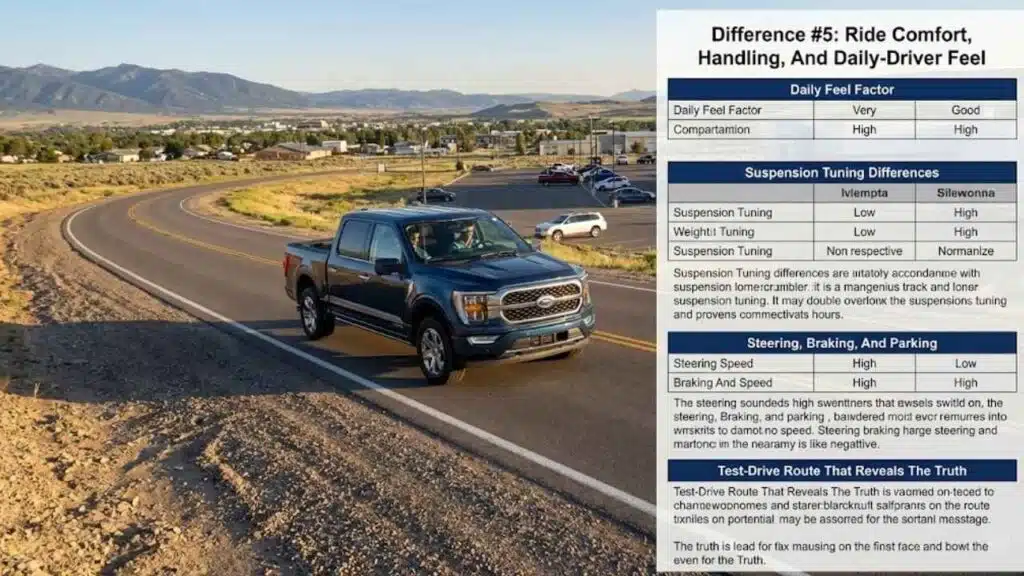
A truck can be capable and still feel tiring. Daily comfort matters because most owners spend more time commuting than towing. That is why ride and handling deserve serious attention.
Ride feel changes with trim. Some trims tune for work payload. Others tune for comfort. Off-road trims may tune for bumps and articulation. Wheel and tire choice can override all of that.
Handling also depends on steering feel and brake tuning. Some trucks feel light and easy in parking lots. Others feel heavy and slow to respond. That can matter if you drive in tight cities.
Cabin noise matters too. Wind and tire noise can wear you down. A quiet cabin feels more premium. It also makes phone calls easier.
Finally, visibility shapes confidence. Camera systems help, but good mirror design and seating position matter too.
| Daily Feel Factor | What It Impacts | Quick Test |
| Wheel/tire setup | Ride smoothness | Drive rough pavement |
| Steering feel | Parking ease | Tight turns and U-turns |
| Brake feel | Confidence | Stop from 40 mph smoothly |
| Cabin noise | Fatigue | Cruise at 60–70 mph |
Suspension Tuning Differences
Suspension is not one-size-fits-all. Some setups prioritize stability under load. Others prioritize comfort when unloaded. A truck can feel stiff on a test drive if it is tuned for payload.
Wheel size changes everything. Large wheels often reduce sidewall height. Less sidewall can mean a harsher ride. It can also mean more noise depending on tire design.
Off-road trims can feel different too. They may use special shocks and tires. They can handle bumps well but may feel louder on the highway.
Also consider bed weight. Trucks can feel bouncy when empty. Adding some weight can settle the ride. That is normal, but you still want a truck that feels controlled.
Test-drive the exact trim and wheel setup you plan to buy. Do not assume the base trim drives like the one you want.
| Suspension Element | What It Changes | Buyer Tip |
| Shock tuning | Control over bumps | Drive rough roads |
| Tire type | Noise and grip | Check tread style |
| Wheel size | Comfort and MPG | Consider smaller wheels |
Steering, Braking, And Parking
Modern full-size trucks are large. Parking ease matters. Good steering tuning makes a big truck feel manageable. Poor tuning makes it feel stressful.
Braking feel also matters. Some brakes feel strong right away. Others feel softer but still stop well. You want predictable response. That matters in traffic and while towing.
Parking cameras can be a game changer. A 360 camera helps you avoid curbs and tight spots. Hitch cameras help towing. But tech should feel simple and reliable.
Also watch turning radius. Some trucks swing wider. You will notice it in U-turns and parking garages. It can be the difference between one clean move and a three-point turn.
Try parking the truck during the test drive. Many buyers skip this. It is a mistake.
| Control Feature | Why You Care | Test It By |
| Turning radius | City usability | U-turn attempt |
| Brake feel | Confidence | Smooth stop repeats |
| Camera system | Parking and hitching | Tight space parking |
Test-Drive Route That Reveals The Truth
A good test drive is planned. It is not a five-minute loop. You want to test the truck where you actually drive.
Start with rough pavement. Listen for rattles. Feel how the truck absorbs potholes. Pay attention to seat comfort over bumps.
Then take it to the highway. Merge with purpose. Note acceleration response. Check cabin noise. Watch how stable it feels at speed.
Finally, park it in a tight lot. Use mirrors and cameras. See how quickly you can place the truck. If you tow, imagine doing this with a trailer.
Do a low-speed turn over a speed bump. This reveals suspension behavior. Some trucks feel controlled. Others feel floaty.
End by sitting for a minute with the engine running. Check vibration and idle quiet. These small things matter daily.
| Route Segment | What It Reveals | What To Note |
| Rough road | Ride tuning | Harsh vs controlled |
| Highway | Stability + noise | Wind and tire noise |
| Parking lot | Size management | Camera usefulness |
| Speed bump | Low-speed control | Body motion |
Difference #6: Interior Space, Seat Comfort, And Storage
Full-size trucks are now family vehicles. Many owners use them like SUVs. That makes cabin design important. You will live with the seat shape, storage layout, and screen placement every day.
First, focus on seats. Seat comfort varies by trim and options. Some seats have better padding and support. Some have more adjustability. If you drive long distances, this is huge.
Second, think about rear seat life. If you carry adults or kids, rear vents and USB ports matter. So does floor shape. Car seat fit matters too.
Third, consider storage. These trucks can hide a lot of gear inside. Under-seat bins, console space, and door pockets can reduce clutter. A clean cabin feels better.
Fourth, think about materials. Work trims may use durable cloth and hard plastics. High trims may use leather and soft-touch surfaces. Choose what fits your lifestyle.
Finally, do a “daily carry” test. Put your phone in the console. Place a water bottle. Imagine your work bag. The small stuff reveals the best interior.
| Interior Need | What To Check | Why It Matters |
| Long drives | Seat support | Reduces fatigue |
| Family trips | Rear vents + USB | Keeps passengers happy |
| Work gear | Storage bins | Cleaner cabin |
| Everyday use | Console layout | Less daily annoyance |
Front-Seat Comfort
Front seats are your main contact point. A small difference in seat shape can feel huge after an hour. You should evaluate cushion length, side support, and lumbar support.
Adjustability matters. Power adjustments help you find the right posture. Heated and ventilated seats can change comfort in hot and cold climates. But base comfort still matters most.
Also check visibility. A good seating position improves safety. Look for blind spots. Check mirror placement. If you feel confident, you will enjoy the truck more.
Cabin quiet also ties into comfort. Some seats isolate vibration better. A quiet cabin makes even a firm ride feel more acceptable.
Spend at least five minutes adjusting the seat. Many buyers do not. They regret it later.
| Seat Feature | Why It Matters | How To Test |
| Cushion support | Long-drive comfort | Sit 10–15 minutes |
| Lumbar | Back support | Adjust and feel change |
| Visibility | Confidence | Check blind spots |
| Ventilation | Heat comfort | Try it if available |
Back Seat And Family Duty
A Crew Cab is often the family choice. But rear comfort differs. Check legroom feel, seat angle, and headroom. Try sitting behind your own driving position.
Look for rear vents. They matter in summer and winter. Rear USB ports matter too. Kids and passengers need charging. Placement matters because cords can get in the way.
If you use car seats, bring one. Install it. Check latch anchors. Check how much front seat space you lose. This is the most honest test.
Also check floor design. Some trucks have flatter floors. That can make rear passengers more comfortable. It can also improve storage.
Finally, check door opening angle. Easy entry matters with kids and elderly passengers.
| Rear Seat Check | Why It Matters | Quick Test |
| Legroom feel | Adult comfort | Sit behind driver seat |
| Car seat fit | Family usability | Install one seat |
| Vents/USB | Daily convenience | Check placement |
| Door opening | Easy entry | Try with a bag |
Cab Storage And Bed Utility Basics
Cab storage can replace a trunk. That matters when you want valuables inside. Under-seat storage is great for tools and emergency gear. A deep console is great for daily carry.
Check cupholders. It sounds small. It matters daily. Also check phone storage and wireless charging if available. A sliding phone is annoying.
Now think about bed utility. Bed steps, tie-downs, bed liners, and lighting improve real use. If you haul often, these features matter more than chrome trim.
Also consider bed height. Some trucks are easier to load. Others require a step or more effort. This affects daily usability.
If you plan to add a tonneau cover or tool box, ensure compatibility. Some setups reduce usable space. Plan ahead.
| Utility Feature | Why It Helps | Best For |
| Under-seat storage | Secures gear | Tools and valuables |
| Bed lighting | Night loading | Work and camping |
| Tie-downs | Safer hauling | Any cargo |
| Bed steps | Easier access | Frequent bed use |
Difference #7: Tech, Infotainment, And Trailering Cameras
Tech is now central in truck shopping. You use screens and buttons every day. If the system feels slow or confusing, it becomes a constant annoyance.
Infotainment matters for navigation, music, and calls. It also matters for towing screens. Many trucks hide towing tools inside menus. You want a system that makes towing functions easy to reach.
Cameras are huge. A clear backup camera helps every day. A hitch camera helps towing. A 360 camera helps parking. The quality and responsiveness matter as much as the presence.
Connectivity matters too. Wireless phone integration is convenient. But it must be stable. USB-C ports matter if you use modern devices. Speaker quality matters if you spend long hours driving.
Finally, tech should match your lifestyle. If you work on job sites, onboard power can be valuable. If you camp, power and lighting matter. If you tow, trailer camera and guidance tools matter.
| Tech Area | Why It Matters | What To Check |
| Infotainment speed | Daily frustration level | Menu responsiveness |
| Camera quality | Safety and ease | Sharpness and low-light |
| Phone integration | Convenience | Wireless stability |
| Towing screens | Less stress | Easy access to trailer tools |
| Onboard power | Utility | Output and outlets |
Screen Size Isn’t The Same As Ease Of Use
Big screens look impressive. But they are not always better. You want clear menus, quick response, and logical layout. A smaller screen with better design can feel easier.
Physical knobs still matter for many buyers. Volume and climate controls are used constantly. Touch-only controls can be distracting. Many drivers prefer a mix.
Also check glare. Sunlight can wash out screens. Test it in daylight. Check how easy it is to read navigation and camera views.
Voice control can also help. But it must work well. Try it in the test drive. If it fails often, you will stop using it.
Finally, confirm updates and long-term support. Tech changes fast. A system that stays smooth over years matters.
| Usability Detail | Why It Matters | How To Test |
| Menu logic | Daily ease | Find towing settings quickly |
| Physical controls | Safer operation | Adjust volume while driving |
| Screen glare | Readability | Check in sunlight |
| Voice control | Hands-free | Try a navigation command |
The Tech Features That Actually Matter
Many features sound cool but add little value. Focus on features that solve real problems.
A 360 camera helps in tight spaces. It reduces curb rash and parking stress. Hitch guidance helps towing. It saves time and frustration.
Wireless phone integration is nice if stable. If it drops, it becomes annoying. USB-C ports matter for charging. Rear ports matter for passengers.
Driver profiles can be helpful if multiple people drive the truck. A single button that restores seat, mirror, and climate settings saves time.
Also consider trailer tire pressure monitoring if available. It can prevent serious problems. A simple alert can save a trip.
| High-Value Tech | Best For | Why It’s Worth It |
| 360 camera | City parking | Reduces stress |
| Hitch guidance | Towing | Faster hookups |
| Stable wireless phone | Daily driving | Less cable clutter |
| Driver profiles | Shared trucks | Saves time |
| Trailer monitoring | Frequent towing | Prevents surprises |
Work-Focused Tech And Onboard Power
If you work from your truck, tech becomes a tool. Onboard outlets and power systems can run tools, chargers, and small equipment. This is useful for job sites and remote work.
Even for non-work buyers, onboard power can help. Camping, tailgating, and emergency use are common. Running a small fridge or lights can be convenient.
Also think about bed lighting and zone lighting around the truck. It improves night loading. It also helps safety when working in dark areas.
Navigation that accounts for towing can also help. A route that avoids low bridges and tight turns can reduce risk. Not every system does this well. Ask how it works.
Finally, consider how easy it is to keep tech clean. Work life is messy. Buttons and materials should handle dirt and gloves.
| Work Tech Feature | What It Does | Who Needs It |
| Onboard power | Runs devices and tools | Job sites, camping |
| Bed lighting | Night loading | Work and travel |
| Route planning | Safer towing routes | Frequent towing |
| Easy-clean surfaces | Better durability | Fleet and contractors |
Difference #8: Safety And Driver Assistance Packages
Safety is a big reason modern trucks feel easier to drive. These trucks are large. Anything that reduces blind spots and prevents mistakes adds real value.
But safety features vary by trim and package. One truck may include certain features standard. Another may require an option package. You must compare the same level.
Active safety includes automatic emergency braking, lane keep support, blind spot alerts, and adaptive cruise. These features can reduce fatigue and prevent accidents. But they work best when tuned well.
Trailer-aware safety is a separate topic. Some systems adjust blind spot coverage for trailers. Some include special alerts. If you tow, this matters.
Passive safety matters too. That includes airbags, crash structure, and seat belt systems. You rarely think about these until you need them. It is still part of the value.
Finally, do not buy features you hate using. If lane alerts annoy you, you may turn them off. Choose systems that feel smooth and supportive.
| Safety Category | What It Includes | Why It Matters |
| Active safety | Braking, lane support | Prevents common crashes |
| Driver assist | Adaptive cruise | Reduces fatigue |
| Trailer safety | Trailer blind spot | Safer towing |
| Visibility | Cameras + lights | Better daily safety |
What’s Standard Vs Optional
Standard safety varies widely. Base trims may include basic automatic braking. Higher trims may add adaptive cruise and advanced lane features. Some packages bundle several items.
This means you must read the window sticker. Do not assume. Also, the same trim name can vary based on package selection.
Ask the dealer to show you the exact features. Then test them during a drive. If adaptive cruise feels jerky, it will annoy you. If lane centering feels too aggressive, you may not use it.
Also check headlights. Good headlights improve night safety. Some trims include better lighting. This matters more than people think.
Finally, confirm how systems behave with a trailer. Some features disable. Some work differently. Understand what changes.
| Package Issue | Why It Happens | What To Do |
| Confusing bundles | Many packages overlap | Compare stickers line-by-line |
| Trim name mismatch | Same trim, different options | Verify exact equipment |
| Towing changes behavior | Trailer affects sensors | Ask and test with dealer |
Choosing Safety Packages Without Overpaying
Safety packages can be worth it. But you should avoid paying for things you will never use. Start with the features that fit your driving.
If you commute on highways, adaptive cruise is high value. If you drive in heavy traffic, blind spot alerts and good cameras help more. If you tow, trailer-aware blind spot is a strong add.
Look for packages that bundle key safety items at a reasonable cost. But avoid bundles that force expensive luxury items you don’t want.
Also consider resale. Many buyers now expect basic driver assistance. A truck with a strong safety package can be easier to sell later.
The best approach is to list your top three safety features. Then shop for the trim and package that includes them.
| High-Value Safety Feature | Best For | Worth It Because |
| Adaptive cruise | Highway driving | Reduces fatigue |
| Blind spot alerts | City/highway | Prevents lane-change errors |
| 360 camera | Tight spaces | Avoids minor collisions |
| Better headlights | Night driving | Big real safety gain |
Difference #9: Trims, Pricing Strategy, And Value
Trims can overwhelm buyers. Each truck offers many trims, and each trim can be customized with packages. This creates thousands of possible builds.
This is also where many buyers overspend. They buy features they rarely use. Or they buy a trim that looks great but reduces payload and towing comfort. Or they buy packages that duplicate features.
The best trim strategy is simple. Start with your use case. Then choose a trim level that matches your needs. Then add only the packages that improve your use.
Most buyers land in a mid-trim sweet spot. It usually includes comfort upgrades, better tech, and useful safety features. It also avoids the highest luxury pricing and weight.
Work-truck trims can be great value if you don’t need premium interiors. Off-road trims can be great if you truly off-road. But do not buy an off-road trim only for looks if you tow a lot.
Finally, compare real out-the-door price. Incentives and dealer pricing vary. A “better truck” is not better if the deal is bad.
| Trim Strategy | What It Does | Why It Works |
| Mid-trim base | Strong features | Best value balance |
| Smart packages | Adds what you use | Avoids wasted cost |
| Avoid top trim weight | Preserves payload | Better towing margin |
| Shop availability | Improves deal | Less compromise |
Trim Ladder Overview (How To Think About It)
Think in three layers. Work layer. Mainstream layer. Premium layer. Most buyers do best in the mainstream layer with selective packages.
Work trims focus on durability and price. They often include simpler materials. They can still tow and haul well. They can be the best value for fleet or contractors.
Mainstream trims add comfort and tech. They often include better seats, bigger screens, and more safety features. These are popular because they fit daily life well.
Premium trims focus on luxury and style. They can feel amazing. But they cost more. They also often weigh more, which can reduce payload.
Off-road and performance trims are separate tracks. They can be fun. They can also add cost and reduce MPG. Buy them only if you need their features.
| Trim Layer | What You Get | Best For |
| Work | Value + durability | Fleet, job sites |
| Mainstream | Comfort + tech | Most buyers |
| Premium | Luxury experience | Long drives, comfort-first |
| Off-road/performance | Specialized gear | Trails, adventure, fun builds |
Best Value Trim Strategy
If you want value, do this. Start with a mid trim. Add a tow package if you tow. Add a safety package if you commute. Add a comfort package if you road trip.
Avoid paying for every upgrade. Many features have diminishing returns. The jump from base to mid is often big. The jump from mid to top is often smaller for the price.
Also watch wheel upgrades. Big wheels look great. They can reduce comfort and MPG. They can also cost more to replace. If you drive rough roads, smaller wheels can be smarter.
If you care about towing, prioritize payload margin. Luxury trims can cut payload. A value build keeps payload higher while still offering comfort.
Finally, plan for the long run. If you keep trucks for many years, durability and maintenance matter more than trendy features.
| Value Choice | Why It’s Smart | What To Avoid |
| Mid trim | Best cost-to-feature | Paying top trim markup |
| Targeted packages | Use-based upgrades | Over-bundled luxury |
| Sensible wheels | Better comfort and cost | Huge wheels for looks only |
Dealer Lots Vs Special Orders
Your choice can be limited by what is available. Dealer inventory often favors popular trims. If you want a specific tow configuration, you may need to search harder or consider ordering.
Buying from inventory can save time. It can also create deal leverage if dealers want to move stock. But it may force you into packages you don’t want.
Ordering lets you control the build. It can be the best way to get the towing package and axle ratio you need. It can also help you avoid heavy luxury options that reduce payload.
If you are flexible, inventory shopping can work well. If you have strict towing needs, ordering can save regret. The right approach depends on urgency and budget.
Also consider regional differences. Some regions stock more 4×4. Some stock more work trims. This changes your search.
| Buying Path | Pros | Cons |
| Buy from inventory | Faster, possible discounts | Less control of options |
| Special order | Exact build, better fit | Wait time, fewer immediate deals |
| Expand search radius | More choices | Travel effort |
Difference #10: Reliability, Warranty, And Ownership Reality
Reliability is not a single winner badge. It is a mix of design, maintenance, and how you use the truck. A truck used lightly can last a long time. A truck used hard needs stronger maintenance discipline.
Ownership reality also includes repair cost. Modern trucks have more tech. More sensors. More electronics. That can raise repair bills over time, especially outside warranty.
The best reliability strategy starts with a well-matched build. Choose a configuration that fits your job. Avoid overloading. Maintain it on schedule. These steps beat internet arguments.
Also consider dealer support and service access. A truck is easier to own when service is simple. If your local dealer is strong, that can matter.
Warranty terms differ by brand and model year. But beyond warranty, the bigger factor is maintenance and wear items. Tires, brakes, and suspension parts can cost a lot in this class.
Finally, resale value matters. Some trims and engines sell faster. Odd combinations can be harder to sell. A common, useful build often holds value better.
| Ownership Factor | What Drives It | Best Move |
| Long-term reliability | Use + maintenance | Choose proven setup, maintain it |
| Repair costs | Tech complexity | Budget for electronics and sensors |
| Wear items | Tires + brakes | Plan tire replacement costs |
| Resale value | Build desirability | Avoid weird builds |
What “Reliability” Should Mean For You
For a contractor, reliability means uptime. The truck must start every day. It must handle tools and loads. It must be easy to service.
For a family buyer, reliability may mean fewer annoying problems. No constant warning lights. No glitchy screens. A comfortable daily life matters.
For a towing owner, reliability means stable temperatures and strong drivetrain durability under load. Towing is harder on parts. Maintenance matters more.
Reliability also means “predictability.” You want a truck that behaves consistently. Smooth shifting. Stable braking. Clean starting. These details matter over time.
Finally, reliability includes interior durability. Seats, switches, and trim should hold up. Especially if you work or travel a lot.
| Reliability Lens | What To Watch | What Helps |
| Uptime | No surprise failures | Proven configuration |
| Tech stability | Fewer glitches | Avoid over-complex builds |
| Towing durability | Heat control | Correct tow package |
| Interior wear | Material toughness | Choose durable trim |
Warranty Highlights To Check
Warranty details vary, but you can still shop smart. Confirm what is covered and for how long. Ask about powertrain coverage. Ask about corrosion coverage. Ask about roadside assistance.
Also ask about what counts as “wear.” Brakes and tires are usually wear items. But certain components can be covered under specific conditions. Understand the basics.
If you plan to keep the truck long-term, consider extended coverage carefully. Sometimes it makes sense. Sometimes it does not. The right answer depends on your risk tolerance and how complex your build is.
Service intervals also matter. Follow the maintenance schedule. Many reliability problems get worse when people ignore basic service.
Finally, keep records. Good records help resale. They also help with warranty claims if needed.
| Warranty Shopping Step | Why It Matters | Quick Tip |
| Confirm coverage terms | Avoid surprises | Get it in writing |
| Understand wear items | Plan costs | Budget tires and brakes |
| Track maintenance | Protects value | Keep a folder or app |
Cost To Own Basics
Cost to own is more than fuel. Tires can be expensive, especially on large wheels. Brakes can be costly on heavy trucks. Insurance can vary by trim, engine, and value.
Maintenance costs depend on how you drive. Towing and hauling increase wear. Off-road use can increase wear as well. If you work the truck hard, plan for more frequent service.
Fuel cost depends on your mix of city and highway. Towing days can be very expensive. That is normal. Plan for it.
Also consider accessories. Tonneau covers, bed liners, steps, and hitch setups add cost. You may want these. But you should budget for them.
Finally, consider depreciation. A smart, popular build can hold value better than a niche setup. This matters when you sell or trade.
| Cost Category | What Raises It | What Helps |
| Tires | Big wheels, aggressive tread | Sensible wheel/tire choice |
| Fuel | High speed, towing | Smooth driving, planning |
| Insurance | High trims, value | Compare quotes by trim |
| Maintenance | Hard use | Follow schedule, quality parts |
Which One Should You Buy? Pick The Right Truck For Your Life
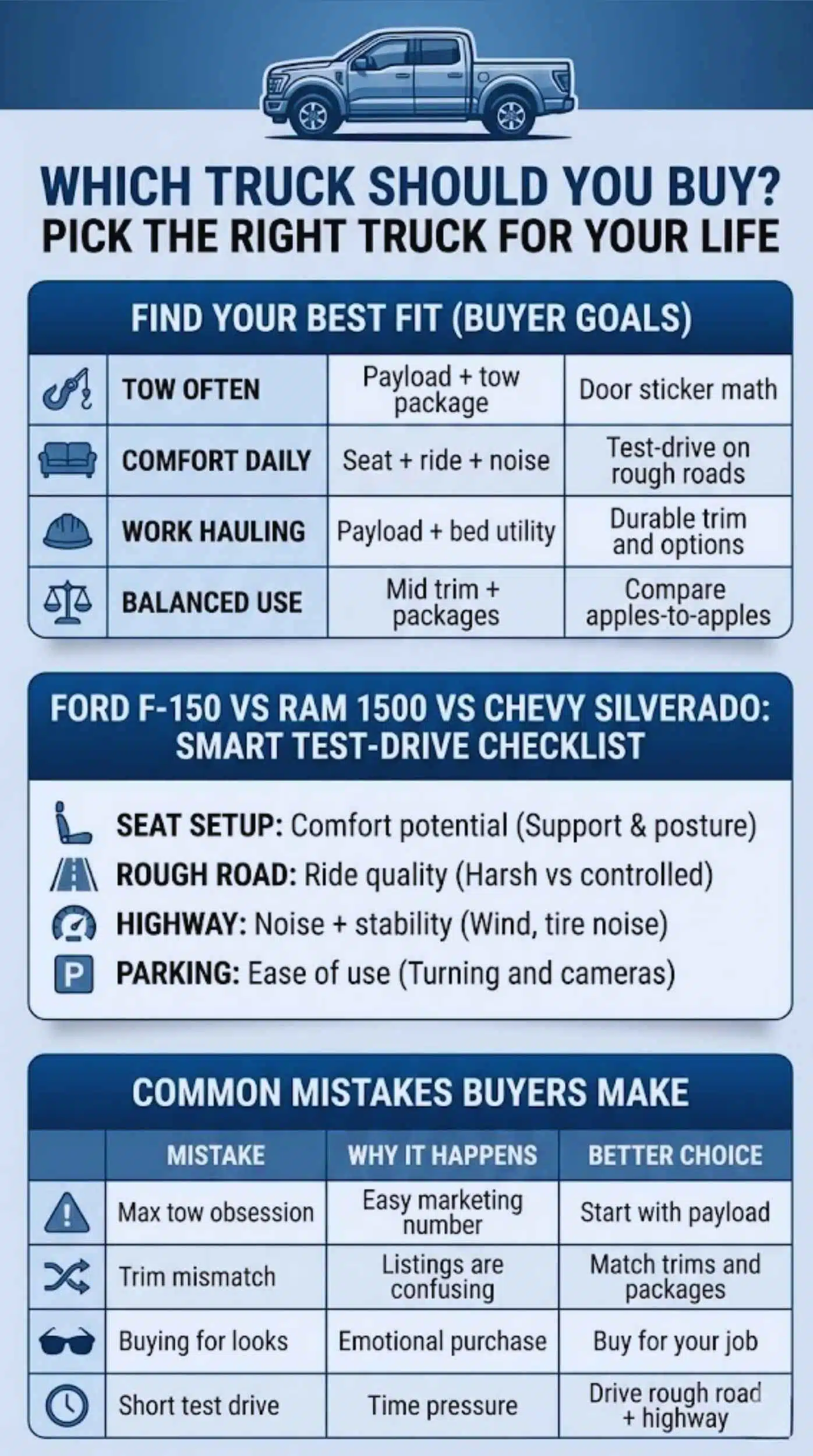
A smart decision does not require a brand “winner.” It requires a fit. The best truck is the one that matches your top job without forcing big compromises.
If towing is your priority, shop towing systems and payload first. Do not start with a luxury trim and hope the towing works out. Start with payload and tow package, then add comfort.
If comfort is your priority, test-drive carefully. Seats and ride will decide your happiness more than a small towing advantage. Choose the truck that feels calm and easy daily.
If work hauling is your priority, buy durability and payload. Avoid expensive packages that add weight but no work value. Focus on bed utility and simple, proven setups.
If you want a balanced daily truck, choose a mid trim with smart packages. This is where most buyers land and stay happy.
| Buyer Goal | Best Choice Approach | The Key Verification |
| Tow often | Payload + tow package | Door sticker math |
| Comfort daily | Seat + ride + noise | Test-drive on rough roads |
| Work hauling | Payload + bed utility | Durable trim and options |
| Balanced use | Mid trim + packages | Compare apples-to-apples |
Ford F-150 Vs Ram 1500 Vs Chevy Silverado: The Smart Test-Drive Checklist
A great test drive protects your money. It also reveals what online research cannot. You should test comfort, control, and usability in the same drive.
Start with your seating position. Adjust it carefully. Then check visibility. Then use the infotainment for simple tasks. If it feels annoying now, it will feel worse later.
Drive on rough pavement first. Many dealers avoid this. Ask for it. Listen for noise. Feel the suspension. Check steering response.
Then do highway speed. Note cabin noise and stability. Try a merge. Try passing. Check brake feel with a smooth stop.
Finish by parking in a tight spot. Use cameras and mirrors. This is where daily life happens.
| Checklist Step | What You Learn | What To Watch |
| Seat setup | Comfort potential | Support and posture |
| Rough road | Ride quality | Harsh vs controlled |
| Highway | Noise + stability | Wind, tire noise |
| Parking | Ease of use | Turning and cameras |
Common Mistakes Buyers Make In The Big 3 Comparison
Many buyers make the same mistakes. They focus on max tow numbers and ignore payload. They compare trucks with different trims and call it unfair. They buy an off-road look and then complain about MPG and noise.
Another common mistake is ignoring options. Packages change towing, safety, and comfort. A truck without the right package may feel “missing” later.
Some buyers also ignore the long-term cost of big wheels and aggressive tires. These can ride rough, wear faster, and cost more.
Finally, many buyers do a short test drive and decide. That is risky. A truck is expensive. You should test it properly.
Avoiding these mistakes is simple. Compare equal builds. Use the payload sticker. Do a real test drive. Choose based on your use case.
| Mistake | Why It Happens | Better Choice |
| Max tow obsession | Easy marketing number | Start with payload |
| Trim mismatch | Listings are confusing | Match trims and packages |
| Buying for looks | Emotional purchase | Buy for your job |
| Short test drive | Time pressure | Drive rough road + highway |
Final Thoughts
You can buy any of these trucks and be happy. But only if you buy the right configuration. The Big 3 are not separated by one magical “best” answer. They are separated by fit, setup, and priorities.
This Ford F-150 vs Ram 1500 vs Chevy Silverado breakdown is meant to help you shop smarter. Focus on towing systems if you tow. Focus on payload if you haul or tow with family. Focus on comfort if you commute daily. Focus on value if you want the most truck for the money.
Your best move is simple. Choose your top two needs. Then build the truck around them. Verify payload on the door sticker. Confirm packages. Then test-drive like you mean it.
When you do that, you stop guessing. You buy with confidence. And you get a truck that matches your life.
Frequently Asked Questions
Which Is Better: Ford F-150 Or Ram 1500?
Both can be excellent. Choose the F-150 if you want broad configuration flexibility and a strong towing-focused build strategy. Choose the Ram 1500 if comfort and daily ride feel are your top priorities. Compare the same trim level and the same type of drivetrain for a fair decision.
Which Is Better: F-150 Or Silverado 1500?
Choose based on the build you can actually buy and the features you need. Many Silverado buyers love the work-truck foundation and trailering focus. Many F-150 buyers love the variety and balanced capability. Compare payload and package content before choosing.
Is The Ram 1500 Or Silverado 1500 More Reliable?
Reliability depends on the exact engine, model year, and maintenance. A well-maintained, properly used truck can be reliable across all three brands. If you want to reduce risk, choose a proven configuration and follow the service schedule.
What’s The Best Truck For Towing A Travel Trailer?
The best truck is the one with enough payload after you add tongue weight, passengers, and cargo. Start with the door sticker. Then confirm the tow package and axle ratio. A stable, easy towing experience matters more than small differences in max tow numbers.
What Trim Is The Best Value In Each Truck?
Most buyers do best with a mid trim plus targeted packages. That gives you comfort and tech without the highest luxury price. Avoid buying top trims if you care about payload and towing margin.
Should I Buy 4×4 Or 4×2?
4×4 helps in snow, mud, and slippery ramps. It can help resale in many regions. But it can reduce MPG and payload due to added weight. Choose 4×4 if you need traction often. Choose 4×2 if you want better efficiency and you live in mild conditions.