Freight fraud can sneak up on you like a cat burglar. Carriers report stolen goods and phantom runners on the docks. Real-World Examples Of Logistics Fraud And Prevention can shine a light on these hidden threats.
We will talk about identity theft, fake carriers, and load pilferage.
CargoNet says fraud costs the industry hundreds of millions of dollars a year. We share ten real cases, like phishing email scams and package rerouting schemes, so you spot them fast.
You will learn how satellite tracking, security audits, and data insights can stop thieves. Read on.
Key Takeaways
- CargoNet says freight fraud costs hundreds of millions of dollars each year. On January 3, 2024, criminals launched onedatfreight.com, stole hundreds of DAT login credentials, and used fake bills of lading.
- Scammers run double-brokering scams to pocket extra fees. They re-broker loads, grab payments, then leave real carriers unpaid.
- Driver-in-need schemes and package rerouting fuel losses. Carriers pay fake cash advances, and a UPS client lost $6,000 to a rerouting scam.
- Fake repair crews on I-95 charge for non-existent engine work. They use AI-generated voices, cloned websites, and manipulated invoices.
- Firms fight back with GPS tracking, multi-factor authentication, data analytics, and shared threat intelligence. Memcyco launched its Digital Risk Protection on AWS Marketplace in 2025 to block spoofing and phishing.
Fake Shipper and Carrier Fraud
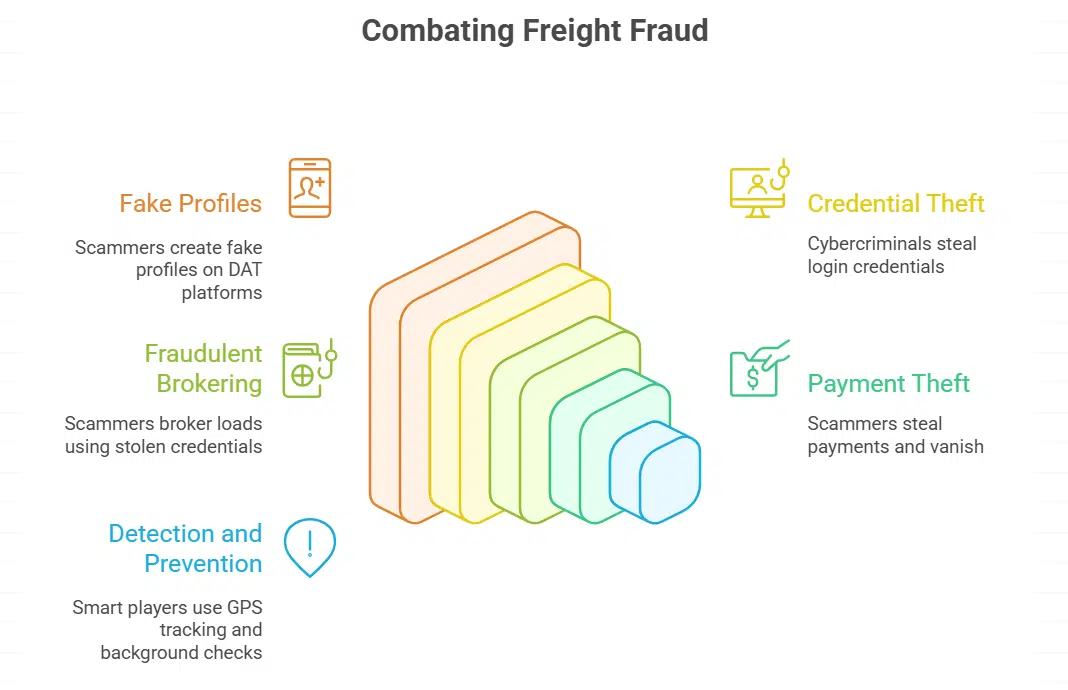
Scammers steal identities of real carriers and brokers, then post fake profiles on a DAT platform. They swipe MC numbers and copy bills of lading to look legit. A case on January 3, 2024 shows their craft.
Cybercriminals launched onedatfreight.com, a lookalike DAT site, and netted hundreds of login credentials. Fraudsters used stolen passwords to broker loads, grab payments, then vanish.
Organized crime rings love this trick, since it slices right through weak verification and fuels cargo theft.
Smart players fight back with GPS tracking, multifactor authentication and strict background checks. Data analytics can flag odd pickup patterns, bogus phone numbers or hidden reroutes.
The Federal Motor Carrier Safety Administration and American Trucking Associations share threat intelligence to power fraud detection. Internet-of-things sensors on trailers report odd stops, and brokers vet every carrier before they sign a contract.
Double-Brokering Scams
A load may pass from one broker to another, each adding a fee. A small carrier might take a gig, then a second broker swoops in. That broker re-brokers the load, pockets the extra money, leaves the carrier unpaid.
Fraudsters exploit supply chain vulnerabilities with stolen identities or fake companies. They send spoofed emails or set up bogus websites, tricking carriers with fake invoices. Digital freight platforms make it easy to mask who holds the bill of lading.
Payment fraud pops up as invoice fraud or redirected funds, all in plain sight. Shippers see higher costs on insurance premiums and on security. Cargo theft spikes when shippers chase phantom carriers.
Stolen goods vanish, shipments stall, trust erodes across supply chains.
Leaders fight back with GPS tracking and risk assessment tools. A transport software flags odd carrier payments, it sounds an alarm. Carriers snap photos of each container seal, log them on a shared ledger.
Distributed ledgers lock down documents, they thwart changes in carrier records. Data analytics spot odd routes or new load brokers in a wink. Firms share threat intelligence with peers, boosting fraud detection.
Experts tap machine learning to spot new patterns in fraudulent activities. One driver asked me, “Who booked our load, then booked it again?” A single alert can halt a shipment before thieves strike.
Quick action saved that cargo loaded with food and beverages.
Driver-in-Need Schemes
Scammers pose as drivers in distress. Fake texts or emails hit carriers. Criminals use known driver info and ask for cash advances, fueling financial fraud. Urgency in last-mile deliveries opens supply chain vulnerabilities.
Some fraudsters also tamper with paperwork, causing partial cargo theft and load pilferage.
Logistics teams deploy gps tracking and threat intelligence to spot odd transactions. A fraud detection tool spots fraudulent activities such as odd advance requests. Third-party logistics firms share threat intelligence with carriers to boost fraud prevention.
Regular staff drills teach drivers and dispatchers to spot social engineering and phishing attacks. This cut identity theft and help lower insurance premiums.
Fake Repair Shops and Towing Fraud
Drivers stall on I-95 with a shot engine, then a tow crew shows up. They pose as a real shop and push bills for fake repairs. They back up their pitch with manipulated documents on letterhead.
They spin up fake websites that mirror legit firms. They even stage fictitious pickups, swapping truck IDs, stolen identity, and routing fees to wrong accounts. They sow panic, then pull off freight fraud and payment fraud with AI voice calls.
Logistics teams install GPS tracking on rigs and pallets. They use threat intelligence to flag odd invoices and area codes. They vet tow firms, cross-check bills on the carrier’s app before they pay.
They share tips with insurers to cut inflated insurance claims, lower premiums, and boost cargo theft prevention. They train staff to spot identity theft tricks, fake websites, and bogus repair invoices.
Package Rerouting Scams
Fraudsters call up courier firms and pose as customers. They spoof caller IDs and send fake emails or sms texts that look real. A UPS client lost six thousand dollars after a scammer diverted a package.
Scammers craft phony waybills and fake IDs to back each claim. They prey on staff kindness. Social engineering and deepfake voice clips help them nail details. They hit both business orders and home deliveries.
Many book fictitious pickups to mask their trail. Growth in online shopping since 2020 fuels these cargo theft ploys.
Cross-border and multi-modal routes add to the mess. Thieves slip in like foxes into a henhouse. Then they switch shipping labels in container yards and trucking depots. Crooks exploit supply chain vulnerabilities in parcel and postal systems.
Many firms fight back with GPS tracking and threat intelligence. Data analytics tools spot odd transit patterns for fraud detection. Industry forums help carriers share alerts for loss prevention.
Firms join forces in cross-company teams to shave insurance premiums. Smart info-security steps cut identity theft and curb heists.
Phishing and Impersonation of Logistics Partners

On January 3, 2024, cybercriminals sent spoofed freight exchange emails that mimicked DAT with a fake FreightGuard report on onedatfreight.com. Scammers targeted trucking companies with urgent language, hiking insurance premiums in false reports.
Support lines for Royal Mail and DHL used AI-generated voices and spoofed texts. In 2024, consumers lost over $470 million to smishing, mostly fake delivery alerts. Fake texts and cloned websites now trick many that lack fraud detection tools.
Attackers aim to steal Social Security numbers, credit card details, and email logins under false pretenses. Victims often face drained bank accounts, account takeovers, and malware on supply chains.
Threat intelligence units track these phishing scams and data breaches. Freight fraud alerts let industry teams flag identity theft and take action. Companies must use cargo theft prevention tactics and threat alerts to guard sensitive information.
Using Technology to Detect and Prevent Fraud
Memcyco launched its Digital Risk Protection system on AWS Marketplace in 2025. Nano Defender flags cloning and spoofing before fake sites go live. Predictive ATO prevention spots likely targeted accounts in real time.
The platform plants decoy credentials and sends alerts when adversaries surface. It automates fake site takedown to keep users safe. It blocks sms phishing and spam from unsolicited emails.
Logistics teams catch fraudulent activities in the trucking sector and container shipping. Stakeholders thwart identity theft and cargo theft attempts.
Teams add multifactor authentication and regular security audits for stronger information security. They share threat intelligence and boost industry collaboration for fraud prevention.
Members close supply chain vulnerabilities that fuel fictitious pickups and stolen goods. Using gps tracking, they monitor cargo in real time. They cut insurance premiums and stop revenue loss from freight fraud.
These steps protect food and beverages as well as other inventories during transit. Clients preserve trust and reputation across supply chains.
Takeaways
Ten true tales of fraud show how thieves play the shipping game. Simple steps can stop them. Satellite tracker and pattern analysis can spot odd moves. Email filters and risk analysis tools block sneaky phishing.
Teams can share threat intelligence to fight gangs. Carriers, shippers, and brokers can work as one. Every layer matters, from driver checks to cargo locks. Keep an eye on bills, logs, and scans.
Fraud stops when we all pitch in.
FAQs on Examples Of Logistics Fraud And Prevention
1. What do we call schemes that steal cargo or trick shippers?
We call them freight fraud or logistics fraud. They cover stolen goods, fictitious pickups, and other fraudulent activities. These plots prey on supply chain vulnerabilities. They drive up insurance premiums and eat into profits.
Sure. One ring stole pallets of food and beverages in the dead of night. Another set up a fake load, a fictitious pickup, then vanished with the truck. Cargo theft crews work fast, they blend in and slip away. It feels like a wild chase.
3. How do criminals use cyber crime and identity theft in the logistics industry?
They hack emails and swipe sensitive information. Then they file bogus bills and claim loads that never existed. They pose as trusted vendors, they move money out quick. Many of these scams tie back to criminal organizations.
4. What tools help with fraud detection, cargo theft prevention, and fraud prevention?
Companies use GPS tracking to watch loads in real time. They tap threat intelligence feeds to spot fraud trends. They set up automated alerts if a route veers off. These methods cut risk, they seal holes in security.
High fraud rates push up insurance premiums. So carriers pool data, they form working groups. Even the postal service joins in, they swap tip-offs. This teamwork stops losses, it tightens every link in the chain.