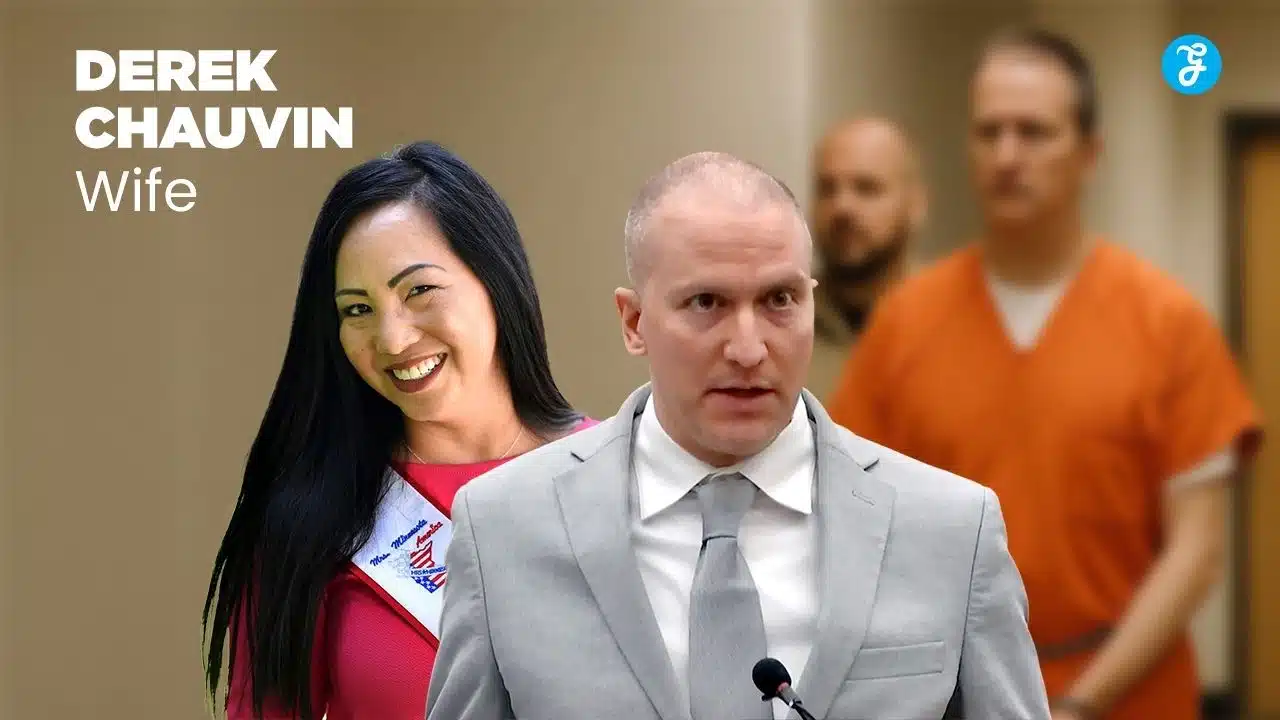
Have you ever wondered what happened to Derek Chauvin wife after George Floyd’s death? The news cameras focused on the trial. The headlines shouted about murder and justice. But what about Kellie Chauvin?
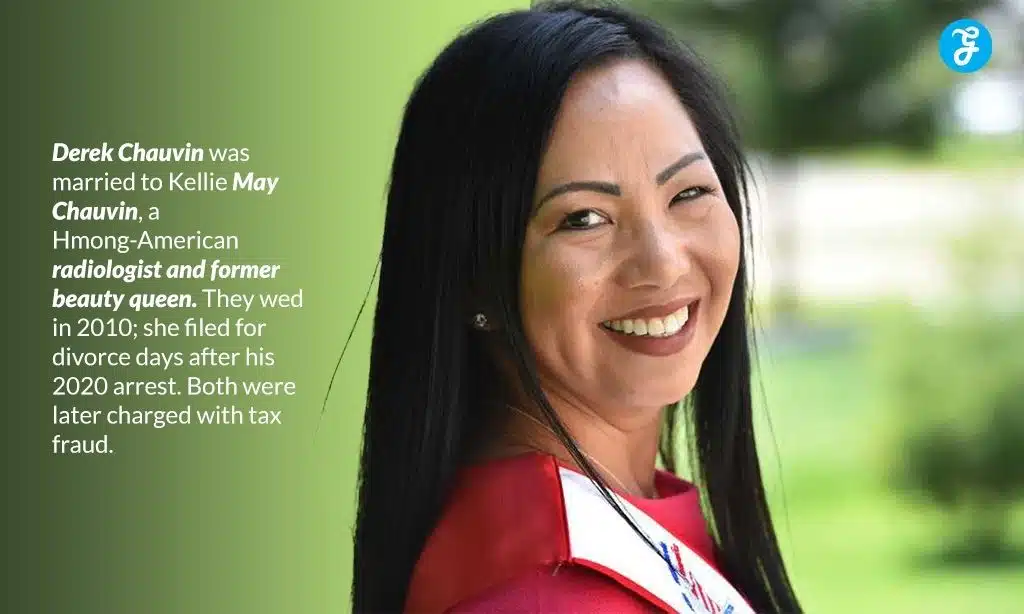
Here’s something that might surprise you: Kellie Chauvin was crowned Mrs. Minnesota America in 2018, becoming the first Hmong woman to win that title. Just two years later, she faced tax evasion charges and watched her life unravel on a global stage.
This is her story, from refugee camp to beauty queen to a woman rebuilding her life in the shadows. It’s more complicated than you might think.
Key Takeaways
- Kellie Chauvin fled war-torn Laos as a child in 1977, spending three years in a Thai refugee camp before settling in Wisconsin in 1980.
- She became the first Hmong woman to win Mrs. Minnesota America when she was crowned in October 2018, marking a historic achievement for her community.
- Kellie filed for divorce on May 29, 2020, just two days after Derek’s arrest for George Floyd’s murder, citing an “irretrievable breakdown” of their marriage.
- Both pleaded guilty to tax fraud charges in 2023 for underreporting $464,433 in joint income between 2014 and 2019; Kellie received 20 days in jail, three years of probation, and was ordered to pay $37,868 in restitution.
- According to a 2023 report by the Twin Cities Pioneer Press, Kellie has since changed her name, moved to Wisconsin, and lives quietly away from public attention.
Who Is Kellie Chauvin?
Kellie Chauvin’s life reads like a movie script, one filled with struggle, triumph, and heartbreak.
Born in Laos in 1974, she arrived in America as a refugee. She worked her way through radiology school, became a beauty queen, and built what seemed like a stable life in Minnesota.
Then everything changed.
What was Kellie Chauvin’s early life like?
Kellie was born during the Laotian Civil War. When she was just three years old in 1977, her family fled the violence and escaped to Thailand, where they lived in a refugee camp for three years.
Can you imagine being that young and watching people die from illness around you? According to a 2018 profile in the Twin Cities Pioneer Press, Kellie witnessed exactly that during her time in the camp.
In 1980, her family finally made it to the United States and settled in Eau Claire, Wisconsin. Life didn’t get easier right away. Kellie faced relentless bullying at school. Other kids called her ugly because of her appearance and refugee status. She was the only one among her friends not invited to participate in a local parade.
“I just knew that for myself, I was better than what people made me out to be,” Kellie told the Pioneer Press years later. “I know it took me a long time to realize that, but it’s never too late.”
At 17, following Hmong cultural traditions, Kellie entered an arranged marriage with a man named Kujay Xiong. She barely knew him. The marriage lasted 10 years and produced two children, but Kellie described it as abusive. After a decade of trying to make it work, she divorced and moved to Minnesota to start fresh. Her ex-husband died shortly after their divorce.
That’s when Kellie decided to take control of her future. She earned her associate’s degree in radiology and landed an internship at Hennepin County Medical Center in Minneapolis. The hospital hired her full-time, and she worked there for 13 years, building a career and a reputation as a dedicated professional.
How did Kellie Chauvin and Derek Chauvin meet and marry?
Their love story began in the most ordinary way.
Kellie was working at the emergency room at Hennepin County Medical Center when Derek Chauvin, a Minneapolis police officer, brought in a suspect for a health check before making an arrest. This was standard procedure for the police department.
She noticed how polite and kind he was during that first interaction. After processing the suspect, Derek came back and asked her out. They started dating, and their relationship grew from there.
The couple married in June 2010. For Kellie, it felt like a new chapter. She had overcome childhood trauma, an abusive first marriage, and cultural barriers. Derek seemed to fit everything she was looking for.
“Under all that uniform, he’s just a softie,” Kellie said in a 2018 interview before competing for Mrs. Minnesota America. “He’s such a gentleman. He still opens the door for me, still puts my coat on for me. After my divorce, I had a list of must-haves if I were ever to be in a relationship, and he fit all of them.”
They built a life together in Oakdale, Minnesota. Kellie eventually left her radiology career and transitioned into real estate, working as a realtor with Re/Max Results. She also ran a photography business called KC Images on the side.
In 2018, at the urging of her longtime friend Sophia Xiong-Yang, Kellie decided to compete in the Mrs. Minnesota America pageant. She won, becoming the first Hmong woman to hold that title. She wore a navy blue evening gown with sparkles as an homage to police officers like her husband.
For a moment, life seemed perfect.
The Divorce and Legal Troubles
Then came May 25, 2020. The day George Floyd died under Derek Chauvin’s knee. The day everything fell apart.
When and why did Kellie Chauvin file for divorce after Derek’s arrest?
Kellie didn’t wait long to make her decision.
On May 29, 2020, just two days after Derek’s arrest, she filed for divorce in Washington County District Court. The speed of her action shocked many people and sparked immediate speculation.
In her filing, Kellie cited an “irretrievable breakdown” of the marriage. Her attorney released a statement that made her position crystal clear: “Her utmost sympathy lies with [George Floyd’s] family, with his loved ones, and with everyone who is grieving this tragedy.”
She also requested something significant in the paperwork: a change back to her maiden name and privacy for her children from her first marriage.
The divorce wasn’t simple. Washington County District Judge Juanita Freeman initially rejected the couple’s first proposed settlement in October 2020, citing possible fraud. The judge noted that Kellie would have received all equity in their two homes, all bank and investment account money, and all funds from Derek’s pension and retirement accounts. Freeman wrote that transferring “substantially all” of one spouse’s assets to the other can be a “badge of fraud.”
Legal experts and prosecutors suspected the Chauvins might be trying to shield assets from civil lawsuits filed by George Floyd’s family. A second settlement proposal in December 2020 would have given Kellie approximately $703,717 while Derek received $420,768.
The divorce was finally granted by Judge Freeman in February 2021 under sealed terms. The final settlement details remain confidential due to harassment and financial fraud concerns both parties faced.
What are the details of Kellie Chauvin’s tax fraud charges and sentencing?
While the divorce proceedings unfolded, another legal problem surfaced.
In July 2020, Washington County prosecutors charged both Derek and Kellie Chauvin with nine felony counts of aiding and abetting tax evasion. The charges painted a picture of years of financial misconduct.
Here’s what investigators found: Between 2014 and 2019, the Chauvins underreported their joint income by $464,433. They failed to file Minnesota state tax returns for 2016, 2017, and 2018. When they did file in 2014 and 2015, they left out significant income sources.
According to the criminal complaint filed in Washington County, Derek Chauvin alone failed to report nearly $96,000 he earned from off-duty security work at El Nuevo Rodeo dance club.
Kellie’s unreported income came from multiple sources. Investigators discovered 340 checks deposited into her bank accounts from her photography business KC Images, totaling more than $66,000, that were never reported as income on their tax returns.
The couple also pulled another questionable move in 2018. They purchased a BMW X5 for $100,231 from a dealership in Minnetonka, Minnesota. But they registered the vehicle in Florida, where they also owned a townhouse, to avoid Minnesota’s higher sales tax. The car saved them about $389 in taxes, but it was serviced 11 times in Minnesota and never once in Florida.
When investigators interviewed Kellie Chauvin about the missing tax returns, she admitted their house in Oakdale was their primary residence. She told them the tax issues had simply “got away from her.” A recorded phone call between the Chauvins while Derek was in custody revealed more. Kellie mentioned they needed help with taxes from “16 to now,” and Derek suggested using “who we have used to handle for many years.” Kellie responded: “Yeah, well we don’t want to get your dad involved because he will just be mad at me, I mean us, for not doing them for years.”
Derek’s father, a certified public accountant, had filed their 2014 and 2015 returns based on what they told him. He filed an extension for 2016 but never received the information needed to complete it.
With unpaid taxes, interest, late fees, and fraud penalties, the Chauvins owed Minnesota $37,868.
Both initially pleaded not guilty in November 2021. But in February 2023, Kellie changed her plea and admitted to two felony counts of aiding and abetting tax evasion. Derek followed suit a month later, pleading guilty via Zoom from a federal prison in Tucson, Arizona.
On May 12, 2023, Judge Sheridan Hawley sentenced Kellie Chauvin. She received:
- 20 days in jail (served through a sentence-to-serve program with community work)
- Three years of supervised probation
- $37,868 in restitution to the State of Minnesota
At the sentencing hearing, Kellie’s attorney Eric Olson told the judge his client had lost her “ability to come and go as she pleases” due to threats on her security. “It’s been a rough couple years, and she is slowly moving forward,” Olson said.
Kellie apologized to Judge Hawley, saying, “I am before you to take responsibility and use this as a springboard for a positive change in my life moving forward.”
Life After the George Floyd Case
What happens when your name becomes linked to one of the most publicized cases in American history? For Kellie Chauvin, the answer meant disappearing.
How has public perception affected Kellie Chauvin’s privacy?
The media attention was instant and overwhelming.
News outlets dug into every corner of Kellie’s life. Her pageant photos circulated online. Reporters showed up at properties she owned. Social media erupted with opinions about her divorce timing, her marriage to a police officer, and her role (or lack thereof) in Derek’s actions.
Some people sympathized with her situation. They saw a woman who had no involvement in George Floyd’s death but was suffering consequences anyway. Others criticized her harshly, questioning why she hadn’t known about Derek’s history or why she married a police officer with 18 complaints on his record.
The scrutiny extended to her Hmong community. Some Asian Americans accused Kellie of “self-loathing” and “complicity with white supremacy” for her interracial marriage to a white police officer. The pressure came from all sides.
Her homes in both Oakdale, Minnesota, and Windermere, Florida, suffered vandalism, decreasing their resale value. According to court documents filed during the divorce proceedings, both properties lost significant equity due to damage from protesters.
Privacy became impossible. Every shopping trip, every movement felt watched. Former colleagues and friends distanced themselves. Her real estate career, which she had built after leaving radiology, effectively ended. Who wants to buy a house from Derek Chauvin’s ex-wife?
The tax fraud case in 2023 brought another wave of publicity, though by then Kellie had largely disappeared from public view.
What are Kellie Chauvin’s current activities and advocacy efforts?
The short answer? Almost nothing public.
According to a February 2023 report from the Daily Mail, Kellie has been “quietly rebuilding her life” in a Wisconsin suburb. The publication caught up with her briefly, and she said simply: “I’ve moved on.” She acknowledged that the case “ruined my life. But I’m doing good.”
She changed her name after the divorce was finalized. Multiple sources from 2025 indicate she now lives in Wisconsin with one of her adult sons from her first marriage. She has not returned to real estate work or made any public appearances since her 2023 sentencing.
Unlike some people connected to high-profile cases who eventually speak out or become advocates for causes, Kellie has chosen silence. She has not:
- Given interviews to major news outlets
- Appeared at any public events or rallies
- Started advocacy work related to police reform, racial justice, or criminal justice reform
- Engaged with social media (her last posts were in 2020)
- Joined any organizations working on police brutality or systemic racism issues
Before George Floyd’s death, Kellie was active in her community. She volunteered with Hmong Empowering Women, a nonprofit that helps newly arrived Hmong women find jobs, childcare, and community connections. She volunteered as a translator at local hospitals. She made her home a “safe haven” for Hmong women going through difficult times.
That community work has apparently stopped. There are no verified reports of her continuing any advocacy or volunteer efforts since 2020.
People close to her situation have suggested to various media outlets that she chose to rebuild quietly, away from attention, judgment, and controversy. Her story, once tied to a man at the center of a global movement for racial justice, has become one of self-protection and private recovery.
Her silence is her statement.
Takeaways
Kellie Chauvin’s journey takes you from refugee camps to beauty pageants to courtrooms to obscurity.
She survived war as a child, rebuilt after an abusive marriage, and became the first Hmong woman to wear the Mrs. Minnesota America crown. Then she watched her second marriage and public life crumble in the span of days.
Her name will probably always carry the weight of George Floyd’s death, even though she wasn’t there that day. Some people see her quick divorce as an act of moral clarity. Others view it as a calculated move to protect assets.
What’s clear is this: One person’s actions rippled outward and changed everything for those closest to them. Kellie’s story is a reminder that behind every headline are real people dealing with consequences they never expected.
FAQs on Derek Chauvin Wife
1. Who is Kellie Chauvin and how did she meet Derek Chauvin?
Kellie Chauvin, a former beauty queen who was born in Laos, met Derek Chauvin while working at Hennepin County Medical Center in Minneapolis. She said she met Derek when he brought a suspect in for a health check before an arrest. They were married in 2010.
2. What happened after Derek Chauvin received his sentence for murdering George Floyd?
By the time Derek received his 22.5-year sentence for murdering George Floyd, Kellie had already filed for divorce, doing so just three days after the murder. Her lawyer stated she was devastated by the event. Their divorce was finalized in February 2021.
3. What was Kellie Chauvin’s response to being married to Derek during this time?
Kellie Chauvin said the situation was heartbreaking and that her utmost sympathy was with George Floyd’s family.
4. Did Kellie Chauvin enter a plea in her own legal matters?
Yes, in a separate case involving tax evasion, she pleaded guilty to two counts of aiding and abetting tax fraud. The charges stemmed from underreporting over $464,000 in joint income with Derek from 2014 to 2019. This plea was the reason she received probation instead of prison time.