
Ever feel like your site drags its feet when you refresh? It feels like watching paint dry, right? You tweak code, but the host still leaves you hanging. Slow sites cost you readers and cash when servers crash.
Here is a fact: blockchain technology can power a peer-to-peer network that cuts out central servers. Each node holds a copy in a distributed file system, so one failure does not kill your site.
In this post, we tackle 5 big challenges, from scalability issues to data breaches. You will find simple fixes using sharding, consensus algorithms, and content delivery networks. Read on.
Key Takeaways
- Nodes in a peer-to-peer network can slow as more users join. Sharding, Layer 2 rollups, sidechains, and bridges split data to speed up hosting.
- Smart contract bugs and 51% attacks can cost millions. The 2016 DAO hack stole 3.6 million ETH (about $50 million). Teams use proof-of-work, proof-of-stake, DPoS, PBFT, and audits to block bad actors.
- Slow loads hurt sites and users. A dCDN with IPFS, edge nodes, and IBC bridges can cut page loads by 50 percent. Caching and on-demand loading also slash lag.
- Clear rules are scarce for decentralized hosting. Gartner predicts better blockchain links by 2024. Teams must track laws, set DAO codes, embed contract rules, and add multi-factor login for compliance.
- Proof-of-work chains used 100 TWh in 2021 (as much as Chile). Proof-of-stake cuts energy by over 99 percent. Ethereum moved to PoS on September 15, 2022. ASICs, FPGAs, solar, and wind make networks green.
Scalability Challenges in Decentralized Hosting

Nodes in a peer-to-peer network slow to sync when many users crowd in. Teams use sharding, Layer 2 rollups, and a distributed hash table to split work and speed up hosting.
Causes of scalability issues
Limited bandwidth in peer-to-peer networks leads to slow loading times and frequent interruptions. Storage constraints in distributed hash tables trigger file fragmentation and hinder data retrieval.
Consensus mechanisms like proof-of-stake slow transaction processing as the node count climbs. Each new participant adds traffic, creating bottlenecks and raising latency. Block validation and data replication stretch resources thin.
Sharding and Layer 2 solutions for improvement
Blockchain networks often hit a wall as they grow. Sharding splits data and speeds up consensus.
- Sharding breaks networks into smaller partitions and cuts compute per node. Each shard runs proof-of-stake consensus mechanisms to reach quicker consensus.
- Layer 2 sidechains shift transactions off the main ledger and cut congestion. They lock state in smart contracts on the blockchain network to boost security.
- Rollups batch hundreds of transactions and store proofs in content addressable storage. They lean on layer 1 security and lower user fees.
- Bridges connect shards and chains for inter-blockchain communication. They use cross-chain solutions and DHTs to sync state.
- Incentives motivate nodes to run shard copies and edge servers. Distributed file systems allocate files and balance load like a peer-to-peer content delivery network.
Security Concerns in Decentralized Hosting
Nodes face nasty hacks or phishing attacks that steal seed phrases. We audit smart contracts, use cryptographic tools, add multi-factor checks, and rely on stake-based consensus.
Risks of malicious attacks
Attackers exploit smart contract vulnerabilities to steal funds. The DAO hack in 2016 cost 3.6 million Ether, over fifty million dollars. Malware can corrupt encrypted data on servers.
DDoS attacks flood blockchain networks and slow performance. Identity theft hits users without strong access control.
A bad actor with over half the network’s mining power can carry out a 51% attack. They rewrite transaction history and steal cryptocurrency. Weak networking code in servers or peer to peer systems feeds these threats.
Proof-of-stake consensus helps block some threats but security audits and backups remain vital.
Enhancing security with consensus algorithms
Consensus methods lock down your network. They block faulty or bad nodes.
- Adopt consensus algorithms like proof-of-work to fight tampering. PoW forces miners to solve tough puzzles and raises the cost of blockchain mining on these networks.
- Switch to proof-of-stake for energy efficiency. PoS picks validators by stake size, it cuts power draw and reduces energy consumption on modern blockchain networks.
- Employ delegated stake protocols to boost speed. DPoS lets token holders elect block producers, it slashes block times on a peer-to-peer network.
- Add Byzantine fault tolerance for data privacy. PBFT spreads votes among nodes and thwarts double spends in dCDNs.
- Mandate frequent smart contract audits for strong security. Code testing catches hidden bugs, patching seals smart contract vulnerabilities and tightens information security.
Performance and Latency Issues
Slow reads and lag can kill a site’s momentum in a flash. Using a peer-to-peer network, edge computing clusters, and CDN caching can slice that wait time.
Causes of slow performance
Data fetch calls from multiple servers drop speed across p2p systems. Nodes in a distributed ledger trade data to complete smart contracts. This flow taps limited bandwidth and stalls load balancing.
Storage gaps in edge computing create file splits and slow retrieval.
Systems guard passwords with cryptographic techniques but each check adds delay. Chains that seek censorship resistance push more data through networks. Growing validators in proof-of-stake chains raise consensus delays.
Every new participant must confirm blocks, slowing transaction processing.
Integrating decentralized content delivery networks (dCDNs) for optimization
Decentralized CDNs cut load times on the internet. They push content near end users via peer to peer network.
- Deploy a distributed file system like IPFS in a dCDN. It splits data and replicates shards across nodes, boosting data privacy and reliability.
- Host static pages on edge computing nodes in a content delivery network (cdn). Proximity to users cuts latency and stops slow start.
- Cache smart contracts and webcrypto assets at proof of stake validators. They stake tokens to audit code and serve data fast.
- Monitor performance with Akamai style metrics and APIs. A 50 percent drop in page load times shows clear gains in a blockchain environment.
- Bridge chains with IBC protocols for cross chain delivery. This inter blockchain communication moves files without central servers.
Regulatory and Governance Challenges
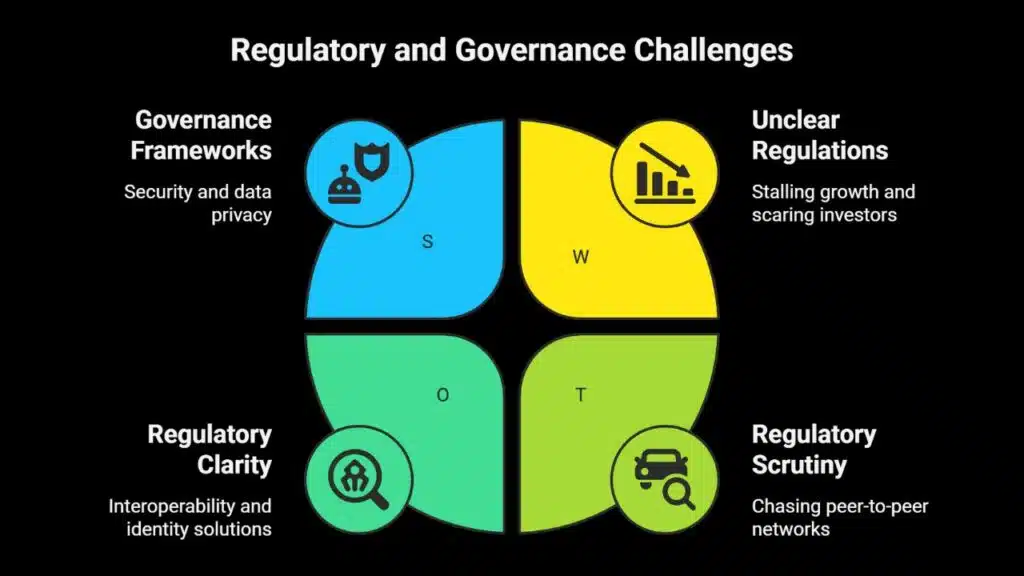
Regulators still chase peer-to-peer networks like they chase a runaway train. Devs draft governance frameworks and lock down access rights to secure compliance.
Lack of clear regulations
Clear rules remain scarce for decentralized hosting. Firms juggle data privacy and censorship resistance goals under vague law. They face fines or shutdowns if they break unknown rules.
The Ethereum Foundation urges regulators to set smart contract guidelines. Gartner predicts blockchain interoperability advances in 2024, and that may spark fresh oversight.
Unclear standards stall smart contract audits and proof-of-stake networks. Many auditors avoid new tools like a peer-to-peer file system and decentralized content networks without legal cover.
That retards growth and scares investors. Teams can push for formal governance frameworks that match regulatory compliance goals.
Developing governance frameworks for compliance
Building governance frameworks is essential for compliance. They help teams curb security risks and boost data privacy.
- Map local and global laws that touch data privacy, censorship resistance and confidentiality.
- Draft governance codes for Decentralized Autonomous Organizations, with clear roles, quorum rules and dispute paths.
- Embed smart contracts and community consensus to lock in rules on the peer-to-peer network.
- Schedule smart contract audits to spot vulnerabilities before they harm operations.
- Link decentralized identity solutions by 2024, as a global policy body predicts rising use in hosting.
- Enable multi-factor authentication on node access to block unauthorized server-side logins.
- Build cross-chain solutions for inter-blockchain communication and seamless blockchain interoperability.
- Incorporate a top blockchain firm report to track DAO growth and tweak rules over time.
Energy Consumption in Decentralized Hosting
Proof-of-stake networks slash power use by letting validators lock tokens instead of running ASIC rigs. Teams buy carbon credits and switch out ASIC miners for FPGA nodes in peer-to-peer setups to cut carbon.
High resource usage in blockchain-based hosting
Miners burn huge power in proof-of-work blockchain hosting. Bitcoin mining used 100 terawatt hours in 2021, as much as the entire country of Chile, like a giant power vacuum. Traditional blockchains push vast compute on nodes, and they drive energy bills through the roof.
That high demand hurts peer-to-peer networks in decentralized hosting, and it spurs data center emissions.
Developers shift to proof-of-stake or delegated proof-of-stake, cutting power use by over 99%. Ethereum moved to PoS in September 2022, and it slashed energy consumption. Operators buy ASICs or FPGAs to trim resource waste, swapping general servers for specialized chips.
Teams add carbon offset programs, tracking power use with solar arrays or wind farms.
Adoption of energy-efficient protocols
Blockchain networks can shrink power needs. Smart protocols slash carbon footprints.
- Proof-of-Stake consensus mechanism cuts energy use by over 99% compared to proof-of-work, as seen with Ethereum’s move on September 15, 2022.
- Delegated Proof-of-Stake spots trusted block producers, it trims validation tasks, it speeds up smart contracts in social platforms.
- Layer Two rollups such as optimistic and zero-knowledge batches transactions off-chain, they reduce on-chain computing and lower energy consumption.
- ASICs and FPGAs boost efficiency, these circuits handle peer-to-peer network consensus with less wattage, they cut hardware waste.
- Solar and wind power source hosting servers, they shrink carbon emissions and supply stable energy, they pair well with decentralized applications.
Case Studies: Overcoming Challenges in Decentralized Hosting
Project A slashed delays with a nano-grid of IPFS nodes and Xilinx Artix-7 modules, and now pages pop up in a blink. Project B locked down smart contracts with thorough audits and rolled out a Cosmos IBC link to tame interoperability chaos.
Project A: Addressing scalability issues
Content delivery networks cut request loads in half. Load balancers sped site responses across the peer-to-peer network. Sharding and partitioning let nodes reach consensus in seconds.
Blockchain integration strengthened consensus mechanisms, and security and data privacy safeguards ran on each partition.
Developers used smart contracts to pay nodes in proof-of-stake tokens. Suppliers earned fees for hosting extra shards, and their contributions raised node count. This approach cut scaling bottlenecks and lifted throughput across the p2p network.
Project B: Implementing advanced security measures
Project B applied RSA encryption to stored data in blockchain networks. Teams added OAuth 2.0 based two-factor authentication and biometric scanners. They set up regular audits and security updates.
This approach cut smart contract vulnerabilities and reduced security risks.
Developers ran code testing with MythX and OpenZeppelin audit tools. They patched flaws fast and held weekly audits. The process fit proof-of-stake consensus mechanisms and kept user keys safe on Ledger devices.
This step strengthened data privacy and censorship resistance.
Project C: Improving latency and user experience
Caching cuts reload times and speeds things up. A study by a content delivery firm shows global cache network use halves page load times on peer-to-peer networks. Developers shrink files with compression to keep image quality high.
They add on-demand loading to save bandwidth and boost speed.
They spread traffic with load balancing so no server chokes under too many hits. They also use distributed processing close to users, shaving milliseconds off each request. This tweaks the site into a slick, user-friendly ride, it feels as smooth as butter on toast.
Blockchain technology and data privacy guard content and boost censorship resistance in smart contract setups.
Future Prospects of Decentralized Hosting
Your apps will sport self-sovereign IDs and cross-chain links to keep snoops at bay. They will stitch zero-knowledge circuits with green proof-of-stake chains and libp2p modules to sip less power and hide the goods.
Advancements in decentralized identity solutions
DID solutions let users hold keys, log in anywhere without a central gatekeeper. They boost data privacy, cut breach risks, fight censorship resistance, link through peer-to-peer networks.
The World Economic Forum predicts DID use in hosting will jump by 2024, as self-sovereign identity and verifiable credentials mature. Tools like Sovrin and uPort power this move, and Hyperledger Indy adds solid trust layers.
Gartner forecasts better blockchain interoperability by 2024 through cross-chain solutions and inter-blockchain communication. A ConsenSys report shows DAO adoption climbing fast for decentralized governance.
Developers tap DIDComm, smart contract audits and proof-of-stake POS to dodge security vulnerabilities, trim energy use and scale networks. They weave these methods into social media and web design, with encrypting and consensus mechanisms protecting data.
Adoption of zero-knowledge proofs for enhanced privacy
Succinct proof method can hide user inputs and verify correctness on blockchain networks. Such a protocol runs in peer-to-peer network setups with no middleman. Proofs seal private data and boost data privacy.
Blockchain hosting emphasizes energy efficiency and regulatory compliance for long term growth.
ZKPs add censorship resistance to smart contracts. They let you prove rules without exposing state details. That approach cuts audit time and stops smart contract vulnerabilities. McKinsey reports that decentralized technologies can lower costs by reducing reliance on centralized infrastructure.
Proof tools work with proof-of-stake (PoS) and cross-chain solutions.
Takeaways
Today’s hosting challenges can feel like chasing rabbits in a maze. You saw how a peer-to-peer network spreads data across nodes. You know how smart contracts and consensus mechanisms lock in security.
You got tips on proof-of-stake tweaks, cross-chain solutions, even private blockchain governance. You found ways to tame latency with decentralized CDNs. You learned how to cut power draw with GPUs and ASICs, and how to link chains with IBC.
Now you can build a bulletproof site that laughs at downtime, sidesteps hacks, sails past regulators, and shrugs off slow pings. Go on, throw your hat in the ring.
FAQs
1. What security risks come with decentralized hosting?
Watch for smart contract vulnerabilities. You run a peer-to-peer network, but bugs happen. Use smart contract audits, check consensus mechanisms, and patch fast. This cuts security risks.
2. How can I solve scalability challenges in decentralized hosting?
Many blockchain networks slow down when nodes grow. You can add cross-chain solutions or shards. Try POS or delegated proof of stake. It is like adding lanes to a busy road, traffic moves smooth.
3. Does decentralized hosting resist censorship?
Yes, it adds strong censorship resistance. Data copies to many nodes, no single gatekeeper. Use blockchain interoperability or IBC to let chains talk. Think of water, it finds cracks in a dam and flows.
4. How do I reduce energy consumption in decentralized hosting?
Pick proof-of-stake consensus, not proof-of-work. Use POS, or tap FPGA or ASIC hardware. Many blockchain technologies now run cool and lean. It is not like a giant server farm frying chips.
5. Can I keep data private and safe from smart contract flaws?
Yes, you can use private blockchain setups and strict data privacy rules. Get smart contract audits to spot vulnerabilities before they bite. It beats running simple mail clients that only talk SMTP. I once saw a reddit post where audits saved the day.