Chandrayaan 3’s Landing on the Moon a Milestone for India

Chandrayaan 3 Landing on the Moon

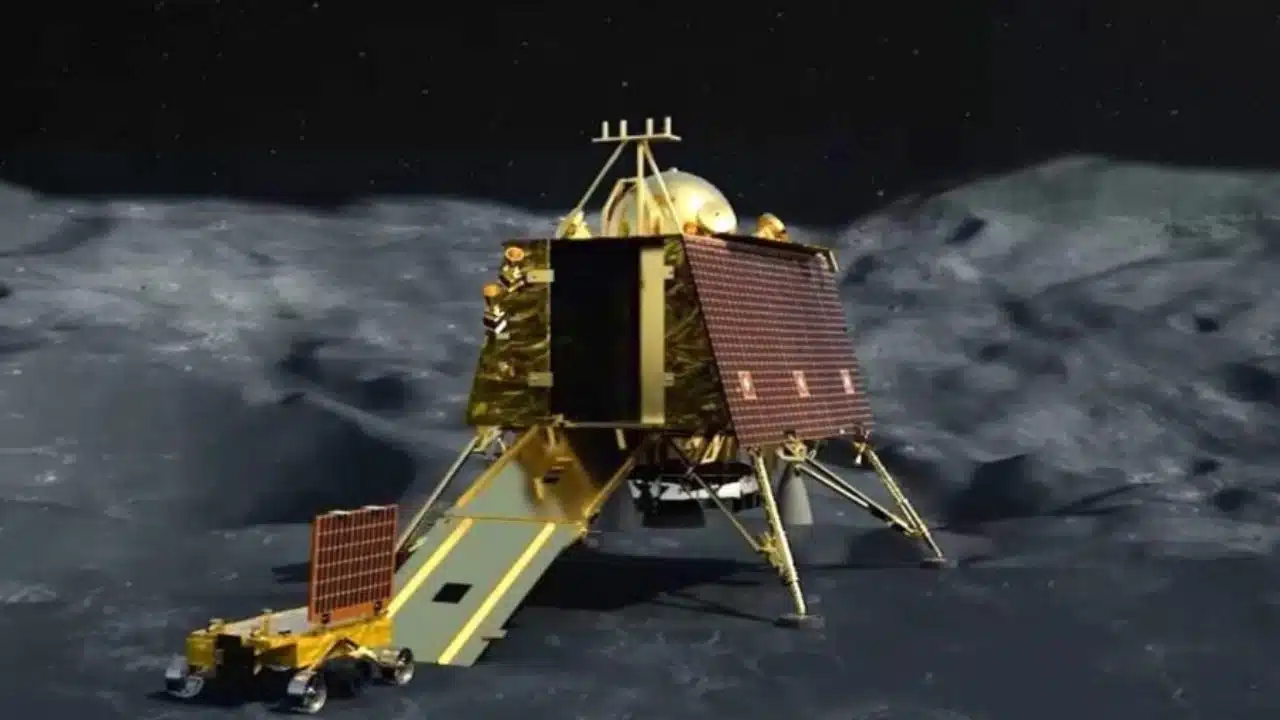
ISRO has unveiled the intricate landing procedure for the Vikram Lander module of Chandrayaan-3, showcasing its daring attempt to achieve a soft landing on the Moon’s south pole. This endeavor is especially challenging due to the difficulty of landing softly on the lunar surface, particularly around its poles.

Scheduled for August 23, the last 15 minutes of the landing sequence are pivotal. During this window, the lander faces the tricky task of transitioning from a horizontal flight at high speeds to a vertical orientation, setting the stage for a gentle descent onto the Moon.

This 15-minute period is crucial to the mission’s success. In a past attempt in July 2019 for the Chandrayaan-2 mission, the Indian Space Research Organisation (ISRO) had to cancel due to challenges encountered during this phase, which was dubbed “15 minutes of terror.”

ISRO Chairman S Somanath recently shared insights into the upcoming landing. The lander begins the process nearly horizontal, around 90 degrees from the vertical landing position it needs. The challenge lies in smoothly maneuvering the lander into the vertical position, a feat that requires meticulous calculations and algorithmic precision to conserve fuel and ensure accurate distance calculations.

Here’s a breakdown of the landing procedure:

Rough Braking Phase: The lander starts at a high horizontal speed of 6048 km/h. The primary goal is to reduce this speed to 1,290 km/h horizontally and 61 m/s (approximately 220 km/h) vertically. This phase, known as the “rough braking phase,” should last around 690 seconds, during which the lander descends from 30 kilometers to 7.42 km above the lunar surface, covering a distance of about 713.5 km.

Attitude Hold Phase: As the lander reaches 7.42 km altitude, it enters the “attitude hold phase” for about 10 seconds. In this phase, the lander shifts its orientation from horizontal to vertical while moving about 3.48 kilometers across the lunar surface. Altitude drops to 6.8 km, with horizontal and vertical speeds at 336 m/s and 59 m/s, respectively.

Fine Braking Phase: The “fine braking phase” lasts about 175 seconds, wherein the lander completes its transition to a vertical position. It covers the final 28.52 km to the landing site, reaching an altitude of around 800-1,000 meters. Ideally, the lander’s speed drops to 0 m/s for a calm landing.

Learnings from Chandrayaan-2’s failure have been instrumental in refining Chandrayaan-3’s approach. The key improvement lies in managing the critical transition between the “attitude hold phase” and the “fine braking phase.” In case sensors or systems fail, the lander, if its propulsion system remains functional, is designed to attempt a landing. This robust design ensures a degree of resilience to handle contingencies.

Despite the intricate planning, the landing will have a significant impact. The Vikram Lander will touch down at a speed of 3 meters per second (about 10.8 km/h), equivalent to a safe speed for instrument preservation. However, this speed is sufficiently forceful that if a human were subjected to it, their bones would be crushed. The module’s combined mass of over 2000 kgs, even on the Moon, emphasizes the need for a controlled landing. The lander can handle a tilt of up to 12 degrees during landing, adding an extra layer of security to accommodate potential variability.

In sum, ISRO’s Chandrayaan-3 mission aims to master the complex procedure of executing a soft landing on the Moon’s south pole. With improvements based on Chandrayaan-2’s experiences, the mission is poised to make history, but the challenges and risks remain formidable.


Subscribe to Our Newsletter

Related Articles

Top Trending

Procurement Analytics
The Rise of Procurement Analytics: A Data-Driven Approach [Revolutionize Your Strategy]
Mental Health Impacts Of AI Companions
The Psychological Impact of AI Companions on Mental Health [All You Need to Know]
Second Passports for Global Mobility
11 Smart Ways Americans Are Obtaining Second Passports for Global Mobility
Operations Management
Operations Management Best Practices For 2026: Future-Proof Your Business!
Light Yagami character analysis
Death Note's Light Yagami: Character Overview, Story Role, and Why He Remains One of Anime's Most Complex Protagonists

Fintech & Finance

Ai In Financial Services
How AI Is Making Financial Services More Accessible: Unlocking Opportunities
crypto remittances New Zealand
17 Critical Facts About How New Zealanders Are Using Crypto for International Remittances
Smart Contracts
Smart Contracts Explained: Real-World Applications Beyond Crypto
Tokenization Of Real-World Assets
Tokenization Of Real-World Assets: The Next Big Crypto Trend!
how to spot Crypto Scam
How to Spot a Crypto Scam Before It's Too Late: Protect Your Investment!

Sustainability & Living

Green Building Certifications For Schools
Green Building Certifications For Schools: Boost Learning Environments!
Smart Water Management
Revolutionize Smart Water Management In Cities: Unlock the Future!
Homesteading’s Comeback Story, Why Americans Are Turning Back To Self Reliance In Record Numbers
Homesteading’s Comeback Story: Why Americans are Turning Back to Self Reliance In Record Numbers
Direct Air Capture_ The Machines Sucking CO2
Meet the Future with Direct Air Capture: Machines Sucking CO2!
Microgrid Energy Resilience
Embracing Microgrids: Decentralizing Energy For Resilience [Revolutionize Your World]

GAMING

Geek Appeal of Randomized Games
The Geek Appeal of Randomized Games Like Pokies
Best Way to Play Arknights on PC
The Best Way to Play Arknights on PC - Beginner’s Guide for Emulators
Cybet Review
Cybet Review: A Fast-Growing Crypto Casino with Fast Withdrawals and No-KYC Gaming
online gaming
Why Sign-Up Bonuses Are So Popular in Online Entertainment
How Online Gaming Platforms Build Trust
How Online Gaming Platforms Build Trust With New Users

Business & Marketing

Procurement Analytics
The Rise of Procurement Analytics: A Data-Driven Approach [Revolutionize Your Strategy]
Operations Management
Operations Management Best Practices For 2026: Future-Proof Your Business!
Supplier Diversity
Supplier Diversity: Why It Matters And How To Implement It
Top European Startup Ecosystems to Watch
Top European Startup Ecosystems to Watch in 2026
Building long-term Supplier Relationships
How to Build Supplier Relationships That Last: Proven Strategies! [Transform Your Business]

Technology & AI

Mental Health Impacts Of AI Companions
The Psychological Impact of AI Companions on Mental Health [All You Need to Know]
App Development For Startups With Garage2Global
iOS and Android App Development For Startups With Garage2Global
AI Data Privacy In Smart Devices
AI and Privacy: What Your Smart Devices are Collecting?
tech giants envision future beyond smartphones
Tech Giants Envision Future Beyond Smartphones: What's Next in Technology
AI Bias
The Rise of AI Bias: Why It Matters To Everyday Consumers

Fitness & Wellness

Regenerative Baseline
Regenerative Baseline: The 2026 Mandatory Standard for Organic Luxury [Part 5]
Purposeful Walk Spaziergang
Mastering the Spaziergang: How a Purposeful Walk Can Reset Your Entire Week
Avtub
Avtub: The Ultimate Hub For Lifestyle, Health, Wellness, And More
Integrated Value Chain
The Resilience Framework: A Collaborative Integrated Value Chain Is Changing the Way We Eat [Part 4]
Nutrient Density Scoring
Beyond the Weight: Why Nutrient Density Scoring is the New Gold Standard for Food Value in 2026 [Part 3]