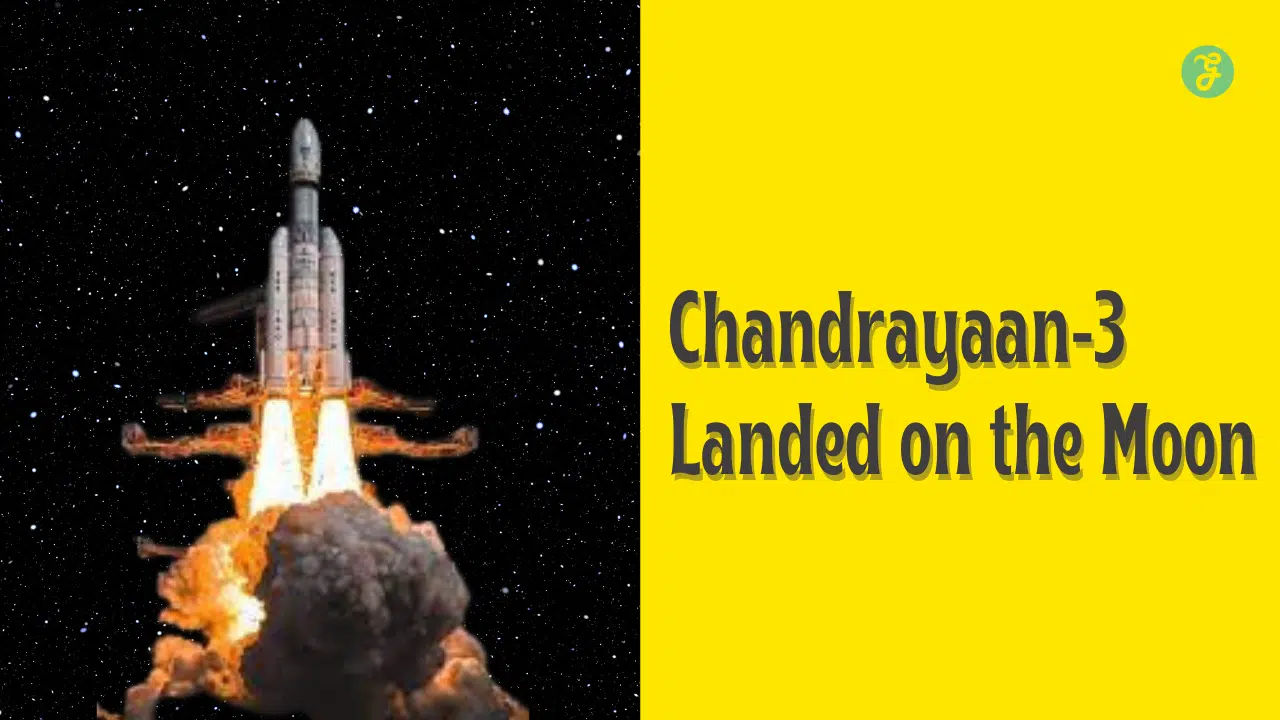
India has joined the elite group of nations that have accomplished a lunar landing, a remarkable achievement. The Chandrayaan-3 mission’s triumphant touchdown on the lunar surface has solidified India’s position as the fourth country to attain this remarkable feat.
On a momentous occasion, Defence Minister Rajnath Singh extends his heartfelt congratulations on the triumphant landing of Chandrayaan-3, the third lunar mission undertaken by the Indian Space Research Organisation (ISRO).
The ISRO scientist is deserving of congratulations for their recent success. In a bold declaration, he proclaims, “Behold the emergence of a new India, whose influence stretches from the red planet to our celestial neighbor, the Moon.”
The Historic Moments
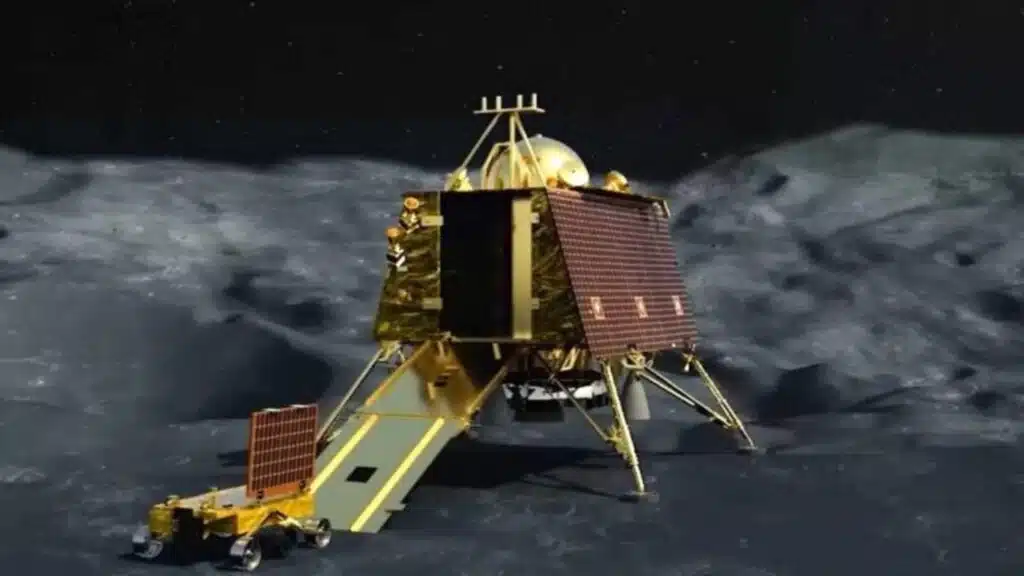
In a gripping display of nail-biting tension, the Indian Space Research Organization (ISRO) mission control center witnessed a remarkable shift as jubilant cheers of joy reverberated. With their lunar lander successfully launched, ISRO has etched their name, and India’s into the annals of history. In a momentous event that unfolded on August 23 at precisely 12:33 P.M. UTC, India’s highly anticipated Chandrayaan-3 mission achieved a remarkable feat as its robotic lander, aptly named Vikram, successfully made contact with the lunar surface near the moon’s southern pole.
In a bold move to reclaim its position in lunar exploration, the Indian Space Research Organisation (ISRO) unveiled Chandrayaan-3 on July 14. This ambitious project comes as a response to the setback suffered by ISRO with the crash of its Chandrayaan-2 mission in 2019. Determined to bounce back, ISRO has doubled down on its commitment to achieve a successful lunar landing.
In a remarkable feat, the Indian Space Research Organisation (ISRO) has successfully landed its spacecraft on the moon, solidifying India’s position as the fourth nation to accomplish a gentle touchdown on the lunar surface. This significant achievement places India in the esteemed company of the former Soviet Union, the United States, and China, who have previously achieved this remarkable milestone.
In this critical phase of the mission, the transmission of signals from the lander to Earth and vice versa experiences a significant delay of approximately three seconds. This time lag is too long for the engineers at ISRO stationed on Earth to provide real-time guidance for the landing process effectively. Vikram had a crucial mission – to bring its high orbital velocity to a complete halt, ensuring it remained as closely aligned with its intended trajectory as possible until it safely touched down.
Read Also: NASA, ESA to Help ISRO Land Chandrayaan-3 on the Moon
A meticulous orchestration of engine firings was required to achieve this feat, relying on a constant stream of measurements about distance, velocity, and orientation.
In an influential statement, Sankaran Muthusamy, the esteemed director of the U. R. Rao Satellite Center (URSC), which spearheaded the development and integration of the Chandrayaan-3 spacecraft and mission, emphasized the immense duty bestowed upon them. Muthusamy stressed the pressing need to ignite a profound sense of inspiration within India and across the globe as they embark on this groundbreaking endeavor.
Chandrayaan 3: Road to the Moon
The lunar descent of Chandrayaan-3 lasted roughly 19 minutes and consisted of four distinct phases. The first phase, known as harsh braking, began when the spacecraft was 30 kilometers above the moon in its orbit and roughly 750 kilometers downrange from the landing location. To slow down from its high horizontal velocity of around 1.7 kilometers per second, Chandrayaan-3 fired all four of its 800-newton main engines for almost 12 minutes until it reached an altitude of 7 kilometers.
The lander then entered a critical 10-second “attitude hold” phase, which stabilized itself using its eight smaller rockets to get a clear view of the looming lunar surface for its landing sensors.
Two different altimeters, one using lasers and the other utilizing microwaves, were used by Chandrayaan-3 to get accurate height readings. While many lunar rovers use laser altimeters, they can give off erroneous height readings if a lander happens to travel through an area with plenty of mountains or craters. Instead, according to Priyanka Mehrotra of SAC, the primary system designer of Chandrayaan-3’s Ka-Band microwave altimeter, “the microwave altimeter’s wider footprint allowed Chandrayaan-3 to tolerate abrupt changes in altitude better.”