Do you ever walk into a room and forget why you went there, or struggle to stay on task while you study? You are not alone, many of us face lapses in memory or low cognitive function.
You might feel worried about cognitive decline as you age. Missing a detail at work or school can feel like a blow to your confidence. We all wish we had sharper working memory and better processing speed.
A study shows that brain games boost neuroplasticity, they activate circuits in your mind like lifting weights for muscles. These games can boost memory improvement, processing speed, and executive functions in just minutes a day.
In this post, we share ten science-backed brain training games, from Sudoku to Lumosity. You will get quick tips to sharpen your mind and cut down on mental fog. Ready to train your brain?
Key Takeaways
- Sudoku, crossword puzzles, chess, Scrabble, Rummikub, Wordle, jigsaw puzzles, Tetris, Lumosity, and Brain Age boost working memory, processing speed, and executive functions by firing up brain plasticity.
- A 15-minute daily Lumosity routine for three weeks improves attention and motor speed; Elevate users score 69% higher on cognitive tests than non-users; a 2019 neurology report links chess to lower dementia risk; and a 2022 study finds daily crosswords boost memory in older adults.
- BrainHQ’s adaptive drills raise BDNF (a key brain-growth protein); an NYU study finds ten Rummikub sessions boost short-term memory; and clinicians use the mini-mental state examination (MMSE) to track memory and focus gains after daily brain training.
- Experts advise at least 150 minutes of moderate exercise per week and recommend mixing puzzles with activity—like squats between Sudoku rounds or walking with crosswords—to further support cognitive health and lower dementia risk.
Benefits of Brain-Training Games
Brain games pump up your working memory, light up your executive functions, and you might notice your MMSE score climb, like racking points in an old-school arcade. This kind of play builds cognitive reserve, sparks fresh neural circuits, and revs up your processing speed with real-world perks.
Improves memory and recall
Dr. Shaheen Lakhan, MD, PhD, FAAN praises puzzles and apps for boosting memory and recall. Sudoku tasks train working memory and boost short-term memory, while crossword puzzles sharpen verbal skills and long-term storage.
BrainHQ uses adaptive drills that track progress and change difficulty. The app sparks new neural pathways and raises brain-derived neurotropic factor. Users report clear gains in cognitive function and memory improvement after a few weeks of practice.
A case control study used a mini-mental state examination and T test to show gains in recall after daily training. Gamers feel a thrill and a jolt to neural circuits in the prefrontal cortex and medial temporal regions.
Spaced repetition tools add a twist to drills, they lock facts deeper into long-term recall. Cognitive training can carve out a bigger cognitive reserve, and may curb mild cognitive impairment or slow Alzheimer’s disease risk.
Enhances focus and attention
A quick brain workout can sharpen focus and attention, like stretching before a sprint. Lumosity users see better concentration after a 15-minute daily session. Peak mixes competition with puzzles to boost mental agility and processing speed.
Elevate offers 35 educational games that build reading, writing, and speaking skills. The concentration trainer on a handheld console trains working memory and sustained attention.
Many brain training apps team fun with practical tasks, to fight cognitive decline. Simple puzzles can lower dementia risk and keep long-term memory tuned. People link higher focus scores with regular practice and a dose of friendly rivalry.
Users report clearer thinking at work, and less drift in daily chores.
Boosts problem-solving skills
Players sharpen problem-solving skills when they analyze each move in a strategy board game. That exercise improves executive functions and working memory. Number grid puzzles shape concentration and boost critical thinking.
Such challenges strengthen cognitive skills and mental agility.
Tile puzzles demand pattern recognition and fast planning. These brain games sharpen cognitive function and speed decision making. Shape-fitting puzzles test logic, intuition, and creative flair.
Brain Age Concentration Training tests processing speed and executive functions in quick mini-challenges.
How Science Supports Brain-Training Games
Researchers use brain scans and mental tests to track new connections after simple puzzles. They run statistical analysis, and it shows these drills boost neuroplasticity like lifting weights for your mind.
Studies on cognitive improvement
Multiple studies track brain games and show real gains. Lumosity players logged fifteen minutes daily and improved cognitive function on processing speed tasks. Users built short-term memory recall after brief play.
Elevate users improved 69% more on cognitive skills tests than non-users in a case–control study. Chess linked to mental agility gains in a 2019 neurology report.
Clinicians used the mini-mental state examination to track gains. A 2022 study showed crossword puzzles improved cognitive function and working memory in older adults. Elevate training nurtured mental agility and long-term potentiation in adults at risk for dementia.
Short, daily sessions can slow cognitive aging and boost executive functions.
Neuroplasticity and mental exercises
The brain acts like a muscle and relies on neuronal plasticity to adapt. Games fire up underused circuits and form new connections in the medial temporal lobe. Dr. Sarah Schewitz, PsyD, says creative hobbies spark fresh pathways in your mind.
They strengthen working memory and processing speed, key parts of executive functions. Tools like Lumosity or a mini mental state examination style test push your neurons to adapt.
Rebecca Marcus, LCSW, notes mental activities stop scatterbrained moments and forgetfulness. Daily puzzles guard against cognitive decline, lower depression risk, even cut dementia risk.
That boost in memory improvement and fine-tuning of cognitive skills show on a mini mental state examination. You protect your mind by mixing jigsaw puzzles, chess and brain games.
Each session builds mental agility and enhances short-term memory.
10 Brain-Training Games Backed by Science
These games fire up your executive functions and stretch your working memory, giving your brain a gym session in minutes. Apps like Lumosity tweak your processing speed and mimic a mini-mental state examination challenge, while puzzles tease out sharper recall.
Sudoku
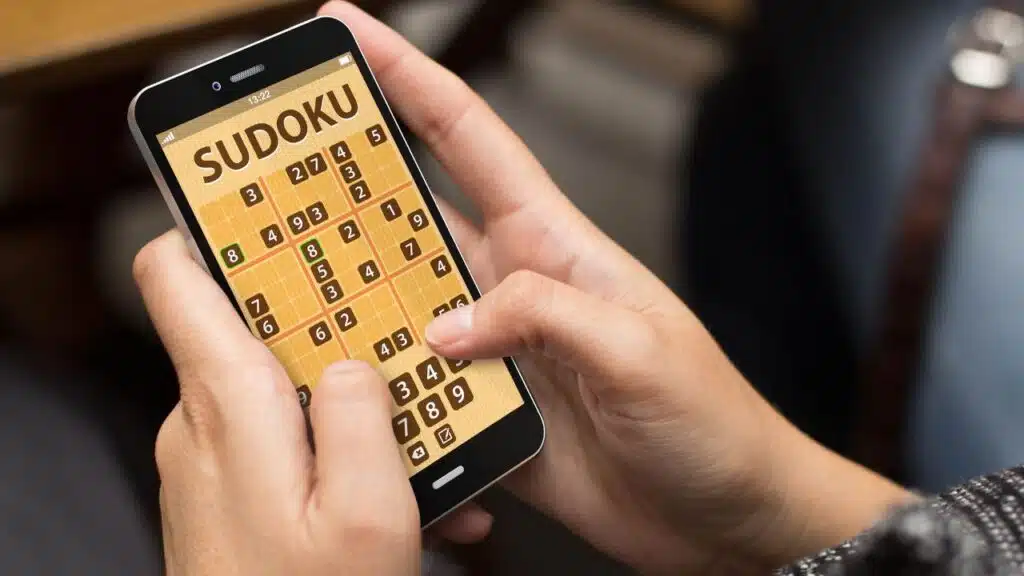
Sudoku ranks among brain games that test short-term memory and concentration. Players scan a nine by nine grid in this logic puzzle, filling each row and column with digits one to nine.
They use logic to check subgrids and spot repeats. Solvers find it in newspapers, books, and apps.
It boosts cognitive function, drives memory improvement, and sharpens executive functions. Daily practice cements new skills and trims processing speed. Solvers sharpen working memory with each grid.
Crossword puzzles
Crossword puzzles boost verbal skills and memory by forcing you to recall words. Research in 2022 links them to better cognitive function and mental agility. They train executive functions and working memory with each clue solved.
The AARP website offers free daily puzzles for older adults. Experts in educational psychology praise their role in neuroplasticity and reduced dementia risk. Regular puzzles act like a gym workout for your mind, improving processing speed and knowledge retention.
Chess
Chess pairs mind and board in each move. This mind sport trains planning skills. Players boost memory, strategic thinking and attention spans. A 2019 study links play to lower dementia risk.
Play acts as a brain game that sharpens cognitive function and executive functions.
Opening theory and endgame tactics stretch short-term memory and mental agility. Competitors solve puzzles that test problem solving and working memory. Online sites pair live matches with analysis engine reviews to boost strategic depth.
This brain training tool fights cognitive decline in aging minds. Many players add chess to creative hobbies and healthy living plans.
Scrabble
Tiles cover the board in a mosaic of letters. Players draw letter pieces on a rack. This brain game boosts vocabulary and strategic thinking. They form words to score points. They check words in a dictionary.
The board layout pushes players to plan each move.
Playing Scrabble feels like a gym session for neurons. It boosts cognitive function and executive functions. It ramps up working memory and processing speed. Strategic planning emerges as you place high-value letters on bonus squares.
Mental agility and language skills sharpen with every play.
Lumosity
Lumosity hosts over sixty brain games. Users find puzzles, memory tasks, and logic drills. The brain training app offers free mini sessions and full subscription plans. It tracks progress and compares scores with players around the world.
Casual gamers and serious trainers see data on processing speed and executive functions.
A study shows a 15-minute daily routine over three weeks improves attention and motor speed. This change links to better working memory and reduced cognitive decline. It feels like a gym session for the mind.
Some folks grin at the challenge, while others treat it as a fun creative hobby. Neuroplasticity kicks in as games adapt to your progress.
Wordle
Wordle tests working memory by asking players to crack a five-letter code in six tries. A browser-based word puzzle joins popular brain games. It feels like a gym session for your mind.
Each guess sparks critical thinking and hones executive functions, boosting processing speed and problem-solving skills. The game also stretches your vocabulary and sharpens word recognition, key parts of memory improvement and mental agility.
Coffee lovers open Wordle in their browser each morning for brain training. The habit taps neuroplasticity and fights cognitive decline. Green and yellow tiles offer instant feedback, sharpening executive functions and short-term memory.
Rummikub
Players blend strategy with tile matching in Rummikub. They sort sets and runs under time pressure. Each round tests planning and decision making. The game builds logical thinking and hones executive functions.
It boosts working memory and processing speed. Friends share tiles and tips, and chat, which stokes social interaction and cuts stress.
A systematic review links regular play to stronger cognitive function and lower dementia risk. Brain wiring changes as players track numbers and colors. A study at NYU found a ten-session boost in short-term memory.
Rummikub stands out among brain games for focus and recall.
Jigsaw puzzles
Picture puzzles engage logic, intuition, and creativity. This brain game boosts executive functions and working memory. It boosts processing speed, spatial awareness, and mental agility.
This activity acts as a calm mental exercise that fights cognitive decline.
Users sharpen problem-solving skills as they fit each piece. They feel calm while they sort shapes. Studies link this hobby to lower dementia risk and alzheimer’s disease odds. That boosts cognitive skills and wards off memory loss.
Tetris
Tetris debuted in 1984, created by Alexey Pajitnov on an IBM PC. Players shift tetromino shapes, the process fires up spatial reasoning and reaction times. The simple puzzle engages working memory and executive functions, so many see gains in processing speed and mental agility.
Stacking colored bricks against a ticking clock prompts problem-solving skills, it builds cognitive flexibility and boosts comprehensive cognitive function. Gamers often call it a mental gym, since it tests short-term memory and executive functions.
This visual challenge counts as a top brain game and sharpens cognitive skills.
Brain Age Concentration Training
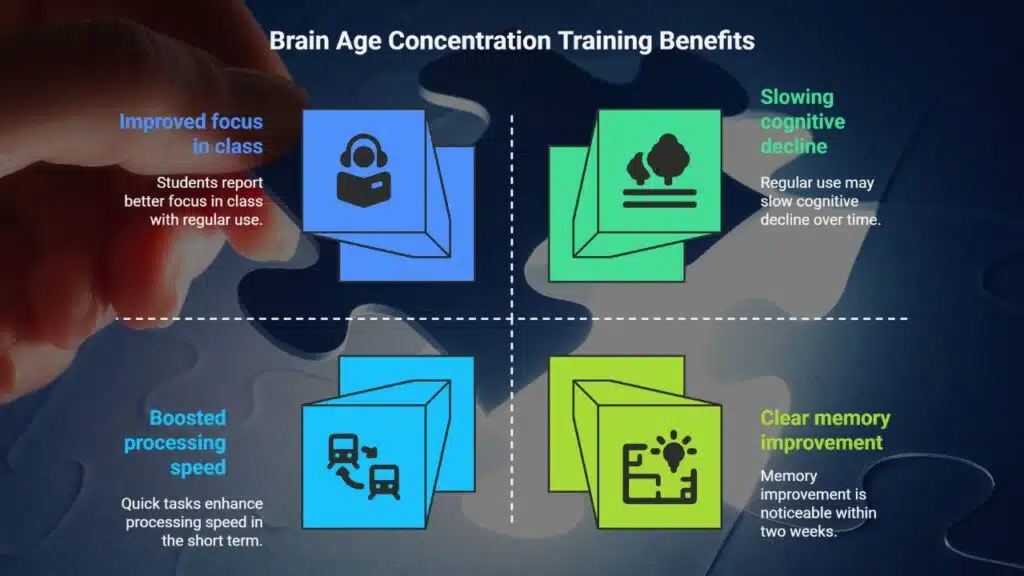
Brain Age Concentration Training runs on a handheld console called Nintendo 3DS. It sends brain games right to your pocket each day. It tests memory, focus and math skills with quick tasks.
These drills boost working memory and processing speed. You get new sets of puzzles every morning.
Players praise this brain training app. It works on executive functions, short-term memory and cognitive function. It feels like a countdown; each challenge pushes you to act faster.
Some see clear memory improvement in just two weeks. A few students say they gain more focus in class. Research hints regular use may slow cognitive decline and cut dementia risk.
Tips for Maximizing the Benefits of Brain Games
Play a brain game at the same time each day to sharpen working memory and executive functions. Use a built-in MMSE quiz in your favorite brain training app to measure processing speed, and spot the next skill to tackle.
Consistency in practice
Simple routines boost cognitive function. Lumosity users train 15 minutes a day and see clear memory improvement. Brain Age Concentration Training suggests daily tasks to sharpen working memory and processing speed.
Consistent play on brain training apps guards against scattered thinking and forgetfulness. Experts use the mini-mental state examination to track gains in executive functions.
Steady sessions curb cognitive decline and lower dementia risk. A small habit fights alzheimer’s disease, and keeps mental agility sharp. Daily brain games also help preserve short-term memory.
Clinicians praise the regimen for healthy neural plasticity and mood support. The habit turns workouts into lasting memory routines.
Combining games with physical activity
Physical exercise adds a spark to mental games. A brisk walk on a shady hiking trail can boost processing speed when you solve crossword puzzles on a smartphone. Squats between Sudoku rounds sharpen working memory and executive functions.
This dual-task training mixes brain training and aerobic exercise. It may cut dementia risk and delay cognitive decline.
Dance classes with a handheld puzzle tighten focus and mental agility. A wearable tracker pings you to play word games during rest. This blend of brain training apps and light jogging fuels memory improvement and cognitive skills.
Doctors recommend at least 150 minutes of moderate activity each week.
Choosing games for specific cognitive goals
Pick games to serve your brain training goals. Sudoku hones working memory and focus. Crossword puzzles boost short-term memory and vocabulary. Chess trains executive functions, strategic thinking, and cognitive skills.
Tetris builds spatial awareness and processing speed. Jigsaw puzzles sharpen problem-solving and mental agility. BrainHQ and Lumosity track progress and adapt difficulty. Such brain training apps slow cognitive decline and lower dementia risk.
Takeaways
Sudoku, Chess and Wordle blend play with science to sharpen your mind and speed up your thoughts. A mix of jigsaw puzzles, Lumosity drills and Tetris tests underused brain circuits and feeds neuroplasticity.
This routine boosts working memory, hones executive functions and shields against cognitive decline, all while you smile. Try a daily dose of these games, switch them up, and watch mental agility take flight.
Let your brain get the workout it craves and enjoy the peak payoff in real life tasks.
FAQs
1. What are brain games and why try them?
Brain games are fun tasks that train your thinking. They boost cognitive function and mental agility. Think of them like push ups for your mind.
2. How do word fill games help memory?
Word fill games train short term memory and working memory. They test executive functions and count as brain training. They may cut dementia risk and slow down alzheimer’s disease.
3. Can brain training apps truly help?
Yes, they track processing speed and test cognitive skills. Some apps pull data from steinhardt.nyu.edu to guide you. They measure progress with the mini mental state examination (MMSE).
4. How long until I see memory improvement?
You can notice gains in weeks if you play daily for 10 to 20 minutes, mix in creative hobbies to keep it fresh, and stick with it—don’t bail out, results should show up.
5. Are these games backed by research?
Sure, case control studies and systematic reviews support them. Labs use enzyme immunoassay and check markers like apolipoprotein e, and use stats like Spearman’s rank. Famous spots like the ruvo center have assayed data.
6. Can brain games aid overall wellness?
Yes, they lift mental health and support self care. They help heart disease patients by guarding vascular cognitive impairment. Pair them with omega 3 fatty acids and folic acid for a full combo.