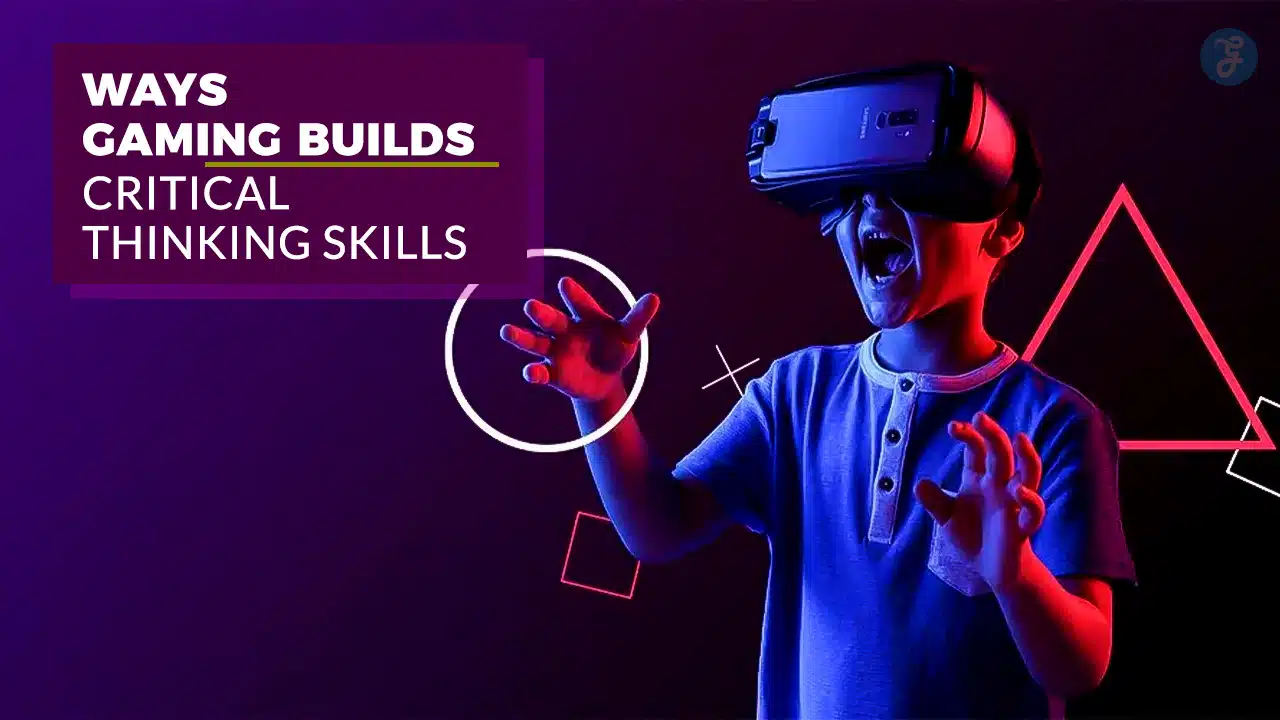
Many parents and educators see learners play console games and worry they waste time. One fact shows that critical thinking games help apply logic and creative brainstorming to real tasks.
In this guide we list the Best Ways Gaming Builds Critical Thinking Skills using game-based learning, strategy games, simulation games, and role-playing games to boost analytical skills and metacognitive strategies.
Keep reading.
Key Takeaways
- A Brazil study in Goiania found ten months of serious game play helped homeless and favela residents solve problems better.
- Parents who work puzzles with kids see a 65% rise in critical thinking, and 72% of parents report more critical thinking after arts or game-based learning.
- Studies show 90% of children who stack blocks or play simulation games gain stronger critical thinking and cognitive skills.
- A University of Toronto study found action game players gain better hand-eye coordination and sharper focus on details.
- Games like Magic: The Gathering, Age of Empires, Civilization, Portal, and The Legend of Zelda boost strategic planning, quick decision-making, and resource management.
How does gaming enhance problem-solving skills?
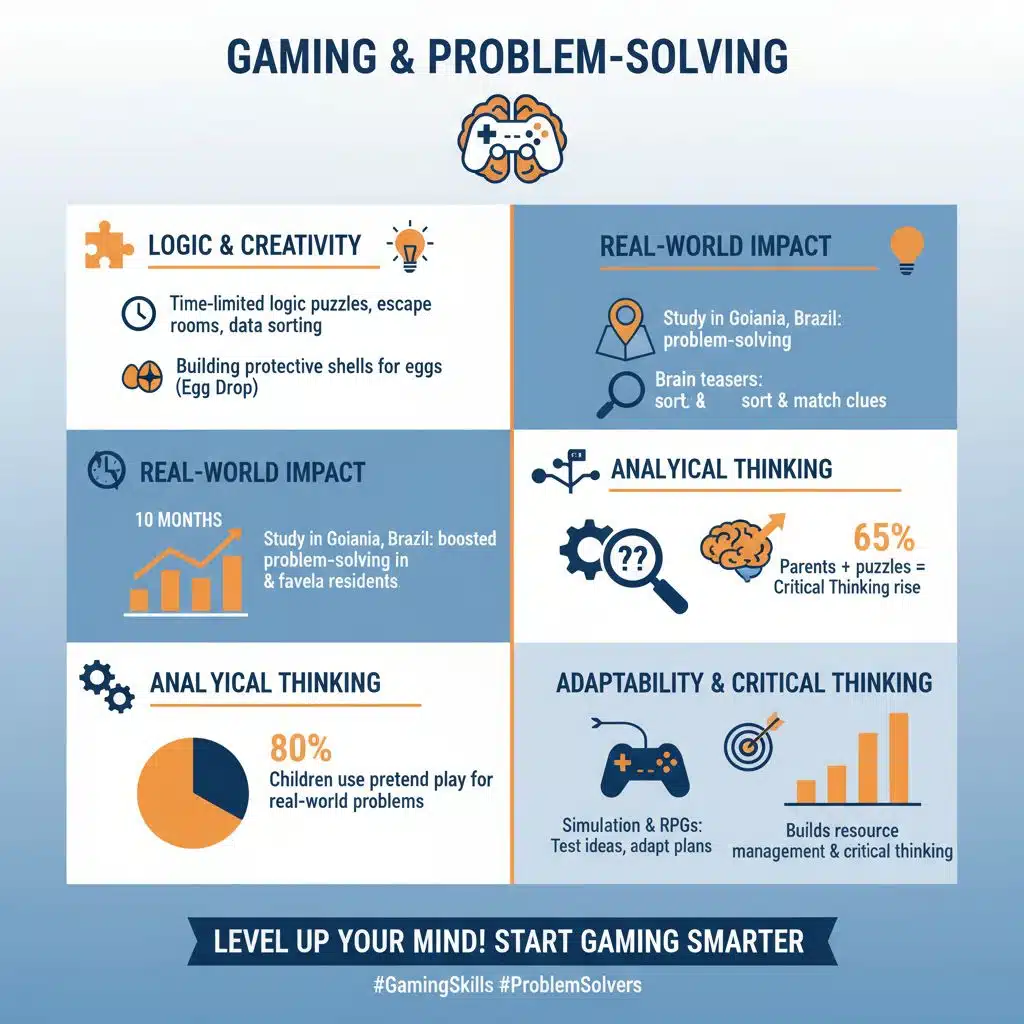
Gamers solve logic puzzles, tackle escape-room scenarios, and sort data under time limits. They build protective shells to save eggs in the egg drop event, blending creativity with teamwork.
A study in Goiania, Brazil showed ten months of serious game play boosted problem-solving skills in homeless and favela residents. Brain teasers push players to sort and match clues.
These tasks train analytical thinking and spark problem-based learning.
Children use pretend play to face real-world problems in eighty percent of cases, raising their problem-solving skills. Parents work on puzzles and sorting tasks, and they spark a sixty-five percent rise in critical thinking.
Simulation games and role-playing missions force players to test ideas and adapt plans in real time. That practice builds resource management skills and makes gamers think critically when they face new hurdles.
How does gaming develop strategic thinking?
Strategy games such as a grand strategy title, Age of Empires and a tactical combat game push players to plan each step, weigh risks and manage limited resources. Video games make learners juggle farms, armies and research paths at once.
A deck of Magic: The Gathering cards teaches logical decision-making and deck building under pressure. A guessing board game trains strategic guessing, forcing users to spot hidden ships while reading patterns.
These tasks boost problem-solving skills, soft skills and critical thinking.
Simulation titles let players run tests, change conditions and watch each outcome unfold. Branching stories like The Walking Dead or Detroit Become Human assign clear stakes to every choice, which grows analytical thinking and decision making.
Puzzle worlds and building modes feed spatial reasoning, sparking creativity tied to resource management. Math-based challenges refine number sense, with each level demanding fresh tactics.
Seventy-two percent of parents report a rise in children’s critical thinking after arts or game-based learning.
How does gaming encourage decision-making under pressure?
Video games like Portal and The Legend of Zelda drop players in tight spots. They need to pick tools, face monsters, solve puzzles in seconds. The Paper Airplane Challenge asks kids to tweak wings for max flight during a contest.
Escape rooms put friends on a ticking clock to break codes. These tasks build critical thinking and decision-making skills in game-based learning.
Multiplayer and MMORPG titles force teams to act fast under shifting threats. Simulation games and VR modes mimic real life, with no pause button. Platforms like MentalUP host over 150 timed challenges that boost cognitive skills.
Instant feedback links every choice to an outcome, so players adjust on the fly. Kids learn to weigh options, act swiftly, and track results.
How does gaming improve analytical thinking?
Logic puzzles use grid clues to guide deductions, boosting analytical thinking. Number match cards link equations with answers, sharpening memory and problem solving. Sudoku tasks challenge players to fill a nine by nine grid, honing pattern recognition and logical thinking.
Sorting cards help students group items by criteria, strengthening analytical skills. A block building challenge asks kids to meet design rules, sparking creative thinking on the fly.
Studies show 90% of children who stack blocks or explore simulation games gain stronger critical thinking and cognitive skills.
How does gaming build adaptability to new challenges?
Video games toss fresh puzzles at players. Players tweak plans on the fly. Simulation apps like The Sims shift goals each level. Gamers spot dead ends fast and test new paths. That boosts problem-solving skills.
Trial and error lies at the heart of game-based learning. Critical reflection follows each lost match. Serious VR on Oculus Quest hurls users into change. Immersive environments raise the stakes each scene.
Runs demand fresh tactics and grow cognitive skills.
Active titles like Wii Fit demand fast reflexes. Motion controls sharpen hand-eye coordination. Quick reflexes feed strong decision-making skills. Gamification cuts fatigue and boosts engagement.
Strategy games push timing and resource management under fire. RPGs guide players through varied worlds and evolving tasks. Young minds read game cues and adapt on the spot. HTC Vive tasks require new methods in real time.
Players pick up soft skills that help with real challenges.
How does gaming strengthen pattern recognition abilities?
Sudoku puzzles force people to match rows of numbers, they boost attention, concentration and cognitive skills. Jigsaw puzzles drive players to spot differences in shape and color, they build pattern recognition as users fit pieces together.
Shape sorting games make users match blocks to slots, they train visual memory and lay a base for logical reasoning. Math-based critical thinking games ask for number sequences, they grow analytical thinking and tie to success in mathematics and science.
Strategy video games push gamers to read enemy behavior, they teach spotting resource flows on a map, they improve decision-making skills and resource management. The Lego Challenge tasks builders with following design patterns, it uses problem-based learning and builds problem-solving skills inspired by John Dewey.
Role-playing game quests reward players who spot map clues or dialog patterns, they boost spatial reasoning, immersive learning and communication skills. Serious educational titles exercise pattern recognition across levels, they link to cognitive development through game-based learning.
How does gaming foster collaboration and teamwork?
Most video games need a team to win, they break the myth of solo play. Multiplayer modes, plus massive online worlds push players to share ideas, they sharpen problem-solving skills.
RPGs use story choices that demand group input, they hone resource management. Design tasks like an egg drop design challenge or a tower build challenge put groups under a clock, they learn to plan, adjust on the fly.
Kids who work puzzles with parents score sixty-five percent higher in critical thinking than those who play alone.
Simulation scenarios and educational games sharpen cognitive skills, they also boost communication skills. Serious games nudge players to feel empathy, they spark ethical reasoning and view taking.
Such game-based learning mixes play with skill work. Team chat tools like voice chat in a group help young players practice clear talk, they forge social bonds. MMORPG settings add a layer of social connection and collective planning, players talk through each move.
How does gaming promote logical reasoning?
Simple logic puzzles push players to use stepwise analysis. Players match shapes, clues or symbols to solve each challenge. Card sorting games test how players group items. They train logical categorization, a key part of deductive reasoning.
Simulation video games simulate supply chains or city growth. They teach resource management and force logical sequencing of tasks. Game-based learning lifts critical thinking and builds cognitive skills.
Math Memory matches equations with answers on cards. That task sharpens logical thinking and reasoning skills. The naval strategy game Battleship asks for smart guesses from partial clues.
It rewards players for testing different ideas. Pipe cleaner sculptures challenge makers to meet size or shape rules. These tasks stretch creative and logical reasoning at once. They build problem-solving skills, analytical thinking and decision-making skills.
Serious games and educational games link such tasks to real-world problems. This link helps critical thinkers learn from mistakes.
How does gaming encourage reflection and learning from mistakes?
Video games send quick alerts when players miss a target. This instant feedback makes players link actions and effects. Players correct moves and refine strategies. Simulation games craft safe labs for trial and error.
This boosts problem-solving skills and critical thinking. The game setting lifts stress since no real stakes exist.
Interactive scenarios push teens to scan past choices, spot weak links, and rethink plans. Kids can use pretend play, tackling problems like virtual shopkeeping. Metacognitive strategies kick in as they log outcomes.
Virtual Reality equips learners with hands-on tasks. They can step back, study the play, and try a fresh approach. Game-based learning builds self-awareness and sharp decision-making.
How does gaming boost resource management skills?
A card game like Magic: The Gathering tests deck planning and mana use. It pushes players to tally costs and think ahead. Strategy games such as Civilization and Age of Empires demand balancing food, gold and wood to build empires.
Game-based learning here feels fun and urgent. These challenges sharpen resource management skills by setting strict limits and clear goals.
A sandbox builder like Minecraft or a colony simulation such as RimWorld forces players to mine, farm and assign tasks. Simulation games teach cause and effect when stocks run low or threats appear.
Some educational games weave math into supply chain puzzles. This active learning builds cognitive skills and critical thinking for real life plans.
How does gaming enhance focus and attention to detail?
Early childhood memory games boost visual memory and perception. Active video games speed up reaction time and demand sharp focus. Interlocking shape puzzles force players to spot color and shape differences.
Number grid puzzle and code-cracking challenge hold attention for long runs. A University of Toronto study found action game players gain superior hand-eye coordination, a sign of strong attentional skills.
Complex simulation games thrust gamers into rich virtual worlds, and they must catch tiny hints and track multiple cues at once. Those tasks sharpen spatial reasoning and fine observation.
Educational games give instant feedback and tie small details to big outcomes. Hands-on learning with blocks or with Minecraft raises attention and cognitive development in 90 percent of kids.
Serious games in formal education push students to report small errors, boosting analytical thinking and problem-solving skills. Teachers use Bloom’s taxonomy to craft levels that train learners to spot hidden patterns.
That practice builds decision-making skills and soft skills that matter in life.
Takeaways
Gaming builds stronger minds through flight simulators and logic puzzles. Players plan with fantasy RPGs, they juggle resources in real time. They answer Socratic questions as they solve digital quests.
Teachers can use Bloom’s Taxonomy and problem-based learning in class. Kids grow when they face challenges, they sharpen key cognitive skills. That mix of fun and skill training sticks, and it fires up critical thinking.
FAQs Best ways Gaming Builds Critical Thinking Skills
1. How do video games build critical thinking skills?
Video games pose puzzles, test resource management, guide your thinking processes. They push you to solve problems, grow your problem-solving skills and analytical thinking, it’s like brain training at play.
2. What is game-based learning?
Game-based learning uses educational games or serious games to teach real ideas through play. It blends play with problem-based learning, links to curricular goals, and follows bloom’s taxonomy. It lays out scaffolding steps, and it builds your cognitive skills.
3. How do simulation games support cognitive development?
Simulation games mimic real experiences, they build spatial reasoning and teach you to make decisions. They improve decision-making skills and boost retention. They mirror real world challenges in a safe place.
Role-playing games (rpgs) ask you to talk, act, and solve problems with friends. They sharpen communication skills, boost collaborative problem solving, and grow soft skills. You learn to step into another role, and that can be fun.
5. Why are strategy games good for analytical thinking?
Strategy games force you to plan ahead and weigh options, they teach resource management and decision making. They boost your analytical thinking, and they give your critical thinking muscles a good workout.
6. How do serious games fight online misinformation?
Serious games use inoculation theory to battle fake news and conspiracy theories. They throw tricky scenarios your way, use socratic questioning, and train you to spot misinformation on social media. They make learning feel like a detective case.