
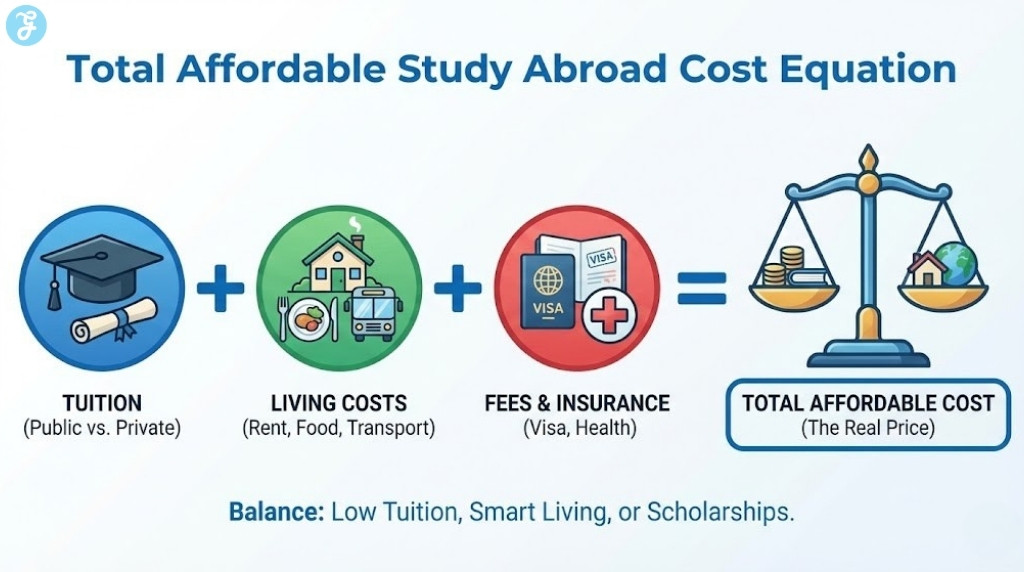
“Affordable” study abroad is not just low tuition. It’s the full yearly cost: tuition + rent + insurance + visa fees + daily living. The smartest destinations either keep public tuition low, keep living costs reasonable, or offer strong scholarship pathways that reduce the total bill.
This list focuses on places where international students can realistically balance cost and quality, especially if you choose the right city and apply early for funding.
How We Picked the 10 Best Study Abroad Destinations for Affordable Education
We used a simple rule: your total yearly cost matters more than a headline tuition number.
-
Tuition reality: Public-university pricing and common international fee ranges
-
Cost of living: Rent and day-to-day costs (big cities vs student towns)
-
Scholarship pathways: Government, regional, and university funding options
-
Work flexibility: Whether students can usually work part-time while studying (where clearly defined)
-
Value: Strong universities, employable degrees, and recognizable credentials
Comparison Table
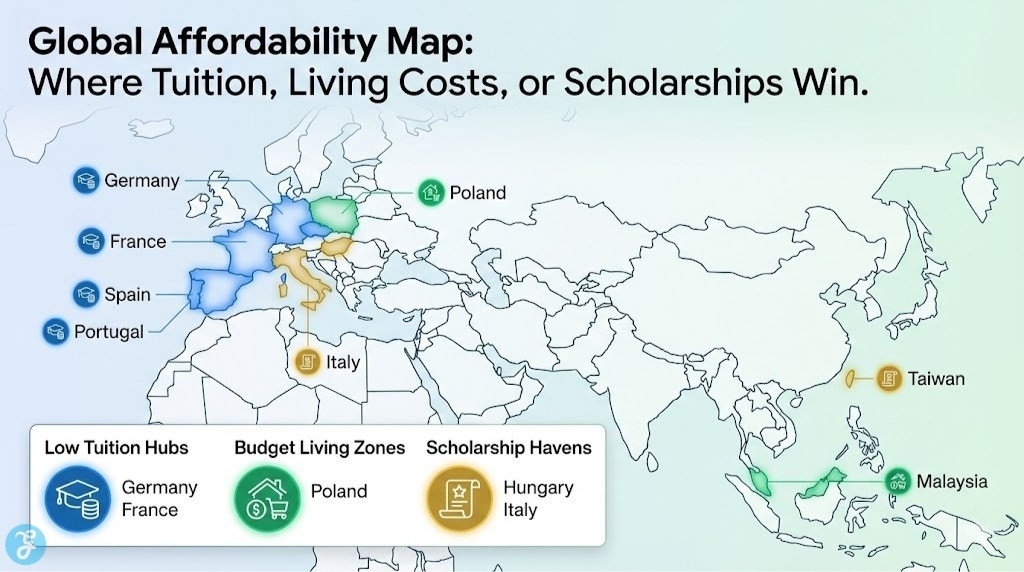
Use this to shortlist based on how you want to save: low tuition, low living costs, or scholarships that cover the gap.
| Destination | Tuition Advantage | Living Cost Advantage | Scholarship Strength | Best Fit For |
|---|---|---|---|---|
| Germany | Low/none at many public unis; semester contribution instead | Medium (cheaper in student towns) | Good (uni + DAAD options) | STEM, business, public unis |
| France | Subsidized public tuition | Medium (outside Paris) | Strong public ecosystem | Arts, business, humanities |
| Poland | Lower tuition than much of Western Europe | Strong | Growing options | Budget EU degree + English programs |
| Czechia | Free if studying in Czech at public unis; English programs paid | Strong | Decent | Central Europe + lower living costs |
| Hungary | Moderate tuition + generous scholarship system | Strong | Strong (Stipendium Hungaricum) | Scholarship-seekers |
| Portugal | Low-cost public tuition caps (in many cases) | Medium | Decent | EU lifestyle + value |
| Spain | Public tuition can be relatively low (varies by region/status) | Medium | Decent | Language learners + culture |
| Italy | Public tuition often €500–€4,000 and income-based | Medium | Strong (regional DSU) | Scholarship/value hunters |
| Malaysia | Competitive tuition + lower living costs | Strong | Growing | English-medium Asia hub |
| Taiwan | Strong government scholarship coverage + good value | Strong | Strong (MOE Taiwan Scholarship) | STEM/engineering + scholarships |
10 Best Study Abroad Destinations for Affordable Education
Here are 10 Best Study Abroad Destinations for Affordable Education that balance tuition, living costs, and real student value.
1) Germany
Germany is famous for affordability because many public universities don’t charge traditional tuition, but you’ll still pay a semester contribution and living costs. Budgeting matters because student expenses are usually the bigger bill, and blocked-account/visa funding expectations can shape your plan.
-
Best For: Public university degrees, STEM, budget-focused students who can plan living costs
-
Pros: Low/limited tuition at many public universities; clear student work rules; strong degree recognition
-
Cons: Housing can be tough in major cities; some programs require German or strong prerequisites
2) France
France stays affordable mainly because public higher education is heavily subsidized, keeping tuition low compared with many peers. If you choose a student-friendly city (not the most expensive neighborhoods in Paris), the value becomes even better, and students have a clear legal work allowance.
-
Best For: Humanities, arts, business, and students who want subsidized public education
-
Pros: Low public tuition; strong university ecosystem; students can work up to 964 hours/year
-
Cons: Paris costs can spike your budget; admin processes can feel slow
3) Poland
Poland is a strong “budget Europe” option: English-taught degrees are typically far cheaper than Western Europe, and living costs are usually manageable for students. It’s ideal if you want an EU experience without EU-capital pricing.
-
Best For: English-taught degrees on a tight budget, especially business and tech tracks
-
Pros: Many programs in English; lower tuition and living costs than many European alternatives
-
Cons: Best opportunities cluster in bigger cities; you still need to vet program quality carefully
4) Czechia (Czech Republic)
Czechia can be extremely cost-effective if you’re willing to study in Czech at a public university, since those programs are free by law regardless of nationality. If you want English-taught programs, you’ll typically pay tuition, but living costs can still make the total budget attractive.
-
Best For: Students open to learning Czech, or those wanting lower total EU costs
-
Pros: Free tuition for Czech-language public programs; student-friendly cost of living
-
Cons: English programs can vary widely in price; Prague can be pricier than smaller cities
5) Hungary
Hungary is a popular affordable destination because the cost of living is typically lower than Western Europe, and the country is known for generous scholarship pathways for international students. If you plan around scholarship timing, it can become one of the best value options in the EU region.
-
Best For: Scholarship-first students and value-focused degree seekers
-
Pros: Lower living costs; strong scholarship reputation (including Stipendium Hungaricum)
-
Cons: Some programs may have limited seats in English; city choice impacts budget a lot
6) Portugal
Portugal can be a great affordability play when you combine reasonable tuition structures with choosing the right city (Lisbon is pricier, smaller cities are often easier). Some public tuition figures are clearly published by major universities, which helps planning.
-
Best For: Students who want Europe with a calmer cost profile and clear tuition info
-
Pros: Public tuition figures are transparent at many institutions; strong lifestyle value
-
Cons: Housing pressure in Lisbon/Porto; English program availability varies by school
7) Spain
Spain’s public tuition can be relatively low compared to many Western destinations, but it varies by region and student status. If you pair a public university route with a lower-cost city and student discounts, your total budget can stay reasonable.
-
Best For: Students who want Spanish-language growth plus affordable public-university routes
-
Pros: Potentially low public tuition; strong student life and culture
-
Cons: Costs vary heavily by city; some programs require Spanish proficiency
8) Italy
Italy is a strong “value Europe” destination because public university tuition is often far lower than many countries and can be income-based, and regional DSU scholarships can cover major costs (tuition relief plus living supports, depending on the region and institution).
-
Best For: Students who want an affordable European degree with scholarship upside
-
Pros: Public tuition often €500–€4,000; DSU programs can include tuition exemptions and support like meals/accommodation
-
Cons: Paperwork can be intense; costs rise in top tourist cities if you don’t plan housing early
9) Malaysia
Malaysia is a practical affordability pick because you often get English-medium programs with lower living costs than many Western destinations. It’s especially appealing if you want a multicultural campus environment and a budget that stays predictable month to month.
-
Best For: Students wanting English programs with lower day-to-day living costs
-
Pros: Lower cost of living guidance is widely available; strong value for money
-
Cons: Tuition varies widely by institution type; climate and distance may not suit everyone
10) Taiwan
Taiwan stands out for affordability because of scholarship support and strong academic value, especially in tech and engineering-adjacent fields. The MOE Taiwan Scholarship can cover tuition up to a set cap per semester and adds a monthly living allowance, which can dramatically reduce total cost.
-
Best For: Scholarship seekers, STEM-focused students, and those open to East Asia
-
Pros: Clear scholarship benefits (tuition support + monthly stipend); excellent value education
-
Cons: Some programs may require language prep; scholarship competition can be high
How To Choose The Right Destination
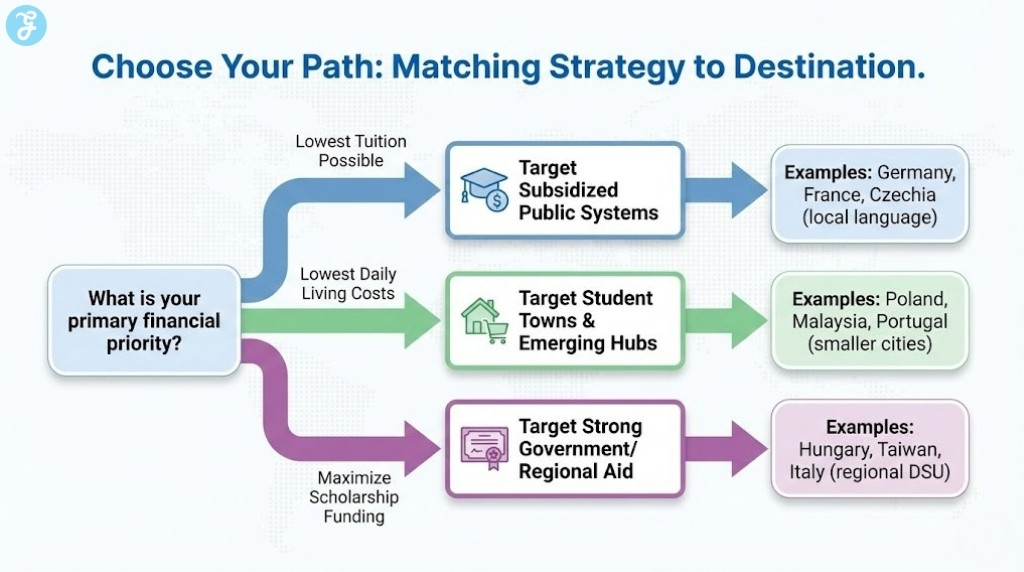
A cheap tuition number is not the same as a cheap degree. Then, how to choose the right option? Make the decision based on total cost and fit.
-
Budget-first: Prioritize low living costs and predictable expenses (often student towns over capital cities).
-
Scholarship-first: Choose destinations with transparent government or regional scholarships (Taiwan, Hungary, Italy).
-
Language-first: English-taught programs can cost more in some countries; local-language routes can be cheaper (Czechia is a prime example).
Small Decision Table
| Your Priority | Best Destination Type |
|---|---|
| Lowest tuition possible | Subsidized public systems + local-language routes |
| Lowest living costs | Emerging hubs and student cities |
| Best scholarship upside | Government/regional scholarship ecosystems |
| Best “global resume value” | Strong public universities + recognized degrees |
Budget Planning That Actually Works
The easiest way to avoid money stress is to set a “real cost” monthly number before you apply.
-
Housing: Your biggest variable, and the one you should secure early
-
Food and transport: Often manageable with student discounts
-
Health insurance: Mandatory in many places, so factor it in from day one
-
One-time costs: Visa, flights, deposit payments, residence permits
Wrap-Up
The best affordable study abroad destination is the one that stays affordable after you land, not just on a tuition page. If you want the lowest tuition routes, Germany and France are hard to ignore. If you want strong scholarship leverage, Taiwan, Hungary, and Italy can change your total cost dramatically.
Pick one destination that fits your degree goals, then choose the right city and funding path. That’s where affordability becomes real.