

Australia’s Outback is beautiful, brutal, and unpredictable. Roads can shift from smooth bitumen to rough corrugations without warning. Distances between towns can be massive. Heat can punish engines, tyres, and drivers.
That is why picking the best 4WD for Australian outback travel is not about picking the most expensive badge. It is about matching your vehicle to your route, your load, and your comfort needs. It is also about how easy it is to service and support that vehicle when you are far from a major city.
In this guide, you will get 10 strong options, practical buying advice, and a prep checklist you can actually use. You will also learn how to avoid common mistakes like overloading, ignoring towball weight, and choosing tyres that are hard to replace in remote towns.
Snapshot: The Best Outback 4x4s At A Glance
You do not need to read every detail to make progress. A smart Outback shortlist starts with your travel style. Are you towing a caravan or camper? Are you doing remote routes with long gaps between fuel stops? Are you travelling with kids and need comfort?
This snapshot gives you a fast way to pick two or three models to research deeper. It is not a “winner takes all” ranking. It is a fit-for-purpose guide.
If you only take one thing from this section, take this: the “best” vehicle is the one that supports your real plan. The Outback rewards honesty more than hype.
Use the table below as your starting point. Then jump to the detailed sections for each vehicle.
| Quick Pick | Best Match For | Why It Stands Out |
| Best Overall Touring + Towing | Toyota LandCruiser 300 | Strong towing focus, stable wagon feel, long-distance comfort |
| Best “Simple And Tough” Remote Workhorse | Toyota LandCruiser 70 | Rugged, durable mindset, popular for harsh use cases |
| Best Big Wagon Comfort | Nissan Patrol | Spacious cabin, relaxed long-drive feel, strong towing ability |
| Best Family Touring Value | Isuzu MU-X | Practical package, towing-friendly, strong value reputation |
| Best Family Tech + Refinement | Ford Everest | Modern cabin, touring comfort, towing-ready platform |
| Best For “Mostly Dirt Roads” Trips | Subaru Outback | Comfortable, capable for graded roads, smart if you avoid extreme tracks |
Best 4WD For Australian Outback: What “Outback-Ready” Really Means
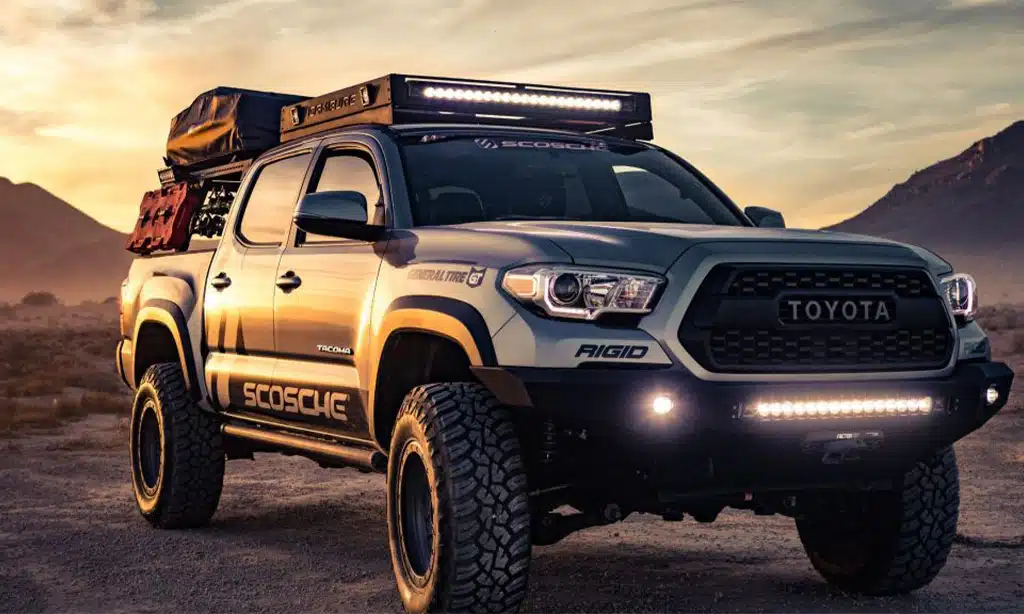
A vehicle can look tough in a showroom and still struggle on long, rough roads. Outback-ready is about what survives heat, dust, vibration, and long days behind the wheel. It also includes what you can fix and support when something goes wrong.
The Outback tests cooling systems, suspension, tyres, and driver stamina. Corrugations can loosen fittings. Dust can work its way into everything. High temperatures can push engines and transmissions harder than normal.
Outback-ready also means practical. You need usable storage, sensible payload, and tyres you can replace outside major cities. You need stability if you tow. You need comfort if you drive 6 to 10 hours in a day.
Think of outback-ready as a system. The vehicle is one part. Your setup and your habits are the other half.
| Outback Need | What To Look For | Why It Matters |
| Heat management | Strong cooling, sensible towing support, stable temps | Heat is a slow killer of drivetrains |
| Corrugation durability | Strong suspension, good shocks, correct tyre pressures | Rough roads punish weak setups |
| Remote practicality | Range planning, reliable tyre sizes, service access | Small issues become big issues far away |
| Load safety | Payload awareness, towball weight planning | Overloads create handling and braking risks |
| Driver comfort | Seats, cabin ergonomics, stable steering | Comfort helps reduce fatigue |
Outback Conditions You’re Really Buying For
Outback conditions are not one thing. They vary by region and season. You might face long sealed stretches that tempt you to push speed. You might also face gravel highways that look smooth but hide sharp stones. You might hit corrugations that shake your vehicle like a washing machine.
Heat changes everything. Tyre pressures rise. Engines work harder. Towing loads feel heavier. Even your fridge, battery system, and air conditioning get stressed.
Dust is another major factor. It can clog filters and reduce airflow. It can also wear moving parts faster if maintenance slips.
Distance is the final reality. A minor issue in a city is a major problem when the next town is hours away. That is why preparation matters.
The Non-Negotiables Checklist
Start with a short checklist before you fall in love with a model. You can be flexible on many things, but some basics are non-negotiable for Outback travel.
You want enough clearance for the tracks you plan to drive. You want tyres that match your load and are easy to replace. You want a drivetrain that fits your terrain. You want stable towing manners if you tow.
You also want honest payload. Accessories add weight fast. Bullbar, roof rack, drawers, fridge, and extra fuel can eat your payload before you pack clothes.
Finally, you need a simple plan for water, fuel, and communication. Your vehicle is not your safety plan. Your planning is your safety plan.
Safety And Comfort That Matter On 1,000km Days
Long-distance comfort is not a luxury out there. It is a safety tool. Comfortable seats and a calm driving position help you stay alert. A stable vehicle reduces stress and fatigue. Smart storage reduces cabin mess and distraction.
Driver fatigue can creep in quietly. It often starts as reduced focus and slow reactions. It can also show up as poor decision-making. Short breaks and hydration help more than people expect.
Comfort also includes noise. A quieter cabin reduces mental load on long days. Good air conditioning matters in hot areas.
If you travel with family, comfort matters even more. A calm cabin is a safer cabin.
How We Chose And Ranked These 10 4x4s
This list is designed for real Outback travel, not just off-road bragging rights. Many Outback routes are not extreme tracks. They are long, rough roads that reward stability, durability, and planning.
The goal is to cover different needs. Some people tow heavy. Some travel remote and carry a lot. Some want a family-friendly SUV. Some want a comfortable option for mostly graded roads.
We also consider ownership reality. A vehicle can be brilliant on paper and still be a headache if parts and servicing are difficult on your route. Costs also matter. So does how easy it is to keep the vehicle within legal and safe weight limits.
This approach keeps the guide useful for more people. It also helps you choose based on your situation, not marketing.
| Selection Lens | What We Considered | Why It Helps You |
| Capability | 4WD hardware, traction aids, clearance | Helps match the vehicle to terrain |
| Touring practicality | Cabin space, storage, comfort | Improves long-distance travel experience |
| Towing readiness | Stability, ratings, load planning | Reduces towing stress and risk |
| Ownership reality | Servicing, tyre practicality, reliability mindset | Matters when you are far from cities |
| Value | What you get for the money | Keeps the choice grounded |
1. Toyota LandCruiser 300 Series
The LandCruiser 300 is built for people who want big touring comfort with serious towing ability. It suits families, couples, and travellers who carry a lot of gear. It also suits caravan towers who need stability and confidence.
The 300 feels like a long-distance vehicle first. It is calm on highways. It also has the ground clearance and drivetrain capability to handle difficult tracks when needed.
The big risk with the 300 is not capability. It is weight planning and cost. Because it is premium, people add premium accessories. That can push payload limits quickly.
If you want a high-end touring wagon that can tow and travel remote with comfort, this is one of the strongest choices.
| LandCruiser 300 Summary | Key Points |
| Best For | Heavy touring, towing, family comfort |
| Strengths | Stable wagon feel, strong drivetrain options, premium long-drive comfort |
| Watch Outs | Price, size, accessory weight creep |
| Smart Setup Focus | Tyres, load planning, cooling confidence when towing |
Why It’s Great For The Outback
The 300 suits the Outback because it balances power, comfort, and stability. It handles long sealed stretches without feeling tiring. It also handles rough surfaces with confidence when set up well.
Its touring comfort helps on long days. A calm cabin and stable steering reduce driver stress. That matters when you cover big distances.
It also has a strong touring ecosystem. That means it is easier to find storage solutions, protection options, and common accessories.
If you tow, the wagon layout helps stability. It generally feels more planted than shorter vehicles when conditions change.
Key Strengths
- Strong towing potential for caravans and trailers
- Comfortable cabin for long days and family travel
- Stable high-speed manners on sealed and gravel roads
- Strong aftermarket support for touring setups
- Good balance between luxury and capability
Potential Trade-Offs
- Expensive to purchase and maintain
- Large size can feel awkward in tight spots
- Easy to overload with accessories and extra fuel
- Tyres and brakes can cost more than smaller SUVs
- Premium complexity can increase repair cost
Best For
- Long-distance touring with high comfort expectations
- Heavy towing with a stable vehicle platform
- Family trips where storage and space matter
- Remote travel when you plan and carry properly
- Drivers who want capability without a “work truck” feel
2. Toyota LandCruiser 70 Series
The LandCruiser 70 is the opposite of soft. It is a classic heavy-duty platform with a strong reputation in remote areas. Many people choose it because they want something simple, tough, and built around function.
It can suit remote touring, but you need to understand what you are buying. Comfort is not its main strength. Long sealed days can feel noisy and tiring compared with modern SUVs.
Where it shines is durability mindset and load-carrying intent. It also suits people who travel for work and need a vehicle that feels “built” rather than “styled.”
If you want a rugged tool for harsh environments, and you accept the trade-offs, the 70 can be a strong Outback choice.
| LandCruiser 70 Summary | Key Points |
| Best For | Remote work, rugged touring, heavy-duty mindset |
| Strengths | Tough build, strong 4WD fundamentals, common remote-area presence |
| Watch Outs | Ride comfort, cabin refinement, fatigue on long sealed days |
| Smart Setup Focus | Suspension quality, seating comfort, sensible touring storage |
Why It’s An Outback Icon
The 70 has an old-school feel that many remote travellers trust. It is often chosen by people who do not want complicated features. They want a vehicle that feels direct and serviceable.
It also fits harsh routines. Dust, rough roads, and heavy loads are common use cases. The platform’s reputation comes from years of real use, not just marketing.
It is also a popular base for touring builds. Many owners add long-range fuel, storage, and protection. But you must be careful with weight.
The icon status is real, but it is not for everyone. Some people will hate the ride and cabin noise.
Key Strengths
- Heavy-duty attitude and strong off-road basics
- Popular remote-area choice with wide community knowledge
- Straightforward touring build potential
- Strong approach to harsh environments when set up well
- Great for people who value function over comfort
Potential Trade-Offs
- Noisy and less refined on highways
- Ride comfort can be harsh on corrugations if setup is poor
- Long days can increase fatigue
- Modern safety and tech features can be less advanced
- Weight can creep up fast with touring accessories
Best For
- Remote work trips with heavy loads
- Travellers who prioritise durability over luxury
- Outback touring with a simple, proven platform
- People comfortable with a more basic cabin experience
- Owners who like to build a vehicle to their needs
3. Nissan Patrol
The Patrol is a big wagon that many people love for comfort and space. It feels relaxed on long trips. It also has the kind of cabin room that makes family touring easier.
It can tow well and handle Outback touring routes with confidence. The major consideration is fuel planning. Petrol touring can be more demanding in remote areas.
The Patrol also suits people who want a traditional big wagon feel without the premium price pressure of some rivals. It is often chosen by those who want comfort first, then capability.
If your Outback plan includes long sealed roads and frequent towing, the Patrol can be a solid pick.
| Nissan Patrol Summary | Key Points |
| Best For | Comfort touring, family travel, towing |
| Strengths | Spacious cabin, relaxed drive feel, strong wagon stability |
| Watch Outs | Fuel consumption, payload planning when towing |
| Smart Setup Focus | Fuel strategy, tyre choice, towing stability basics |
Why Patrol Fans Swear By It
People like the Patrol because it feels like a long-distance machine. It is steady and roomy. It can make big days feel less stressful.
The cabin layout is touring-friendly. You can carry people and gear without feeling cramped. That matters on long family trips.
It also has strong presence in the touring community. That means you can find setup ideas and solutions easily.
The key is to plan fuel and keep your weight within limits. Comfort does not remove physics.
Key Strengths
- Spacious cabin for passengers and gear
- Comfortable for long-distance highway travel
- Strong towing capability and stability
- Touring-friendly driving position and visibility
- Good for family trips where comfort matters
Potential Trade-Offs
- Petrol fuel planning can be harder in remote areas
- Fuel costs can be higher over long distances
- Large size can be awkward on narrow tracks
- Accessories and passengers can reduce payload quickly
- Not everyone needs a big wagon every day
Best For
- Families doing long road-based touring loops
- Caravan towing with a stable wagon platform
- Travellers who prioritise comfort and space
- People who want capability without a “work truck” vibe
- Outback routes that mix highways, gravel, and easy tracks
4. Toyota LandCruiser Prado
The Prado sits in a popular middle zone. It is more modern and refined than heavy-duty work platforms. It is also more capable than many soft-road SUVs.
For many families, it is a practical touring choice. It can handle Outback roads, towing, and long-distance comfort. It also tends to feel easier to live with day-to-day.
The main thing to get right is trim selection and weight planning. Different variants can have different strengths. Your accessories, passengers, and towball weight still matter.
If you want a balanced touring vehicle that feels manageable, the Prado belongs on your shortlist.
| Prado Summary | Key Points |
| Best For | Balanced family touring, mixed road travel |
| Strengths | Comfort + capability blend, manageable size, touring-friendly layout |
| Watch Outs | Trim differences, weight planning when towing |
| Smart Setup Focus | Tyres, storage that does not overload, towing balance |
The Touring Sweet Spot For Many Buyers
The Prado often feels “just right” for mixed use. It can do school runs and long trips. It can handle gravel highways and moderate tracks.
It also tends to offer a calmer cabin than heavier-duty platforms. That helps on big days.
For many Outback travellers, the goal is not extreme off-road. The goal is reliable access and comfort. The Prado fits that well.
If you tow, you still need careful planning. The vehicle can do the job, but only if the load is within limits.
Key Strengths
- Strong balance of comfort and capability
- Touring-friendly cabin for families
- Suitable for long highway stretches and gravel roads
- Generally manageable size compared with large wagons
- Strong community support for touring builds
Potential Trade-Offs
- Not every trim suits the same touring needs
- Payload can shrink quickly with accessories
- Towing stability depends on setup and weight distribution
- Some owners may want more space for big family loads
- Cost can rise fast in higher trims
Best For
- Families touring on mixed sealed and unsealed roads
- Couples wanting a capable but refined touring vehicle
- Travellers who want a practical daily driver and tourer
- Moderate towing when your load plan is realistic
- Outback travel that focuses on access, not extremes
5. Ford Everest
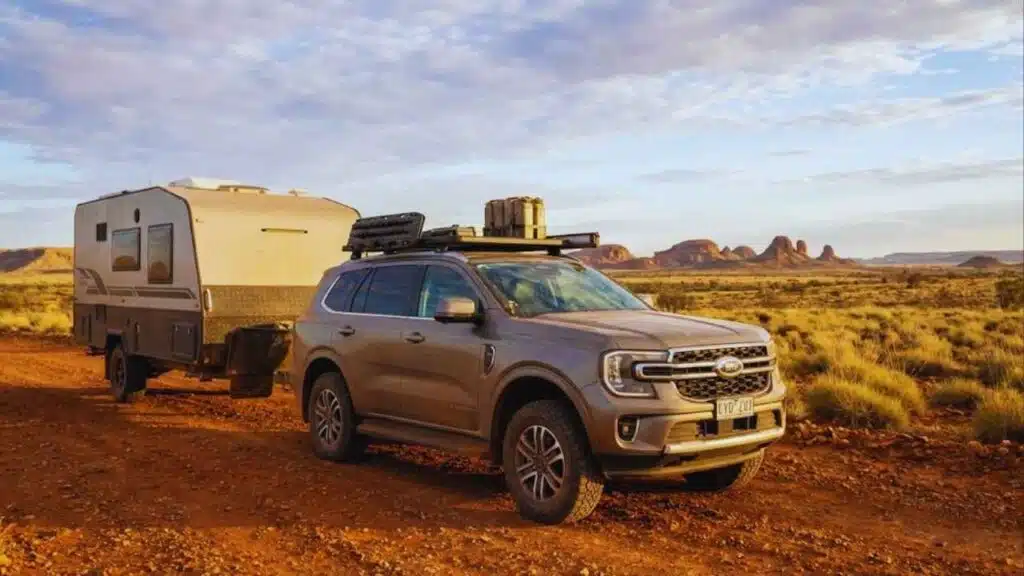
The Everest is popular because it offers modern comfort and strong touring ability. It suits families who want technology, safety features, and a refined cabin without giving up capability.
It is also a serious towing option in many trims. It can handle caravans and trailers when you set it up correctly. Its platform is built for tough conditions, but your tyres and suspension still matter.
The biggest choice with the Everest is selecting the right variant for your plan. Some trims are tuned toward comfort. Some lean more toward off-road touring.
If you want a modern, comfortable Outback SUV with towing strength, the Everest is a strong contender.
| Ford Everest Summary | Key Points |
| Best For | Family touring, towing, modern comfort |
| Strengths | Refined cabin, strong touring ergonomics, capable platform |
| Watch Outs | Variant selection, accessory weight |
| Smart Setup Focus | Tow setup, tyres, practical storage and cooling confidence |
A Modern Touring SUV With Serious Capability
The Everest suits long days because it feels easy to drive. It often has a stable, confident road feel. That reduces fatigue.
It is also practical inside. Family storage, seating comfort, and driving aids can make big trips smoother.
On rough roads, the Everest can perform well if you set tyre pressures correctly and choose sensible tyres for your route. It is not magic, but it is capable.
If you tow, focus on towing stability and load distribution. That matters more than marketing numbers.
Key Strengths
- Modern cabin comfort and long-drive refinement
- Strong towing potential in many trims
- Touring-friendly features for families
- Good balance of on-road stability and off-road ability
- Strong everyday usability compared with large wagons
Potential Trade-Offs
- Some trims may be better suited to touring than others
- Complex tech can increase repair cost in rare cases
- Accessory weight can reduce payload quickly
- Towing requires careful payload and towball planning
- Larger wheels on some trims may limit tyre choices
Best For
- Families doing big kilometres with comfort in mind
- Caravan towing with a modern SUV platform
- Mixed travel with highways, gravel, and easier tracks
- Buyers who want safety tech and practicality together
- People who want a tourer that also works daily
6. Isuzu MU-X
The MU-X is a practical touring SUV that focuses on value and function. Many buyers choose it because it feels honest. It is designed to tow and carry people without being overly fancy.
It suits families, couples, and travellers who want a reliable-feeling touring base. It also suits those who prefer spending on tyres, gear, and travel rather than paying more for a luxury badge.
The MU-X can be a very smart Outback choice if you prioritise practicality. It gives you capability without forcing you into a huge wagon.
If you want a touring SUV that feels like a tool, but still comfortable enough for long days, the MU-X is worth a look.
| Isuzu MU-X Summary | Key Points |
| Best For | Value-focused touring, towing, family travel |
| Strengths | Practical package, touring-friendly size, strong value perception |
| Watch Outs | Comfort differences by trim, load planning |
| Smart Setup Focus | Tyres, sensible suspension, storage that stays within payload |
The Practical Workhorse Tourer
The MU-X works well for Outback touring because it focuses on fundamentals. It can handle rough roads when set up correctly. It can tow in many variants. It also has a practical interior.
It is also easier to live with than a huge wagon for many people. Parking, daily driving, and running costs can feel more manageable.
For touring, it provides a strong base for sensible upgrades. Think tyres, basic protection, and storage that does not overload.
If you want a strong touring tool without chasing luxury, the MU-X fits.
Key Strengths
- Practical interior and touring-friendly packaging
- Strong towing ability in many trims
- Good value compared with premium alternatives
- Suitable for long road trips with family comfort
- Strong choice for travellers who prefer simplicity
Potential Trade-Offs
- Some trims may feel less refined than rivals
- Long-distance seat comfort varies by person
- Accessory additions can quickly reduce payload
- Not every driver loves the driving feel compared with wagons
- Resale and brand preference vary by region
Best For
- Families wanting a sensible touring SUV
- Caravan towing when you stay within limits
- Travellers doing long loops with mixed road surfaces
- Buyers who want value and practical ownership
- People who prefer a “tour first” vehicle choice
7. Mitsubishi Pajero Sport
The Pajero Sport often shines as a value choice. It can be a strong option for families who want seven seats and touring capability without spending top-tier money.
It can handle Outback touring routes well if you choose the right tracks and set the vehicle up properly. It also works well for moderate towing, especially if you are not pushing into heavy caravan territory.
The Pajero Sport is especially interesting for used buyers. Value and availability can make it a smart entry into touring life.
If you want a capable, family-friendly SUV and your towing needs are moderate, it deserves a place on this list.
| Pajero Sport Summary | Key Points |
| Best For | Value touring, 7-seat trips, moderate towing |
| Strengths | Price-to-capability appeal, practical interior, touring-ready fundamentals |
| Watch Outs | Not the highest tow rating in class, trim differences |
| Smart Setup Focus | Tyres, suspension condition, realistic tow expectations |
Flexible Capability, Strong Value
The Pajero Sport is a practical touring base. It often offers good off-road traction systems and stable road manners for the money.
For families, space matters. This SUV gives you a touring-friendly interior layout without forcing you into a massive wagon.
It also suits buyers who want to spend on travel and gear. A lower purchase price can free budget for tyres, comms, and recovery gear.
Just keep towing realistic. Match your trailer to your vehicle, not your hopes.
Key Strengths
- Strong value for a capable touring SUV
- Family-friendly seating and storage options
- Suitable for Outback gravel and easy-to-moderate tracks
- Good used-market appeal in many areas
- Practical choice for travellers watching budget
Potential Trade-Offs
- Towing may be lower than 3.5T-focused rivals
- Not all trims offer the same features
- Ride quality depends on tyres and suspension condition
- Payload still shrinks with accessories and towball weight
- Some owners may prefer a wagon for maximum stability
Best For
- Families wanting a value-focused tourer
- Travellers towing lighter caravans or trailers
- People doing mixed highways and gravel touring
- Buyers who want capability without premium pricing
- Used buyers wanting a known touring platform
8. Land Rover Defender
The Defender is a premium touring option that blends comfort with serious off-road technology. It suits people who want a high-end cabin, refined road manners, and strong traction management.
It can perform extremely well on varied terrain. It can also feel excellent on long sealed stretches. That combination is rare. It makes the Defender attractive for those who travel far and want comfort.
The trade-off is ownership reality. Premium vehicles can cost more to service and repair. That matters in remote areas where support may be limited.
If you want premium touring comfort and genuine capability, and you are willing to plan carefully, the Defender is a standout option.
| Defender Summary | Key Points |
| Best For | Premium touring, comfort + capability, varied terrain |
| Strengths | Refined cabin, advanced traction systems, strong long-distance comfort |
| Watch Outs | Cost, complexity, remote repair logistics |
| Smart Setup Focus | Tyres, protection, service planning for remote routes |
Premium Comfort Meets Real Off-Road Tech
The Defender suits the Outback because it handles long sealed roads with ease. It also handles rough tracks with confidence when set correctly.
Its comfort can reduce fatigue. That is a big benefit on long days. A calm cabin helps you stay sharp.
It also offers a modern driving experience. For many travellers, that is worth paying for.
The key is planning. Make sure your route and support options fit your vehicle choice. Premium requires smarter preparation.
Key Strengths
- High comfort for long touring days
- Strong off-road traction systems on many variants
- Calm road manners and confident steering
- Premium cabin features that improve travel quality
- Great for mixed touring that includes rough sections
Potential Trade-Offs
- Higher servicing and repair costs
- Complex systems may be harder to fix remotely
- Tyres and parts may be more specific in some trims
- Insurance costs can be higher
- Not the simplest choice for very remote DIY touring
Best For
- Travellers prioritising comfort and capability together
- Mixed routes with sealed roads plus tougher track sections
- Drivers who want a premium touring experience
- People who plan service and support carefully
- Couples and families who value cabin quality
9. Jeep Grand Cherokee
The Grand Cherokee is a comfort-first touring SUV with a strong road-trip feel. It can suit Outback travel when you focus on maintained roads and easier tracks.
It works well for travellers who want a quiet cabin, relaxed seating, and a smooth ride. It can be a great choice if your Outback plan is more “town-to-town” touring than remote track exploration.
Towing can be suitable for moderate loads. But it is not built to be a heavy caravan hero like some 3.5-tonne-focused options.
If your goal is comfort touring with light off-road capability, it can be a good fit.
| Grand Cherokee Summary | Key Points |
| Best For | Comfort touring, highway-heavy trips, mild tracks |
| Strengths | Smooth ride, refined cabin, long-drive comfort |
| Watch Outs | Moderate towing focus, remote support planning |
| Smart Setup Focus | Tyres, route choice, realistic towing loads |
Long-Distance Comfort With Off-Road Cred
The Grand Cherokee can make long travel days feel easier. A comfortable cabin reduces fatigue and stress.
It also suits travellers who prefer sealed roads and well-travelled gravel routes. That is a common Outback touring style.
If you plan to explore rougher tracks, be honest about limitations. Not every touring plan requires low range and maximum clearance.
This is a “comfort and capability balance” option, not a heavy-duty workhorse.
Key Strengths
- Comfortable cabin designed for long trips
- Smooth ride for highways and graded roads
- Good touring feel for couples and families
- Suitable for light off-road sections on many routes
- Great if comfort is your top priority
Potential Trade-Offs
- Not ideal for very remote, harsh track touring
- Towing focus may be moderate compared with 3.5T leaders
- Repair and servicing logistics matter in remote regions
- Some variants may have tyres less suited to sharp gravel
- Off-road confidence depends heavily on route choice
Best For
- Highway-heavy touring loops between Outback towns
- Travellers prioritising comfort over extreme tracks
- Moderate towing within safe limits
- Couples wanting a refined long-distance SUV
- Families who want a calm, quiet cabin
10. Subaru Outback
Not every Outback trip requires a full 4WD with low range. Many travellers spend most of their time on sealed roads and graded dirt. For that style, an AWD wagon can be a smart choice.
The Subaru Outback is comfortable, stable, and practical. It can handle gravel roads and mild tracks well when driven sensibly. It also feels easy to live with every day.
The key is route selection. This is not a rock-crawling vehicle. It is an Outback touring vehicle for the “mostly roads” reality that many people actually do.
If your route is sensible and your expectations are realistic, this can be one of the most comfortable Outback choices.
| Subaru Outback Summary | Key Points |
| Best For | Sealed roads, graded dirt roads, comfort touring |
| Strengths | Comfortable wagon feel, stable road manners, practical storage |
| Watch Outs | No low range, not for deep ruts or heavy towing |
| Smart Setup Focus | Tyres, tyre pressures, route planning |
The Smart Pick For “Mostly Dirt Roads” Outback Trips
The Outback works when your Outback travel is not extreme. That includes touring between major regional centres, national parks with maintained roads, and well-used gravel routes.
It is also comfortable. Many people underestimate how much comfort matters on long days.
For couples, it can be perfect. For small families, it can also work well if you pack smart.
If you want a simple, comfortable vehicle that handles real-world touring routes, it is worth considering.
Key Strengths
- Comfortable for long highway days
- Stable handling on sealed and gravel roads
- Practical wagon storage for touring gear
- Easier to live with daily than large 4WD wagons
- Good choice if your route avoids harsh tracks
Potential Trade-Offs
- No low range for steep or deep terrain
- Clearance limits on rutted tracks
- Not suited to heavy towing or big loads
- Tyre protection and pressures matter on sharp gravel
- Requires honest route planning
Best For
- Town-to-town touring with side gravel adventures
- Couples wanting comfort and simplicity
- Small families doing maintained Outback routes
- Travellers avoiding deep sand and severe ruts
- People who want a daily driver that can tour
Wagon Vs SUV Vs AWD: Which One Fits Your Outback Plan
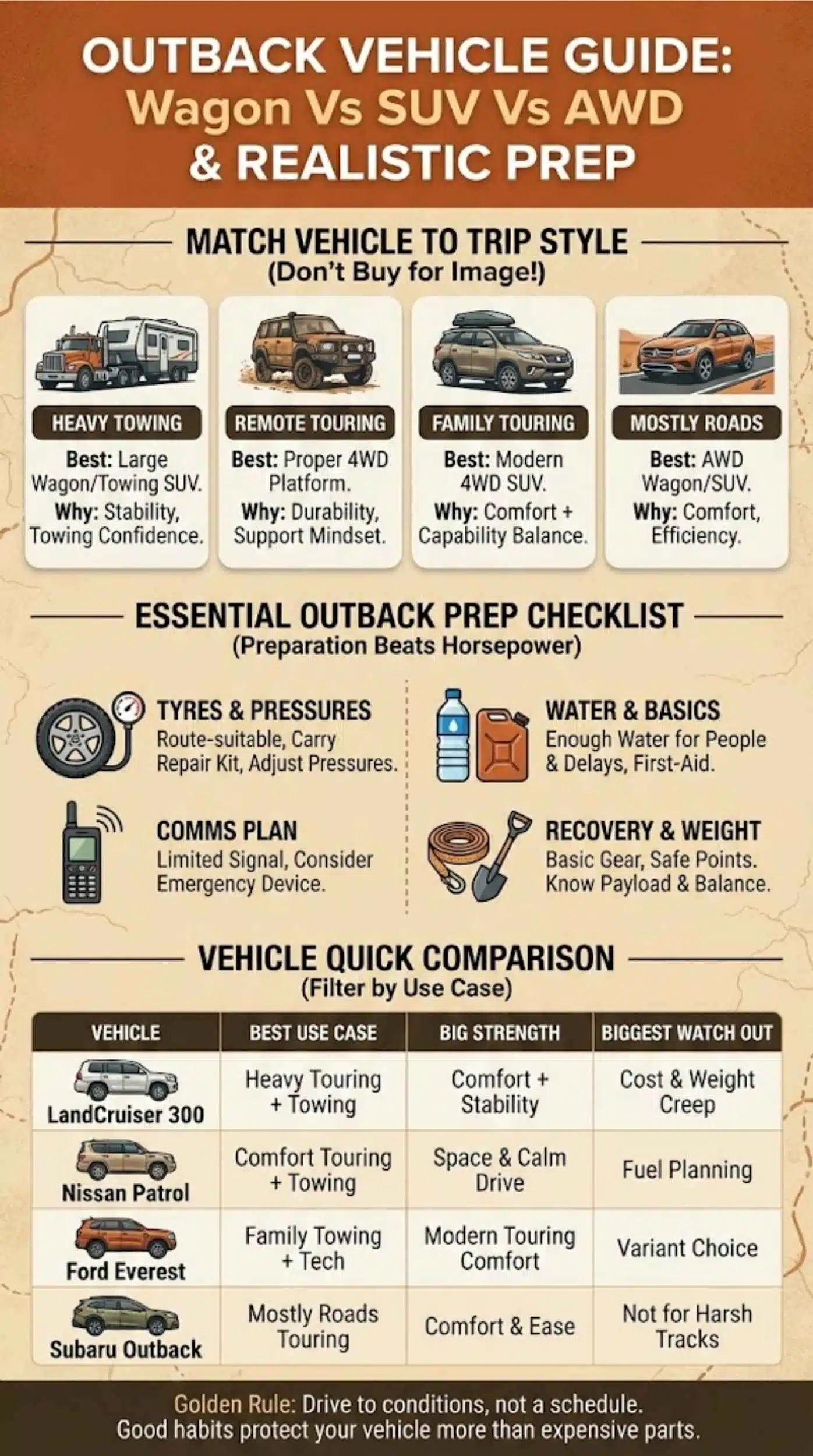
This is where many travellers make the biggest mistake. They buy for image instead of reality. Then they pay for it in fuel, cost, and frustration.
If you tow heavy, you need stability and strong load planning. If you travel remote, you need durability and range planning. If you travel with family, you need comfort and storage.
If you travel mostly on roads, you may not need a full heavy-duty 4WD. An AWD can be safer and more comfortable for that use.
Match your vehicle type to your trip type. That single step saves money and reduces stress.
| Trip Style | Best Vehicle Type | Why It Works |
| Heavy towing | Large wagon or towing-focused SUV | Stability and towing confidence |
| Remote touring | Proper 4WD platform | Durability and support mindset |
| Family touring | Modern 4WD SUV | Comfort + capability balance |
| Mostly roads | AWD wagon/SUV | Comfort and efficiency |
If You’re Towing Heavy
Heavy towing is not just about a towing number. It is also about payload, towball download, and how your vehicle handles in crosswinds.
A common mistake is loading the vehicle and trailer separately without checking the full system. The towball weight often pushes the vehicle closer to its limits than people expect.
A stable vehicle makes towing less stressful. A stable trailer setup matters just as much.
If towing is your main goal, choose a platform designed for it. Then build it sensibly.
If You’re Doing Remote Touring
Remote touring means fewer services, fewer tyre options, and slower help. That changes what “good” looks like.
In remote travel, simple reliability mindset is valuable. So is the ability to carry water, fuel, and spares within safe weight limits.
Route planning also matters more. You need to know distances, fuel availability, and likely road surfaces.
Remote touring is very rewarding. But it punishes casual planning.
If You’re Doing Family Touring
Family touring usually means more gear. It also means more comfort needs. Kids get tired and bored. That affects the whole trip.
A comfortable cabin, good storage, and stable ride reduce stress. That can make the difference between a great trip and a hard trip.
Safety and fatigue management matter. Long days are common. Breaks become part of the plan, not a “maybe.”
Choose a vehicle that keeps the cabin calm and secure.
Outback Prep Checklist: Mods And Gear That Make Sense
Preparation beats horsepower. A stock vehicle with smart preparation often outperforms an expensive build with poor planning. The Outback does not care about your badge. It cares about your tyres, your load, and your decisions.
Start with essentials. Water, a basic emergency kit, and a communication plan are more important than fancy accessories.
Next, focus on tyres and tyre pressures. Many Outback problems start with tyre damage or poor pressure management.
Then consider practical upgrades. Underbody protection can be useful. Storage can be useful. But everything has a weight cost.
Build your prep list around your route. Not around social media.
| Prep Area | What To Do | Why It Matters |
| Tyres | Choose route-suitable tyres, carry repair kit | Tyres are the most common trip-ending issue |
| Water | Carry enough water for people and delays | Heat and distance can trap you |
| Comms | Plan for limited signal, consider emergency device | Help can be far away |
| Recovery basics | Basic gear, safe recovery points | Small bogs can become big delays |
| Weight control | Know your payload, balance your load | Safety and handling depend on it |
Essential (Do These First)
Start with what keeps you safe if things go wrong. Water and basic supplies should always come first. A first-aid kit is non-negotiable. A torch and batteries are simple but critical.
Next, handle tyres properly. Carry a compressor. Carry a puncture repair kit. Know how to use it. Adjust pressures for the road surface when needed.
Have at least one full-size spare. For remote travel, many people carry more than one spare or extra repair options.
Finally, plan communication. Mobile coverage can disappear quickly. You should not rely on it as your only option.
Nice To Have (Depends On Route And Budget)
Underbody protection can help on rocky tracks. A better suspension setup can help on corrugations when you travel loaded. But upgrades should match real needs, not assumptions.
Long-range fuel solutions can help if your route demands it. But they add weight. They also require careful handling and planning.
Storage systems can improve comfort and access. Drawers and fridge slides can be great. But they add weight and reduce payload.
Aim for upgrades that increase safety and reduce stress. Avoid upgrades that only look tough.
Driving Habits That Save Vehicles
Good habits protect your vehicle more than expensive parts. Slow down on corrugations. Harsh speed overheats shocks and destroys tyres.
Adjust tyre pressures for the surface. Hard tyres on rough gravel can increase puncture risk. Very low pressures on fast roads can create heat issues. Learn safe ranges for your tyres and loads.
Take breaks. Let the vehicle cool if conditions are harsh. Let your brain rest too. Fatigue is a real risk on long days.
Drive to the conditions, not to your schedule.
Buying Advice: New Vs Used For Outback Touring
A new vehicle gives you warranty and a known history. It also costs more. A used vehicle can be great value, but it can hide wear from towing, rough roads, and poor maintenance.
If you buy used, you are buying someone else’s story. Make sure it is a good story. Look for service history. Look for evidence of sensible use. Inspect suspension and underbody areas carefully.
Also think about how the vehicle was loaded. Signs of repeated heavy towing can show in brakes, suspension, and drivetrain feel.
The best buying strategy is patience. Do not rush. The Outback will still be there next month.
| New Vs Used | New | Used |
| Pros | Warranty, known start point, newest safety tech | Better value, more choice, often quicker availability |
| Cons | Higher cost, more fear of scratches | Unknown history, hidden wear risks |
| Best For | People who want peace of mind | People who can inspect and choose carefully |
What To Check On A Used 4×4
Start with service history. Consistent servicing matters more than a shiny exterior. Ask what towing was done and how often. Ask what roads it travelled.
Inspect tyres for uneven wear. That can indicate alignment issues or worn suspension components. Check for underbody scrapes that look harsh.
Look for dust ingress signs in seals and filters. Outback driving can accelerate wear if filtration and maintenance were poor.
Finally, test drive on different surfaces if possible. Listen for suspension noise. Feel for drivetrain smoothness. A good vehicle should feel calm and consistent.
Ownership Costs To Budget For
Plan your budget beyond the purchase. Tyres can be expensive. So can servicing, brakes, and recovery.
Fuel cost is a big factor on long trips. That matters more if you choose a petrol wagon.
Accessories also cost money and payload. Many people spend thousands on gear that adds stress rather than reducing it. Keep upgrades practical.
Budget for safety items too. Comms, first aid, and emergency planning are real costs. They are also the best money you will spend.
Quick Comparison Table
A comparison table helps you make a calm decision. It also helps you avoid buying with emotion only. Use it to match models to your plan.
Do not treat this as a spec war. Two vehicles can have similar numbers and still feel very different in the real world.
Also remember that trims vary. A model name is not enough. Always check the exact variant, tyre size, and towing setup you plan to buy.
Use this table as a quick filter. Then revisit the detailed sections for your finalists.
| Vehicle | Best Use Case | Big Strength | Biggest Watch Out |
| LandCruiser 300 | Heavy touring + towing | Comfort + stability | Cost and weight creep |
| LandCruiser 70 | Remote work + rugged touring | Toughness mindset | Comfort and fatigue |
| Nissan Patrol | Comfort touring + towing | Space and calm drive | Fuel planning |
| LandCruiser Prado | Balanced family touring | Comfort-capability blend | Trim and payload planning |
| Ford Everest | Family towing + tech | Modern touring comfort | Variant choice |
| Isuzu MU-X | Value towing + touring | Practical ownership | Comfort varies by trim |
| Pajero Sport | Value 7-seat touring | Price-to-capability | Moderate towing focus |
| Defender | Premium touring + off-road | Comfort + tech | Cost and complexity |
| Grand Cherokee | Comfort touring | Smooth long-trip feel | Route and towing limits |
| Subaru Outback | Mostly roads touring | Comfort and ease | Not for harsh tracks |
Wrap-Up: Choosing The Right 4WD For Your Outback Trip Style
The best trips come from smart matching, not extreme buying. Start with your route. Then match your vehicle type to that route. Then build a setup that stays within safe weight limits.
If you tow heavy and travel remote, choose a platform built for it. Focus on tyres, cooling confidence, and stable towing setup. Keep accessories practical.
If you travel with family, choose comfort and storage that reduces fatigue. A calm cabin makes the trip better and safer.
If your route is mostly sealed and graded dirt roads, do not ignore AWD options. They can be comfortable, stable, and more efficient for that travel style.
Most importantly, plan for water, fuel, communication, and rest. The Outback rewards preparation. With the right planning, the best 4WD for Australian outback travel becomes the one that gets you there calmly, safely, and with a smile.
FAQs About Outback 4x4s
What is the best 4WD for Australian outback travel overall?
It depends on your plan. For heavy towing and high comfort, large wagons often fit best. For value touring, modern SUVs can be enough.
Do I need low range for Outback roads?
Not always. Many Outback routes are sealed or graded. Low range helps on steep, sandy, rocky, or deeply rutted tracks.
What should I prioritise first: tyres or accessories?
Tyres. Correct tyres and pressures prevent the most common travel problems.
How do I avoid overloading my 4×4?
Add up passengers, luggage, accessories, water, and towball weight. Keep a buffer. Pack lighter than you think you need.
Is diesel always better for Outback touring?
Diesel can help with range and touring habits, but the “best” depends on your route, vehicle, and fuel planning discipline.






























