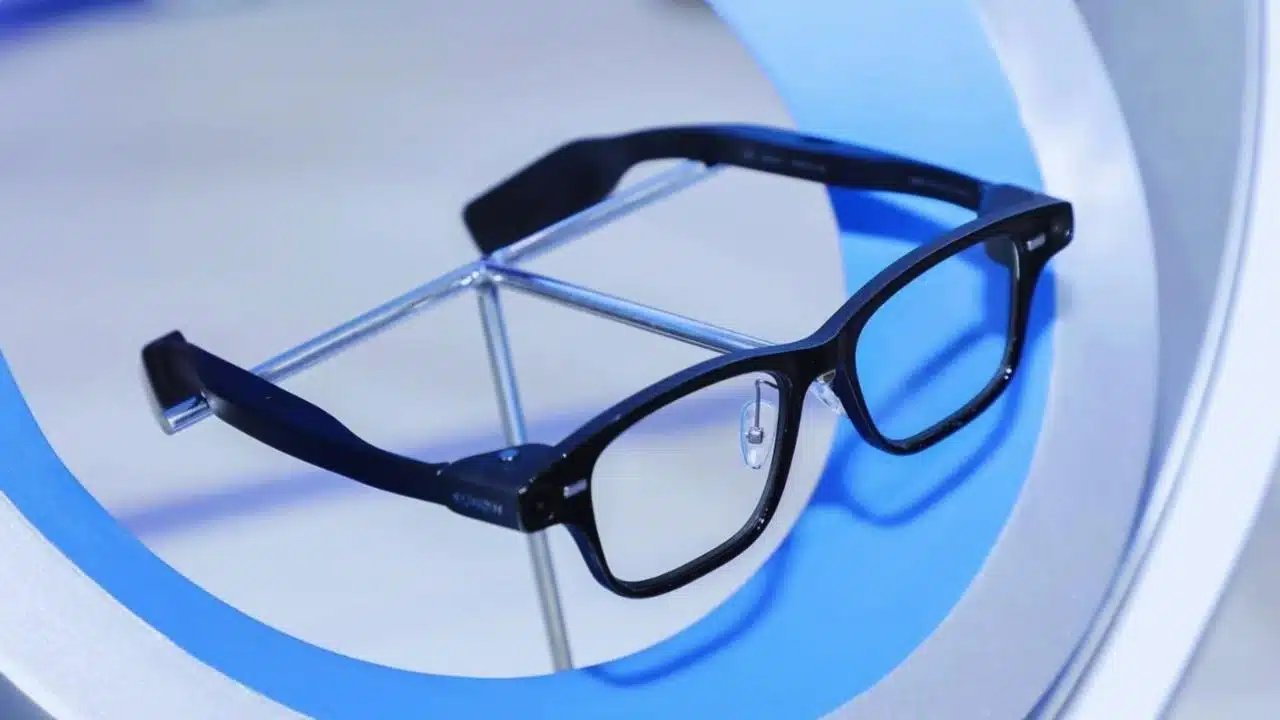
Alibaba has begun selling its Alibaba Quark AI glasses in China, starting at ¥1,899, positioning the eyewear as a hands-free “life assistant” that uses its Qwen AI model for translation, navigation, shopping help, and meeting notes.
Launch details: models, pricing, and where buyers can get them
Alibaba’s new wearable line is branded Quark AI Glasses and launches first in China, where Alibaba is combining online distribution with an offline retail rollout through optician partners.
The company is introducing two main product families:
- Quark AI Glasses G1: the lower-priced, everyday model designed as camera-and-audio smart glasses without a display.
- Quark AI Glasses S1: a higher-tier model with dual micro-OLED displays for near-eye information and richer on-device interactions.
Alibaba says the Quark AI Glasses line includes multiple frame and lens options, with several variants for each model family.
Key pricing and rollout snapshot (China)
| Item | What Alibaba says |
| Starting price | G1 from ¥1,899; S1 from ¥3,799 |
| Main sales channels | Major Chinese e-commerce platforms (including Alibaba-owned marketplaces) plus offline retail |
| Offline expansion | 604 partner optical stores across 82 cities in China |
| First public showing | The company says the glasses were first unveiled at World AI Conference (WAIC) 2025 in Shanghai |
The approach reflects a practical reality for smart glasses: comfort and fit matter, and offline channels can help buyers try frames and lenses before committing.
What the Quark AI Glasses do: everyday AI features designed for “voice + vision”?
Alibaba is pitching Quark AI Glasses as a wearable assistant that blends voice commands with camera-based understanding—so users can ask questions, get translations, and identify items in the real world without switching apps or typing.
According to Alibaba, key user-facing functions include:
- Instant price recognition for shopping comparisons
- AI-powered Q&A using both text and images
- On-the-go translation
- Near-eye navigation (especially relevant to the S1’s display)
- AI-generated meeting notes and smart reminders
- A live teleprompter mode for speaking or presenting
- Context-aware help such as finding nearby places and managing schedules
What makes this launch distinct in Alibaba’s ecosystem is how strongly the company is emphasizing built-in connections to its major services. Alibaba says the glasses integrate with:
- Alipay (payments)
- Amap (maps and navigation)
- Taobao (shopping)
- Fliggy (travel services)
- Music platforms including QQ Music and NetEase Cloud Music
What “ecosystem integration” means in real use?
| Common task | How Alibaba positions Quark AI Glasses to help |
| Shopping | Identify an item and check price information; connect to Taobao for product discovery |
| Paying | Use Alipay connections for commerce and daily transactions |
| Getting around | Use Amap integration for route guidance and location-based suggestions |
| Travel planning | Tie into Fliggy for booking-style workflows |
| Listening | Use music platform support for hands-free playback |
| Work and study | Translate, summarize, and create meeting notes without taking out a phone |
Alibaba’s strategy here is straightforward: smart glasses become more useful when they are connected to services people already use daily.
Hardware focus: display, imaging, battery life, and comfort
Alibaba is trying to reduce the usual friction points of smart glasses—short battery life, slow capture, and uncomfortable frames—by focusing on all-day wear and fast “moment capture.”
Quark S1: display-led model for near-eye information
Alibaba says the S1 is designed for extended use and includes:
- Bright, clear dual micro-OLED displays (a compact display technology often used for high-contrast near-eye viewing)
- Dual chips for performance
- Bone-conduction-based voice pickup support, aimed at improving voice interaction and calls in noisy environments
- An “industry-first” swappable dual-battery system with a claimed up to 24 hours of battery life
On imaging, Alibaba highlights:
- 0.6-second instant photo capture
- 3K video recording
- AI-enhanced 4K output
- Improved low-light performance using a company-described “Super Raw” approach
Quark G1: lighter, everyday model without a display
For the G1, Alibaba is aiming at daily wear and price accessibility:
- Starting at ¥1,899
- About 40 grams in weight (company claim)
- Shares core hardware capabilities with the S1, except for the display, while retaining audio, imaging, and AI features
Model comparison at a glance
| Feature | Quark AI Glasses G1 | Quark AI Glasses S1 |
| Starting price (China) | ¥1,899 | ¥3,799 |
| Display | No | Dual micro-OLED |
| Weight | ~40g (company claim) | Not emphasized as a single figure; positioned as all-day comfort |
| Battery strategy | Standard wearable battery approach | Swappable dual-battery system, up to 24h claimed |
| Best for | Entry-level smart glasses, everyday AI and capture | Navigation and “on-face” info, heavier daily AI usage |
By launching both a lighter entry model and a more feature-rich display model, Alibaba is covering two common buyer groups: people who want discreet smart glasses, and people who want a more capable near-eye experience.
Why Alibaba is pushing AI wearables now: Qwen, Quark, and “consumer AI” momentum?
The Quark AI Glasses launch is part of a broader Alibaba shift: turning its AI systems from enterprise tools into consumer products that people use daily.
Several recent moves help explain the timing:
- Qwen App expansion: Alibaba has been pushing Qwen into consumer-facing experiences, aiming to make it a “life and work partner,” not just a chatbot.
- Quark as a distribution engine: Alibaba positions Quark as an AI-powered information services platform with a very large user base in China, giving it a built-in pipeline to promote new AI experiences.
- Amap integration for real-world planning: Alibaba says Qwen has integrated with Amap to turn conversational requests into practical actions like choosing hotels, identifying nearby pharmacies, planning routes, and launching navigation—powered by Amap’s traffic and location database.
Recent Alibaba consumer AI milestones tied to wearables
| Date (2025) | Milestone | Why it matters for Quark AI Glasses |
| Feb 24 | Alibaba announced a 380 billion yuan plan for cloud and AI infrastructure over three years | Signals long-term compute and infrastructure support for large-scale consumer AI |
| Nov 17 | Public beta launch date cited by Alibaba for Qwen App | Establishes the consumer app foundation that the glasses connect to |
| Late Nov–Early Dec | Quark AI Glasses availability expands and details are published | Brings Qwen from phone to wearable hardware |
| Dec 18 | Alibaba says Qwen App integrated with Amap | Strengthens navigation and location intelligence—key daily smart-glasses use cases |
Alibaba’s bigger bet is that AI becomes most valuable when it is ambient—available quickly, on the move, and connected to services that complete tasks. Smart glasses are a natural test of that idea because they sit at the intersection of voice, camera, and daily routines.
Market impact and what to watch next
Smart glasses are shifting from niche gadgets toward mainstream experiments, with companies competing on comfort, price, battery life, and—most importantly—usefulness. Market research has pointed to rapid growth in smart-glasses shipments in 2025, fueled largely by consumer interest in AI-enabled models.
Alibaba’s Quark AI Glasses launch matters for three reasons:
- Aggressive entry pricing for a major ecosystem player
Starting at ¥1,899, the G1 puts Alibaba into an “everyday wearable” price band for China’s mass market—where even small differences in cost and distribution can influence adoption. - A service-first approach
Alibaba is not framing Quark as a standalone gadget. It is framing it as an interface to payments, shopping, navigation, and travel, which could increase retention if the experience feels seamless. - Battery-life is being treated as a core product feature
Many wearable attempts struggle because users do not want another device that dies midday. Alibaba’s emphasis on a swappable dual-battery approach on S1 shows it believes battery anxiety is a key barrier to daily smart-glasses use.
What to watch next?
| Question | Why it matters |
| Do users wear them daily? | Daily use is the difference between a novelty device and a new interface category |
| How well does “voice + vision” work in real settings? | Translation, navigation, and meeting capture must perform reliably in noise, motion, and crowds |
| Will developers build on the platform? | Alibaba says Quark AI Glasses support the MCP protocol, which could help third-party services add value |
| Will Alibaba expand outside China? | Wider markets would require localization, privacy compliance, and partnerships for distribution and lenses |
If Alibaba can turn Quark AI Glasses into a dependable daily tool—especially for navigation, translation, and commerce—it could strengthen its consumer AI footprint at a moment when the industry is searching for the next device category beyond the phone.