
Listen to the Podcast:
You may have heard the baseball term “Mound Visits Remaining,” but you might not know what it means. In this article, we’ll talk about what MVR is and how it’s used in baseball. We’ll also look at how the 5-visit rule came about and what effect it has on the sport.
When you go to a Major League Baseball game, you might see an MVR column on the scoreboard. MVR is a new idea that started in 2018. Its goal is to speed up a nine-inning game by reducing the number of times the pitcher goes to the mound. Mound visits are an important time for players and managers to talk about what to do next with a batter. Read on to learn more about the history of baseball, whether you’re a diehard fan or just like to watch every now and then.
Mound Visits Remaining
Mound Visits Remaining, or MVR is a baseball term. When a coach walks out to the mound to talk to his pitcher, this is called a “mound visit.” The umpire keeps track of each visit because there are only so many. Mound visits can change the way a game is going in a big way. They can calm a pitcher down in a tough spot and help the coach come up with a plan for his defence.
History of the MVR in Baseball
Even though we’ve already given a short explanation, you may still not be sure about the MVR in baseball rules. But some of you might not be sure that you need to limit the number of visits and why baseball even has the MVR. There is a very good reason for it. There is a certain order to the limits.
Before 2016, there was only one rule to follow. It said that if a manager or coach went to the field more than once in an inning, they had to take a pitcher off the field to make up for it. But there was no limit on the number of visits, and the coach or manager could use them whenever they wanted.
In 2016, each visit was only allowed to last “30 seconds.” This 30-second rule was only added to make sure that going to the Mound didn’t make the game last forever. This rule was made to make the game go faster. But in 2018, each team could only visit the Mound “six” times per game, and in 2019, that number dropped to “five” per game for each team.
Read More: What is Ops in Baseball
What is a Mound Visits Remaining in Baseball?
Mound Visits Remaining (MVR) is a sophisticated way to figure out how many visits each pitcher gets per game. A visit is when a player or coach comes out of the dugout and goes into the mound circle to talk to the pitcher.
Mound visits are trips to the pitcher’s mound by the manager, coach, or player during a game. The manager usually goes to the mound when he wants to give his pitcher signs, talk strategy with his pitcher, or take his pitcher out of the game. Players who are hurt and could get hurt more if they stay in the game also get to see a doctor.
Scorekeepers keep track of mound visits by putting an X next to the names of those who went to the mound during a game. When a player leaves his spot and crosses the foul line to talk to the pitcher on the mound, this is counted as one visit.
Scorekeepers and fans get confused when the same player or team comes to bat more than once in the same inning. In this case, only the first time a person crosses the foul line counts as a visit.
Where Did the MVR System Come From?
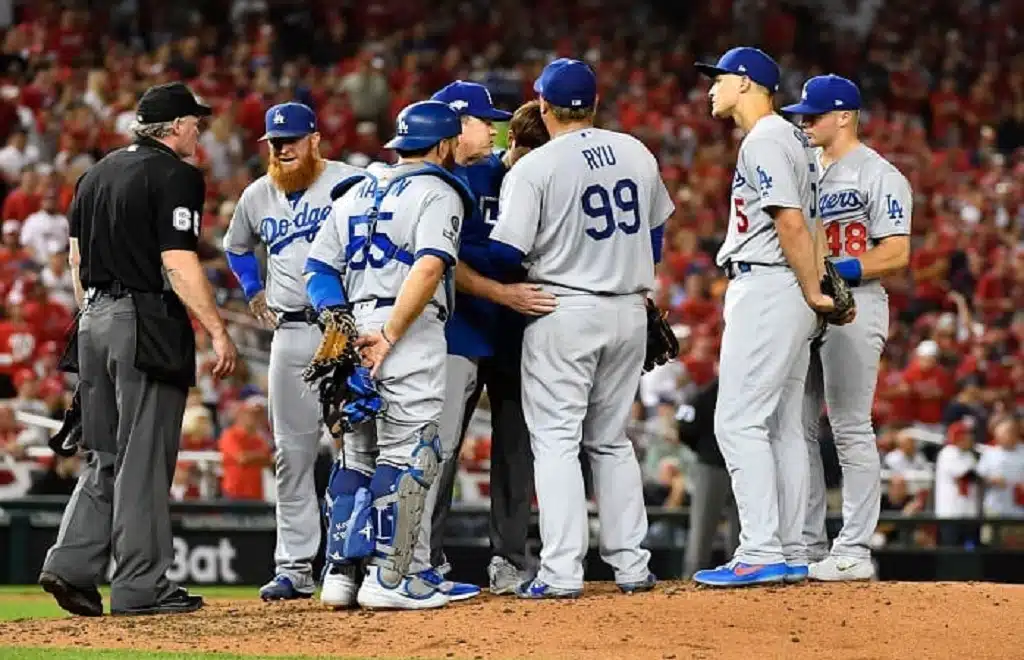
People have always gone to mounds, but until 2016, they could go as often as they wanted. Visits would only count for coaches and managers, and since there was no limit on the number or length of visits, any player could stop the game for as long as they wanted to check on the pitcher and it wouldn’t count as a visit. The only rule was that if a coach or manager went to the mound a second time in the same inning, it could only be to change the pitcher.
Because of this, games are getting longer, so as of 2016, visits can only last 30 seconds, and any conversation between the pitcher and a teammate counts as a visit, not just with coaches and managers. This makes teams think more carefully about which visits to take.
After 2018, teams can go to the pitcher’s mound no more than six times in a nine-inning game and one more time for every extra inning. A year later, they cut it down to five and let the pitcher and one infielder visit each other for free as long as it didn’t lead to a change.
But here’s the catch: limiting mound visits hasn’t made games shorter like the MLB thought it would. If anything, games are getting longer. In 2001, Baseball Reference said that a full baseball game takes about 2 hours and 58 minutes. Twenty years later, a typical baseball game can last up to three hours and eight minutes.
How Many Mound Visits Are Allowed in MLB?
By 2020, each team will get five trips to the pitcher’s mound in a nine-inning game. For every extra inning, they get one more visit. If a team has already used all of its mound visits, the umpire may give a quick one so the catcher can clear up a misunderstanding with the pitcher. That worries me more about safety than anything else. If the catcher is expecting a low pitch and the pitcher throws a high one, the catcher could get hurt.
The coaching staff can only go to the mound once per pitcher and once per inning, or twice if they want to switch out the pitcher. In other words, the manager or coach can go check on their pitcher, and if they need to make a change, they can leave the mound, tell the umpire, and then go back to the hill to put the pitcher on the bench. Even though they’ve been to the pitcher’s mound twice in the same inning, it only counts as one visit. If they went to the pitcher a second time without calling for a change, the pitcher could be taken out of the game for the rest of the game.
Once the umpire gives permission, visits start as soon as the coach leaves the dugout. Then, they have 30 seconds to get to the mound and talk to the pitcher. If they get back to the dugout before the time is up, the visit is over when the coach leaves the circle around the pitcher’s mound.
Read Also: How Many Baseball Games in a Season
How to Improve MVR?
The best way for a pitcher to raise his MVR is to do better overall as a pitcher. Still, there are a few other things he can do to be more efficient and get more mound visits per game without actually getting better at pitching:
Pace Yourself: A pitcher should pace himself and throw no more than 12-15 pitches per inning. By doing this, he can use his best stuff in late innings when it counts the most while limiting the number of times he has to go to the mound.
Maintain Focus: It’s important for pitchers to stay focused no matter how exhausted they are. Keeping his mind on the game will help him cut down on walks and may even keep him from having to go to the mound as often.
Limit Unnecessary Mound Visits: A pitcher should never leave the mound unless he absolutely needs to (i.e., injury) (i.e., injury). The more trips he makes to the mound that isn’t necessary, the more tired he gets.
Improve Pickoff Move: Pitching out of the windup is useful, but it’s harder for a pitcher to go to the mound more than once when there are runners on base. This is why a pitcher should work on his pickoff move until he can get pitches out of the stretch if he wants his manager to give him consistent MVRs every game. Only a few of the best pitchers don’t need a pickoff move, which makes them valuable in today’s game.
Improve Mound Presence: This part of pitching has more to do with your attitude and ability to scare people off than anything else. If a pitcher seems crazy and means enough, his manager will let him go to the mound more often. The best example of this is Trevor Bauer. Even though he has a better-than-average arsenal of pitches, Major League Baseball has fined him for going to the mound too often because he shows how he feels every time he pitches.
What Are the MLB Mound Visit Rules?
MVR has rules to make sure that both teams are treated fairly and that the game doesn’t get stopped too often. Here are some important rules about how to visit a mound:
- In a nine-inning game, each team can go to the plate five times. Since 2019, this rule has been in place. In 2018, the maximum number of mound visits per game was 6.
- The average amount of time you can spend at each site is 30 seconds.
- The coaches and managers can only talk to the pitcher once per inning. Also, the pitcher can’t leave his place on the mound during the short talk. If not, he must be switched out during the game.
- If the coach goes to the same pitcher twice in the same inning, he will also be taken out of the game.
- Also, if a game goes into extra innings, each team gets one extra visit per extra inning, and the visit doesn’t have to involve a change of pitchers.
- Other than these basic rules, you can look at MLB’s Official Baseball Rules for all the details about how to visit the mound.
Why Does This Rule Exist?
In 2018, the MVR rule was put in place to keep games from going on for too long. MLB has been looking at many rules about the speed of play to make games go a bit faster. People have stopped playing video games because they take too long.
Even though the major leagues don’t have pitch clocks like the minors do, the MLB has been trying to make games more exciting. The goal is to stop teams from trying to speed up or slow down the game. People will also find games more interesting to watch because of this rule.
What Does a Mound Visit Mean in Practice?
Well, in baseball, a mound visit is a break in the game to talk to the pitcher about other ways to play. During a typical mound visit, the pitching coach or baseball manager, the pitcher, the catcher, and the fielders are all around. During the mound visit, players will talk about how and where to pitch to opponents, how the pitcher does on the pitch, if there needs to be a change in pitching and much more. Mound visits shouldn’t take more than 30 seconds, after which a referee will come in to break up the match.
Also Read: Hank Aaron Baseball Cards
What Counts as a Mound Visit in Baseball?
The MLB says that a mound visit is when a player or coach stops the game to walk to the mound. There is no set time limit for deciding if it is a mound visit or not. Even if it only lasts five seconds, it will still count as a visit to the mound.
As was already said, each team gets five of these chances during a game. When a coach uses these, he should think about it carefully. If he uses them all up early, he might wish he could have a mound visit later. It’s a good idea to save them for the end of a baseball game.
What are the Exceptions?
There are exceptions to the five mound visits, just like there are to any rule change in baseball. For instance, if the pitcher seems to get hurt while pitching, the coach and trainer need to check on them. If the coach and/or trainer think the pitcher should be taken out (or stay), this won’t count against the MVR count.
The rule is also broken if the catcher and pitcher get mixed up when the pitcher throws the ball to home plate. Catchers and pitchers use complicated signals and sequences to tell each other what pitch is coming because they are afraid other teams will steal their signs. If there is a clear cross-up and the catcher expects a curveball but gets a fastball instead, the umpire will let the two players meet without MVR being counted.
If a pinch hitter comes in to take the place of a player at bat, the catcher can quickly talk to the pitcher if they want to. A “mound visit” is also when an infielder comes to the mound to use the rubber scrapper to clean their spikes. Even though neither of these is common, fans and players should know that these short stays don’t count as an MVR.
Responses About the Mound Visits Policy
The main point of this rule is to act in a civilized and forward-looking way. Both the players and the people watching the game will have more energy if the game goes faster. Overall, it makes the game more interesting and changes how tournaments are run.
Fans, coaches, and managers from the past don’t think so. They don’t like the new terms because they think it changes the rules of the game and makes the staff work harder and take more time. If they aren’t careful, they can throw off the pitcher and the whole game. There has been a lot of debate about what “MVR” means in baseball and whether or not we should keep this law.
Why is Knowing MVR Important?
The more times a pitcher goes to the mound during a game, whether he hits a home run or not, the more tired he gets. When pitchers are tired, they are more likely to get hurt and have a harder time performing at their best. MVR is a percentage, so it can be used to judge both a team’s rotations and each player on the team.
To Know More: Benefits of Batting Cage
Conclusion
In short, MVR makes a traditional mound visit during a baseball game even better. There are only five meetings that can be held at the mount. This means that teams must use them in a smart way. The idea behind this change is that it will speed up the game. Check out how long baseball games are to see if the length of games is getting shorter or longer to get a sense of what is going on.
Frequently Asked Questions (FAQs) about MVR in Baseball
What is a mound visit?
When a person in uniform goes to the pitcher’s mound to talk to the pitcher, this is called a “Mound visit.” Only people in uniform are allowed to make this kind of visit. A manager who is not in uniform, like Connie Mack, must give this job to someone else.
What does MVR stand for?
Your state’s department or Bureau of motor vehicles keeps a record of your time behind the wheel. This is called your “motor vehicle record,” or “MVR.”
What does MVR mean on the scoreboard in baseball?
MVR, which stands for “Mound Visits Remaining,” will be used in baseball for the first time on Thursday, Opening Day.
What happens if you run out of mound visits?
If a team has used up all of its visits, the umpire may let the catcher have a short visit if the pitcher and catcher got their roles mixed up.
What counts as an MVR in baseball?
As mentioned above, a mound visit is when anyone on the team, including the coach and staff, goes to the pitcher’s mound to talk about strategy, change pitches, or check in with the pitcher’s mind. Normal talk between players on the same team does not count as one mound visit.
How many mound visits are allowed in MLB?
In a nine-inning Major League Baseball game, each team can go to the mound five times. Also, each team gets an extra inning for every extra inning that is played. So, the total number of mound visits in a game is the sum of the five official visits and any extra innings.
Are the Mound Visits limited per inning?
No, you can’t only go to the Mound once per inning. The most recent rule for 2021 says that each team can have a maximum of five MVRs per game. If a team used all five in the first two innings of the game, the special team can’t use the mound visit under any circumstances (except in rare cases).