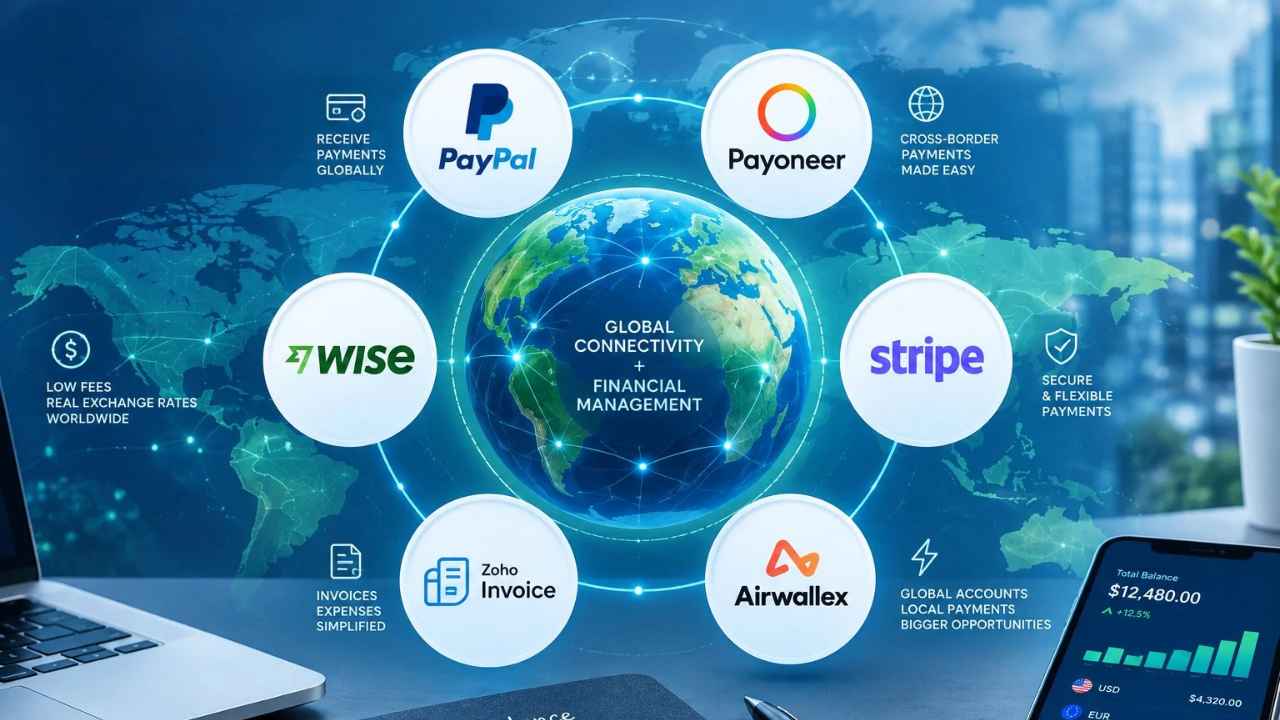
Finding fintech tools for freelancers to get payments globally is personal for me. I have worked remotely for US and European companies for more than five years. Living in Bangladesh, I know how difficult it can be to receive earnings when a client’s preferred payment service does not support my country.
Finishing the work is only part of the job. Before accepting a project, I also need to know how the client will pay, what the transfer will cost, and whether I can withdraw the money locally.
For global freelancers, there is no single best payment app. Payoneer suits cross-border business payments. Wise suits eligible users managing different currencies. Deel and Remote work when clients use contractor payment platforms. Stripe and PayPal help eligible freelancers collect payments, while Zoho Invoice handles billing.
This guide compares their roles and limits. It draws on my freelance background and current provider documentation, rather than claiming I have personally tested every service.
Provider information checked October 3, 2026. Fees and eligibility depend on your country, account, and payment route.
Comparing Fintech Tools for Freelancers to Get Payments Globally
I start with three questions: Can I open the account? Can my client pay into it? Can I withdraw the earnings? Those are different checks. A provider may support transfers to a country without offering residents a payment account.
| Tool | Main use | Important limitation |
|---|---|---|
| Payoneer | Business payments and marketplace earnings | Receiving and withdrawal fees vary |
| Wise | Currency balances and international transfers | Bangladesh balance and business-transfer restrictions |
| Deel | Client-managed contractor payments | Client participation and withdrawal eligibility |
| Remote | Contractor invoices and payouts | Currency availability depends on the payment route |
| PayPal | Invoices and familiar checkout | Receiving support varies by country. |
| Stripe | Card payments and payment links | Requires an eligible business location |
| Airwallex | Business collections, currency management, and spending | Business eligibility and registration requirements |
| Revolut Pro | Freelance income and business expenses | Residence and product availability restrictions |
| Zoho Invoice | Billing, reminders, and payment records | Connected gateways have their own restrictions |
| bKash | Local access to Payoneer earnings in Bangladesh | A withdrawal destination, not a global collection account |
Understanding how cross-border payments work helps explain why a client can send $500 while a freelancer receives less.
10 Fintech Tools for Freelancers to Get Payments Globally: Uses and Limits
1. Payoneer: A practical starting point for international business earnings
Payoneer supports marketplace payouts, receiving accounts, and payment requests. Eligible clients can pay requests through methods such as cards and US ACH bank debit. For a freelancer facing limited payment options, that flexibility is worth checking.
Its published pricing lists US ACH debit at 1% and card payments at up to 3.99% plus $0.49 or equivalent. Location-specific terms apply. It also lists a $29.95 annual account fee when receipts fall below $6,000 over 12 consecutive months, with exceptions and regional conditions.
I would compare the full withdrawal quote before agreeing to use it. A low receiving fee does not tell me how much will reach my local account.
2. Wise: Useful currency tools, with a major Bangladesh caveat
Wise offers currency balances and account features to eligible residents. However, Bangladesh is absent from its current list of countries where residents can hold money. Older accounts may have different features.
Wise can send BDT to Bangladeshi banks, bKash, and Nagad, but its BDT guide explicitly excludes business transfers. I would therefore not recommend that route as a standard way for a company to pay a Bangladesh-based freelancer.
For freelancers elsewhere, Wise deserves a look if their residence, business status, and required receiving details are supported. I would check those features before putting Wise details on an invoice.
3. Deel: Best considered when a client manages contractors through it
Deel gives contractors several withdrawal choices, including bank transfers and selected wallets. Availability still depends on the contractor’s circumstances; seeing a wallet listed does not mean I can open that wallet in Bangladesh.
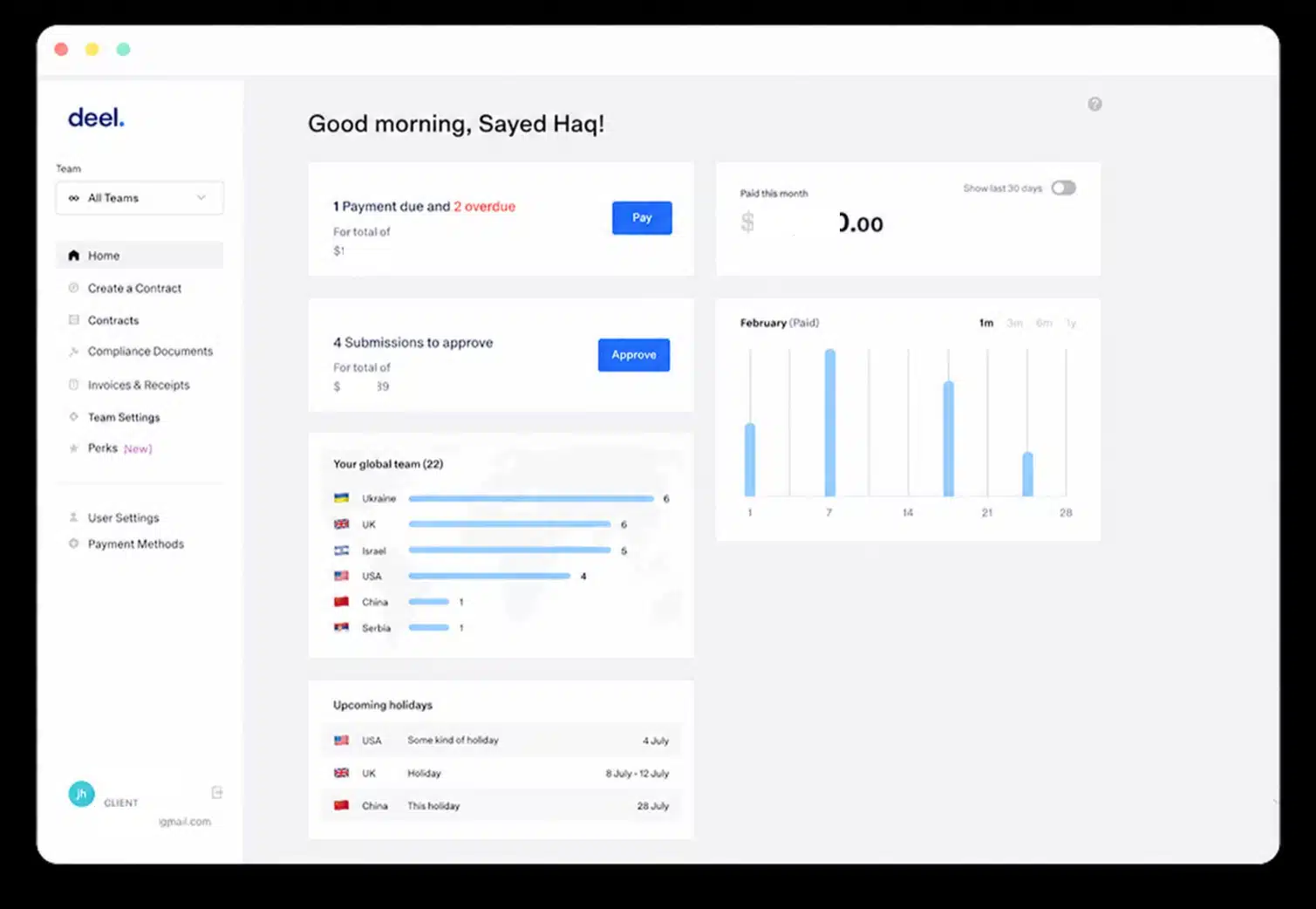
Deel lists no Deel fee for local bank withdrawals, although provider and bank fees may apply. Its Payoneer withdrawal fee is 1%, with a $12 minimum. That minimum matters on small invoices.
I would discuss Deel with a regular client that already uses it. It is a client-managed payment workflow, so opening a contractor account alone does not replace the client’s involvement.
4. Remote: A documented option for contractors in Bangladesh
Remote’s contractor coverage table lists Bangladesh with BDT and EUR payout currencies. The available route depends on the client’s billing currency and the contractor’s bank location.
Remote processes contractor payouts after receiving payment from the client. For ongoing work, I would ask the client to confirm the payout setup before the first invoice.
Non-local currency payouts need closer attention. Remote warns that SWIFT transfers can attract correspondent bank charges of $20–$50, beyond its payment provider’s SWIFT fee. I would compare that cost with the local-currency option.
5. PayPal: Convenient where receiving payments is supported
PayPal lets eligible sellers create invoices, and customers can pay through supported methods. Sending an invoice is free; payment-processing fees apply when it is paid.
The important check is receiving capability. PayPal says some countries have send-only accounts, and its supported payouts country table does not include Bangladesh. I would not treat PayPal as a confirmed local receiving option for a Bangladeshi freelancer.
Where supported, I would compare commercial payment fees, currency conversion, and withdrawal costs. Client familiarity is useful, but the final amount received still decides whether the route makes sense.
6. Stripe: Helpful for collecting card payments without building checkout
Stripe Payment Links lets eligible businesses share a hosted payment page without coding a checkout. That suits a freelancer selling a defined service or collecting a project payment online.
Bangladesh is absent from Stripe’s supported payments business locations. A client having an international card does not remove that account restriction.
I would consider Stripe if I operated an eligible business and could meet its verification requirements. I would check the local pricing page for international card and currency conversion charges, rather than assume US rates apply everywhere.
7. Airwallex: Worth considering as a freelance business grows
Airwallex combines global receiving accounts, currency transfers, business cards, and accounting integrations. It is more relevant when freelance work involves business expenses or payments to other people.
Its eligibility guidance requires an active registered business in an eligible country and says it does not offer personal accounts to individuals. Business structure and location therefore come before features.
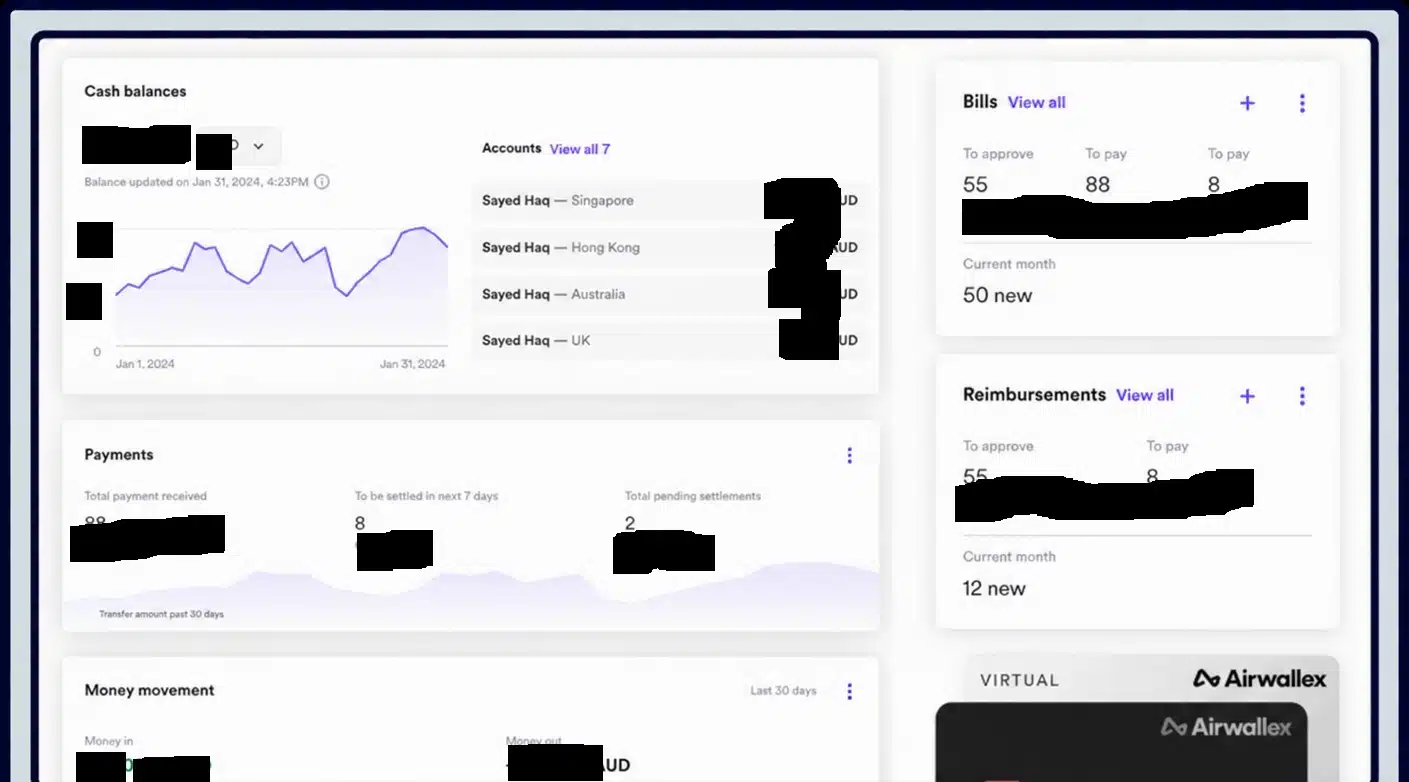
I would shortlist it for an eligible freelance business with regular foreign-currency income. For occasional invoices, I would first compare their account requirements and local plan costs with simpler options.
8. Revolut Pro: A separate account for eligible solo freelancers
Revolut Pro sits inside the personal Revolut app but provides a separate account for business activity. It offers invoices, payment links, and expense tracking without an additional Pro subscription fee. Payment acceptance fees still apply.
Revolut’s account signup list does not include Bangladesh. Pro features also vary by market, so personal-account eligibility is only the first check.
For an eligible freelancer, keeping work income separate could simplify records. Editorialge’s guide to neobanks for freelancers receiving cross-border payments explores related account choices.
9. Zoho Invoice: Useful for organizing what clients owe
Zoho Invoice is free invoicing software with payment reminders, receivables tracking, and online payment integrations. Its main role is managing bills and records.
I would use an invoicing tool to state the service, currency, due date, and agreed payment instructions clearly. It also helps separate an unpaid invoice from a payment that has already arrived.
Connecting a gateway does not bypass that gateway’s country rules or processing fees. For freelancers with payment barriers, organized invoices can support an approved bank or payment-provider route even when online card collection is unavailable.
10. bKash: Local access to Payoneer earnings in Bangladesh
bKash belongs on this list because receiving foreign income is only useful if I can access it locally. Its Payoneer integration lets eligible users move earnings into a linked bKash account. The account names must match.
The published transaction range is BDT 1,000–250,000. Payoneer charges a 3% conversion fee plus $1 per withdrawal. Cashing out afterward can add a separate charge. bKash also states that the government’s 2.5% remittance incentive does not apply to this service.
I would compare this route with a bank withdrawal. Convenient local access can justify a fee, but frequent small withdrawals make the fixed $1 charge more noticeable.
Choosing Fintech Tools for Freelancers to Get Payments Globally When Access is Limited
For a freelancer in Bangladesh, my starting shortlist would be Payoneer, its bKash withdrawal route, and Remote when the client supports it. I would also check Deel’s available bank payout options before signing a contract.
My checklist would be:
- Confirm eligibility: Use my real residence, identity, and business information.
- Agree on fees: State whether the client covers transfer charges.
- Compare the final amount: Include receiving, conversion, withdrawal, and cash-out costs.
- Keep records: Save the contract, invoice, payout statement, and bank receipt.
- Confirm bank requirements: Ask what documents the bank needs for freelance service income.
- Test the route: Arrange a small approved payment before relying on it for a large invoice.
I would keep a second verified payment route available where possible. A delayed account review should not leave every client unable to pay.
For freelancers meeting clients in person, contactless payments can offer another way to collect fees. Our explainer on biometric payments at the register covers a related checkout trend. Neither replaces checking whether international business payments can reach my account.
My Take on Fintech Tools for Freelancers to Get Payments Globally
After more than five years working remotely with US and European companies, I know payment arrangements deserve attention before work begins.
The best fintech tools for freelancers to get payments globally are the ones that support my actual location, accept my client’s business payment, and let me withdraw at a reasonable total cost. I would choose a verified receiving route, clear invoicing, and a workable backup before chasing the app with the longest feature list.