Teaching a child the alphabet is widely viewed as the foundational starting line for reading. Many parents eagerly buy flashcards, colorful posters, and alphabet puzzles to give their children an early academic start. However, traditional approaches handed down across generations are often based on outdated assumptions rather than modern literacy research.
Relying on widespread alphabet teaching myths can unintentionally frustrate young learners and slow down reading development. By understanding how children naturally process letter shapes, sounds, and language structure, parents and educators can adopt science-backed strategies that build true phonemic awareness. Below are 9 persistent myths about teaching the alphabet and how to replace them with effective learning habits.
9 Alphabet Teaching Myths Debunked
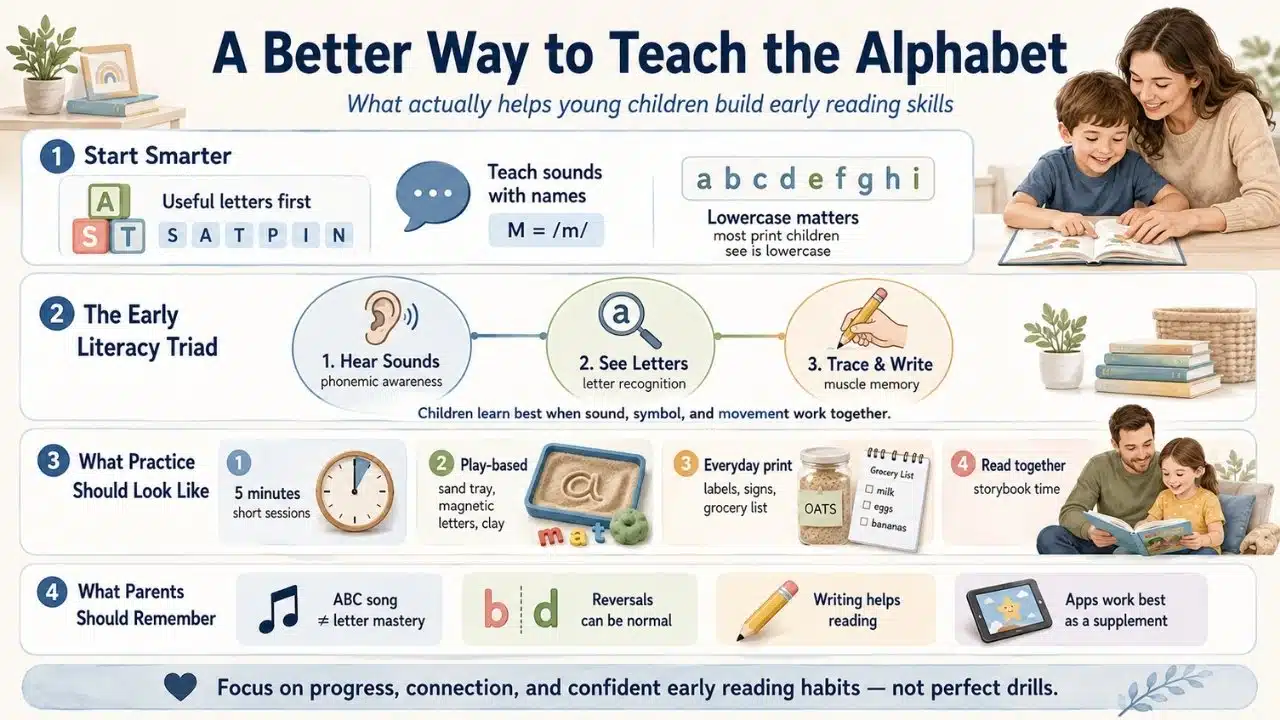
1. Myth: You Must Teach Letters in Alphabetical Order (A to Z)
Many parents assume instruction must begin at “A” and proceed strictly sequentially through “Z.”
-
The Reality: The alphabetical sequence is an arbitrary organizational system, not an instructional path. Teaching letters sequentially means children take a long time to learn high-frequency letters needed to form basic words.
-
The Solution: Introduce high-utility letters first (such as S, A, T, P, I, N). Learning this small set allows children to blend sounds and read their first simple words – like sat, pin, tap, and pit – almost immediately, boosting confidence.
2. Myth: Singing the ABC Song Means a Child Knows the Alphabet
Reciting the alphabet song is often celebrated as proof that a toddler has mastered letter knowledge.
-
The Reality: Memorizing the “ABC” song is a rote memory task involving auditory recitation, not letter identification. Children often view “L-M-N-O-P” as a single multi-syllable word (“elemenopee”) rather than five distinct linguistic units.
-
The Solution: Pair auditory singing with visual pointing. Ask your child to touch individual letters on a chart as they sing to connect spoken letter names with their visual representations.
3. Myth: Teaching Letter Names Should Come Before Letter Sounds
A conventional approach focuses on memorizing names (“This is the letter B”) before introducing letter sounds (“B says /b/”).
-
The Reality: Knowing that the letter W is named “double-u” does not help a child sound out the word “wet.” Literacy research indicates that letter-sound recognition (phonics) is far more critical for early decoding than letter-name memorization.
-
The Solution: Teach letter names and letter sounds simultaneously, or prioritize the sound. For example, introduce the letter M by saying: “This is M, and it makes the /m/ sound like in monkey.”
4. Myth: Flashcards Are the Best Tool for Alphabet Mastery
Rote flashcard drills remain a staple in many households attempting to teach early reading skills.
-
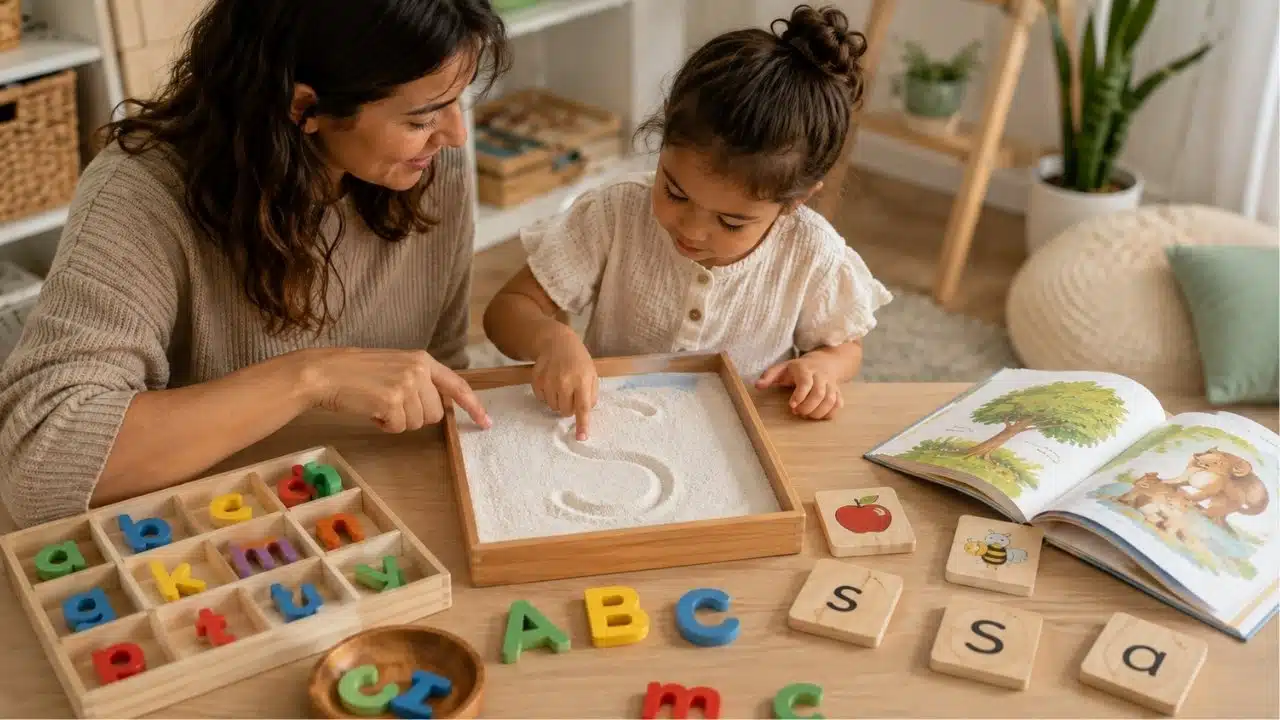
The Reality: Flashcards emphasize passive recognition rather than active engagement. Young children learn language best through multisensory experiences that combine sight, sound, touch, and physical movement.
-
The Solution: Replace repetitive flashcard drills with interactive games. Have children form letters in sand trays, shape them with modeling clay, or hunt for specific letter shapes in environmental print like cereal boxes and street signs.
5. Myth: Uppercase Letters Should Always Be Taught First
Parents usually teach capital letters first because their straight lines and symmetry appear easier to draw.
-
The Reality: Lowercase letters account for over 90% of written text in books, signs, and everyday writing. Delaying lowercase instruction makes it harder for children to recognize words when transitioning to actual storybooks.
-
The Solution: Teach uppercase and lowercase pairs together, or focus heavily on lowercase letters early on so children recognize the forms they encounter most frequently in print.
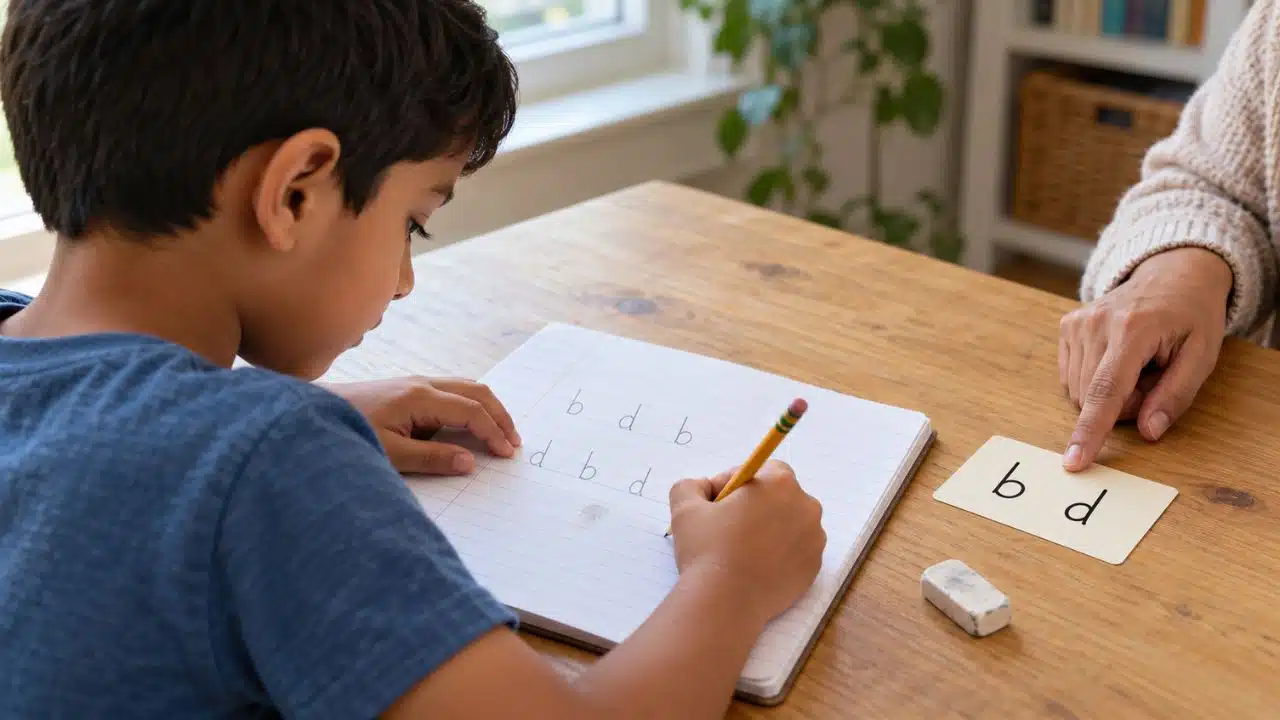
6. Myth: Letter Reversals (b vs. d) Are an Immediate Sign of Dyslexia
When a 4- or 5-year-old writes “b” instead of “d” or flips “p” upside down, parents frequently worry about learning disabilities.
-
The Reality: Visual directionality is a learned skill. In a child’s natural world, a chair is still a chair whether turned left or right. The brain must be trained to realize that a letter changes identity when flipped. Reversals are normal up until roughly age 7.
-
The Solution: Provide multi-sensory anchor cues. For example, teach the “bed” visual trick (where the left hand forms ‘b’ and the right forms ‘d’ to resemble a bed) rather than expressing concern over early writing flips.
7. Myth: Reading Must Be Mastered Before Writing Begins
Many caregivers treat reading and writing as separate, sequential steps, delaying pencil work until reading is established.
-
The Reality: Reading (decoding) and writing (encoding) are two sides of the same coin. Physical manipulation through tracing, forming, and writing letters strengthens muscle memory and speeds up visual letter identification.
-
The Solution: Encourage early scribbling, finger-tracing, and approximate spelling alongside letter identification. Writing helps cement letter shapes into long-term memory.
8. Myth: Digital Toys and Apps Can Teach the Alphabet Independently
Light-up electronic toys that speak letter sounds are frequently marketed as complete alphabet learning tools.
-
The Reality: While digital media can offer supplemental practice, passive screen interaction lacks the back-and-forth conversational feedback (serve-and-return interaction) essential for language acquisition.
-
The Solution: Use digital tools as secondary reinforcement rather than primary teachers. Sit with your child during screen activities to discuss sounds, ask questions, and relate digital content to real-world objects.
9. Myth: Daily Intensive Drills Are Necessary for Early Success
Some parents fear their child will fall behind unless they commit to 30-minute daily alphabet lessons before kindergarten.
-
The Reality: Young children have short attention spans. Long, rigid instruction sessions often create anxiety around reading, leading to frustration and avoidance.
-
The Solution: Keep learning micro-focused and play-based. Short, 5-minute interactions embedded naturally throughout the day – such as pointing out letters on a grocery list or reading a bedtime book – build stronger retention without fatigue.
Phonics-First Instruction vs. Traditional Rote Learning
To understand how addressing these alphabet teaching myths impacts early reading, consider research conducted on early childhood literacy frameworks.
A comparative study evaluated two groups of preschool students over a six-month period:
-
Group A (Traditional Rote Method): Taught letters strictly from A to Z, focusing primarily on letter names via songs and flashcard drills.
-
Group B (Targeted Phonics Method): Taught high-frequency letters out of order, pairing letter shapes directly with their corresponding sounds and incorporating tactile activities (sand tracing, building letters with blocks).
The Results:
-
Word Decoding Ability: Students in Group B were able to decode simple three-letter words (CVC words like cat, dog, sit) nearly three times faster than those in Group A.
-
Long-Term Retention: Group B demonstrated significantly higher letter-sound retention scores after breaks because the learning was connected to hands-on manipulation and word formation rather than simple singing memory.
A Balanced Framework for Early Literacy
Dispelling these myths does not mean abandoning fun alphabet activities. Instead, parents should focus on a balanced approach that combines phonemic awareness, visual recognition, and practical engagement.
-
Prioritize Phonemic Awareness: Help children hear individual sounds in spoken words (“What sound does sun start with?”) before forcing visual letter identification.
-
Embed Learning in Everyday Life: Point out environmental print during grocery shopping, outdoor walks, or kitchen prep.
-
Keep It Conversational: Talk with your child regularly; a rich spoken vocabulary provides the foundation upon which alphabet recognition sits.
Limitations & Trade-Offs
While evidence-based methods improve learning efficiency, parents should account for individual developmental differences:
-
Developmental Readiness Varies: A strategy that works for an active 5-year-old may overwhelm a 3-year-old whose fine motor skills and attention span are still maturing.
-
Phonics Is Not the Only Component: Focusing exclusively on phonics and letter sounds without reading rich, engaging stories can limit vocabulary growth and reading comprehension.
-
Over-Correcting Mistakes Can Lower Confidence: Constantly correcting minor errors during early attempts at reading or writing can cause children to withdraw. Balance constructive guidance with enthusiastic praise.
Complementing Hands-On Learning with Safe Digital Practice
While passive screen time offers minimal educational value, thoughtfully designed digital tools can support early literacy when used alongside physical, real-world activities. Interactive apps that pair guided tracing with immediate phonetic audio allow children to practice connecting letter shapes with their corresponding sounds at their own pace.
When evaluating screen options, parents should look for ad-free environments that prioritize active practice over flashing distractions and popups. If you’re exploring digital options, our hands-on Alphabet Magic Trace & Phonics review breaks down how structured tracing and letter-matching mini-games can serve as a supportive reinforcement tool. Used as a short, secondary supplement rather than a substitute for parent-led reading, safe educational games can reinforce fine motor control and letter identification in a stress-free setting.
Focus on Progress Over Perfection
Unlearning common alphabet teaching myths allows parents to provide intentional, stress-free literacy guidance at home. By shifting focus from rigid A-to-Z memorization to engaging, sound-focused instruction, you help your child build a genuine foundation for lifelong reading success.
Frequently Asked Questions(FAQs) on Alphabet Teaching Myths
At what age should a child start learning the alphabet?
Most children begin showing interest in letter shapes and sounds between ages 2 and 4. Informal, play-based exposure can start in toddlerhood, while structured phonics activities typically begin around age 4 or 5.
Is it bad if my child only knows letter sounds and not letter names?
No. Knowing letter sounds is actually more beneficial for learning to read than knowing letter names. Letter names can easily be introduced alongside or after sounds are established.
How many letters should I introduce at one time?
Start with 2 to 4 letters at a time. Ensure your child can recognize and produce the sounds for those letters comfortably before introducing a new set, while periodically reviewing previously learned letters.