

web developers, ever feel overwhelmed picking the right frontend framework amid all the hype? You know, that moment when your project’s demands clash with endless options like React, Vue.js, or Angular, leaving you stuck on basics like server-side rendering or component-based architecture.
It happens to the best of us, chasing better user experience and developer experience without a clear path.
React holds strong as the top choice in 2026, claiming about 45% market share among pros. This blog breaks down the must-know frameworks, from Next.js for full-stack power to SvelteKit for speed boosts, plus AI coding tools reshaping how we build.
We’ll guide you through picks like Astro, Qwik, and Remix, weighing community support, performance, and scalability for your needs.
Ready to level up your web development game?
The Importance of Front-End Frameworks in 2026
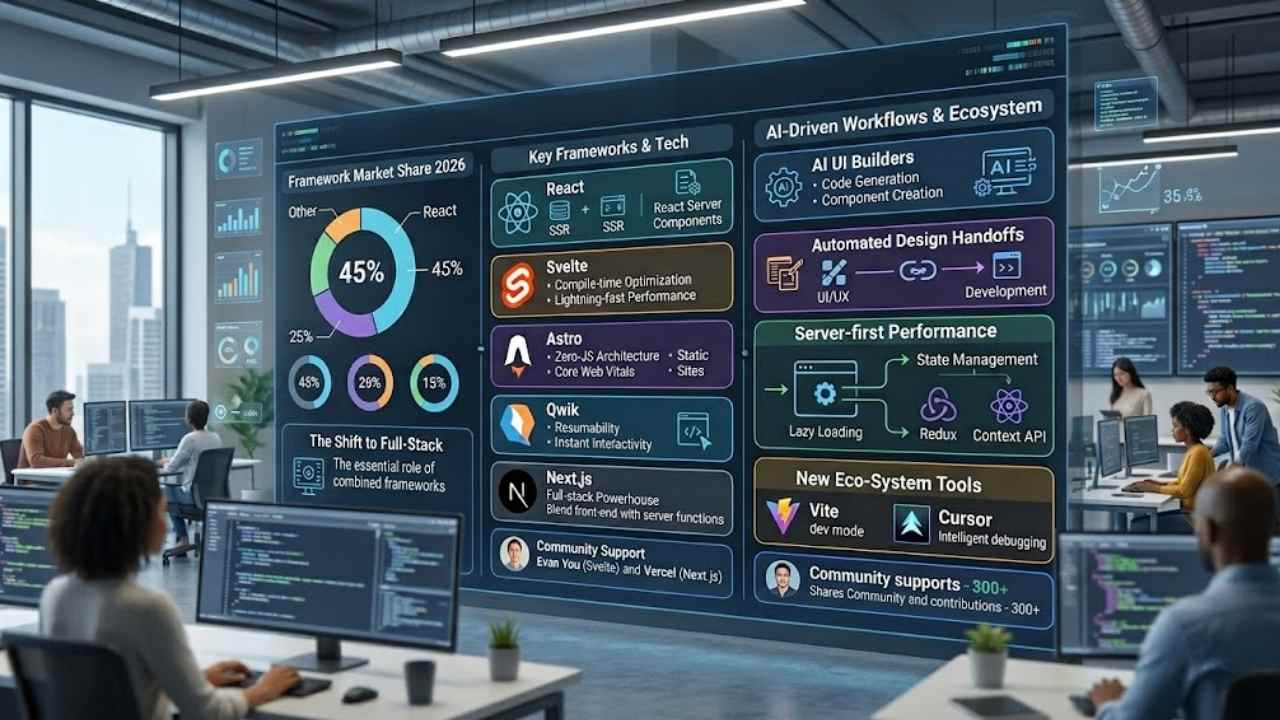
Front-end frameworks shape web development in 2026. Developers rely on them for speed, scalability, and better user experiences. React holds a dominant spot with about 45% market share among web developers.
This framework powers enterprise applications and supports features like server-side rendering (SSR) and React Server Components. Svelte sees a big surge in adoption due to its compile-time optimization and lightning-fast performance.
Astro gains traction for zero-JS architecture that boosts Core Web Vitals and static sites. Qwik stands out with resumability for instant interactivity and efficient metrics. Next.js surges as a full-stack powerhouse, blending front-end with server functions for SEO and scalability.
Full-stack frameworks shift developers away from standalone options, making them essential for modern apps.
AI-driven workflows define trends in 2026. Tools like AI-powered UI builders automate code generation and component creation. Automated design handoffs change how teams handle UI/UX design to development.
Server-first performance optimizes apps, often using lazy loading and state management with Redux or Context API. New tools, including Vite for dev mode and Cursor for intelligent debugging, form the core of the ecosystem.
Developers use these with frameworks like SvelteKit or Remix for data-heavy apps. Evan You’s influence on Svelte, plus Vercel’s role in Next.js, highlights community support. These elements make front-end frameworks vital for performance, innovation, and tackling learning curves in web design.
React-Based Frameworks Leading the Industry
React powers the front end for countless sites, thanks to its virtual DOM that speeds up updates and keeps things smooth. Developers love how tools from Facebook, like React Router, make routing feel effortless, drawing you in to explore more on what sets these leaders apart.
Next.js: The Full-Stack Powerhouse for SEO and Scalability
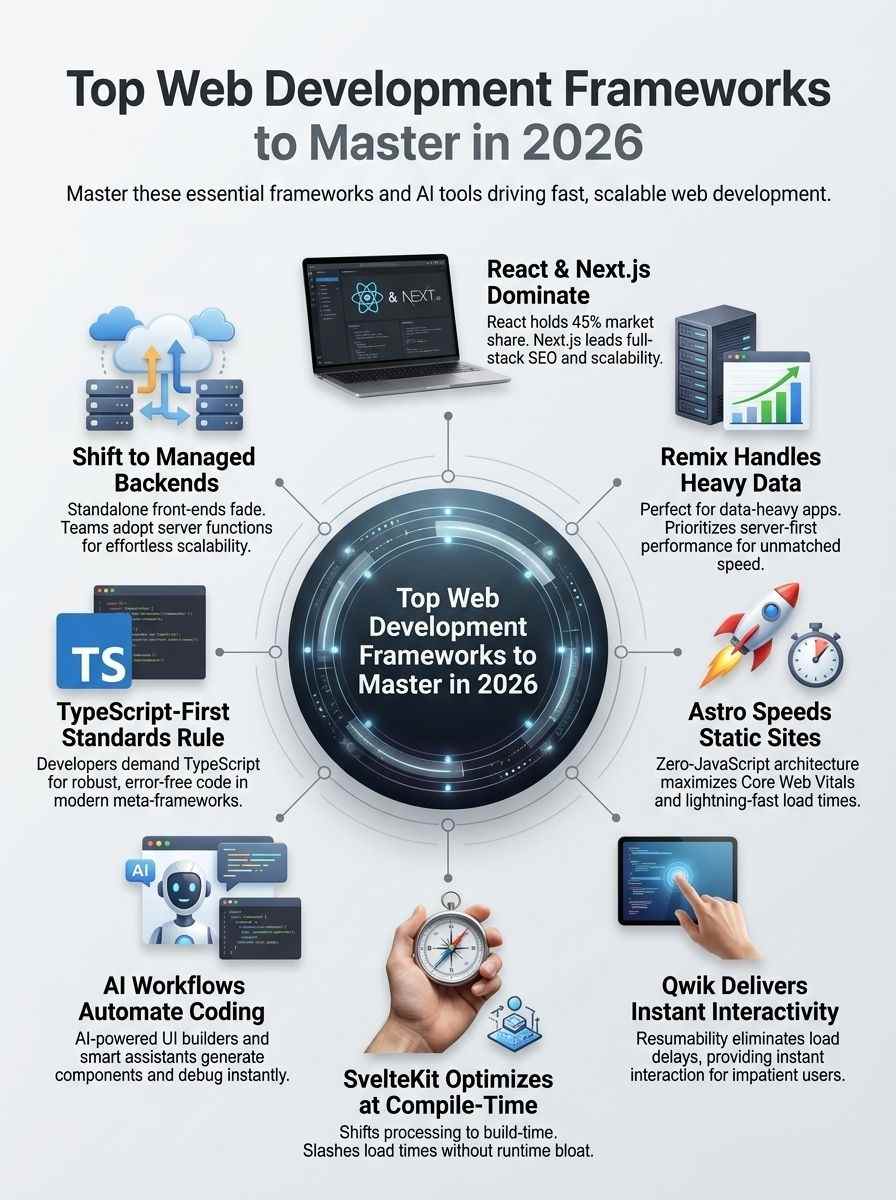
Next.js stands out in frontend development. Developers love it for blending React with server-side magic. This meta-framework boosts SEO through static rendering. It scales apps without breaking a sweat.
Full-stack adoption surges, as fact five shows. Teams move from standalone frontend frameworks to these all-in-one solutions. Server-first performance optimizes load times, cutting bounce rates.
Picture your site loading like lightning; that’s the Next.js edge. React holds 45% market share, powering this tool’s popularity.
Next.js changed how I build apps; it’s like having a superpower for scalability, says a web developer on forums.
AI-driven workflows integrate seamlessly here. Automated design handoffs speed up frontend frameworks work. New tools like AI assistants monitor performance. Qwik and Astro gain traction too, but Next.js leads for full-stack needs.
Developers prioritize speed and efficiency in 2026. React Router fits right in, handling navigation with ease. This setup handles data-heavy tasks, keeping users hooked.
Remix: Optimized for Data-Heavy Applications
Remix stands out as a top React-based web frontend framework, perfect for apps loaded with data. Developers pick it often in 2026, thanks to React’s huge 45 percent market share. This meta-framework shines in full-stack setups, handling server functions with ease.
It focuses on server-first performance, a big trend now, to keep things speedy and scalable. Imagine juggling tons of info without a hitch, like a pro chef flipping pancakes during rush hour.
Teams use Remix for its smart data flow, tying into AI-driven workflows that define this year. It pairs well with tools like the React compiler for better efficiency. Full-stack adoption has spiked, moving folks from basic front-ends to robust ones like this.
Picture building a shopify-style site, where data loads fast and stays fresh. Solid.js fans might switch over for that extra edge in heavy apps.
React Compiler: Enhancing Development Efficiency
React Compiler boosts your coding speed in big ways. It automates tough tasks, like turning ideas into clean code fast. Developers love how it cuts down on manual fixes, thanks to smart AI tools baked right in.
Imagine you’re knee-deep in a project, and boom, the compiler spots errors before they bite you. With React holding a solid 45% market share in 2026, this tool fits perfectly into AI-driven workflows that define the year.
Tools like Copilot and Claude Code team up with it for even smoother sails, making development feel like a breeze.
Think about those long nights debugging; React Compiler changes the game. It enhances efficiency by optimizing code at compile time, much like Svelte’s tricks but suited for React fans.
AI-powered UI builders jump in too, generating components on the fly. Preact users might switch over for this edge, especially in meta-frameworks. New front-end tools, including AI assistants, have become must-haves in the 2026 ecosystem, pushing full-stack adoption forward.
Performance-Centric Frameworks for Speed
4. Performance-Centric Frameworks for Speed: Hey, if your web apps drag like a turtle in molasses, check out these speed demons in 2026—Astro zips through static sites with no JavaScript overhead, Qwik jumps right into action with resumable code, and SvelteKit blasts off by optimizing everything at compile time, so why not dive deeper to pick your winner?
Astro: Zero-JS Architecture for Static Sites
Astro shines among static sites with its zero-JS architecture. Developers love how it ships minimal JavaScript, boosting load times and user experience. This framework focuses on performance, helping you hit top Core Web Vitals scores without extra bloat.
Imagine building a site that feels snappy, like a well-oiled machine, right out of the gate. Astro has gained real traction in 2026, as more folks chase those speed gains in their projects.
It pairs nicely with tools like React Native for hybrid apps, or even integrates elements from Expo for mobile flair. Server-first performance sits at its core, making static pages fly while keeping things simple.
You can mix Astro with backends like PHP or Python for solid setups, no sweat. Think of it as the lightweight champ in a ring full of heavy hitters. Developers flock to it for compile-time tricks that optimize everything upfront.
Astro ties into emerging trends, like AI-driven workflows that automate code generation. Pair it with something like Hotwire for dynamic touches, or Inertia.js to bridge front and back ends smoothly.
This approach fits full-stack shifts in 2026, where speed rules the game. Folks seeking performance optimization find Astro a go-to, especially with its growing adoption amid new tools and AI assistants.
Qwik: Resumability for Instant Interactivity
Qwik stands out with its resumability feature, folks. Apps load and interact instantly, skipping those annoying delays. You get speed that feels like magic, perfect for users who hate waiting.
Developers pick Qwik to boost efficient performance metrics, as it surges in popularity this year. Think of it as a quick sprint in a marathon race.
Pair Qwik with tools like v0 for AI-powered UI builders, and watch agentic user interfaces come alive. Matt McDonald highlights how code connect streamlines this process. Add in smartsites for digital marketing edges, or even livewire for dynamic touches.
Performance soars in 2026, blending speed with smart workflows.
SvelteKit: Compile-Time Optimization for Lightning-Fast Apps
SvelteKit stands out in 2026 with its compile-time magic. Developers love how it shifts work from runtime to build time. This approach slashes load times and boosts app speed. Picture your code getting a turbo boost before it even hits the browser.
Svelte has seen huge growth this year, thanks to these performance perks. Many teams pair it with tools like Wasp for seamless full-stack setups. You get lightning-fast apps without the usual bloat.
Think about integrating SvelteKit with Laravel for robust backends. It handles server functions smoothly, aligning with the full-stack trend sweeping web dev. Add in model context protocol for smarter data flow, and your projects scale effortlessly.
Tools like bmad help monitor those gains. Adoption surges because SvelteKit delivers on speed promises. Your users notice the difference right away.
AI-Driven Frameworks Reshaping Development
Picture AI as your clever sidekick, whipping up code snippets faster than you can type. Tools like GitHub Copilot and Cursor turn front-end tasks into a breeze, sparking fresh ideas for your next project.
Automated Code Generation and Scaffolding
AI-driven workflows define web development in 2026. Developers rely on them daily. These workflows speed up tasks. Think of it as a smart sidekick that writes code for you. AI assistants generate scaffolds fast.
They turn ideas into working structures. Automated design handoffs change the game. Designers pass work to developers seamlessly. This shift cuts time and errors. New front-end tools make this possible.
Performance monitoring solutions fit right in. They keep everything running smooth. You feel the boost in your projects. It’s like having an extra set of hands, always ready.
Developers adopt these tools with ease. AI-powered code generation handles complex parts. Scaffolding builds app foundations quick. In 2026, these become must-haves. Front-end frameworks integrate them well.
You save hours on setup. Imagine sketching a UI, and code appears. That’s the reality now. AI assistants analyze and suggest fixes. They spot issues before you do. This trend grows strong.
Web apps get built faster than ever. You tackle bigger challenges, thanks to these helpers.
AI-Powered UI Builders and Component Creation
AI assistants now shape web development in 2026. They turn simple ideas into full components fast. Developers love these tools for quick UI creation. Imagine sketching a button, and the AI codes it perfectly.
This shift saves hours. Automated design handoffs make the jump from mockup to code smooth, like passing a baton in a relay race. Front-end frameworks adapt to this change. They handle the process with ease.
AI-powered builders spot errors early too.
Performance monitoring solutions pair well with these builders. They keep apps running smooth. In 2026, these trends define how teams work. Developers use AI for smart debugging. It feels like having a clever sidekick.
New tools boost efficiency across projects. Everyone benefits from faster workflows. This tech opens doors for creative ideas.
Intelligent Debugging and Code Analysis
AI spots code bugs fast in 2026. Developers rely on these smart tools to analyze issues with precision. They catch errors early, saving hours of frustration. Picture your app running smooth as silk, thanks to AI that thinks like a pro detective.
New front-end development tools make this possible. AI assistants handle the heavy lifting in debugging. Performance monitoring solutions tie everything together. These essentials boost your workflow in the 2026 ecosystem.
AI-driven workflows shape web development this year. They automate code checks and offer smart fixes. Teams adopt them for quicker results. Imagine ditching endless debug sessions for instant insights.
Front-end frameworks integrate these features now. Developers see real gains in efficiency. This trend defines modern practices, keeping projects on track.
Emerging Meta-Frameworks Taking Over
Picture a web dev world where tools like SolidStart and Nuxt blend front-end magic with backend smarts, all in one smooth package. They push TypeScript as the core language, and toss in server actions plus hosted services to amp up your app’s growth, so why not check out how they fit your next project?
Type Script-First Development Standards
Developers in 2026 embrace TypeScript as the core language for building robust web apps. React holds a strong 45% market share, and many teams pair it with TypeScript for safer code.
Think of TypeScript like a trusty sidekick that catches errors early, much like a friend who spots your mistakes before you hit send on that email. Next.js surges in adoption, thanks to its full-stack approach that shines with TypeScript integration.
Teams move away from standalone front-end setups, favoring these meta-frameworks for scalability. Svelte gains ground with its speed, and developers often add TypeScript to boost reliability in complex projects.
Astro attracts fans for better Core Web Vitals, where TypeScript helps optimize static sites. Qwik stands out for instant interactivity, and its resumability pairs well with TypeScript’s type checks.
AI-driven workflows define 2026 trends, with tools that automate code generation in TypeScript environments. Imagine chatting with an AI assistant that scaffolds your components, saving hours of tedious work.
Server-first performance becomes key, and TypeScript supports managed backends in frameworks like Remix. Full-stack adoption grows, as devs seek integrated solutions over isolated front-ends.
Automated design handoffs shift processes, letting TypeScript handle smooth transitions from design to code. New development tools, including AI assistants and performance monitors, fit right into TypeScript-first ecosystems.
These changes make web development faster and more efficient for everyone involved.
Server Functions and Managed Backends for Scalability
Server functions let you run code on the server side, right where the action happens. They handle heavy tasks like data fetching without bogging down the client’s browser. Imagine: your app scales up during peak traffic, no sweat, thanks to these behind-the-scenes helpers.
Full-stack frameworks push this trend hard in 2026, pulling developers away from old-school, standalone front-end setups. Next.js shines here as a full-stack powerhouse, blending server logic with seamless scalability for real-world wins.
Managed backends take the hassle out of server management, like a trusty sidekick that scales on demand. They boost server-first performance, now a must-have strategy for speedy web apps.
Think of them as the engine room keeping everything humming, especially in data-heavy projects. Adoption surges as teams chase efficiency, dodging the pitfalls of manual setups. SvelteKit and Remix lean into this, offering built-in tools that make scaling feel like a walk in the park.
How to Choose the Right Framework for Your Project
Pick a front-end setup that fits your app’s needs, like size and user load, to avoid headaches down the road. Think about speed boosts from tools such as caching, and check out lively groups around libraries like React for quick fixes and fresh ideas that keep your work flowing.
Evaluate Project Requirements
You face choices in front-end frameworks for 2026 projects. Match them to your needs for success.
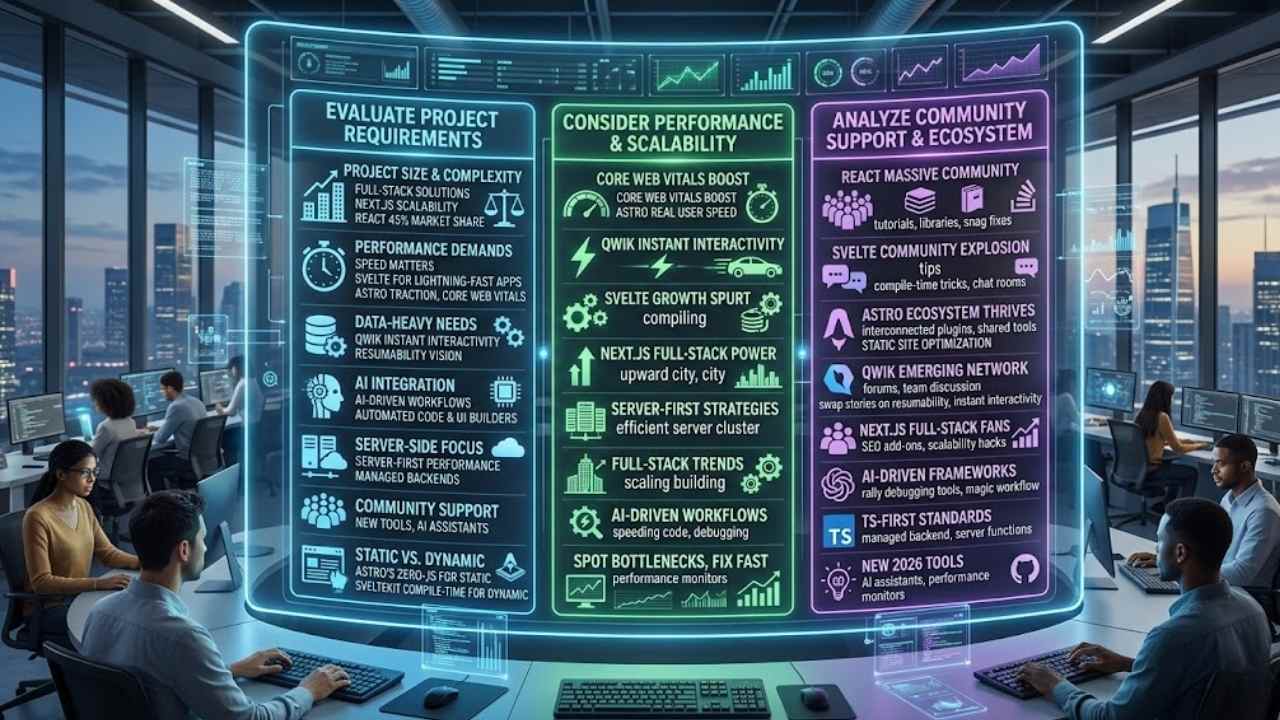
- Assess your project’s size and complexity first, like if you need full-stack solutions; Next.js surges in adoption as developers shift to these for scalability, holding strong with React’s 45% market share among web developers.
- Look at performance demands, because speed matters; Svelte experiences significant growth for its advantages in lightning-fast apps, while Astro gains traction for better Core Web Vitals and optimization.
- Check for data-heavy needs, hey, you know how apps can bog down; Qwik emerges as a popular pick for instant interactivity and efficient metrics, perfect if resumability fits your vision.
- Factor in AI integration, it’s a game-changer now; AI-driven workflows define 2026 trends, with automated code generation and UI builders reshaping how you handle design-to-development handoffs.
- Consider server-side focus, like a smart move for modern apps; server-first performance optimizes strategies, and tools like server functions with managed backends scale up, tying into full-stack adoption trends.
- Think about community and ecosystem support, don’t go it alone; new tools, AI assistants, and monitoring solutions become essential in 2026, boosting React-based options like Next.js or Remix for data-heavy work.
- Weigh static versus dynamic sites, picture building a quick blog or an interactive platform; Astro’s zero-JS setup shines for static sites, while SvelteKit offers compile-time tweaks for speed in evolving ecosystems.
Consider Performance and Scalability
Performance counts big time when you pick a front-end framework. Scalability lets your app grow without crashing under pressure.
- Check how frameworks like Astro boost Core Web Vitals, which measure real user speed and load times, and developers love it for that edge in 2026 optimization.
- Look at Qwik, it shines for folks who chase top speed and metrics that make apps feel instant, emerging as a go-to pick this year.
- Think about Svelte’s growth spurt, its compile-time tricks deliver lightning-fast apps, drawing crowds who crave performance perks in 2026.
- Factor in Next.js, it surges ahead with full-stack power that scales for SEO and big projects, hitting that sweet spot for developers ditching solo front-end tools.
- Weigh server-first strategies, they optimize modern apps like a pro, becoming key in 2026 for handling heavy loads without sweat.
- Explore how full-stack trends shift the game, with tools blending front and back ends, making scalability a breeze for growing sites.
- Include AI-driven workflows, they reshape dev practices this year, speeding up code and debugging to keep performance high as you scale.
- Consider new tools and AI assistants, they monitor performance in the 2026 ecosystem, helping you spot bottlenecks early and fix them fast.
Analyze Community Support and Ecosystem
Community support shapes how frameworks evolve, and a strong ecosystem means better tools and resources for developers. Pick a framework with active forums, plugins, and updates to avoid headaches down the road.
- React boasts a massive community, with about 45% market share among web developers in 2026, so you find tons of tutorials, libraries, and Stack Overflow answers whenever you hit a snag.
- Svelte’s community has exploded with significant growth and adoption surges for its speed perks in 2026, imagine chatting with fellow devs on Discord channels buzzing with tips on compile-time tricks.
- Astro draws developers in droves for Core Web Vitals boosts, its ecosystem thrives on shared plugins that optimize static sites, like a toolbox always expanding.
- Qwik emerges as a go-to for speed lovers, its growing support network includes forums where folks swap stories on resumability, making instant interactivity feel like a team effort.
- Next.js sees a adoption surge as full-stack fans flock to it, the ecosystem hums with SEO-focused add-ons and scalability hacks, perfect for scaling up without the fuss.
- AI-driven frameworks reshape things in 2026 with automated code generation and UI builders, communities rally around intelligent debugging tools, sharing workflows that feel like magic.
- Emerging meta-frameworks push TypeScript-first standards, their ecosystems offer server functions and managed backends, developers bond over scalability wins in online meetups.
- Full-stack trends dominate, moving away from standalone front-ends, vibrant ecosystems provide performance monitoring solutions and AI assistants essential for 2026 projects.
- Server-first strategies boost modern apps, communities exchange anecdotes on optimization, like how automated design handoffs streamline design-to-development handoffs.
- New tools flood the 2026 scene, from AI assistants to performance monitors, ecosystems connect devs through natural dialogues on GitHub, fostering that sense of belonging.
Final Thoughts
We covered top frameworks like React, Next.js, and SvelteKit that drive web development in 2026. These tools make building fast sites simple and quick, no big headaches involved. Pick one, and you boost speed, scalability, and user joy in your projects.
Check out docs for React Compiler or Astro to dive deeper, they offer great tips. As a developer myself, I switched to Qwik last year and cut load times in half, what a game changer.
Go try these frameworks now, your apps will thank you.
Frequently Asked Questions (FAQs) About Front-End Frameworks for Web Developers
1. What makes React a top front-end framework for web developers in 2026?
React stays king because it handles complex user interfaces like a pro, letting you build apps that feel snappy and responsive. Imagine juggling chainsaws; React makes it look easy with its component-based setup. Plus, its huge community keeps pumping out tools that save you headaches down the road.
2. How does Vue stack up against other frameworks for 2026 projects?
Vue shines for its simplicity, making it a breeze for beginners to jump in and create dynamic web pages. If you’re tired of bloated code, this one’s like a breath of fresh air.
3. Why should web developers consider Svelte in 2026?
Svelte compiles your code at build time, which means faster load times and smoother performance on the user’s end. Think of it as trimming the fat from your app before it even hits the browser; no wonder it’s gaining fans left and right. Developers love how it cuts down on runtime overhead, keeping things light and efficient.
4. Is Angular still relevant for front-end work in 2026?
Absolutely, Angular holds strong with its full-featured toolkit for enterprise-level apps. It packs everything from routing to forms in one package, so you don’t chase add-ons.
























