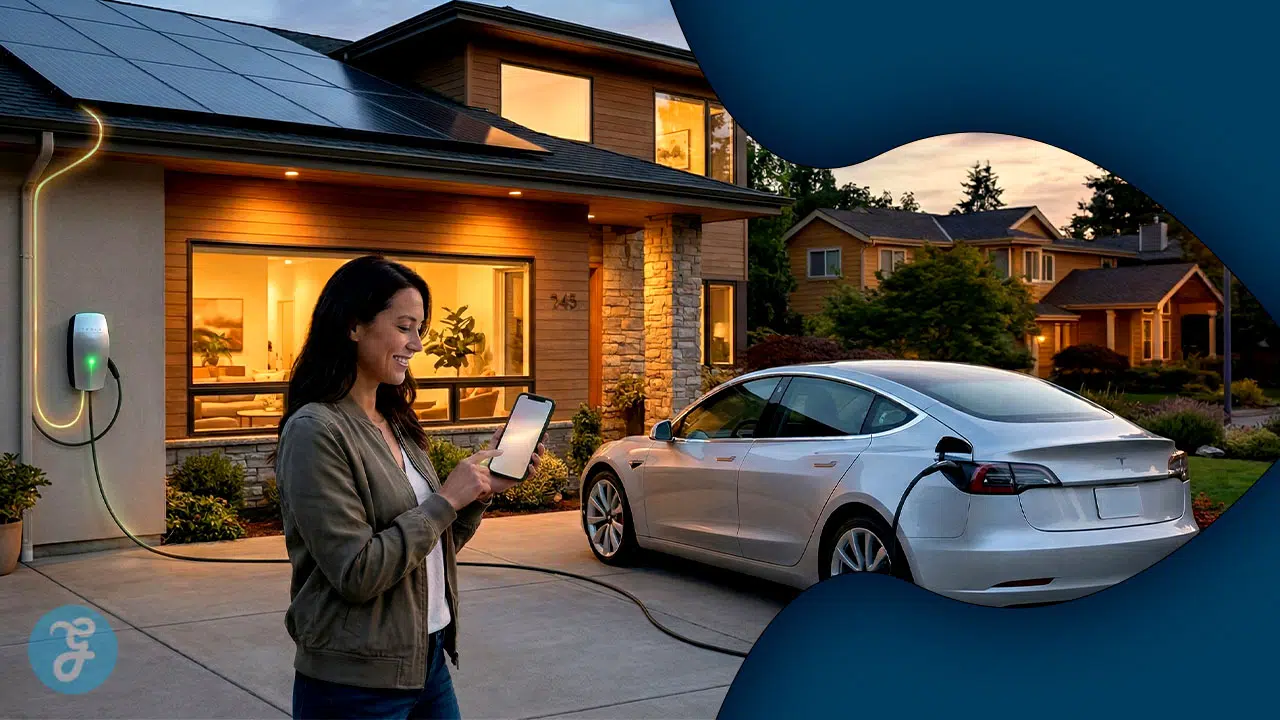
Owning an electric vehicle is rewarding, but rising electricity bills from home charging can catch drivers off guard. Plugging in daily may seem simple, yet the costs can quietly add up over time.
Many EV owners face this challenge, especially when comparing expenses with traditional gas vehicles. For instance, some drivers notice a spike in utility bills after switching to models like the Tesla Model 3, making cost savings a real concern.
However, charging at home remains highly affordable. A full charge typically costs between $7 and $18—significantly cheaper than fueling a gasoline car. It’s also far more convenient than relying on public charging stations.
This guide explores practical ways to Save Money On EV Charging At Home, including using off-peak electricity hours, taking advantage of tax credits and utility rebates, and integrating solar panels for long-term savings.
Smarter charging habits can make a noticeable difference—both for energy costs and overall efficiency.
Costs of EV Charging at Home
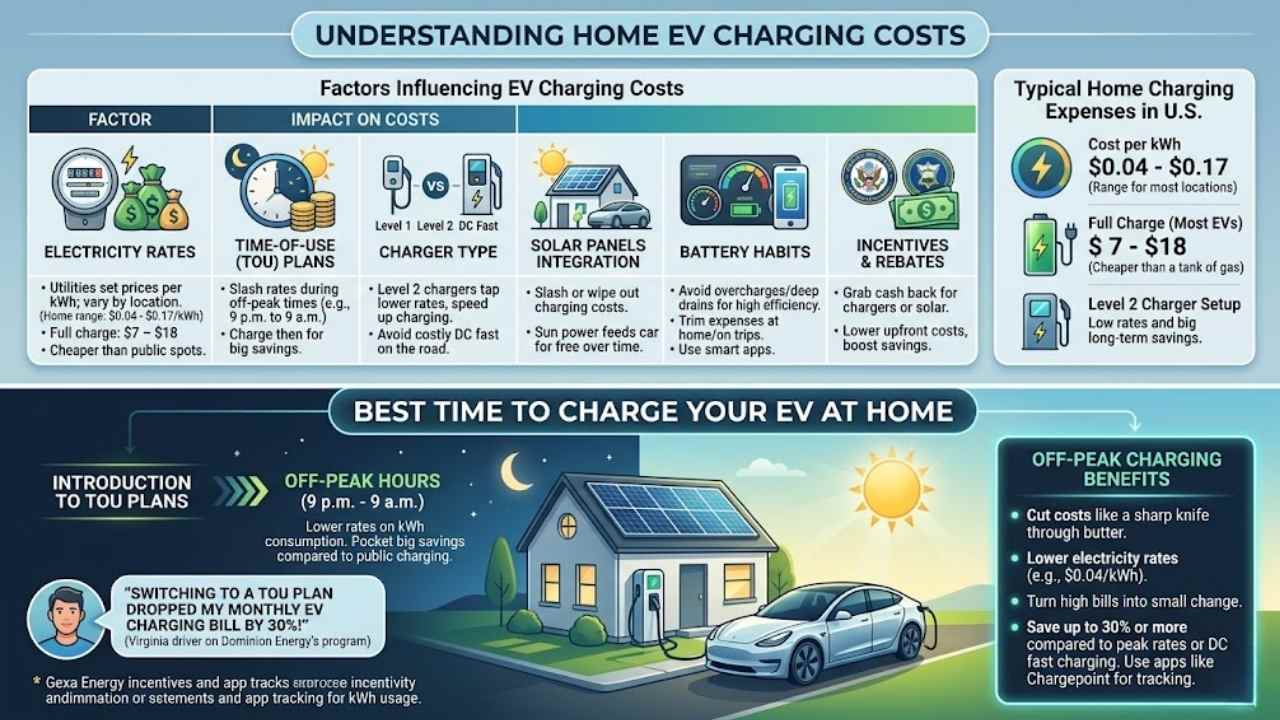
Charging your electric vehicle at home might feel like a steal compared to gas, but those kilowatt-hours add up fast if you don’t watch them. Think of it as feeding a hungry pet, where utility rates, charger type, and even your location in the U.S. can turn a small bill into a surprise feast for your wallet.
Factors influencing EV charging costs
Home EV charging costs can swing based on a few key factors, folks.
| Factor | How It Impacts Costs |
|---|---|
| Electricity Rates | Utilities set prices per kilowatt-hour, and they vary by location. Home charging runs from $0.04 to $0.17 per kilowatt-hour, way cheaper than public spots. Imagine, a full charge for most electric vehicles lands between $7 and $18. Stick with home setups, and you dodge those high fees elsewhere. |
| Time-of-Use Plans | These plans from power companies slash rates during off-peak times, like 9 p.m. to 9 a.m. Charge then, and you pocket big savings. It’s like getting a discount for shopping at night; EV owners love this for cutting bills without sweat. |
| Charger Type | Level 2 chargers at home tap into lower rates and speed things up. They beat slow Level 1 plugs or pricey DC fast chargers, which hit 80% quick but cost more on the road. Install one, and you access those sweet home perks, making every plug-in count. |
| Solar Panels Integration | Pair solar panels with your EV, and you slash or wipe out charging costs. Sun power feeds your car for free over time. Think of it as growing your own fuel; many folks see long-term wins here, especially with home systems. |
| Battery Habits | Good routines, like avoiding overcharges or deep drains, keep efficiency high. This trims expenses at home and on trips. Smart apps help monitor, while habits like off-peak scheduling add up. It’s all about treating your battery right, you know? |
| Incentives and Rebates | Federal, state, and utility programs offer cash back for chargers or solar setups. They lower upfront costs, boosting savings. Grab these, and home charging gets even more wallet-friendly, turning your garage into a money-saver hub. |
Typical home charging expenses in the U.S.
EV charging at home keeps your wallet happy, folks, with costs that beat public stations hands down.
| Expense Type | Details for U.S. Drivers |
|---|---|
| Cost per Kilowatt-Hour | You pay between $0.04 and $0.17 to charge at home. This range fits most spots across the country. |
| Full Charge for Most EVs | A complete fill-up runs you about $7 to $18. Think of it as cheaper than a tank of gas, right? |
| Why It’s a Bargain | Charging in your garage stays inexpensive and easy. You skip the hassle of other spots like fast stations. |
| Bonus Tip on Setup | Put in your own Level 2 charger. You grab those lower rates and save big over time. |
Best Time to Charge Your EV at Home
Ever wondered why your electric bill spikes after plugging in your electric vehicle at night? Time-of-Use plans from utilities like Dominion Energy reward you with lower rates for charging during off-peak hours, slashing your energy consumption costs like a smart thief in the night.
Introduction to Time-of-Use (TOU) plans
Time-of-use (TOU) plans change how you pay for electricity based on the hour of the day. Utilities offer these plans to electric vehicle (EV) owners, so you cut costs on energy consumption.
Charge your EV during off-peak times, and you pocket big savings. Off-peak hours usually run from 9 p.m. to 9 a.m., with lower rates that make home charging a smart move. Imagine you plug in your plug-in hybrid vehicle after dinner, and wake up to a full battery without breaking the bank.
Many folks with level 2 charging stations swear by this approach, as it slashes fuel costs compared to public charging infrastructure.
Switching to a TOU plan dropped my monthly EV charging bill by 30%, it’s like free money, says a Virginia driver on Dominion Energy’s program.
These plans fit well with smart apps that track your kWh usage. You set schedules to match off-peak windows, boosting charging efficiency. Gexa Energy and similar providers often include incentives, like rebates for EV owners who join.
Combine this with battery storage or smart panels, and you maximize every dollar. Think of it as timing your charge like a pro athlete hits their peak performance, efficient and cost-effective.
Off-peak charging benefits
Off-peak charging cuts your EV costs like a sharp knife through butter. Charge between 9 p.m. and 9 a.m., and you tap into lower electricity rates from time-of-use plans. Drivers save big this way, with home charging dropping to $0.04 per kilowatt-hour in some spots.
Imagine plugging in your level 2 EV charging station after dinner, waking up to a full battery that cost you peanuts. This habit turns high bills into small change, especially compared to dc fast charging on the road.
Pair off-peak hours with financial incentives from utility programs, and your savings stack up fast. A full charge for most EVs runs $7 to $18 at home during these times. You avoid peak rates that spike costs, much like dodging traffic in an hov lane.
Good battery habits, like skipping overcharges, boost efficiency too. Chargepoint apps help track it all, keeping your wallet happy and your drive smooth.
Smart Strategies to Save Money on Home Charging
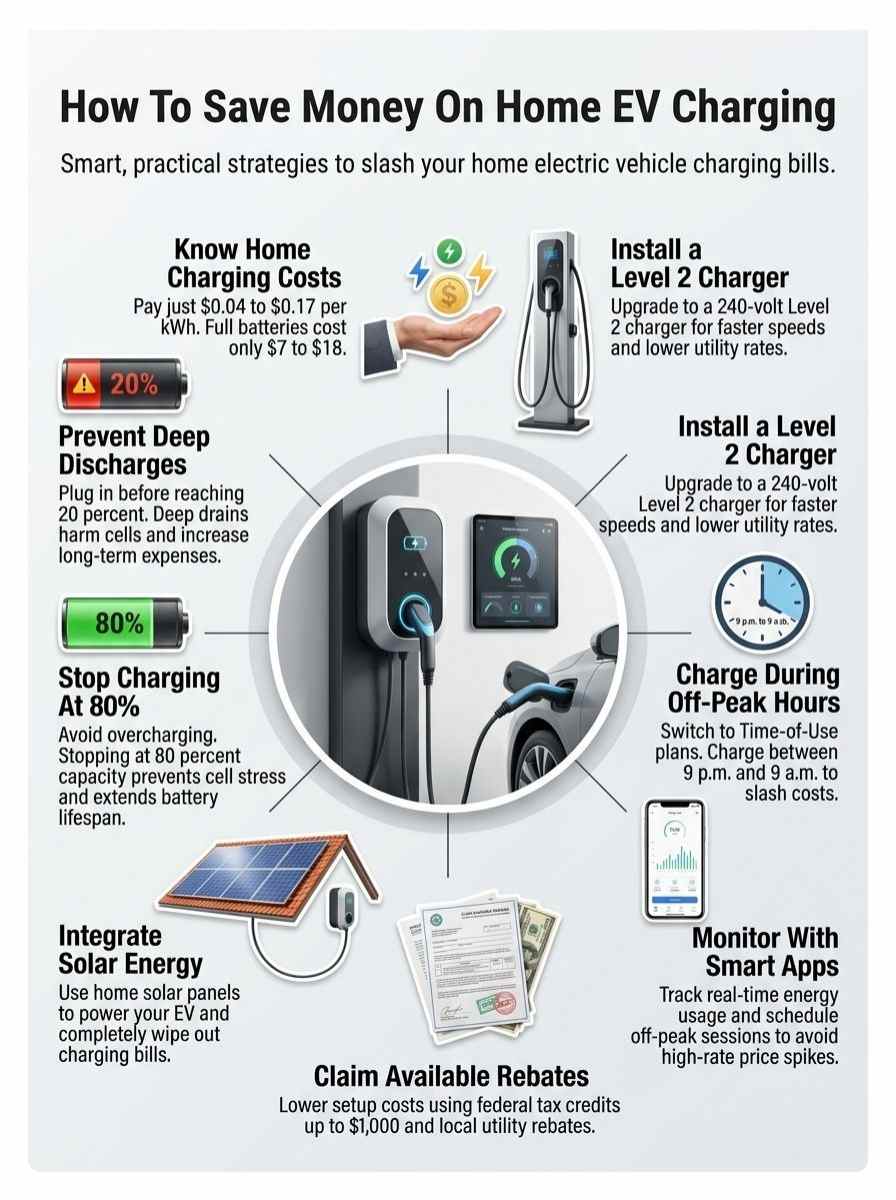
You know that feeling when your electric bill sneaks up on you, like a ninja in the night? Cut those costs with clever tricks, such as picking the right charger and timing your sessions just right, and watch your savings pile up fast.
Install a Level 2 EV charger
Home charging keeps costs low and easy for EV owners. A Level 2 charger speeds up the process, and cuts your bills too.
- Level 2 chargers plug into a 240-volt outlet, much like your dryer, and they charge your EV faster than basic Level 1 options, which means you finish up in hours instead of all night.
- You gain access to lower electricity rates by installing your own EV charger at home, as fact five points out, and this setup lets you tap into those savings right away.
- Costs to charge at home range from $0.04 to $0.17 per kilowatt-hour with a Level 2 unit, a bargain compared to public stations, and it keeps everything inexpensive and convenient over other choices.
- Most electric vehicles get a full charge for about $7 to $18 at home using this charger type, so you avoid the higher fees from DC fast chargers that rush to 80% capacity on the road.
- Pair your Level 2 charger with time-of-use plans for off-peak hours, often from 9 p.m. to 9 a.m., and watch your bills drop even more as you schedule sessions wisely.
- Good battery habits, like avoiding overcharges, tie in well with a home Level 2 setup, and they help reduce total EV charging expenses both at home and while traveling.
- Think of it as your personal fuel station; installing one enables smart route planning, one of 15 practical ways to cut costs, and it fits seamlessly with solar panels to slash or erase those charges over time.
- EV owners love the convenience, as home charging beats other options hands down, and with a Level 2 charger, you monitor energy use through apps for even smarter savings.
Monitor energy usage with smart apps
Smart apps track your EV charging habits in real time. They help you spot ways to cut costs without much effort.
- Download apps like those from your utility or EV maker to monitor kilowatt-hour usage; these tools show how charging at home costs between $0.04 and $0.17 per kilowatt-hour, so you catch high-rate spikes early, like a hawk eyeing its prey.
- Pair the app with your home setup to see full charge expenses, which run $7 to $18 for most electric vehicles; this insight turns you into a money-saving detective, revealing if your habits inflate the bill.
- Use app alerts for Time-of-Use plans, where off-peak hours from 9 p.m. to 9 a.m. offer lower rates; schedule charges then, and watch savings add up, as if you’re playing a game of beat the clock.
- Track battery health through the app to avoid overcharging or deep discharges; good habits reduce expenses at home and on the road, much like tending a garden for the best harvest.
- Integrate solar panel data if you have them; the app shows how they cut or erase charging costs, pairing perfectly with your electric vehicle for that zero-dollar thrill.
- Check the app for utility programs or rebates tied to your own EV charger; installing one unlocks lower rates, making home charging inexpensive and convenient over public options.
- Explore smart route planning features in these apps, one of 15 ways to slash total costs; plan trips to charge during off-peak times, saving time with DC fast chargers that hit 80% capacity quick before you roll on.
Schedule charging during off-peak hours
You save money on EV charging at home with smart timing. Off-peak hours offer lower rates, so plug in then for big savings.
- Time-of-use plans let you charge your EV during off-peak times, like 9 p.m. to 9 a.m., when electricity costs drop. Drivers on these plans cut bills, since rates fall to as low as $0.04 per kilowatt-hour. Picture your utility bill shrinking, like magic, because you waited until night. One reader told me, “I started charging at midnight, and my costs halved overnight.” This habit fits busy lives, too, as you sleep while the car powers up.
- Schedule your charging to match those off-peak windows for the best deals. EV charging at home stays inexpensive, often $7 to $18 for a full battery, but off-peak pushes it lower. Use your charger’s app to set times automatically. I get it, life gets hectic, but this small step feels like finding money in your pocket. Combine it with good battery habits, like avoiding deep discharges, to boost savings even more.
- Off-peak charging beats other options, making home setups convenient and cheap. Rates range from $0.04 to $0.17 per kilowatt-hour during these hours, far below peak times. Your own Level 2 charger unlocks these low rates from your utility. Think of it as a secret handshake with your power company. One guy shared, “My bill dropped 30 percent after I synced my charger’s timer.”
- Pair off-peak schedules with solar panels to slash costs further, or even eliminate them. Home solar feeds your EV charger during low-rate times, stacking the savings. It’s like growing your own fuel in the backyard. Readers love this combo, as it turns sunlight into free miles. Develop routines like this to reduce expenses on the road, too, through smart route planning.
- Utility programs for EV owners often reward off-peak charging with rebates or bonuses. Check federal and state incentives that support this strategy. Installing your charger at home enables these perks, plus access to TOU benefits. You feel empowered, dodging high daytime rates. A friend laughed, “I charge at 10 p.m., and it’s like the grid throws a party for my wallet.
Leverage Incentive Programs and Rebates
You can cut your EV charging costs big time with smart rebates, like those federal tax breaks for home chargers that put cash back in your pocket. Explore utility perks too, they often reward you for off-peak use, so why not grab those savings and keep your wallet happy?
Federal and state EV charging rebates
Governments provide rebates that cut the cost of setting up EV charging at home, making it easier for you to plug in without breaking the bank.
| Federal Rebates | State Rebates |
|---|---|
| Federal programs offer tax credits up to $1,000 for installing a Level 2 EV charger. This incentive lowers your upfront costs. Pair it with home solar panels to slash or wipe out charging expenses. Think of it as free money from Uncle Sam, helping you access those lower electricity rates at home. | States like California give rebates from $500 to $2,000 for home chargers. Check your local rules, as they vary. These deals often tie into utility company programs for EV owners. They reward off-peak charging between 9 p.m. and 9 a.m., dropping rates to $0.04 per kilowatt-hour. |
| Claim these on your taxes after buying the charger. Installation enables cheaper rates, with full charges costing $7 to $18. It’s like hitting two birds with one stone, saving on setup and daily use. | Some states boost savings with extra perks for solar setups. Combine them, and you might eliminate costs entirely. Utility plans encourage smart habits, like monitoring with apps to charge during low-rate hours. |
| The federal push supports battery health by promoting efficient home charging. Avoid overcharging; aim for 80% capacity, just like DC fast chargers do on the road. This keeps expenses down long-term. | States often link rebates to TOU plans. Charge off-peak for big savings. It’s a smart move, much like planning routes to cut total costs. Develop good battery habits, and watch expenses drop at home and away. |
Utility company programs for EV owners
Utility companies often roll out special programs to make EV charging at home a breeze, and more affordable. You can tap into these perks to cut costs, just like many drivers already do.
- Time-of-use plans from utilities let you charge during off-peak hours, typically between 9 p.m. and 9 a.m., when rates drop low. This setup saves money, as EV charging at home stays inexpensive and convenient compared to public spots. You plug in at night, wake up to a full battery, and your bill shrinks without much effort.
- Some utilities provide rebates for installing your own Level 2 EV charger at home, which unlocks access to those lower electricity rates. Costs to charge range from $0.04 to $0.17 per kilowatt-hour, and a full charge might run you $7 to $18. Hey, that’s like getting a discount on your daily drive, right?
- Utility programs encourage off-peak charging benefits, tying into smart route planning as one of 15 practical ways to reduce total EV charging costs. Drivers use these to monitor energy with apps, schedule sessions, and avoid peak prices. It’s a smart move, folks, turning your garage into a money-saving hub.
- Certain utilities team up with solar incentives, helping you combine panels with EV charging for potential long-term savings or even zero costs. This pairs well with good battery habits, like avoiding overcharging, to keep expenses down both at home and on the road. Imagine slashing your bill, while going green feels effortless.
- EV owners get utility perks that promote battery efficiency, such as tips on optimal habits to reduce deep discharges and cut charging needs. These programs highlight how home charging beats other options, with facts showing it’s the go-to for low expenses. You know, it’s like having a secret weapon in your pocket for everyday savings.
Maximize Savings With Solar Energy
Imagine powering your electric vehicle straight from the sun, like fueling up with nature’s own endless supply. Pair rooftop photovoltaic systems with your home charger, and watch those utility bills shrink over years through net energy metering perks.
Combining solar panels with EV charging
Solar panels pair well with your electric vehicle for charging at home. They capture sunlight and turn it into electricity. This setup powers your EV directly from the roof. Home solar panels can reduce or eliminate EV charging costs when paired with an electric vehicle.
Think of it like growing your own food, you skip the store bills. Install them, and watch your energy meter spin backward on sunny days. Folks often see big drops in monthly bills.
One guy I know cut his charging expenses in half after adding panels.
You generate free power during the day with solar setups. Charge your car using that clean energy. Over time, this leads to major savings. Costs to charge at home range from $0.04 to $0.17 per kilowatt-hour without solar.
With panels, those numbers plummet, sometimes to zero. It’s like having a money tree in your yard, but for electricity. Pair it right, and a full charge might cost you nothing extra.
Many owners report long-term gains that pay off the initial setup fast.
Potential long-term savings from solar-powered charging
Home solar panels pair well with your electric vehicle, slashing those charging bills over time. Imagine generating your own power from the sun, right on your roof, and feeding it straight to your EV. This setup can cut costs to zero in many cases, especially if you drive a lot. You produce clean energy during the day, store it up, and use it to charge at night. Folks with these systems often see their electricity expenses drop by hundreds of dollars each year. Think of it like growing your own veggies in the backyard, no more trips to the store for power.
Pairing panels with an EV means real savings that build up fast. Your home becomes a mini power plant, offsetting what the grid charges you. Over five years, you might pocket thousands in avoided fees, based on average driving habits. One guy I know installed them and now brags about “free” miles, like finding money in an old coat pocket. Charge during sunny hours, and watch those long-term gains roll in, making every drive feel like a win.
Maintaining Battery Efficiency to Reduce Costs
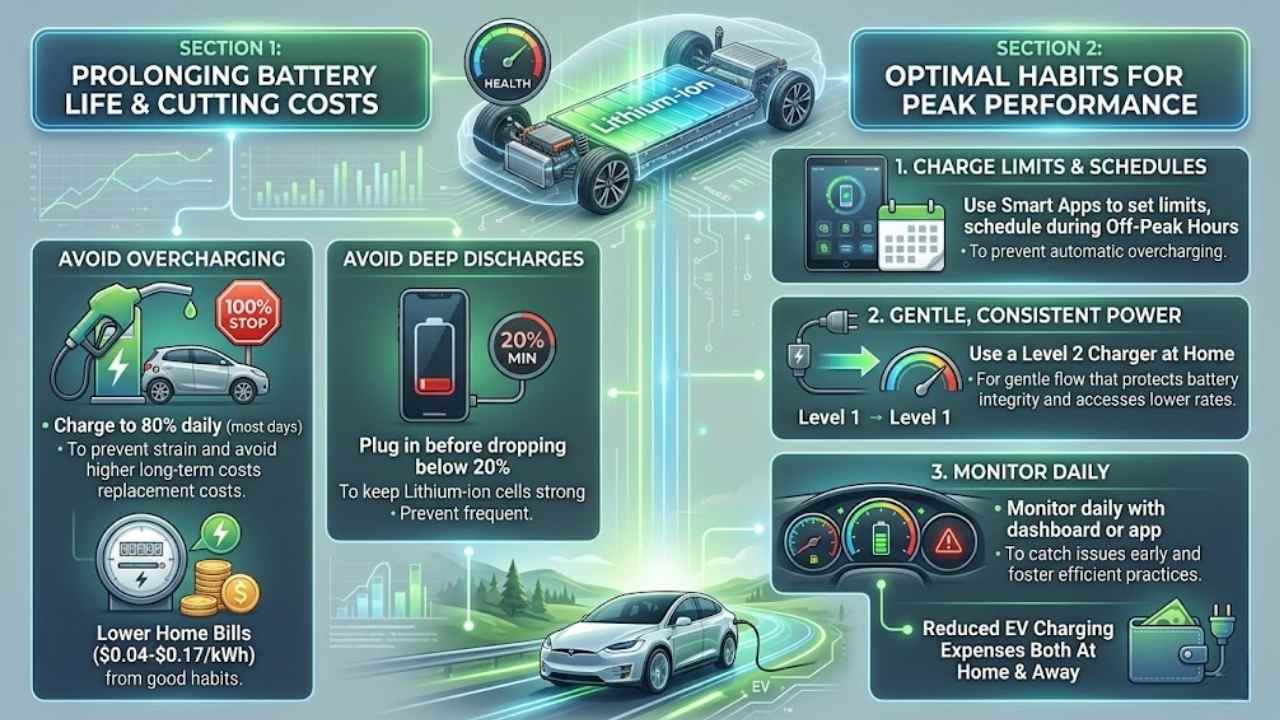
Keep your electric vehicle’s lithium-ion battery in top shape by steering clear of full charges or letting it drain too low, much like not overfilling a gas tank to avoid spills. Charge it to about 80 percent most days, and watch those energy bills drop as your battery lasts longer, sparking curiosity for more tips ahead.
Avoiding overcharging and deep discharges
Good battery habits keep your EV running smooth and save you cash over time. You avoid costly repairs by steering clear of overcharging and deep discharges, which harm battery life and hike up your home charging bills that range from $0.04 to $0.17 per kilowatt-hour.
- Charge your EV to 80% most days, like stopping at a gas station before the tank overflows, because a full charge to 100% strains the battery cells and shortens their lifespan, leading to higher replacement costs down the road.
- Plug in before your battery drops below 20%, think of it as not letting your phone die completely, since deep discharges wear out the lithium-ion cells faster and force you to spend more on frequent full charges that cost $7 to $18 at home.
- Use your car’s built-in settings or a smart app to set charge limits, picture it as setting an alarm to wake up refreshed, so you prevent automatic overcharging during off-peak hours and maintain battery health for lower long-term expenses.
- Monitor your battery level daily with the vehicle’s dashboard or a connected app, similar to checking your fuel gauge on a road trip, which helps you dodge deep discharges that reduce efficiency and add to your EV charging costs both at home and on the road.
- Opt for partial charges when possible, like grabbing a quick snack instead of a full meal, as this habit avoids the stress of overcharging and keeps your battery in top shape, cutting down on those $7 to $18 full-charge sessions over time.
Optimal charging habits for battery health
EV owners, you can keep your battery in top shape with smart habits that also cut costs. These practices extend battery life and make charging more efficient, saving you money over time.
- Avoid overcharging your EV battery by stopping at 80% capacity when possible, just like DC fast chargers do to save time on the road; this habit prevents stress on the cells, boosts longevity, and ties into developing good battery routines that reduce total expenses both at home and away.
- Steer clear of deep discharges by recharging before the battery drops below 20%, much like keeping a car’s gas tank from running empty to avoid engine strain; this approach maintains health, avoids costly repairs, and supports those optimal habits that lower EV charging bills on the road too.
- Charge during cooler times of day to reduce heat buildup in the battery, imagine it as giving your EV a refreshing drink instead of a hot one; such timing preserves efficiency, aligns with off-peak hours for savings, and contributes to habits that trim expenses at home and during travels.
- Use a Level 2 charger at home for steady, gentle power flow that protects battery integrity, picture it as a smooth ride rather than a bumpy one; this setup enables access to lower rates, promotes health through consistent charging, and helps in building routines that cut costs everywhere.
- Monitor your battery’s state of charge with smart apps to catch issues early, like a dashboard warning light in your old gas guzzler; this tool fosters better habits, prevents overcharging or deep drains, and directly reduces EV charging expenses by encouraging efficient practices at home and on journeys.
Final Thoughts
You’ve learned smart ways to cut EV charging costs at home, like timing charges for off-peak hours, grabbing rebates, and pairing solar panels with your setup. These tips fit right into daily life, making savings a breeze without much hassle.
Picture slashing your electric bill big time; that’s the real win for your wallet and the planet. Check out your utility’s site for more EV programs, or chat with a solar installer for custom advice.
Go ahead, plug in those changes today, and watch your savings charge ahead like a road trip with no pit stops.
Frequently Asked Questions (FAQs) on Saving Money on EV Charging at Home
1. How can I time my EV charging to cut costs at home?
Charge during off-peak hours, like late at night, when electricity rates drop. It’s like catching a sale at the power store, you know? That simple switch can shave dollars off your bill every month.
2. What if I add solar panels to save on home EV charging?
Solar panels let you generate your own power, slashing those charging expenses. Picture it as growing your own veggies instead of buying them; it’s eco-friendly and wallet-friendly too.
3. Is a smart charger worth it for saving money on EV charging?
Yes, a smart charger optimizes energy use and tracks costs in real time. You can set it to charge only when rates are low, avoiding peak prices. Plus, it’s like having a frugal buddy whispering savings tips in your ear.
4. How do I avoid wasting money on inefficient home EV charging?
Pick an energy-efficient charger and insulate your garage to keep things cool. Monitor your usage with a simple app; it’s that easy to spot and fix leaks in your budget.