Have you ever noticed how a young girl’s face lights up when she solves a puzzle or builds something new? It’s that spark of pure curiosity. But here is the hard truth had to face: for too many girls, that spark fades way too soon. You might have heard that STEM fields are just “for boys” or STEM for girls quietly step back in math class because they don’t feel like they belong.
It can be tough to know where to start, especially if they do not see other women leading the way. Did you know that while interest starts high, confidence drops sharply by high school? In fact, a 2025 report from The Girls’ Index found that 58% of high school girls don’t think they are smart enough for their dream job.
But there is good news. We are seeing a massive shift right now.
Less than 35% of students studying STEM subjects in college worldwide are women, and this gap is even bigger when we look at those building careers after school. Now you will learn how EdTech is bridging the gender gap.
You will find stories of real progress, smart tools making a difference, and simple steps anyone can take to help fix this problem. Stick around; real change starts here!
What is STEM and Why is it Important for Girls?
STEM stands for science, technology, engineering, and math. Girls bring fresh ideas to these fields, making them stronger and more creative.
Definition of STEM
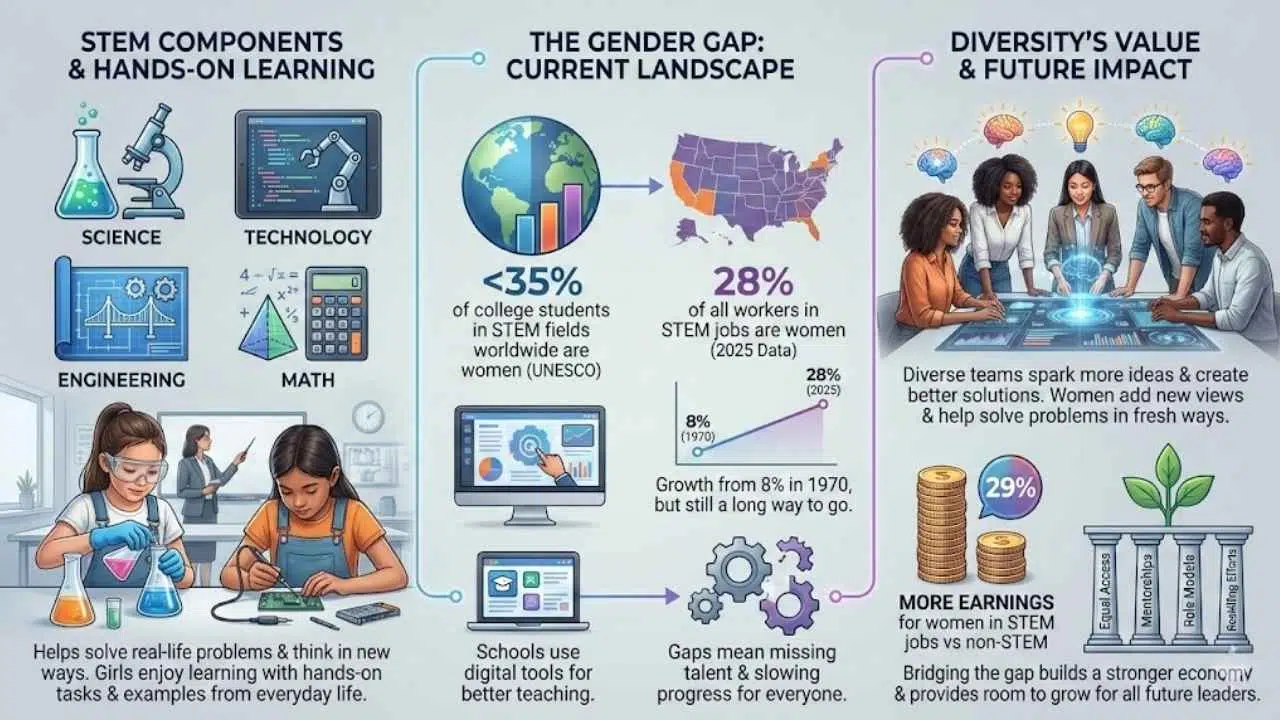
Science, technology, engineering, and math make up STEM. These subjects help students solve real-life problems and think in new ways. In schools today, girls’ education in these areas leads to greater gender equality.
Less than 35 percent of college students in STEM fields worldwide are women, says UNESCO. In the US, only 28 percent of all workers in STEM jobs are women, according to recent 2025 workforce data. This number has grown from just 8% in 1970, but we still have a long way to go.
STEM education gives girls tools to gain skills for future tech careers. Girls often like learning with hands-on tasks and examples from everyday life. Schools use digital learning tools and educational technology to teach these subjects better for everyone.
With strong support and access to opportunities in science or coding classes, more girls step into careers as engineers or scientists each year.
The importance of diversity in STEM fields
Teams filled with people from different backgrounds spark more ideas and create better solutions. In STEM fields, this means women add new views and help solve problems in fresh ways.
Today, women make up just 28 percent of the STEM workforce in the US, and only about 35 percent of college students in these fields worldwide are female, according to UNESCO studies. Gaps like these mean we miss out on talent and slow progress for everyone.
More girls in STEM also bring real-life connections into lessons. Many girls enjoy learning with examples they can see or use every day, which helps improve how we teach science and math.
Bridging this gender gap is not just fair; it builds a stronger economy. In fact, women in STEM jobs earn 29% more than those in non-STEM fields. This gives our society room to grow through equal access to education technology, mentorships, role models, and reskilling efforts for all future leaders, both boys and girls.
Understanding the Gender Gap in STEM
Girls face extra hurdles in STEM that boys often do not. Numbers show fewer women continue into these careers, leaving big gaps and missed chances for everyone.
Statistics on women in STEM
Numbers are painting a clear picture, and the gender gap in STEM fields is hard to ignore. Here’s how the figures stack up:
| Statistic | Details |
|---|---|
| Women in U.S. STEM Workforce | Just 28 percent of the U.S. STEM workforce are women as of 2025. Men overwhelmingly outnumber women in most college STEM majors. |
| Women in STEM Higher Education (Global) | Only about 35 percent of students enrolled in STEM higher education globally are women (UNESCO). |
| Confidence Gap | A 2025 study shows that while 5th-grade girls are confident, by high school, 58% doubt their own intelligence compared to their male peers. |
| Learning Preferences | Research shows girls are more engaged with STEM when lessons tie in real-life examples. Boys tend to do better in traditional academic formats. |
Key barriers faced by girls in pursuing STEM careers
Girls face many barriers in STEM education and careers. Gender bias starts early, with some teachers and parents thinking boys do better in math or science. This type of thinking, even if not said out loud, sends a message that girls don’t fit in these fields.
During the pandemic, the gender gap grew wider as girls faced more pressure at home and lost access to good learning tools. In classrooms around the world, only 35 percent of college students in STEM are women according to UNESCO.
“The biggest barrier isn’t ability; it’s the belief that they don’t belong. When a girl sees a female engineer, that barrier begins to crumble.”
Men still outnumber women by a wide margin in most STEM majors. Access is another big barrier for many girls interested in technology or engineering jobs.
Some schools do not have enough resources for digital learning or up-to-date lab equipment; this hits harder in underserved areas where EdTech could help but is missing. Girls often miss female role models or mentors who could show what success looks like in these jobs, making it tough to picture themselves working there someday.
Without encouragement and support—like mentorship programs or real-life examples—many give up before they start building skills needed for science, technology, engineering, or math fields later on.
The Role of EdTech in Bridging the Gender Gap
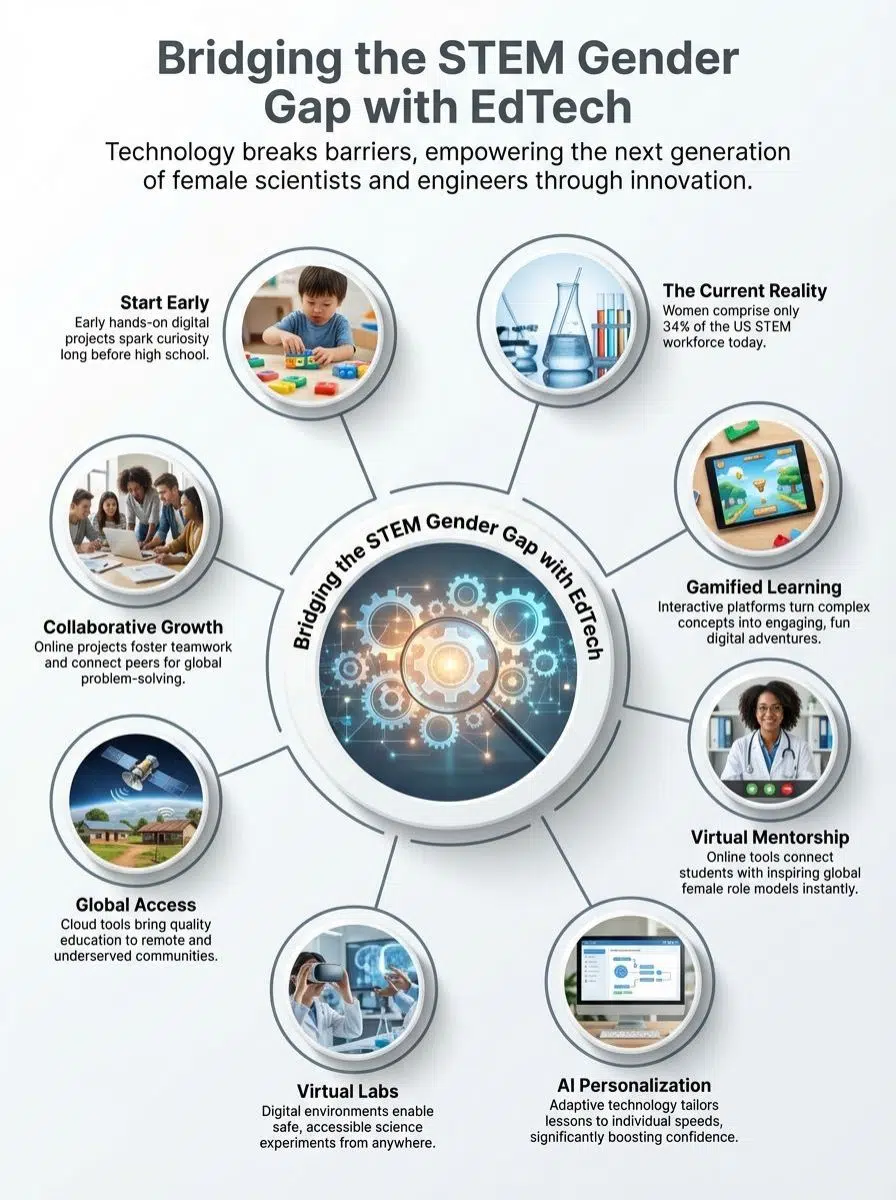
Digital learning brings science and math alive for girls everywhere, sparking new interest. Technology opens doors that used to be shut, letting more young women step right in.
Promoting interest in STEM through interactive learning tools
Girls are starting to see STEM as fun and engaging thanks to interactive learning tools. EdTech is giving them new ways to explore science, technology, engineering, and math.
- Gamified STEM platforms turn lessons into games, helping girls learn and enjoy at the same time. For example, Kodable teaches pre-readers coding concepts through colorful mazes, while Tynker offers storytelling modules that appeal to girls who love creativity.
- Virtual labs let students conduct science experiments safely from home or school. This breaks down barriers for girls in places where lab equipment is not easy to find.
- Coding apps use animations and puzzles to teach programming. These tools build confidence as girls solve problems step by step.
- Interactive math software offers instant feedback. Girls can see what works right away, fixing mistakes early and keeping their interest high.
- Group-based online STEM projects help create a sense of teamwork. Everyone feels included no matter their background or location.
- AI-driven learning platforms track progress and adjust lessons. Girls receive support that fits how they learn best, boosting skills in areas where they may feel less sure.
- Platforms highlighting women in science provide important role models. Mentorship connections inspire more girls to think about tech careers, especially since women make up just 28 percent of the US STEM workforce according to recent data.
- Resources made for underserved areas bring quality STEM education beyond big cities. More girls get access thanks to EdTech’s reach across different regions.
These modern tools open doors for female empowerment and gender equality in classrooms everywhere. Collaboration grows while barriers shrink one click at a time.
Providing access to STEM education in underserved areas
Access to STEM education should not depend on where a person lives. EdTech tools are helping break down old barriers for students in overlooked communities.
- Digital learning platforms can reach rural and remote areas, giving more students a chance at quality STEM education.
- Many girls in underserved places now use tablets and online courses to learn science and math at home or school.
- With only 35% of higher education STEM students worldwide being women, better access can help boost these numbers.
- Some programs use AI-driven lessons that fit each learner’s pace, making tough subjects less scary and more exciting.
- UNESCO reports show technology in education is shrinking the gap for women in science fields across many countries.
- Interactive apps connect young people with mentors who share their stories about overcoming barriers to education.
- Schools without enough teachers turn to virtual classes, so every child has an equal shot at exploring coding, robotics, or engineering basics.
- During the pandemic, digital tools became lifelines for learning; this kept dreams alive even as traditional classrooms shut their doors.
- Reskilling courses aimed at boosting collaboration and confidence are opening new doors for girls looking to enter STEM careers from all walks of life.
- Scholarships for online STEM programs remove cost hurdles while encouragement from teachers empowers lasting change in communities once left out of the conversation.
EdTech brings hope to corners of the country that used to be left behind, giving new meaning to female empowerment and gender equality in STEM education.
Encouraging collaborative learning environments
Girls often shine brighter in STEM when they feel supported by their classmates. EdTech platforms use group projects and virtual labs to make teamwork easy, no matter where students live.
Teachers can set up digital spaces where girls work together, ask questions without worry, and share ideas just like scientists do in the real world. Research shows girls enjoy linking lessons to life outside of school more than boys do.
Collaboration helps them see how science or math impacts daily life. With tools that break down barriers like distance or lack of resources, even girls in underserved areas join discussions and learn side by side with peers everywhere.
This type of learning builds skills for future workplaces, encourages confidence, and opens doors to STEM careers that need more women at the table.
Key EdTech Innovations Supporting Girls in STEM
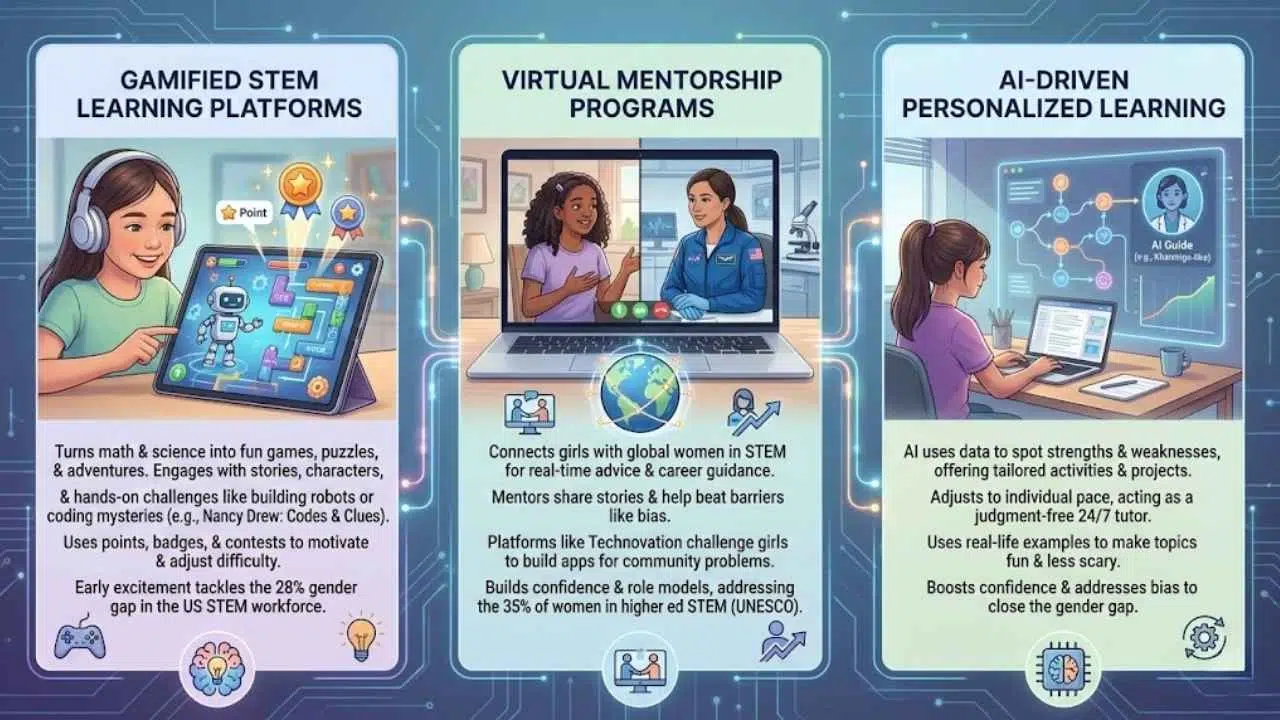
Smart learning tools open new doors for girls, making complex science fun and easy to grasp. Small ideas spark big dreams—just one click can start a journey into genius.
Gamified STEM learning platforms
Girls light up when learning feels fun. Gamified STEM platforms turn math and science into games, puzzles, or digital adventures. These tools keep girls engaged and curious, breaking down old ideas that these subjects are tough or dull.
Research found girls do better with real-life links; gamified lessons offer stories, characters, and hands-on challenges. Think building robots to solve problems or coding simple games. For instance, Nancy Drew: Codes & Clues combines mystery solving with basic coding principles, proving that tech skills can be part of any story.
EdTech uses points, badges, and friendly contests to motivate students who might shy away from traditional textbooks. Leaders in education technology now use data to adjust difficulty for each learner, so no one feels left out or bored stiff.
In a world where only 28 percent of the US STEM workforce is women, early excitement from playful STEM education can make a real dent in the gender gap. Girls living far from big cities can access these platforms online too; all they need is an internet connection and some curiosity.
Virtual mentorship programs
Virtual mentorship programs use technology to connect girls with women in STEM across the globe. A seventh grader from a small town can chat online with a female engineer from Google or NASA, all without leaving home.
Girls get advice about college majors, career skills, and how to beat barriers like gender bias. In these programs, mentors share real stories and help girls practice coding or math problems together. Platforms like Technovation challenge girls to build their own mobile apps to solve community problems, connecting them with professional mentors along the way.
UNESCO shared that only 35% of students in higher education STEM fields are women. Virtual mentorship aims to change those numbers by giving girls extra support and role models.
EdTech tools make it easy for busy professionals and eager students to meet online for video calls or group chats after class—no matter where they live. These relationships build confidence, show what is possible, and spark interest in science careers at a young age.
AI-driven personalized learning for STEM subjects
AI uses data to spot each girl’s strengths and weaknesses in STEM subjects. It then offers activities, quizzes, and projects that match what she needs most.
If one student struggles with math problems but loves science experiments, the system adjusts lessons for her pace. It is a bit like having a wise tutor by your side 24/7. Tools like Khan Academy’s Khanmigo act as a judgment-free guide, allowing girls to ask “silly” questions without fear of embarrassment.
Girls often show more interest when real-life stories or hands-on projects appear in classwork. AI platforms serve up examples tied to daily life, making topics less scary and way more fun.
This smart approach helps address bias in education tech while boosting confidence among girls who might hesitate in traditional classrooms. With only about 35% of STEM students being women worldwide (UNESCO), every little boost counts for closing that wide gender gap.
Benefits of Bridging the Gender Gap in STEM
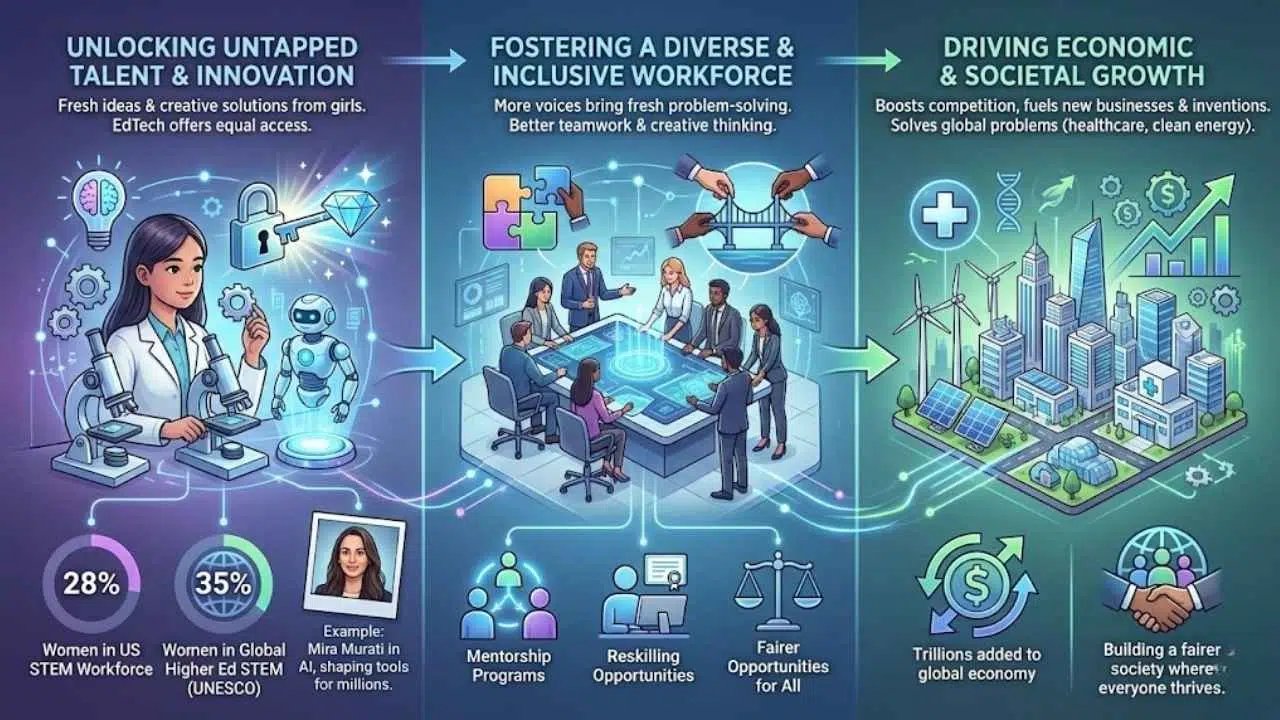
When more girls join STEM, fresh ideas and creativity spark brighter than fireworks—stick around to see how this can change everything!
Unlocking untapped talent and innovation
EdTech is helping girls step into STEM fields where their skills have often gone unnoticed. Today, women make up only 28 percent of the STEM workforce in the US. Across the globe, just about 35 percent of students enrolled in higher education for science and technology are women, says UNESCO.
By removing learning barriers and giving equal access to new tools, more girls are joining this field every year. Many smart ideas come from those who see things differently or solve problems in creative ways. Girls—and especially those from underserved areas—have a fresh take on real-world challenges.
Encouraging more female voices leads to stronger teams and better science. A great example is Mira Murati, a key leader in artificial intelligence who has helped shape tools used by millions. Her success shows exactly what happens when we let talent shine regardless of gender.
EdTech helps by offering digital learning platforms and AI-driven paths that adapt to each girl’s strengths. This shift sparks new inventions in technology, engineering, math, and beyond that might never surface without equal opportunities for all learners.
Fostering a more diverse and inclusive workforce
Girls and women make up only 28 percent of the STEM workforce in the United States, while men still outnumber women in college STEM majors. More diversity brings fresh ideas and new ways to solve tough problems.
When girls gain equal chances through education technology, more voices join science, engineering, math, and tech teams. Firms with mixed backgrounds see better teamwork and more creative thinking.
Mentorship programs help lift younger women into important roles. Reskilling gives workers a chance to learn or improve skills they may have missed before. A wider pool of talent makes workplaces stronger and leads to fairer opportunities for all.
With these changes, career doors open wider for girls who want jobs in science or technology fields around the world.
Driving economic and societal growth
Boosting gender equality in STEM fuels fresh ideas and sharpens competition. In the US, women fill only 28 percent of STEM jobs, while men outnumber them in nearly every major at college.
Giving girls access to STEM education opens these fields to more talent, sparking new businesses and inventions that power local economies everywhere. Reports indicate that closing the gender gap in the workforce could add trillions to the global economy.
UNESCO reports show just 35% of higher education students in STEM are women worldwide. Closing this gap brings different perspectives into science, technology, engineering, and math.
More diversity helps solve big world problems faster—from healthcare advances to clean energy solutions—all while building a fairer society where everyone has a chance to thrive.
How to Support Girls in STEM
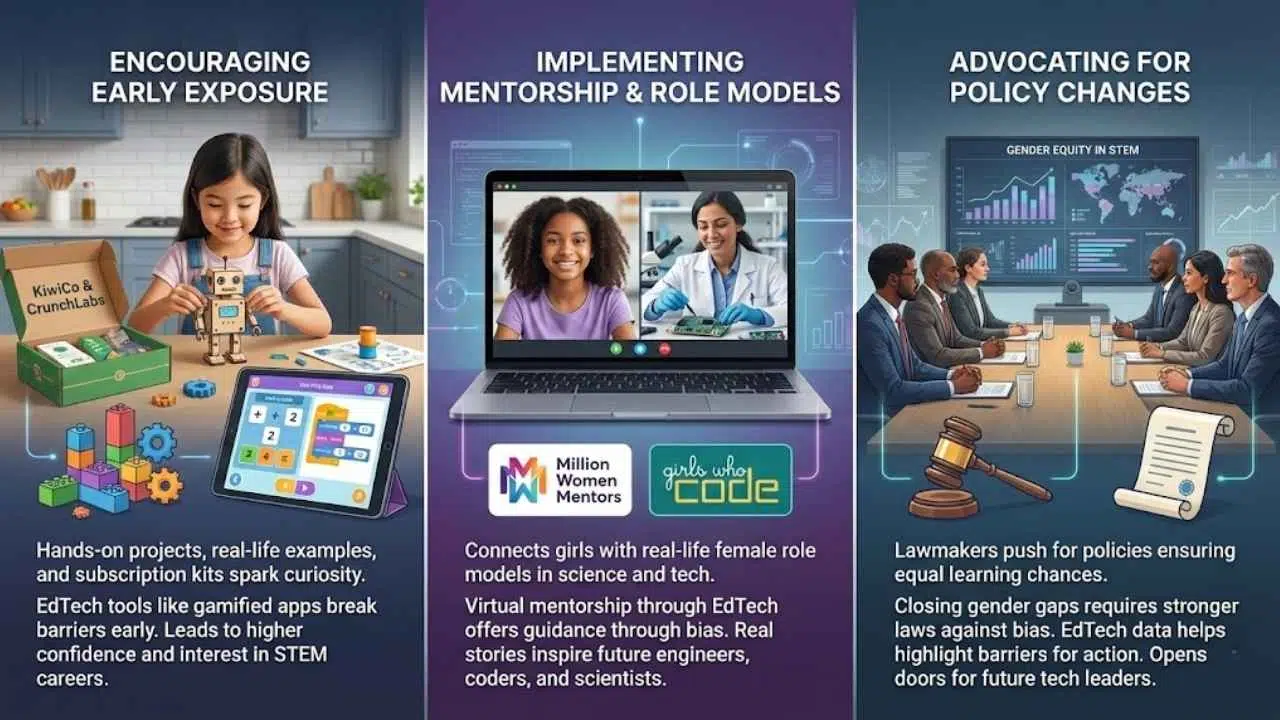
Simple steps can open doors for girls in STEM. Support sparks curiosity, and curiosity grows into confidence—sometimes all it takes is a little nudge in the right direction.
Encouraging early exposure to STEM concepts
Bright colors, building blocks, and math puzzles can spark a girl’s curiosity long before she enters high school. Early hands-on projects in science or coding help girls see that STEM is both useful and fun.
Studies have shown that girls often enjoy learning with real-life examples instead of just reading textbooks. For parents, subscription kits like KiwiCo or CrunchLabs deliver these engineering challenges right to your door, turning a kitchen table into a maker space.
Girls still face big hurdles. Men outnumber women in most college tech majors, and only 28 percent of the US STEM workforce are women. By using EdTech tools like gamified learning apps or digital science kits at home or school, parents and teachers can break old gender barriers right from the start.
This early boost often leads to higher confidence, better skills development, and stronger interest in future STEM careers for girls everywhere.
Implementing mentorship and role model programs
Girls need to see women working in science and tech roles. Mentorship programs link female students with real-life role models in STEM fields. This support helps young girls feel less alone and more confident about choosing STEM careers.
Virtual mentorship, powered by EdTech, brings these connections right into the classroom or even a living room. Organizations like Million Women Mentors and Girls Who Code have created massive networks to ensure no girl has to navigate this path alone.
UNESCO reports only 35% of higher-ed STEM students worldwide are women, and just 28% of the US STEM workforce is female. That shows how important strong mentors can be; they offer guidance through bias or barriers girls face every day.
Real stories from successful women inspire action better than any statistic—sometimes seeing really is believing for future engineers, coders, or scientists!
Advocating for policy changes to promote gender equity
Lawmakers play a big part in creating equal spaces for girls and women in STEM education. They can push for policies that give all students the same chance to learn science, technology, engineering, and math.
UNESCO states that only 35% of higher education STEM students worldwide are women. In the US, just 28 percent of the STEM workforce is female. Closing this gap needs stronger laws against gender bias in schools and workplaces.
Education technology platforms support these efforts by highlighting where barriers exist. Policymakers can use data from EdTech companies to spot problems fast and fix them with clear laws or funding programs.
These steps open more doors for girls so they can step boldly into careers as scientists, engineers, or tech leaders.
Final Thoughts
Girls around the world are stepping up in STEM, thanks to EdTech and community support. Easy-to-use tools, games, and mentors make learning science and math fun while removing old barriers.
You can boost this change by encouraging girls to explore STEM early or connect them with strong role models. Why not share a cool experiment with a young girl or help her find an online coding class today?
These small actions bring huge results—more ideas, fresh talent, and fair chances for all. Every step helps close the gender gap; as my niece once said after building her first robot, “Girls can do anything!”