


You know how every investor says they want their money to work harder? Here’s what I’ve seen change the game. Purpose-driven investing means putting your capital into companies that generate measurable positive impact for society and the environment while pursuing competitive returns. According to the US SIF Foundation, $6.6 trillion in the US now falls into ESG or sustainability-focused investments, making up about 12% of professionally managed assets.
This approach uses Environmental, Social, and Governance metrics to evaluate companies.
The data speaks for itself. Sustainable funds delivered a median return of 12.6% in 2023, compared to just 8.6% for traditional funds. That outperformance held true for both equity and fixed-income asset classes. Companies like Nvidia dominate the AI chip sector with an 85% market share while maintaining strong ESG commitments, including 100% renewable electricity for offices and data centers.
More investors want portfolios that match their values without sacrificing performance. Nearly 70% of industry professionals say they remain committed to sustainability’s long-term future, even amid political headwinds. Nvidia posted $57 billion in recent quarterly revenue with gross margins above 70%. Microsoft continues expanding Azure through smart AI integrations. Broadcom reported $18 billion in quarterly revenue, up 28%.
Smart choices today shape both your financial future and the world you invest in. Keep reading as we break down how to build a purpose-driven portfolio that performs.
What is Purpose-Driven Investing and How Does It Work?
Purpose-driven investing puts your money into companies that generate real-world positive impact.
Investors evaluate businesses using Environmental, Social, and Governance metrics. These ESG scores measure how companies handle sustainability challenges, treat workers fairly, and maintain strong leadership. The betterthisworld approach highlights firms solving global problems like climate change and social inequality.
This strategy prioritizes long-term value over short-term hype. I once selected an agricultural technology stock because the company demonstrated clear data on reducing water waste by 40% while maintaining profit growth. Watching my portfolio grow while knowing my capital supported ethical practices created alignment between financial goals and values.
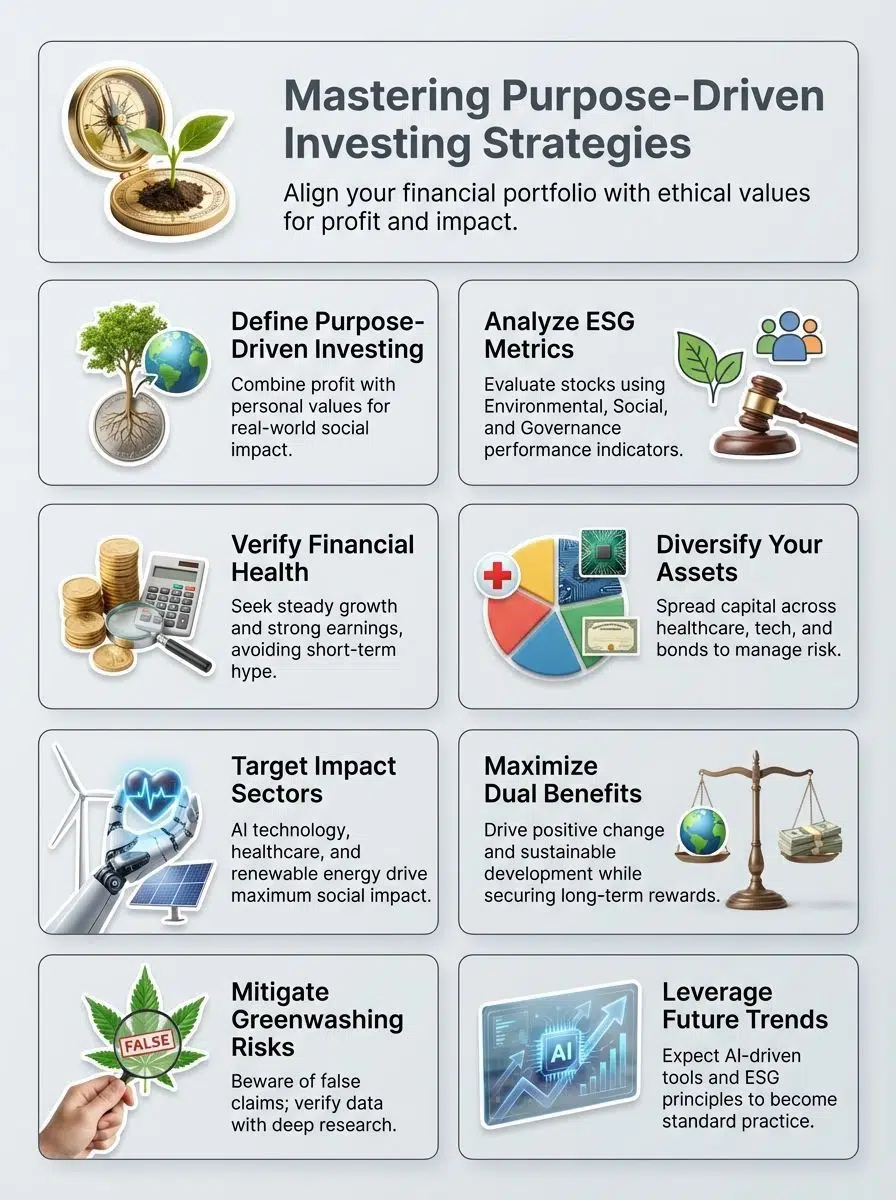
According to a 2025 BNP Paribas survey targeting firms managing $30-35 trillion, 87% say their ESG objectives remain unchanged. Another 84% believe sustainability progress will continue or accelerate through 2030. The approach attracts younger generations who prioritize social change alongside wealth building, making it a defining trend for modern investors.
Key Criteria for Evaluating Stocks Betterthisworld
Smart investing requires clear evaluation tools. Modern investors use financial performance indicators, ESG analytics, and measurable market data to assess betterthisworld stocks.
What Are Environmental, Social, and Governance (ESG) Metrics?
ESG metrics reveal how companies act toward the planet, people, and governance rules.
These numbers help investors identify businesses supporting fair labor or reducing environmental harm. For example, Welltower improved its ESG score from the bottom 10th percentile to the top 70th percentile in recent years. Many investors choose ESG-aligned companies because these stocks represent ethical business choices backed by verifiable data.
Companies with strong ESG performance often demonstrate social responsibility and positive long-term impact. In my experience tracking portfolios focused on purpose-driven investing across healthcare and sustainable energy, firms with high ESG scores tend to build stronger brand loyalty. They’re also less affected by global events or economic downturns compared to competitors with poor ESG ratings.
Understanding these metrics helps you evaluate stocks for long-term commitment rather than chasing market trends.
How Does Long-Term Financial Performance Impact Investments?
Strong long-term performance builds investor trust.
Welltower projects a 30% revenue jump and 22% EBITDA rise for FY24. Broadcom reported $18 billion in quarterly revenue, up 28%, with adjusted EBITDA climbing 35%. These numbers show solid management and value investing potential.
Real income statements guide smart decisions. Nvidia posted $57 billion in recent quarterly earnings with gross margins above 70%. High margins signal stable profits through market volatility. This financial strength reduces risk during recessions or inflation spikes, helping portfolios stay strong across stock market cycles.
I’ve valued this stability as an investor myself. Companies demonstrating consistent profitability and revenue growth over multiple quarters prove they can weather economic uncertainty. Stock traders seek these results to reduce volatility and build wealth safely over time.
Building a Purpose-Driven Investment Portfolio
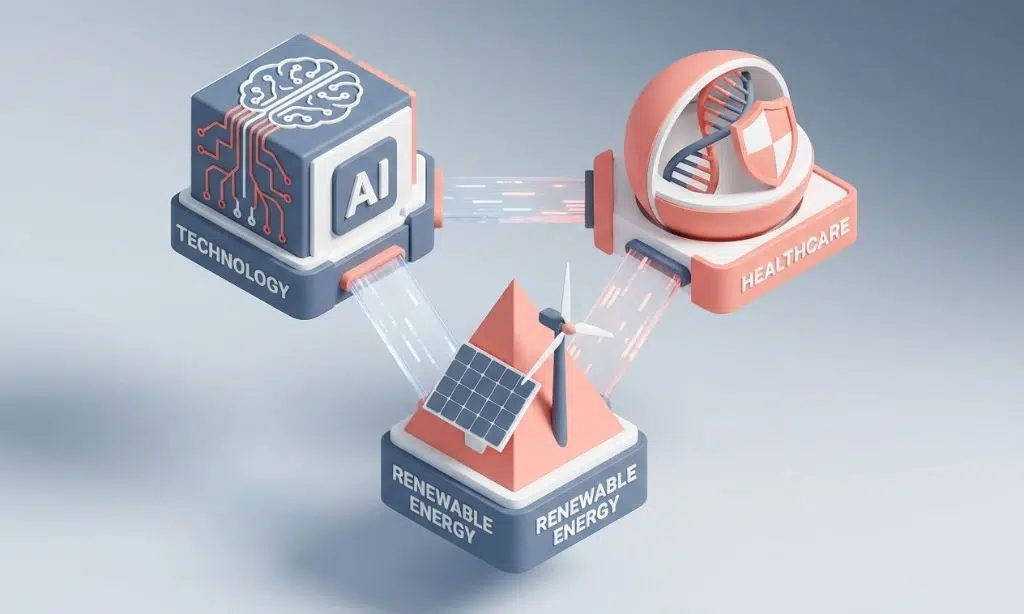
A purpose-driven portfolio aligns your values with financial objectives. Using strategies like diversification and portfolio optimization, investors can build holdings that support both profit and a sustainable future.
How Can I Diversify My Investment Portfolio Effectively?
Diversification protects against big losses while boosting growth potential. Spreading capital across different stocks and sectors is the foundation:
- Invest across multiple sectors. Welltower covers healthcare infrastructure while Microsoft and Nvidia add technology strength.
- Choose companies with global reach. Broadcom operates in Canada, the UK, and many other markets for broader exposure.
- Mix growth and income stocks. Nvidia controls 85% of the AI GPU market and delivers rapid growth. Pair this with dividend-paying stocks like Welltower for steady income.
- Include diverse asset types. Look at exchange-traded funds or bonds alongside individual stocks for balance.
- Add sustainability leaders. Companies excelling in corporate social responsibility align with betterthisworld values and often show resilience.
- Track emerging trends. Adjust portfolios to follow opportunities in climate change solutions or renewable energy.
- Rebalance regularly. Market conditions shift, so match your holdings to financial goals and risk tolerance quarterly.
Which Sectors Have the Highest Impact for Purpose-Driven Investing?
AI technology leads as one of the most impactful sectors.
Companies like Nvidia, Microsoft, and Broadcom drive innovation with tools reshaping markets. Nvidia holds an 85% market share in AI GPUs and reported $57 billion in quarterly revenue. Microsoft’s Azure business continues expanding through AI integration. Broadcom reached $18 billion in quarterly sales with 39% free cash flow growth. Their work supports sustainability, accountability, and smarter business practices.
Healthcare creates strong social impact results. Welltower invests in properties that provide safe care environments, raising its ESG rating significantly. Other high-impact sectors include renewable energy and sustainable agriculture. These areas support cleaner air, fight climate change, and improve food security globally.
According to a 2025 ESG Dive report, the market for commercial solutions addressing environmental challenges is expected to reach $7 trillion annually by decade’s end. Focusing on companies showing real social responsibility allows investors to earn returns while supporting ethical goals across the economy.
What Are the Benefits of Purpose-Driven Investing?
Purpose-driven investing delivers both financial returns and measurable impact.
Sustainable funds returned a median 12.6% in 2023, compared to 8.6% for traditional funds. This outperformance held across equity and fixed-income asset classes, showing that ESG-focused strategies can compete financially. Companies with strong ESG scores often demonstrate solid growth trajectories.
Take Welltower as an example. After increasing its ESG ratings in 2023, the company saw improved market performance. Investors are drawn to stocks matching their values like transparency and fairness.
This approach supports companies working on clean energy or social equality. According to US SIF data, nearly 70% of industry professionals remain committed to sustainability’s long-term future. More capital flows into firms promoting positive behavior in society and the environment.
“Companies with strong ESG ratings may outperform peers because of stronger earnings fundamentals” according to studies from MSCI and McKinsey.
The approach attracts long-term investors who want competitive returns alongside positive impact. Transparency builds trust, drawing more people seeking smart stock investing while contributing to sustainable development across society. Purpose-driven investing isn’t just an ethical choice. It’s become a strategic one that shapes financial market trends.
What Challenges and Risks Should Investors Consider?

Market volatility affects all stocks, including purpose-driven investments.
I’ve seen companies with strong ESG commitments face sharp price drops just like traditional stocks. Even long-term investors must stay alert to market swings and economic cycles.
Greenwashing poses a major threat. According to a 2024 EY survey, 85% of investors report that misleading ESG statements are a bigger problem than five years ago. Some firms present an ethical image without following through, making it hard to trust sustainability claims without deep research. Microsoft’s significant AI investments with OpenAI create profit opportunities but also carry risk if consumer demand for AI falls.
Financial performance can disappoint. Welltower’s $3.7 million EBITDA loss shows how missing revenue targets impacts valuations. Analysts project its 2024 revenue will drop by $56.6 million with lower EBITDA guidance. These real-world examples remind us that ESG metrics alone don’t guarantee profits.
New regulations shift the landscape fast for betterthisworld investment picks. Rules around sustainability and corporate governance standards update frequently, raising financial risk and speculation concerns. According to the Investment Company Institute, ESG fund assets decreased by $6.84 billion to $617.43 billion in December 2025, reflecting outflows amid regulatory uncertainty.
Here’s how to manage these risks:
- Verify ESG scores through multiple sources before investing
- Diversify your portfolio across sectors to reduce concentration risk
- Study company news and financial statements regularly
- Build sufficient financial literacy to spot hype versus true impact stocks
- Watch for regulatory changes that could affect your holdings
Understanding these challenges helps you avoid overpaying due to market trend excitement. A well-researched approach using research tools protects your capital while still contributing to a better world through equity investments reflecting your values about what BetterThisWorld stocks represent.
What Are the Future Trends in Purpose-Driven Investing?
AI continues reshaping how investors pick stocks and track market performance.
Investment in artificial intelligence infrastructure keeps breaking records. Nvidia holds 85% of the AI GPU market and posted $57 billion in quarterly revenue with 70% gross margins. According to the BlackRock Investment Institute, AI-related capital expenditure is expected to reach $5-8 trillion through 2030. This massive spending drives growth for leading technology companies.
ESG principles are becoming standard practice for mainstream investors by 2026. The US SIF Foundation reports that sustainable assets under management show resilience despite political headwinds, with $6.6 trillion explicitly marketed as ESG investments. Nearly 70% of industry professionals say they remain committed to sustainability’s long-term future.
Social media helps new investors discover curated opportunities in real time. Companies demonstrating strong long-term performance and transparent reporting show clear benefits over risky choices chasing hype. According to a 2025 Fortune Business Insights report, the US ESG investing market is projected to reach $7.24 billion by 2026, with institutional investors dominating at 47.28% market share.
From my experience, using data-driven tools makes choosing stocks with good values like sustainability and ethical responsibility much easier. Investors want transparency and profit now, making purpose-driven investing not just a buzzword but the forward direction in stock markets and the world economy.
Final Words
Purpose-driven investing puts values and ethics at the center of portfolio decisions.
You learned how ESG metrics, financial performance, and transparency help identify strong companies like Nvidia, Microsoft, and Broadcom. This approach builds wealth while supporting positive change through equity options and strategic stock selection. Even with risks like market volatility or AI project spending shifts, careful planning delivers significant rewards over time.
The data is clear. Sustainable funds returned 12.6% versus 8.6% for traditional funds in 2023. Education empowers smarter choices.
Your investment mindset shapes a betterthisworld. Step forward and let your money reflect what matters most to you.





















