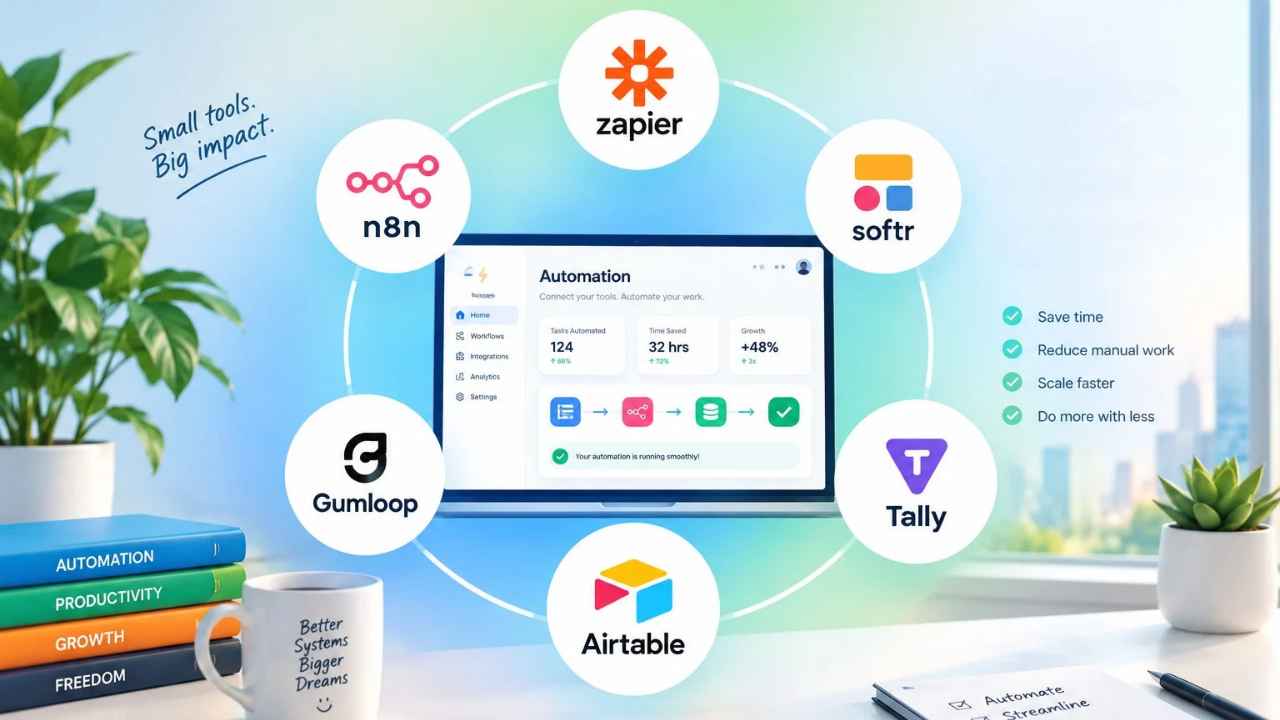
Teams build “small tools” every day. A tracker for approvals, a dashboard for sales, a request form for IT, or a simple customer portal. The problem is that these tools still take time, and most teams do not have spare developer hours.
That is where the best low code platforms come in. They let you build apps with visual blocks, ready-made connectors, and workflow builders. You still need clear thinking and clean data, but you can ship faster than traditional development in many business scenarios. This guide compares 10 popular options in a practical way. You will see where each platform fits, what it does well, and what can become a headache later.
| What This Guide Helps You Do | Why It’s Useful |
| Shortlist the right platform fast | Saves weeks of trial and error |
| Match tools to real use cases | Stops you from overbuying |
| Understand tradeoffs clearly | Prevents expensive mistakes |
| Plan a safe pilot project | Helps you validate before committing |
Quick Summary
If you want a tool that works with what your company already uses, start there. Microsoft-heavy teams often move fastest with Power Apps. Salesforce teams usually get quick wins inside Salesforce. Data-heavy internal tools often fit Retool-style builders. Workflow-first organizations usually do better with case and process platforms like Appian or ServiceNow.
The best approach is to pick two or three tools and build the same small pilot in each. Once you connect real data, real permissions, and real users, the best fit becomes obvious.
| Use Case | Strong Shortlist | Why It Fits |
| Microsoft ecosystem apps | Power Apps | Deep integrations with Microsoft tools |
| Enterprise app portfolios | Mendix, OutSystems | Governance and scaling for multiple teams |
| Workflow and case management | Appian, ServiceNow | Strong process handling and controls |
| Internal dashboards and admin tools | Retool | Great UI over databases and APIs |
| Spreadsheet to app speed | AppSheet | Fast builds from structured data |
| Mobile-first MVP | FlutterFlow | Mobile UI focus and quicker iteration |
What Is A Low-Code Platform?

A low-code platform is software that helps you build apps using visual tools instead of writing everything in code. You typically drag and drop UI components, connect data sources, and define workflows with rules. Many platforms also allow custom code when needed, which helps when your app becomes more complex.
Low-code is popular because it reduces delivery time for business apps. It also helps teams that are close to the problem, like operations, customer support, and finance, build what they need without waiting in a long engineering queue. Still, low-code is not magic. You need good requirements, proper access control, and a clean data setup to avoid chaos.
When used well, low-code can turn repeated manual work into simple apps. It can also improve visibility by putting real-time dashboards in front of the people who need them.
| Low-Code Concept | What It Means In Practice |
| Visual UI builder | Create screens without heavy coding |
| Workflow automation | Route tasks, approvals, and alerts |
| Connectors and integrations | Link to common tools and databases |
| Roles and permissions | Control who can view and edit data |
| Optional code | Extend features when visuals are not enough |
Low-Code Vs No-Code
No-code tools aim to keep things simple and avoid code entirely. They work well for basic forms, simple databases, and lightweight automations. Low-code tools still prioritize speed, but they usually offer deeper logic, better governance, and more flexibility when requirements grow.
If you expect complex workflows, multiple data sources, role-based access, or long-term maintenance, low-code often holds up better. If your app is small and will stay small, no-code can be enough.
Common App Types You Can Build
Low-code platforms are frequently used for internal tools and operational workflows. These are not flashy apps, but they save time and reduce mistakes. Many teams start with one workflow and expand into several apps over time.
Common examples include request systems, approval apps, dashboards, field inspection tools, and customer portals. The best results usually come when you pick a process that is repetitive and measurable.
| App Type | Example | Typical Result |
| Approvals | Purchase requests | Faster decisions, fewer missed steps |
| Dashboards | KPI tracking | Better visibility and accountability |
| Internal tools | Admin panels | Less manual work and fewer errors |
| Field apps | Inspections and checklists | More consistent data collection |
How We Chose These Platforms?
This list is built around real buyer needs, not hype. We focused on platforms that are widely used, have strong app-building features, and cover different scenarios. Some platforms are best for enterprise governance. Others are best for internal dashboards. Some shine in workflow automation, while others are strong for mobile MVPs.
We also considered how teams actually adopt low-code. A tool that looks powerful can fail if it is too hard for the team to maintain. On the other hand, a very simple tool can become limiting when your app grows.
Most importantly, we looked at tradeoffs. Every platform has strengths, and every platform has a ceiling. The goal is to pick the one that matches your situation.
| Selection Criteria | What We Looked For |
| Ease of adoption | Can non-developers ship something real |
| Workflow depth | Can it handle approvals and branching logic |
| Data flexibility | Can it model data cleanly and scale |
| Integrations | Can it connect to what teams already use |
| Governance | Roles, audit trails, environments, controls |
| Practical fit | Best for internal tools, enterprise apps, or mobile |
Who This List Is For?
This article is for teams building practical business apps. That includes internal tools, workflow apps, dashboards, and simple portals. It is also for founders validating a product idea without hiring a full dev team upfront.
Who This List Is Not For?
If you need a highly custom consumer app with unique animations, heavy real-time features, or complex performance requirements, low-code may not be the best fit. You can still use low-code for prototypes, but full custom development might be required for the final product.
| Good Fit | Not The Best Fit |
| Internal operations apps | Real-time gaming and advanced 3D |
| Workflow and approvals | Ultra-custom UI at massive scale |
| Rapid prototypes and MVPs | Deep system-level performance tuning |
Comparison Table
Before you read every platform review, decide what kind of app you are building. A workflow-heavy compliance process needs a different tool than a dashboard over a database. A mobile-first MVP needs different strengths than an internal admin tool.
A good shortlist usually contains one ecosystem tool, one workflow tool, and one internal tool builder. Then you run a pilot and choose based on real results.
| Platform | Best For | Strength | Watch-Out |
| Power Apps | Microsoft teams | Ecosystem integration | Licensing complexity |
| Mendix | Enterprise apps | Governance | Can feel heavy |
| OutSystems | Enterprise delivery | Scale | Quote-based pricing |
| Appian | Workflow and cases | Process control | UI flexibility limits |
| ServiceNow App Engine | Service workflows | Enterprise controls | Not ideal outside its ecosystem |
| Salesforce Platform | CRM-based apps | Salesforce data | Costs can scale |
| Zoho Creator | SMB apps | Easy adoption | Enterprise ceiling |
| AppSheet | Quick apps | Speed | Complexity limits |
| Retool | Internal tools | Data-driven UI | Public apps can be harder |
| FlutterFlow | Mobile MVP | Mobile UI speed | Backend complexity later |
1) Microsoft Power Apps
Power Apps is built for teams using Microsoft tools daily. It helps you build internal apps, forms, and workflow-based solutions that connect to Microsoft services. For many companies, the biggest advantage is that identity, access, and integrations are already aligned with how the organization works.
Power Apps also works well when you want to standardize citizen development. IT teams can create guardrails, while business teams build apps within those boundaries. The practical sweet spot is internal apps, approvals, and dashboards that connect to Microsoft data sources.
If your company already uses Teams and SharePoint heavily, Power Apps can become a natural layer for building simple operational tools quickly.
| Power Apps Key Points | Summary |
| Best for | Microsoft-first organizations |
| Strong at | Internal apps, approvals, integrations |
| Typical wins | Faster delivery for business tools |
| Common limit | Licensing and connector tiers |
Best For
Microsoft 365, Teams, SharePoint, Dynamics, and Azure environments
Standout Features
- Strong connector ecosystem within Microsoft products
- Data modeling options for structured apps
- Workflow pairing with automation tools
- Enterprise access control and governance patterns
2) Mendix
Mendix is known for enterprise-grade low-code development. It is often chosen when teams want fast delivery but still need a structured lifecycle. That includes environments, governance controls, and a clean path from prototype to production.
Mendix supports complex processes and multi-team collaboration. It also fits organizations that want a platform approach, where several teams build and maintain multiple apps over time. For many enterprises, that governance layer matters as much as the app builder itself.
Mendix is usually a better fit for teams that treat low-code as a serious development practice. It can be overkill for very small apps, but it shines when your app portfolio grows.
| Mendix Key Points | Summary |
| Best for | Enterprise app portfolios |
| Strong at | Governance and structured development |
| Typical wins | Long-term maintainability |
| Common limit | Heavier setup for small teams |
Best For
Enterprise apps that need governance and long-term maintenance
Standout Features
- Visual modeling for complex workflows
- Collaboration between business and IT
- Lifecycle tools for testing and deployment
- Strong support for multi-app roadmaps
3) OutSystems
OutSystems is designed for organizations that need to ship many apps quickly without losing control. It is commonly used in large enterprises where app backlogs pile up and delivery speed becomes a business problem. OutSystems focuses on rapid development with enterprise governance patterns.
A key value is consistency. When teams build many apps, consistent patterns, reusable components, and stable deployment practices become important. OutSystems is often positioned for that environment, where speed and structure must coexist.
For smaller teams, OutSystems can be more than they need. For large organizations delivering dozens of apps, it can be a strong match.
| OutSystems Key Points | Summary |
| Best for | High-scale enterprise delivery |
| Strong at | Speed plus governance |
| Typical wins | Clearing large internal app backlogs |
| Common limit | Platform commitment and cost planning |
Best For
Organizations building serious production apps fast at scale
Standout Features
- Designed for scaling delivery across teams
- Reusable components and patterns
- Governance and structured deployment support
- Suitable for complex requirements
4) Appian
Appian is workflow-first. If the main problem is routing work through steps, handling exceptions, and tracking outcomes, Appian is often a strong fit. It is commonly used for case management, compliance-heavy processes, and structured operations.
Appian tends to work best when the workflow is the product. If you want a tool to manage requests, approvals, investigations, or multi-step operations, Appian’s process focus helps. The UI is functional, but many teams choose Appian because it handles the complexity behind the scenes.
This is a common pattern in operations-heavy businesses. You need stable workflows more than pixel-perfect screens.
| Appian Key Points | Summary |
| Best for | Workflow and case management |
| Strong at | Process control and visibility |
| Typical wins | Fewer process bottlenecks |
| Common limit | Less ideal for highly custom UI |
Best For
Workflow automation, case management, and process-heavy apps
Standout Features
- Process-first orchestration
- Exception handling for complex cases
- Better visibility into work queues
- Strong fit for regulated workflows
5) ServiceNow App Engine
ServiceNow App Engine fits companies that already rely on ServiceNow for internal service workflows. It is designed to build apps that align with IT service management, HR service delivery, and operational processes. That alignment can shorten rollout time because the organization already uses the platform’s core patterns.
It works well when you want to create new internal workflows without introducing a separate tool stack. Governance and access control are typically a strong part of the experience. That matters in large organizations where unmanaged citizen apps can create risk.
If your company is not already committed to ServiceNow, it can be a heavier path. But for existing ServiceNow users, it can be a practical extension.
| ServiceNow App Engine Key Points | Summary |
| Best for | ServiceNow-centric enterprises |
| Strong at | Service workflows and governance |
| Typical wins | Fast internal service apps |
| Common limit | Heavy outside its ecosystem |
Best For
Enterprises already using ServiceNow for IT, HR, or operations workflows
Standout Features
- Built around service workflows and controls
- Strong role-based governance
- Fits operational service models
- Good for structured internal apps
6) Salesforce Platform
Salesforce Platform is a strong choice when your company runs core workflows on Salesforce. If your customer data, sales process, and service operations live there, building low-code apps on top can be efficient. You can leverage existing permissions, data structures, and automation patterns.
This platform is especially practical for sales operations, service teams, partner workflows, and customer-facing portals that depend on CRM data. It often reduces integration complexity because your main records already live in one place.
The main tradeoff is cost scaling. CRM ecosystems can grow expensive when many teams and products get layered in. Still, for Salesforce-centric businesses, it can be one of the quickest paths to useful apps.
| Salesforce Platform Key Points | Summary |
| Best for | CRM-based apps and portals |
| Strong at | Using Salesforce data and permissions |
| Typical wins | Faster delivery for sales and service workflows |
| Common limit | Costs can scale with adoption |
Best For
Salesforce-centric teams building apps around CRM data
Standout Features
- Tight connection to CRM objects and permissions
- Strong automation patterns for operations
- Large ecosystem of extensions
- Good for portals and internal tools around CRM
7) Zoho Creator
Zoho Creator is often popular with small and mid-sized businesses that want fast results without heavy enterprise complexity. It is frequently used to build forms, approvals, internal tools, and operational trackers. Many teams like it because it feels approachable and practical.
Zoho Creator is also a strong option if you already use other Zoho products. In that case, integrations and workflows can feel more seamless. It is a common choice for teams that want to replace messy spreadsheets with a real workflow.
The main limitation appears when requirements become very complex or when deep enterprise governance is needed. For many SMB scenarios, it stays in the sweet spot.
| Zoho Creator Key Points | Summary |
| Best for | SMB workflows and internal tools |
| Strong at | Quick forms, approvals, simple apps |
| Typical wins | Replacing spreadsheets with structured apps |
| Common limit | Enterprise-scale governance and complexity |
Best For
Small to mid-sized businesses building practical workflows
Standout Features
- Fast building with templates and workflows
- Strong SMB-friendly approach
- Useful for approvals and operational trackers
- Works well inside a broader business suite
8) Google AppSheet
AppSheet is a go-to tool when speed matters and the app is relatively simple. Many teams use it to turn structured data into working apps quickly. It is often used for field checklists, inventory tracking, basic approvals, and internal reporting.
AppSheet tends to feel natural for teams who already live in spreadsheet-based workflows. It helps them formalize processes without requiring a heavy build phase. For operations teams, that speed can be the difference between “we might build it someday” and “we shipped it this week.”
The tradeoff is complexity. As apps grow, teams may hit limits in UI flexibility, deep logic, or complex integrations.
| AppSheet Key Points | Summary |
| Best for | Fast apps built from structured data |
| Strong at | Field workflows, simple approvals |
| Typical wins | Quick digitization of spreadsheet processes |
| Common limit | Complexity and customization ceiling |
Best For
Quick apps built from spreadsheets and lightweight data sources
Standout Features
- Fast path from data to app
- Mobile-friendly defaults
- Great for field use cases
- Suitable for simple operational workflows
9) Retool
Retool is built for internal tools. If your business already has databases and APIs, Retool helps you build clean interfaces on top of them. It is often used for admin panels, dashboards, support tools, and internal workflow screens.
Retool shines when the “app” is mostly a smart UI over data. That is common in modern companies. The data exists, but teams need a better way to view, update, and manage it. Retool lets you build those interfaces faster than a fully custom internal portal.
The main consideration is scope. Retool is excellent for internal use, but public-facing consumer apps usually require more product-level UI control.
| Retool Key Points | Summary |
| Best for | Internal tools over databases and APIs |
| Strong at | Dashboards, admin panels, ops tools |
| Typical wins | Faster internal tooling without full dev builds |
| Common limit | Not always ideal for public consumer apps |
Best For
Internal tools, admin panels, dashboards, and data-heavy apps
Standout Features
- Strong database and API connectivity
- Fast UI building for internal teams
- Great for operational dashboards
- Useful for support and admin workflows
10) FlutterFlow
FlutterFlow is a mobile-first builder aimed at teams who want a more “real app” feel without starting from scratch. It is popular for MVPs, early product tests, and apps that need more mobile UI polish than spreadsheet-driven builders can offer.
FlutterFlow can speed up screen building and iteration. That matters when you need to test onboarding flows, navigation, and user experience quickly. For startups, this can reduce time to validation.
The main tradeoff is that mobile apps still require discipline. You need testing, clear requirements, and a backend plan. As you scale, you may need developer involvement for advanced backend logic or performance tuning.
| FlutterFlow Key Points | Summary |
| Best for | Mobile-first MVPs and prototypes |
| Strong at | Mobile UI speed and iteration |
| Typical wins | Faster product validation |
| Common limit | Backend complexity can require developers later |
Best For
Mobile-first apps that need stronger UI control
Standout Features
- Mobile UI building with structured components
- Faster iteration on screens and flows
- Works well for MVP testing
- Better fit for mobile polish than sheet-based tools
How To Choose The Right Low-Code Platform?

Choosing from the best low code platforms is easier when you start with constraints. Most teams fail by picking the most famous tool, not the best fit. Your ecosystem, data sources, security needs, and who will maintain the app matter more than fancy demos.
Begin with a simple pilot project. Build one workflow that touches real data and uses real permissions. The platform that feels easy during a demo can feel hard when you apply real-world rules.
Also consider the long view. If you will build multiple apps, governance and consistency become important. If you only need one simple internal tool, ease of use may matter more than enterprise features.
| Choice Factor | What To Decide Early |
| Ecosystem fit | Microsoft, Google, Salesforce, or neutral |
| Data sources | Sheets, database, APIs, mixed |
| Users | Internal only, or external too |
| Governance | Roles, audit logs, environments |
| Growth plan | One app vs many apps in a year |
Start With These 7 Questions
- What are you building, a workflow app, internal tool, or customer portal
- Who owns it long term, ops team, IT, or shared ownership
- What data must it connect to, and how clean is that data
- Do you need mobile, web, or both
- What permissions model is required
- Are there compliance or hosting constraints
- How many users will rely on it after a year
Match Platforms To Scenarios
- Microsoft-first teams often start with Power Apps
- CRM-centric teams often choose Salesforce Platform
- Workflow-heavy operations often fit Appian or ServiceNow
- Data and dashboard heavy internal teams often fit Retool
- Fast spreadsheet replacement often fits AppSheet
- Mobile-first MVPs often fit FlutterFlow
Best Practices To Build Apps Without A Developer
Low-code works best when you treat it like real software. That means you define scope, test logic, secure data, and document the workflow. When teams skip these basics, apps become fragile and break as soon as more users join.
Start small. Build one workflow and ship it. Measure whether it reduces time, improves accuracy, or increases visibility. Then expand. This approach keeps momentum and prevents “half-built platform projects” that die quietly.
Design matters too. A clean, simple UI reduces errors and support tickets. Role-based views help users focus on their tasks and avoid confusion.
| Best Practice | What It Prevents |
| MVP-first approach | Overbuilding and slow launches |
| Clear data rules | Messy records and broken reports |
| Role-based screens | Confusion and accidental edits |
| Testing before rollout | Workflow failures in production |
| Basic documentation | Knowledge loss when owners change |
Build A Simple MVP First
- Keep the first version narrow and measurable
- Launch to a small group, then expand
- Improve weekly based on real usage
Design Like A Product
- Keep screens focused on one task
- Use consistent labels and navigation
- Add confirmations and clear error messages
Keep Your Data Clean
- Use required fields and validation rules
- Avoid multiple sources of truth
- Standardize naming and IDs early
Security Basics You Should Not Skip
- Use least-privilege access
- Separate test and production environments
- Track changes and ownership clearly
Final Thoughts
The best low code platforms are not “the most popular ones.” They are the ones that fit your workflows, your data, and your team’s ability to maintain what they build. If you want quick internal apps inside Microsoft, a Microsoft-first platform often makes sense. If you need workflow control and case handling, a workflow-first platform can save you months. If you need internal dashboards over databases, internal tool builders can be the fastest path.
Your safest move is simple. Shortlist two or three platforms, build one small real pilot, and judge based on speed, clarity, permissions, and long-term maintainability. When you do that, the right choice usually becomes obvious.