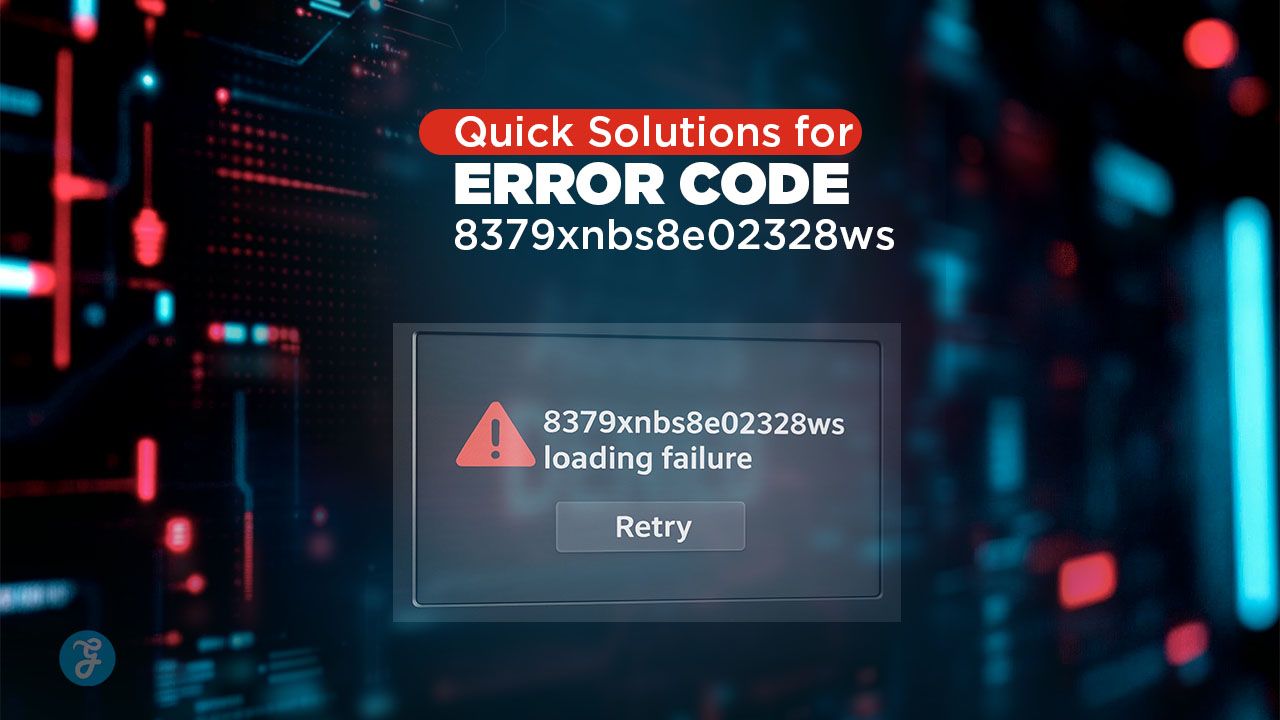
Are you trying to print or sync a file and suddenly hit the error 8379xnbs8e02328ws code? If you see it on an HP OfficeJet Pro 8210, inside a cloud tool, or right after an operating system update, it can stop printing or syncing immediately.
This code usually shows up during sign-in (authentication) changes or data synchronization, so the fastest path forward is to check what changed, confirm your network can reach the service, and repair any corrupted files.
Read on; I’ll walk you through quick fixes first, then deeper troubleshooting if the error keeps coming back.
Key Takeaways
- The 8379xnbs8e02328ws error code often interrupts printing or cloud sync during authentication or data synchronization, especially after updates.
- Common causes include corrupted program files, compatibility problems, outdated updates, blocked firewall/router rules, cache issues, and malware.
- Quick fixes: restart the app/device, power-cycle your router for about 10 seconds, clear the cache, and update or reinstall the software.
- Diagnose faster by checking Event Viewer and Reliability Monitor, reviewing changes from the last 72 hours, and running SFC/DISM if Windows system files look damaged.
- If you’re still on Windows 10, Microsoft lists October 14, 2025, as the end of the support date, so older PCs can run into more update and compatibility failures over time.

Common Causes of Error Code 8379xnbs8e02328ws
Error code 8379xnbs8e02328ws usually means a background step failed, like signing you in, validating a certificate, writing a config file, or reaching a cloud endpoint.
The good news is that most root causes fall into a few buckets, so you can test them quickly instead of guessing.
1) Corrupted files and incomplete installs
Corrupted program files or broken configuration files are common triggers, especially after a failed update, a power outage, or a forced shutdown while the app was writing data.
If the issue started right after a patch, focus on repair steps first, then reinstall only if repairs fail.
- Repair Windows system files with DISM, then SFC (this is one of the fastest ways to fix corrupted files that break printing or sync).
- Check available disk space before retrying a reinstall; low free space can cause partial installs and loading errors.
- If the app stores local databases, clear only the cache first; don’t delete full data folders until you’ve backed up.
2) Compatibility problems and end-of-support operating systems
Compatibility issues show up when your operating system, browser, plug-in, or printer driver is out of step with the service you’re connecting to.
This gets more likely on older systems. Windows 10 support has ended, and after October 14, 2025, you won’t get the normal security fixes and feature updates that many tools assume are present.
- If you’re on Windows 10, confirm you’re fully patched, then consider upgrading to Windows 11 if your PC supports it.
- If the error appears in a web app, try a clean browser profile and disable extensions first; ad blockers and security plug-ins can block authentication scripts.
- If the error started after a driver update, roll back the driver in Device Manager as a quick test.
3) Network blocks, DNS trouble, and time sync issues
When a printer app or cloud tool cannot reach its server, authentication updates and data synchronization can fail instantly.
In home networks, the most common culprits are flaky Wi-Fi, DNS issues, strict firewall rules, or a router that needs a clean reboot.
- Test on a second connection (mobile hotspot) to confirm whether the problem is your local network.
- Restart your gateway/router: unplug the power, wait about 10 seconds, plug it back in, then retry.
- If your device clock is wrong, sign-in can fail. Resync time and make sure your time zone is correct before you chase deeper fixes.
4) Security tools, firewall rules, and malware
A misconfigured firewall can block an app even when your internet “works.” Antivirus tools can also quarantine files mid-update, which creates corrupted files and repeat crashes.
For printers, this can get extra confusing because one process might print locally while another process handles cloud sync or account sign-in.
- It’s usually safer to allow an app through your firewall than to open ports. Only make firewall exceptions for software you recognize.
- Run a malware scan. If you suspect a stubborn infection, Microsoft Defender includes an offline scan mode that reboots into a cleaner environment for scanning.
- If you previously used HP Print and Scan Doctor, HP states it was retired on May 27, 2025, due to a security vulnerability, so remove it and use newer HP tools instead.
What Causes Corrupted Program Files?
Bad installs and failed updates are the big ones. A sudden shutdown during a write operation can damage files. Malware can also alter or delete key components, which can break authentication and data synchronization.
Disk errors and low storage space can damage configuration files, too. If you’re seeing repeated crashes, check drive health and free space before you reinstall.
A misconfigured firewall, router, or server setting can block sync and throw an error. If you’re worried about data loss, keep backups on cloud storage or external drives before you make major changes.
How do software compatibility issues trigger this error?
When an online service updates its authentication flow, older apps, outdated plug-ins, or unsupported browsers can fail without warning.
Start by checking the app’s supported operating systems and browsers. Then disable extensions, clear the cache, and retry in a clean browser session to see if a plug-in is triggering the error.
Why can network connectivity problems cause this error?
If your device cannot reliably reach the server, background sign-in checks and sync jobs can fail and surface as error 8379xnbs8e02328ws. Check internet access first. Then restart your gateway or router, and retest. A quick reboot often clears DNS or firewall glitches that interrupt cloud services.
How to Diagnose Error Code 8379xnbs8e02328ws
To diagnose the error 8379xnbs8e02328ws code, you want two things: a timestamp and a reason. That means you’ll look at logs, confirm what changed recently, and run a few fast network checks to see where communication breaks.
Get the “what failed” details first
Before you change anything, capture the basics. This keeps troubleshooting focused and saves time if you need help later.
- Write down the exact error message, the time it occurred, and what you were doing (printing, signing in, syncing, installing an update).
- Note whether it fails on one file/task or everything.
- If it’s printer-related, note whether the printer is on Wi-Fi, Ethernet, or USB.
Check Event Viewer, Reliability Monitor, and app logs
Windows logs usually tell you if the failure was a crash, a permissions problem, or a blocked network call.
- Open Event Viewer and look under Windows Logs (Application and System). Filter by the time of the failure, then look for “faulting application,” “faulting module,” or network errors.
- Open Reliability Monitor (search for “View reliability history”) to spot a pattern of application failures, Windows failures, or failed updates right before the error started.
- Inspect application logs in ProgramData or AppData. Search inside the newest log for “8379xnbs8e02328ws” and for words like “auth,” “token,” “TLS,” “timeout,” or “access denied.”
Run quick network checks that actually isolate the problem
Don’t stop at “Wi-Fi looks connected.” You want to confirm DNS resolution and stable reachability.
- Try the same action on a different connection (hotspot). If it works there, your router, DNS, or firewall is the likely trigger.
- Run a ping test to your router first, then to a known external host, to separate local Wi-Fi problems from ISP problems.
- If time sync is broken, fix it. A wrong system clock or time zone can break certificate-based authentication and make an otherwise healthy network look “down.”
How Can I check for Error Messages Related to this Code?
If you saw this error after an update, start with system logs, then work outward.
- Open Event Viewer and filter around the failure time. Look for a crash report, a blocked connection, or a permissions error tied to the same timestamp.
- Use Task Manager to spot failing background processes. If something keeps restarting, note its name and then check its related logs.
- Review recent update history and compare install times to when the error started. That’s often your best clue.
- Review the software update history and HP Community posts, then match timestamps to see what other users fixed on the same model and OS version.
- Inspect application and installer logs in ProgramData or AppData folders. Search the newest log file for “8379xnbs8e02328ws” and for a secondary “exception code” that can explain the failure type.
- Verify corrupted system files with SFC and DISM from an elevated Command Prompt. File corruption can cause the process failure that produces this code.
- Clear the application cache and temporary files, then retry the same action to confirm whether a bad cache entry is triggering instability.
How do I review recent system changes for troubleshooting?
If the error code often appears “out of nowhere,” it usually didn’t. Something changed.
- Check system entries from the last 72 hours for patches, crashes, or driver updates. Write down the install times.
- Scan newly installed apps, plug-ins, and browser extensions. Disable the newest items first, then retest.
- Check firewall and router logs (if available) for dropped connections and repeated timeouts near the error timestamp.
- Create a restore point before you do big changes. Then you can safely test a rollback without risking data loss.
How do I test my internet connection to diagnose the error?
You can rule out network causes quickly with a few simple tests.
- Load a few unrelated websites or apps to confirm general internet access.
- Power-cycle your router for about 10 seconds, then retry the exact same task that triggers the error.
- Switch networks (Wi-Fi to hotspot) to isolate whether the issue lives inside your local network.
- Review firewall settings and app permissions. If the app fails only on your home network, a firewall rule is a strong suspect.
Quick Solutions to Fix Error Code 8379xnbs8e02328ws
If you want to fix the error 8379xnbs8e02328ws code fast, start with the lowest-risk steps that reset credentials, cache, and connectivity.
Then move to repairs (system files and network stack), and save full reinstalls for last.
If you test by disabling a firewall, do it briefly, and only as a quick diagnostic step. It’s usually safer to allow the specific app than to open ports or leave protection off.
Start with the “2-minute” fixes
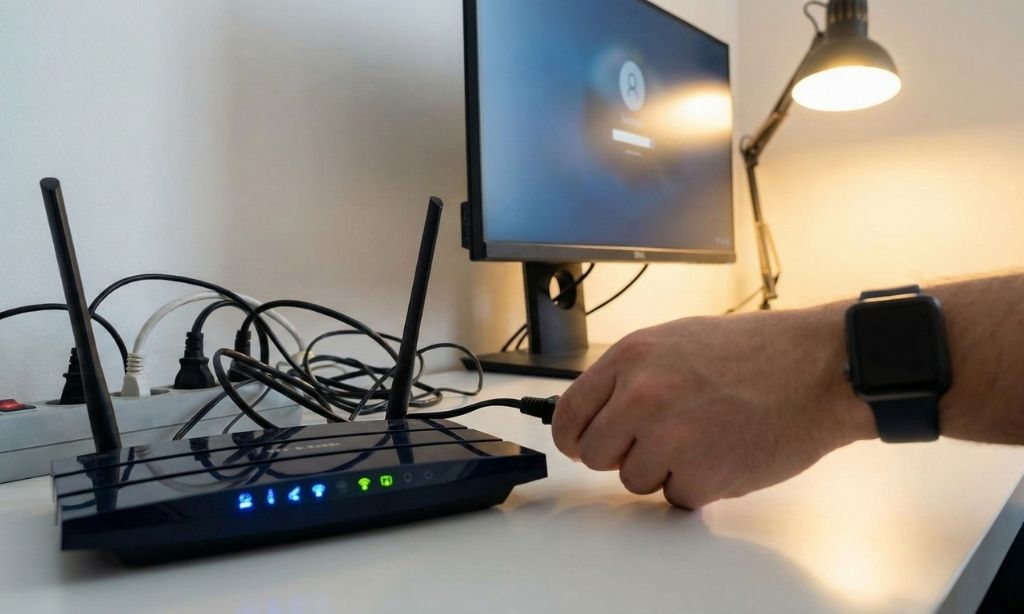
- Sign out of the app, close it fully, then sign back in. This refreshes authentication tokens.
- Reboot your PC and the printer. Then wait until the printer is idle before you retry.
- Clear the app cache and temporary files. Cache corruption is a common trigger for repeated error messages.
- Restart your router: unplug power, wait about 10 seconds, plug it back in.
Use this quick decision table

| Fix | Best when | What to watch for |
|---|---|---|
| Restart the app and sign out/in | Error appears during login or sync | If it works once, but fails again soon, check time sync and firewall rules |
| Clear cache/temp files | Error occurs mid-task, after an update, or after a crash | Don’t delete full data folders until you have a backup |
| Repair system files (DISM, then SFC) | Repeated crashes, missing DLL errors, odd Windows behavior | Run in an elevated Command Prompt and let scans finish completely |
| Reset the network stack (TCP/IP reset) | Network looks “connected” but sync fails, DNS feels flaky | You may need to reconnect to Wi-Fi after a reset |
Repair Windows and reset the network stack (safe, built-in tools)
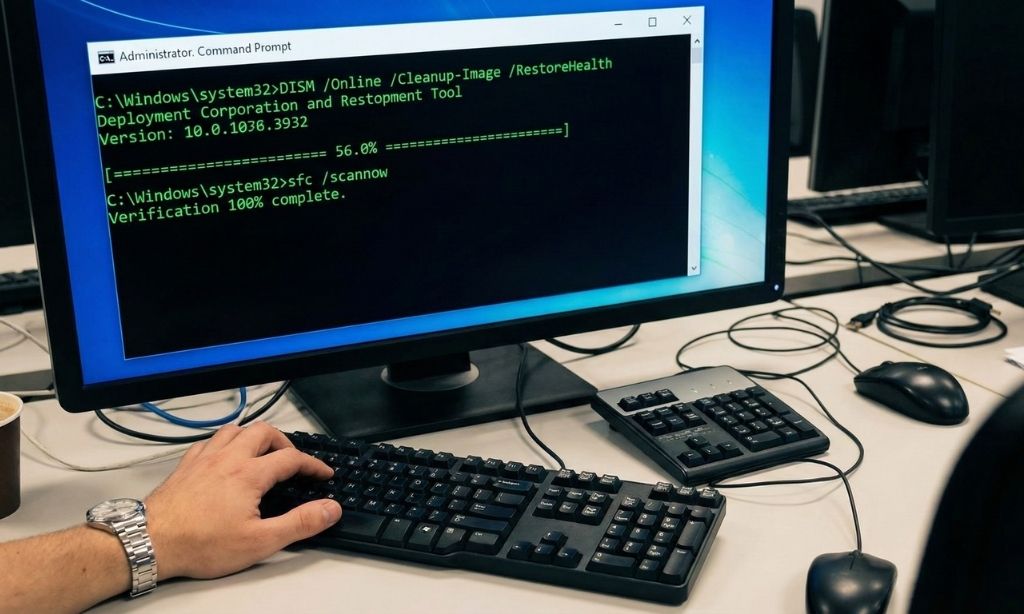
When the error is tied to corrupted files or unstable networking, built-in Windows tools can fix it without a full reinstall.
- Run DISM first, then SFC to repair Windows system files.
- If connectivity feels “half broken,” use TCP/IP reset. Microsoft Support documents the NetShell method for resetting TCP/IP if you have stubborn connection issues.
- If your clock is wrong, resync time. If resync fails, time sync traffic can be blocked by firewall rules on some networks.
Printer-specific fixes for HP OfficeJet Pro 8210
If you’re seeing the code while printing, treat it like a driver, firmware, or spooler problem, plus a network check.
- Update your printer firmware and drivers using HP’s recommended tools for your device and operating system.
- Remove old HP utilities you no longer use. HP states HP Print and Scan Doctor was retired on May 27, 2025 due to a security vulnerability, and HP Smart includes a newer “Diagnose & Fix” flow.
- If the printer is on Wi-Fi and keeps dropping, test with Ethernet (if supported) or move it closer to the router to rule out signal issues.
How do I restart the system or application properly?
A proper restart is more than clicking the X. You want to clear stuck background processes and refresh credentials.
- Close the app, then end any remaining related processes in Task Manager, then reopen and sign in again.
- Shut down the computer, wait about 10 seconds, then start it again.
- Restart your gateway/router for about 10 seconds, then confirm you’re back online before retrying the task.
- Clear the app cache and temporary files, then relaunch.
- If you must test security software, do it briefly. Prefer “allow the app through the firewall” over opening ports or leaving protection off.
What are the steps to update or reinstall the software?
Use this order so you don’t create extra problems or lose data.
- Back up files to cloud storage or an external drive before you change app settings or reinstall.
- Install available updates for the app, printer driver, and your operating system, then reboot.
- Clear the app cache and retry. If the error disappears, you may not need a reinstall.
- Check permissions for the application in your security settings, and confirm it can access needed folders and the network.
- Uninstall the app from Installed Apps, reboot, and then reinstall from the vendor’s official channel.
- After reinstalling, confirm firewall settings allow the app. It’s safer to allow the app than to open ports (per Microsoft’s Windows Firewall guidance).
How can I reset configuration settings to fix the error?
If a recent tweak triggered the error, resetting the configuration can be the cleanest fix.
- Clear app cache and temp files, then restart and retest.
- Disable browser add-ons and retry the same task to isolate compatibility problems.
- Reset the application’s configuration to defaults if the error started after an update or language change.
- Reinstall the software if resets don’t stick; this replaces corrupted program files and broken components.
- Power-cycle your modem/router for about 10 seconds and reconnect; this clears common network glitches.
- For HP printers stuck in error states, update firmware and use HP’s current diagnostic tools inside HP Smart.
- Share logs without personal data if you ask for help. Include the system-generated identifier and the exact time of the failure.
Final Words
You can fix error code 8379xnbs8e02328ws with calm, methodical steps.
Start with restarts, cache clears, and a quick network swap test. Then repair corrupted files, update HP OfficeJet Pro 8210 drivers/firmware, and confirm firewall permissions.
If a recent update triggered the crash, roll back the driver or reinstall the software. If you still get the error 8379xnbs8e02328ws code, share sanitized logs and details in the HP Community so others can match your model, OS, and timestamps.