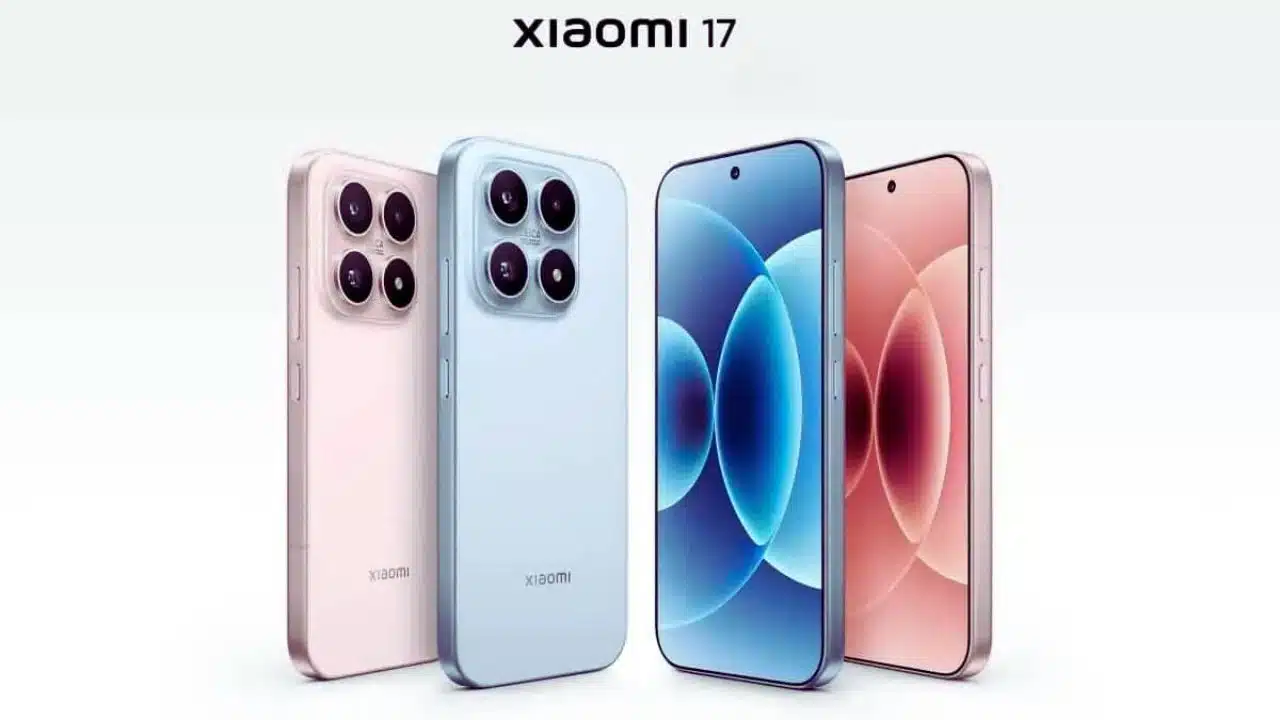
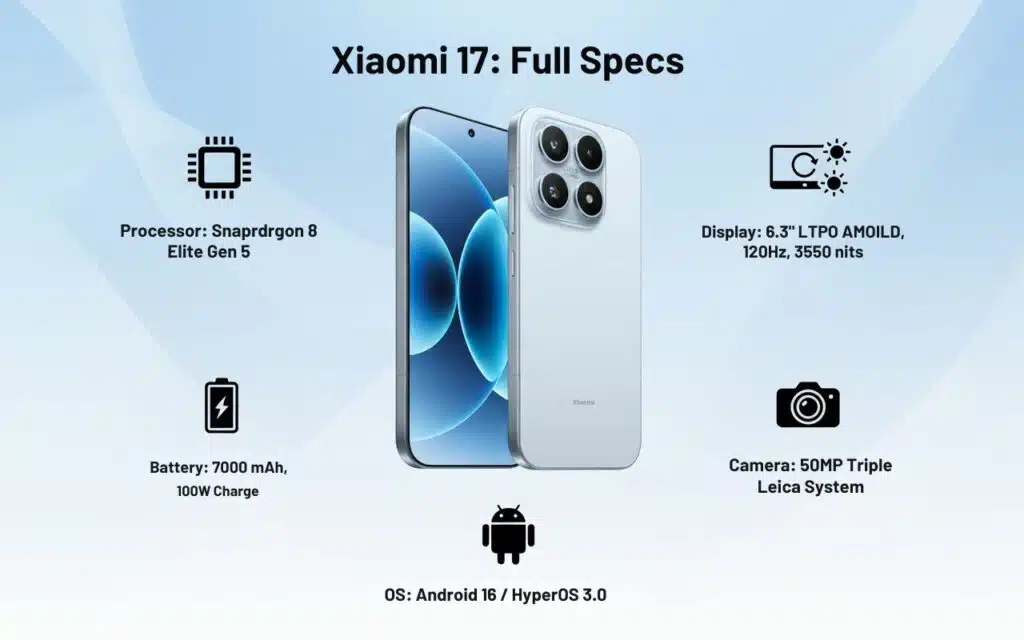
The Xiaomi 17 is built around one big promise: flagship power in a compact size, plus a battery that’s closer to “battery phone” territory than typical premium devices. The headline combo is a 7,000mAh silicon-carbon battery and 100W wired charging, which aims to reduce charging anxiety without turning the phone into a heavy brick.
In early hands-on use, it feels like Xiaomi is targeting people who want a smaller display but refuse to compromise on speed, cameras, or day-long endurance. If you’re a tech enthusiast who enjoys tuning settings and comparing camera profiles, it’s interesting. If you’re a budget-conscious buyer who just wants a dependable phone that lasts, it’s practical.
First impressions (unboxing and initial feel)
Unboxing is refreshingly straightforward: phone, charging gear (market dependent), cable, and a protective case in many packages. The phone itself feels dense and premium, with clean lines, tight tolerances, and a comfortable balance that doesn’t scream “huge battery inside.”
The compact 6.3-inch class screen makes it easier to handle one-handed than many current flagships. Buttons are clicky, the frame feels rigid, and the display sits nicely flush with slim bezels.
Key specs at a glance
You’re looking at a 6.3-inch LTPO AMOLED with up to 120Hz refresh, a high-resolution panel suited for sharp text, a flagship Snapdragon 8-series platform, and configurations that typically start at 12GB RAM with higher trims available. Software is Xiaomi HyperOS on Android, with the usual mix of features, customization, and a few preinstalled apps depending on region.
Who is the Xiaomi 17 for?
This phone is for:
- People who want compact size without “midrange compromises”
- Heavy users who prioritize battery endurance and fast top-ups
- Anyone who wants flagship cameras but doesn’t want a giant device
It may not be ideal for:
- Users sensitive to display flicker at low brightness
- People who need guaranteed global software features and services with zero friction on day one
- Hardcore gamers who want maximum sustained performance for long sessions
| Overview snapshot | What it means for you |
| 6.3-inch LTPO AMOLED, up to 120Hz | Smooth, power-efficient scrolling in a compact body |
| Flagship Snapdragon platform | Fast daily performance and strong gaming potential |
| 7,000mAh battery | Multi-day potential for many users with moderate use |
| 100W wired charging | Very quick top-ups and short “charging windows” |
| Camera setup with multiple focal lengths | Better flexibility than single-camera-focused rivals |
Design and Build Quality
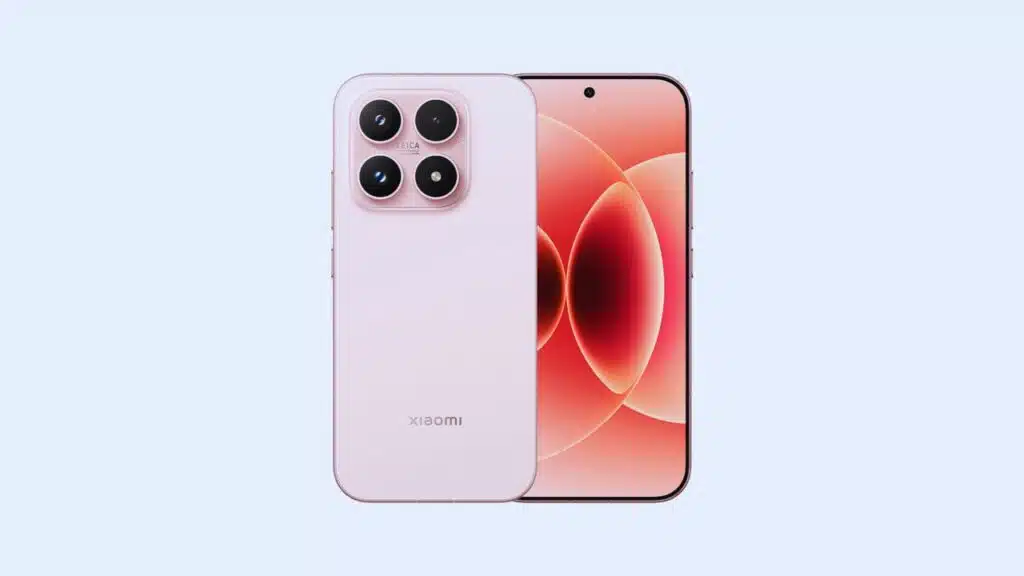
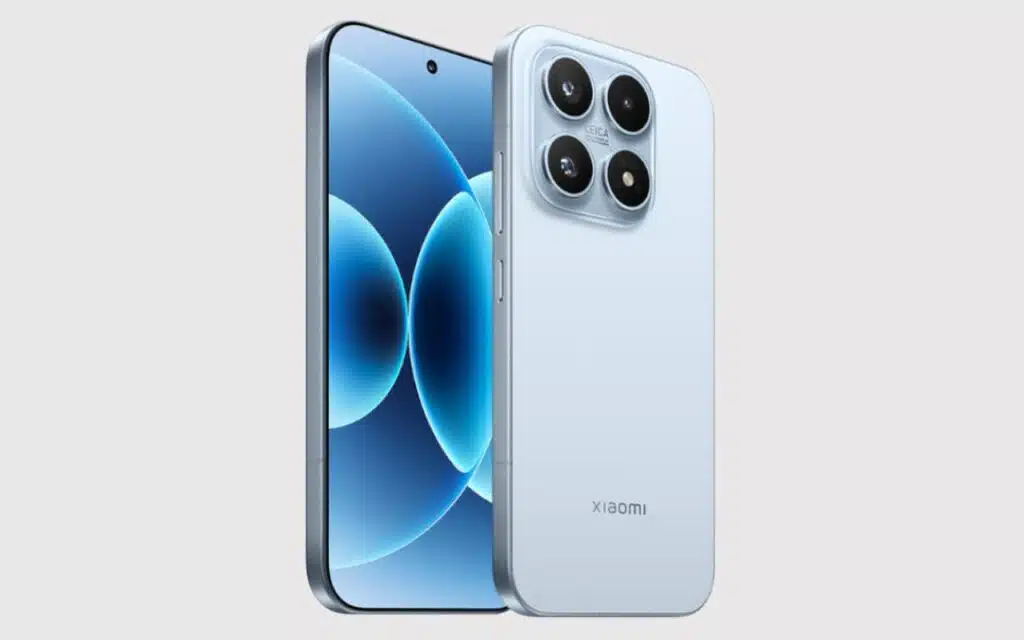
Xiaomi goes for a modern flagship feel: metal frame, glass panels, and a tight, compact footprint. The Xiaomi 17 doesn’t try to be the thinnest phone in the world, and that’s a good thing here, because the extra internal volume appears to be used for battery and thermal headroom.
Materials (frame, back, screen protection)
The frame is aluminum for stiffness and durability. The back is glass with a matte finish that helps reduce fingerprints and looks clean under bright light. Up front, Xiaomi uses its own reinforced glass branding (market naming varies), aiming for better drop and scratch resistance.
If you’re the kind of person who hates cases, the finish is grippy enough to survive normal handling, but glass is still glass. A slim case remains the safest option.
Ergonomics (weight, in-hand feel, durability)
For a phone carrying a huge battery, it feels surprisingly manageable. The weight is around the “comfortable flagship” zone rather than the “brick” zone, and the 6.3-inch size helps the phone feel smaller than its battery spec suggests.
The corners are rounded enough to avoid pressure points. The camera bump is noticeable but not extreme. On a table, it may wobble slightly without a case, depending on how the camera module is shaped.
Practical durability notes
Most units are rated for water and dust resistance (often IP68 in many markets). That helps for rain, spills, and everyday accidents, but it’s not a free pass for intentional water use. Ports and speaker grilles still need occasional cleaning if you live in a dusty environment.
| Design and build | Quick insight |
| Frame and back | Aluminum frame + glass back for a premium feel |
| Grip and finish | Matte surfaces reduce smudges and improve hold |
| Handling | Compact size helps comfort, even with a big battery |
| Durability | Water/dust protection in many versions; still treat with care |
| Real-life tip | A slim case reduces wobble and protects the camera bump |
Display
A compact flagship lives or dies by display quality. The Xiaomi 17’s panel aims for the full premium checklist: LTPO for efficiency, high resolution for crispness, and 120Hz for smoothness.
Technology, resolution, refresh rate
The Xiaomi 17 uses an LTPO AMOLED display around 6.3 inches, with a high-resolution 2656×1220-class panel. LTPO lets the refresh rate scale down dynamically for power savings during reading, static screens, and always-on display use, then ramp up for scrolling and gaming.
In daily use, this gives you a smoother “feel” without constantly paying the battery penalty of a locked high refresh rate.
Brightness, color accuracy, outdoor visibility
Peak brightness is strong enough for outdoor use, and OLED contrast makes text and icons pop. Color tuning typically includes multiple modes: vivid options for punchy visuals and more accurate modes for natural tones.
In bright sunlight, reflections can still be your enemy because the front glass is glossy. Max brightness helps, but glare depends heavily on angle and your sunglasses.
Bezels and cutout evaluation
Bezels are slim and generally symmetric, which makes the phone look modern. The punch-hole cutout fades into the background quickly in normal use, especially in apps with darker top bars.
PWM and eye comfort (important note)
Some OLED phones use flicker-based dimming at lower brightness. If you’re sensitive to PWM flicker, you should test the phone at low brightness in a dark room before committing. Xiaomi typically includes dimming options, and switching modes can improve comfort for many people.
| Display | What you should know |
| Panel type | LTPO AMOLED for smoothness and efficiency |
| Refresh behavior | Up to 120Hz with adaptive scaling |
| Resolution class | High enough for sharp text and crisp UI |
| Outdoor use | Strong brightness, but glass reflections still matter |
| Comfort tip | Test low-brightness flicker sensitivity before buying |
Performance and Software
The Xiaomi 17 targets “fast everywhere,” not just in benchmarks. That means snappy app launches, stable multitasking, and enough headroom to keep feeling quick after months of updates.
Daily performance and processor
With a top-tier Snapdragon 8-series chipset, daily use is effortlessly smooth. Apps open quickly, camera processing is fast, and heavy multitasking (maps + music + chat + browser tabs) stays stable.
If you buy a higher RAM/storage configuration, you’ll notice fewer app reloads and smoother behavior in memory-heavy workflows like editing photos, switching between large documents, and running multiple social apps.
Thermal management and gaming performance
Here’s the reality with compact flagships: heat has less space to spread out than in larger phones. Short bursts of gaming are excellent, but long sessions can trigger thermal limits that reduce peak performance to keep temperatures comfortable.
For most users, this isn’t a deal-breaker. The phone still feels fast; it just may not sustain absolute maximum frame rates for extended periods the way a larger “gaming phone” can.
Operating system and manufacturer skin
HyperOS focuses on smooth animations, deep customization, and ecosystem integration with Xiaomi accessories. You get plenty of features: robust theming, advanced battery controls, floating windows, and camera AI features (where supported).
Bloatware depends on region and retailer. Some versions ship cleaner than others. The good news is that most preinstalled apps can be disabled or uninstalled, and you can streamline the home screen easily.
Updates and long-term use
Software support is a key buying factor. Xiaomi’s update timelines vary by region and model line. If updates are your priority, confirm the exact update policy for your market version before buying, especially if you’re importing.
| Performance and software | Practical takeaway |
| Chipset class | Flagship Snapdragon 8-series performance for smooth daily use |
| Multitasking | Strong, especially with higher RAM trims |
| Gaming | Great in short sessions; can throttle in long sessions due to heat |
| HyperOS experience | Feature-rich, customizable, sometimes extra apps depending on region |
| Buyer advice | Confirm update policy and region-specific software behavior |
Camera System
A strong camera system is about consistency. The Xiaomi 17 aims to deliver reliable photos in most conditions, plus the flexibility of multiple focal lengths so you don’t feel trapped by a single perspective.
Lens and sensor overview
The Xiaomi 17 typically includes:
- A main camera with optical stabilization
- An ultrawide for landscapes and group shots
- A telephoto/zoom option for portraits and distant subjects
- A high-resolution front camera for selfies and video calls
The real value is not just “more cameras,” but useful separation between main, ultrawide, and zoom so you can shoot naturally without cropping everything.
Main camera: daylight performance
In bright light, the main camera produces detailed photos with strong dynamic range. Colors tend to lean vibrant, and sharpening can be a touch aggressive in default settings. For social media, that’s often a benefit. For photographers who prefer a natural look, switching to a more neutral profile can help.
Exposure is usually reliable, and motion freezing is good enough for kids, pets, and street shots in decent lighting.
Low light and night mode
Low light is where processing matters most. Night mode typically boosts brightness and detail, and the main camera’s stabilization helps keep shots usable even when your hands aren’t perfectly steady.
Expect the best low-light results from the main camera. The ultrawide will usually be noisier and softer in the dark, which is normal for small ultrawide sensors.
Ultrawide and zoom (telephoto)
Ultrawide is best for daylight landscapes and interiors. At night, it’s more of a “capture the moment” camera than a “wow” camera.
The telephoto is the more valuable secondary lens for most people. It improves portraits by avoiding face distortion and makes travel photography more fun by letting you frame scenes without physically moving closer.
Video: resolution, stabilization, audio
Video performance is typically strong on flagship Snapdragon platforms. Stabilization is best on the main camera, and audio capture is usually clear enough for casual vlogging. If you’re serious about video, pair it with a small mic and you can get surprisingly professional results.
| Camera performance | What to expect |
| Main camera | Strong detail and dynamic range; slightly punchy processing by default |
| Low light | Main camera holds up well; ultrawide drops faster in quality |
| Ultrawide | Great for daylight landscapes; average in low light |
| Telephoto/zoom | Best for portraits and travel framing; more useful than ultrawide for many |
| Video | Good stabilization on main; reliable audio for everyday clips |
Battery Life and Charging
This is the section that sells the phone. A 7,000mAh battery changes behavior: you stop thinking about chargers, you travel with less anxiety, and you can push brightness and refresh rate without constantly worrying.
Real-world battery endurance
With moderate use (social, messaging, browsing, camera, some video), many users can realistically see two-day endurance. Heavy users can still get a full day comfortably, even with 5G, GPS, and high brightness.
Screen-on time depends on your use pattern. Streaming video and Wi-Fi browsing are usually very efficient. Gaming and long camera sessions drain faster, but the battery capacity gives you a large buffer.
Charging speed and time to full
100W wired charging is about convenience, not just bragging rights. The most practical benefit is fast top-ups:
- 10 minutes can add enough for hours of use
- A short coffee break can restore a big chunk of battery
- Full charges can be quick if you use the right charger and cable
Actual charging time depends on temperature, charging mode settings, and whether you’re using “boost” modes that prioritize speed.
Wireless charging and reverse charging
Wireless charging (where supported) is ideal for desks and bedside stands. Reverse charging can be useful for earbuds and accessories, though it’s not something you’ll rely on daily.
Battery longevity and health
Fast charging doesn’t automatically destroy battery health, but heat is the enemy. To keep the battery healthy:
- Avoid charging under a pillow or in direct sun
- Don’t game while fast charging
- Use optimized charging features overnight when available
| Battery and charging | Everyday impact |
| 7,000mAh capacity | Two-day potential for moderate users |
| Heavy-use comfort | Full-day confidence even with 5G and high brightness |
| 100W wired charging | Short charging windows and quick top-ups |
| Wireless options | Convenience charging for desk/nightstand routines |
| Longevity tips | Keep it cool; use optimized charging overnight |
Audio, Haptics, and Connectivity
These “secondary” areas are the difference between a phone you admire on paper and one you enjoy every day.
Speaker quality and stereo performance
Stereo speakers deliver louder, fuller sound than typical single-speaker setups. For videos, games, and calls on speakerphone, it feels like a true flagship.
At maximum volume, most phones lose some bass and can sound sharper. The sweet spot is usually around 70–85% volume for the best balance.
Haptic motor quality
Good haptics make typing feel precise and notifications feel “premium” rather than buzzy. Xiaomi generally uses solid vibration hardware in its flagship line, and the Xiaomi 17 feels tight and responsive for taps, gestures, and system feedback.
Connectivity: 5G/4G, Wi-Fi, ports, and extras
Expect modern 5G support and strong Wi-Fi performance with newer standards like Wi-Fi 7 (market dependent). The USB-C port supports fast data and typically supports video output on many flagship-grade devices, which is useful for external displays.
NFC support is important for payments, and an IR blaster is a Xiaomi favorite for controlling TVs and appliances. Check whether your regional model supports every band you need, especially if you’re importing.
| Audio and connectivity | What matters most |
| Stereo speakers | Better media experience and clearer speakerphone calls |
| Haptics | More premium typing and navigation feel |
| 5G support | Fast mobile data where networks support it |
| Wi-Fi standard | Strong home/office speeds on compatible routers |
| Extras | NFC, IR blaster (often included), region-specific band considerations |
Summary and Verdict
The Xiaomi 17’s identity is clear: it’s a compact flagship that prioritizes real usability. The 7,000mAh battery and 100W charging are not “nice-to-have” features; they change your daily routine. You charge less, worry less, and still get top-tier speed and a versatile camera setup.
The trade-offs are also clear. Compact bodies can’t always sustain peak performance in long gaming sessions, and region differences can affect software features, service support, and update clarity. If you buy the right version for your region and your priorities align with battery-first practicality, this is one of the most compelling all-rounders in its category.
Pros and Cons
Pros:
- Massive 7,000mAh battery that supports genuine long endurance
- 100W charging that makes short top-ups extremely effective
- Compact 6.3-inch class form factor that’s easy to handle
- LTPO AMOLED display with smooth adaptive refresh behavior
- Flagship Snapdragon performance for fast daily use
- Versatile cameras with a more useful zoom perspective than many rivals
Cons:
- Sustained gaming can trigger thermal limits in a compact chassis
- Ultrawide cameras are typically weaker in low light than the main sensor
- Software experience and preinstalled apps can vary by region
- Update policy and feature support can differ by market version
- OLED flicker sensitivity can be an issue for some users at low brightness
Value assessment (price vs features and competitors)
For tech enthusiasts, the value is the flagship platform, premium display, and camera flexibility in a smaller body. For budget-conscious buyers, the value is longevity: the big battery and fast charging reduce the need to baby the phone all day.
Against typical compact flagships, the Xiaomi 17’s standout advantage is battery capacity per size. Many similarly sized competitors prioritize thinness over endurance. If you care about lasting power more than the lightest possible phone, Xiaomi’s approach makes sense.
Final verdict and recommendation
Recommended for:
- Tech enthusiasts who want a compact flagship with serious endurance
- Regular buyers who prioritize battery life, fast charging, and smooth daily performance
- Travelers and commuters who want fewer charging stops
Not the best fit for:
- People who need maximum sustained gaming performance for long sessions
- Users who require a specific global software feature set guaranteed on day one
- Anyone sensitive to low-brightness OLED flicker who can’t test before buying
| Verdict | Best match |
| Buy it if | You want compact size plus extreme battery and fast charging |
| Think twice if | You prioritize long-session gaming performance above all else |
| Best users | Travelers, commuters, battery-first buyers, compact phone fans |
| Smart buying move | Choose the correct regional model for bands, services, and updates |
FAQs on Xiaomi 17
Is the Xiaomi 17 good for battery-heavy users?
Yes. The Xiaomi 17 is designed around a very large 7,000mAh battery, which is especially useful if you use 5G, navigation, and high brightness regularly.
How fast is 100W charging in real life?
100W charging is most noticeable in short bursts. Even a brief charge can add hours of use. Full-charge times vary by charger, temperature, and charging mode settings.
Does the Xiaomi 17 feel too heavy for a compact phone?
For its class, it’s surprisingly manageable. A big battery usually increases weight, but the compact size helps it feel balanced rather than bulky.
Is the Xiaomi 17 camera system good enough for casual creators?
Yes. The main camera is the most reliable, and the zoom lens helps with portraits and framing. For consistent video, use the main camera and stabilize your shots when possible.
Will the Xiaomi 17 be smooth for everyday apps over time?
With a flagship Snapdragon platform and ample RAM options, it should remain smooth for daily use, provided you keep storage from filling completely and manage background apps sensibly.