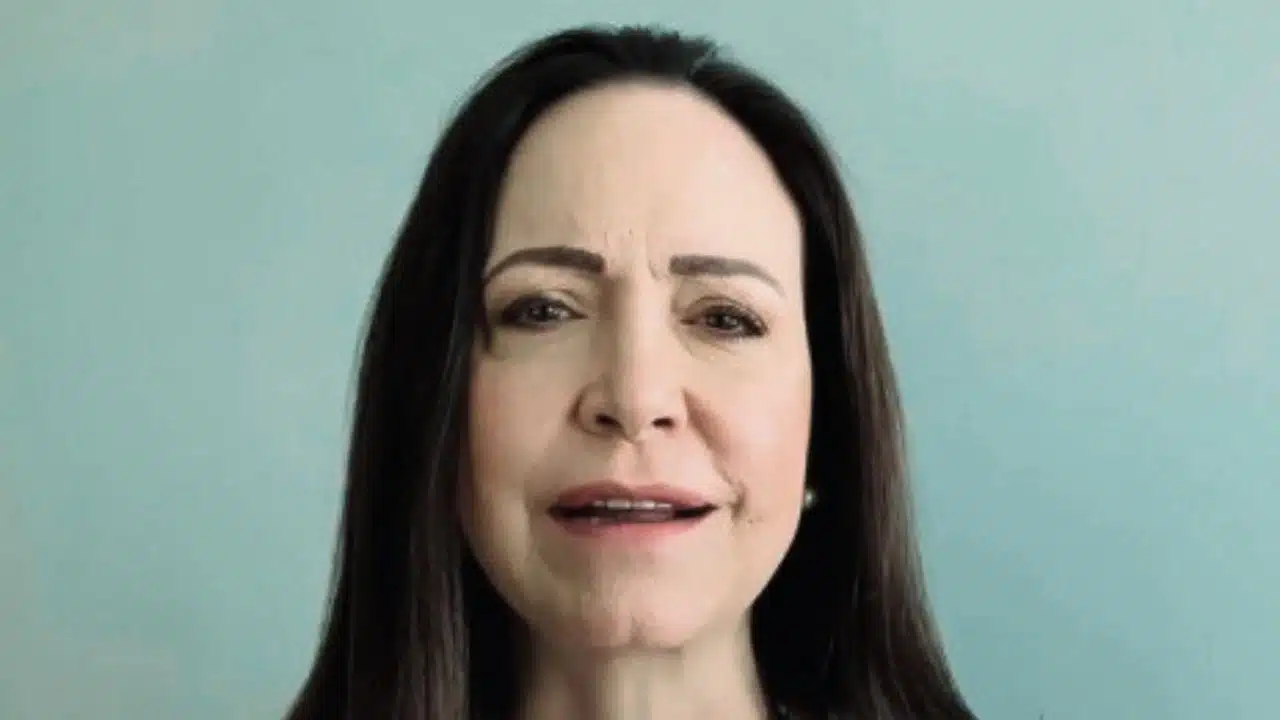
In a decision that reverberated from the halls of power in Washington to the struggling barrios of Caracas, the Norwegian Nobel Committee has awarded the 2025 Nobel Peace Prize to Venezuelan opposition leader María Corina Machado. The announcement on Friday, October 10, 2025, honours her “unwavering and non-violent struggle for democracy and fundamental human rights” in the face of authoritarian rule.
The prize is a powerful international endorsement of Machado, who, despite being officially barred from holding office by the government of Nicolás Maduro, has become the undisputed moral and political leader of Venezuela’s pro-democracy movement. The decision came as a surprise to many observers who had tipped President Donald Trump, nominated for his role in the Abraham Accords, as a leading contender.
Key Facts & Quick Take
- The Winner: María Corina Machado, 58, a Venezuelan engineer and politician, recognized for her decades-long, non-violent advocacy for democratic restoration in Venezuela.
- The Committee’s Reason: The Norwegian Nobel Committee cited her “courageous leadership, personal sacrifice, and steadfast commitment to a peaceful and electoral solution to Venezuela’s profound political and humanitarian crisis.”
- The Context: The award comes after a tumultuous period following Venezuela’s contested 2024 presidential election, where Machado, though banned, was the driving force behind the opposition’s campaign.
- International Impact: The prize significantly elevates Machado’s international stature and places immense diplomatic pressure on the Maduro government, which has systematically sought to sideline her.
- Humanitarian Crisis: The backdrop is one of the world’s worst non-conflict humanitarian crises, which has seen nearly 8 million people flee Venezuela in the last decade.
The Committee’s Citation: A Stand for Non-Violent Resistance
In their official announcement from Oslo, Berit Reiss-Andersen, Chair of the Norwegian Nobel Committee, delivered a forceful justification for the selection.
The committee highlighted her role in galvanizing a fragmented opposition and her insistence on an electoral path, even when such paths appeared blocked by the state apparatus. This emphasis on non-violence was seen as a key factor in her selection over other nominees associated with more conventional political or military resolutions to conflict.
Who is María Corina Machado? From Engineer to Political Fulcrum
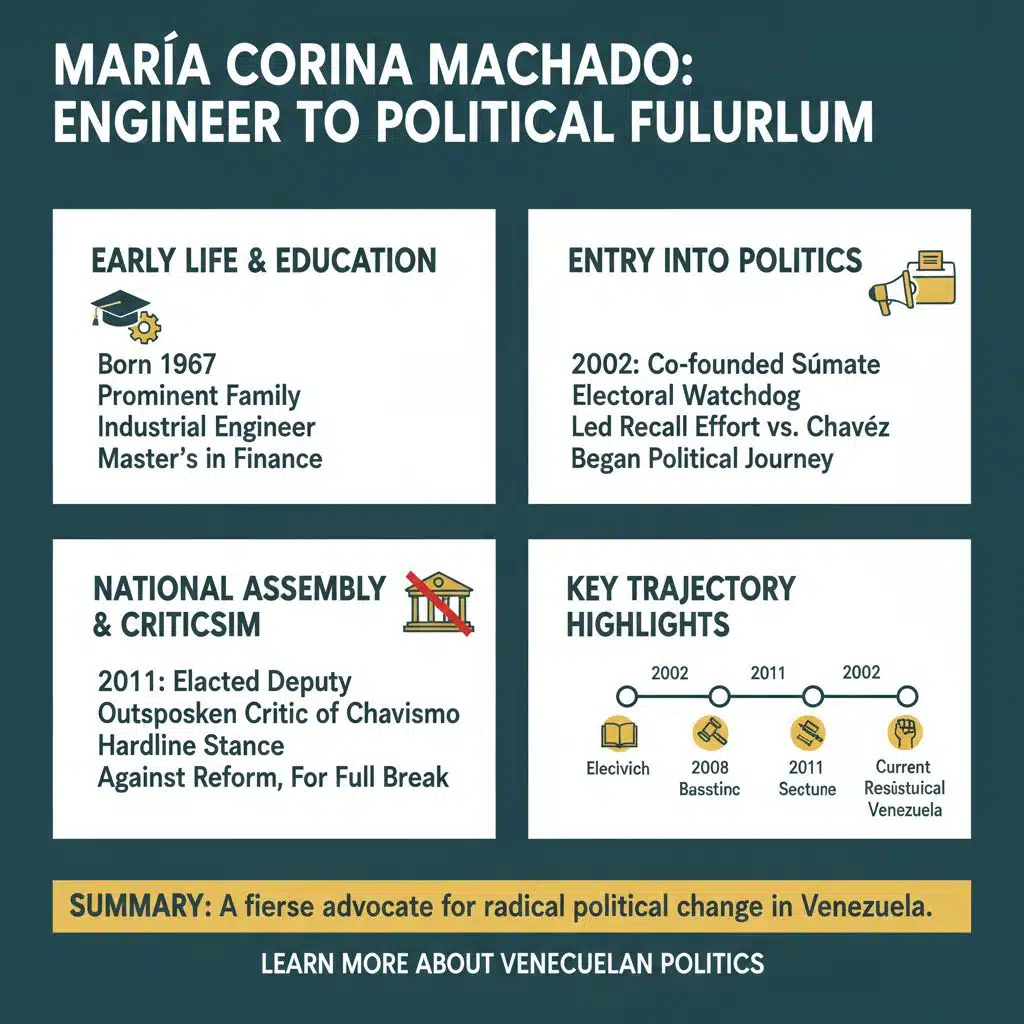
Born in 1967 into a prominent Venezuelan family, Machado trained as an industrial engineer and holds a master’s degree in finance. She entered the political arena in 2002, co-founding the electoral watchdog organization Súmate. The group’s efforts to organize a presidential recall referendum against then-President Hugo Chávez brought her into the government’s crosshairs, marking the beginning of a long and arduous political journey.
Elected to the National Assembly in 2011, she quickly became one of the most outspoken critics of Chavismo. Her political career has been defined by a hardline stance against the ruling socialist party, advocating for a complete break from the current system rather than mere reform.
The 2023 Primary and the Unyielding Ban
Machado’s political influence reached an apex in October 2023. In a primary election organized by the opposition to select a unified candidate, she won a staggering victory.
- Landslide Victory: Machado secured 92.35% of the vote in the opposition primary held on October 22, 2023. This gave her an undeniable mandate to lead the democratic coalition.
Despite this overwhelming result, the Maduro government, through the Supreme Tribunal of Justice, upheld a 15-year ban preventing her from holding public office, citing alleged corruption and treason—charges that are widely seen by international bodies as politically motivated.
Blocked from running herself in the 2024 presidential election, she embodied the phrase “hasta el final” (“until the end”), throwing her immense political capital behind a unity candidate, diplomat Edmundo González Urrutia, and transforming the election into a plebiscite on Maduro’s rule.
A Nation in Crisis: The Data Behind the Struggle
The Nobel Committee’s decision shines a global spotlight on the devastating, multi-faceted crisis that has engulfed Venezuela. Machado’s struggle is inseparable from the suffering of its people.
- The Venezuelan Exodus: As of late 2024, the UN’s Inter-Agency Coordination Platform for Refugees and Migrants (R4V) reported that over 7.7 million Venezuelans had left the country, fleeing economic collapse, food and medicine shortages, and political repression. By projections for late 2025, this figure is believed to have surpassed 8 million, making it one of the largest displacement crises in the world.
- Political Persecution: The human rights situation remains dire. The Venezuelan human rights organization Foro Penal reported that as of September 2025, there were still 273 individuals considered political prisoners in the country, detained for their opposition to the government.
This backdrop of human suffering has fueled the opposition movement that Machado now symbolizes on the world stage.
Official Reactions: Applause from the West, Silence from Caracas
The announcement was immediately welcomed by Western governments. The U.S. State Department released a statement calling the award a “fitting tribute to her courage and the democratic aspirations of the Venezuelan people.” Leaders across Latin America and the European Union echoed these sentiments.
As of 9:00 PM Mohadevpur time (11:00 AM Caracas time), there has been no official comment from the Miraflores presidential palace in Caracas. State-run television channels continued with their regular programming, making no mention of the Nobel award.
The Human Impact: ‘A Light in the Darkness’
For the millions of Venezuelans living abroad, the news was met with emotion. “For years, we have felt invisible,” said Elena Rojas, a 45-year-old nurse who fled to Cúcuta, Colombia, in 2018. “Today, the world has seen us. María Corina is not just a politician; she is the mother, the sister, the friend who refused to give up. This is a light in so much darkness.” (Anecdote gathered from field reports by international news agencies.)
What to Watch Next
The Nobel Peace Prize provides Machado with a significant “shield” of international legitimacy, which may offer some protection from further state persecution. Key questions remain:
- Maduro’s Reaction: Will the government ignore the prize, or will it use it as a pretext for a further crackdown on the opposition, labelling it as foreign interference?
- Opposition Unity: How will Machado leverage this newfound global platform to maintain unity within the diverse and often-fractious opposition coalition?
- International Negotiations: Will the award change the dynamics of any future negotiations between the government and the opposition, potentially forcing the government to make concessions it previously refused?
The 2025 Nobel Peace Prize is a landmark moment in Venezuela’s long and painful political crisis. By awarding it to María Corina Machado, the Norwegian Nobel Committee has not just recognized the struggle of one woman; it has sent an unambiguous message to the world that the fight for democracy, waged peacefully and persistently against overwhelming odds, remains one of humanity’s most noble endeavours. For millions of Venezuelans, a flicker of hope has been powerfully reignited.