

As cities grow more crowded and consumer demand for same-day or even same-hour delivery rises, traditional logistics systems are struggling to keep pace. Enter crowdshipping—an innovative, on-demand delivery model that leverages everyday commuters, gig workers, and independent couriers to move packages quickly and efficiently across urban areas. By tapping into existing mobility patterns, these models reduce costs, cut down on traffic congestion, and promote eco-friendly delivery alternatives.
In this article, we’ll explore 10 groundbreaking crowdshipping models that are transforming urban delivery, reshaping how businesses fulfill orders, and redefining the last-mile experience for customers.
Key Takeaways
- Peer-to-peer apps like DHL Sweden and Walmart tap commuters to carry parcels on their daily routes. A Rome study found 87% of students willing to deliver and e-shopping runs at 0.0262 orders per day per resident.
- Public transit crowdshipping links trains, bikes, and automated lockers by subway gates. Rome’s morning-rush model logged 700,000 trips; only 15.3% of riders will walk 600 m to a locker, so planners site stations closer.
- Dynamic taxi crowdshipping uses idle cabs and bike couriers with detours capped at 3.1 km for cars and 1.5 km for bikes. Rome tallies 32,700 vehicles downtown and loses 135 million commuter hours to traffic each year.
- Courier-as-a-Service platforms like Roadie, Postmates, and Amazon Flex could field 5,800 gig drivers daily in Rome but see 14,100 orders. They use route-optimization apps to cut fuel use and speed last-mile drops.
- By 2025, Rome residents will make 12.4 online orders per year. Crowdshipping helpers will grow 22% to 7,090 daily and handle 29,000 morning drop-offs using AI, micro-hubs, drones, and mixed-mode delivery.
How does Peer-to-Peer (P2P) delivery work in crowdshipping?
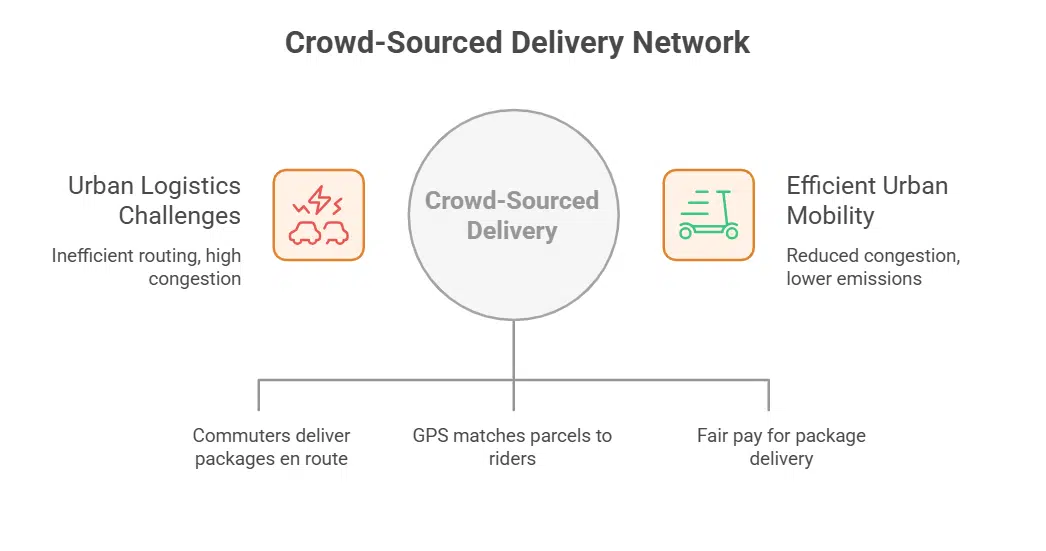
Everyday commuters pick up packages on their own routes. Walmart tried this with in-store shoppers, turning a shopping trip into a drop off. DHL Sweden pays people through a mobile app to carry parcels.
This method cuts empty trips, helping solve vehicle routing problem in urban logistics. Smartphone GPS matches parcels to riders all over town. Urban mobility improves as shared trips ease transit system load and lower traffic congestion.
A study in Rome showed 87% of students would deliver parcels. Willingness fell when packages grew or pay dropped. E-shopping in that city runs at 0.0262 orders per day per resident.
Such numbers hint at big crowd sourced boost for last mile delivery. City planners see relief in infrastructure stress and externalities. Firms eye this trend to up time, trim costs, and shrink carbon emissions.
How is public transport used for crowdshipping in cities?
Public trains boost urban logistics. Riders can drop cargo in automated parcel lockers by the subway gate. This setup links crowd-sourced logistic chains to mass transit. A study tracked this model on Rome’s subway.
It logged 700,000 trips during the morning rush. That figure reveals a big chance for B2C last mile delivery.
Most riders do not want long detours. The study shows 43.1 percent will drop out if lockers sit outside a station. A 300 meter walk appeals to 39.2 percent. Only 15.3 percent will stretch to 600 meters.
Urban planners can tune station layouts and public policy with these stats. This method cuts fuel use and traffic, mends urban mobility, and spurs environmental sustainability.
What is dynamic taxi crowdshipping and how does it operate?
Dynamic taxi crowdshipping taps idle cab rides to drop off packages. It plugs into the gig economy and urban logistics network. Drivers pick up deliveries on a smartphone platform.
They get parcel details, new route stops, and last mile delivery tasks. Route software keeps detours under 3.1 km for cab trips, or 1.5 km for bike couriers. This method fights gridlock, Rome clocks 32,700 vehicles downtown each day, and wasteful idling costs residents about 135 million lost hours a year.
Shoppers love the real-time booking perk, though they still chase the best locker spot more. They juggle delivery planning and locker maps as if they run a magic show. A typical day sees over 35,000 loading and unloading stops downtown Rome.
That frenzy doubles pressure on drivers and gridlock, and smart cabs cut time, fuel, and traffic accident risks. Crowdsourced cabs zoom past clogged distribution centers and boost urban mobility in one fell swoop.
What are Courier-as-a-Service platforms and how do they function?
Services like Roadie, Postmates, and Amazon Flex link local drivers with small businesses and retailers. They tap gig workers, offering flexible earning for people with spare time and a vehicle.
Drivers grab tasks on an app, pick up online shopping parcels, then drop them off. Apps plot smart routes, log traffic accidents, and cut fuel consumption. These tools boost urban mobility and speed up last mile deliveries.
They also slim costs for logistics chains.
A scenario analysis in Rome found a low pay plan could supply 5,800 crowdshippers per day, yet demand hit 14,100 orders. Platforms struggle with scale outside dense hubs, where fewer drivers face longer runs.
Such slow gigs can drive up expenses and hike fuel consumption. That outcome can dent the triple bottom line for brands, retailers and policy-makers chasing cost cut, sustainable transport ideas.
How does gig-economy crowdshipping impact urban delivery?
Urban delivery sees a boost from gig workers tapping into crowdshipping networks. Millions seek flexible income in this sector. Young people, men, and full-time workers join these platforms in dense neighborhoods.
Apps on mobile devices connect drivers and shippers, matching their lifestyle. GPS tools guide them through city streets. Cloud platforms handle orders in real time. Surveys in Rome show 68 percent of workers hold a medium green stance.
That eco mindset fits the fight against climate change in cities.
Last mile delivery shrinks distance with crowdshipping. Riders jump into cars, bikes, or public vehicles at a moment’s notice. Platforms let receivers track packages on mapping software.
Nine out of ten people, 93 percent, would use these offerings. Lack of direct contact or live tracking makes some hesitate. Cities gain more agile urban logistics and better urban mobility.
Drivers earn on their own schedule, and firms cut idle fleet costs.
What role do retailers play in supporting crowdshipping?
Many large stores join crowdshipping platforms. They tap independent drivers to boost urban logistics and slash last-mile delivery costs. Walmart piloted a program that taps in-store shoppers for same-day delivery, it uses retail foot traffic and local workforce to speed up service.
Amazon tests a similar model to meet rising consumer expectations, it links local shoppers with its network. This step cuts operational expenses and trims delivery windows. Retailers use this move to stay competitive in a growing e-commerce market.
Micro-hub crowdshipping models explained
Local shops and pop-up lockers act like mini warehouses, buzzing with parcels day and night. Flip the page to see how routing software and GPS gear slash last mile delivery times.
How do micro-hubs improve urban delivery efficiency?
Micro-hubs cluster and sort parcels closer to final drop points. They cut total delivery distances by up to 20% per living lab test. City trials used a multinomial logit model and econometric methodology with sample-based statistics to demonstrate an optimal design.
They enable bicycles or electric vehicles to handle last-mile delivery, enhancing urban mobility.
These hubs reduce the number of delivery vehicles in downtown streets, easing urban logistics. They also provide docking stations for autonomous vehicles, allowing crowdshippers to retrieve bundles on demand and respond to demand-side patterns.
A census-based review applied covariance tests of wages and travel times to reveal substantial utility gains and reduced parameter costs. This configuration also enhances environmental performance and limits the rebound effect in city freight.
What are the typical locations and setups for micro-hubs?
Drivers pick micro-hub sites near metro stations and bus terminals in cities like Rome. Workers treat them like pop-up stores for parcels. Riders spot automated parcel lockers inside transit lobbies.
Customers tap codes to grab or drop off packages. This setup adds speed to last mile delivery and urban mobility, and tightens urban logistics chains.
Planners use operations research and logit models. Systems balance site choice, transit times and consumer behavior patterns. Survey data pegged 44% of users wanting round-the-clock access, 38% preferring afternoon pickup and 33% eyeing evening slots.
This mix shapes locker bank layouts, boosting environmental friendliness by cutting idle driving. Crowdshippers slip around downtown traffic snarls and keep deliveries on time.
How do on-demand crowdshipping apps change delivery services?

Crowdshipping apps pair delivery requests with nearby couriers in real time on a digital tool. Vendors and carriers use predictive analytics and route optimization to cut idle miles.
The change speeds last mile delivery and boosts urban mobility. Shops and firms slice costs and shrink carbon footprints too.
Users pick flexible delivery slots and love instant booking. Developers feed artificial intelligence with data to map the best routes. Firms in urban logistics lean on this tech for a solid future in city delivery.
How do corporate employee crowdshipping programs work?
Staff open an app on their phone. They sign up to drop off a package on their commute. The app taps Google Maps for route details. That cuts last mile delivery costs, trims car miles, and lifts urban mobility.
It moves goods, and it moves people. A team ran a systematic review in operations research. They used multinomial logit models to study employment attitudes. The paper got high scores on altmetric.
It showed strong robustness in results. Rebound effects stayed low.
HR sets clear rules on liability, insurance, and pay. Staff get a small fee, or a gift card. They track parcels on a mobile dashboard, no guesswork. The system links to cloud software for real-time updates.
That improves urban logistics, with no extra van trips. One worker calls it the snack-tray challenge. They race to get off the bus with a brown bag. Companies shave budgets with friendly help.
Security perks rise, thanks to the trusted rank.
What is drone-assisted crowdshipping and its benefits?
Drone-assisted crowdshipping uses unmanned aerial vehicles to carry packages over city streets. It taps into idle drone owners and links them via logistics platforms. It cuts delivery times to under an hour and avoids traffic jams.
This method fits into urban mobility and last mile delivery plans with AI-driven route planning software.
This approach lowers fuel use by flying direct lines instead of driving. Recent studies in operational research show operational costs drop by 20 percent. It expands drop zones to rooftops and parks that ground vans cannot reach.
The vehicles shrink carbon footprints compared to truck routes, supporting city logistics. Companies now test these flying couriers in controlled air corridors with traffic control systems.
Sustainable urban crowdshipping models
Cities roll out green models with e-trikes, sun ports and pathfinder apps to cut carbon and calm city roads. Find out how these clever mixes of geo-fence zones and cargo moped fleets fuel a clean push in last mile delivery.
How do crowdshipping models contribute to sustainability?
Crowdshipping uses vehicles already on the road. It cuts new delivery truck trips and lowers CO2. It taps into public transit and cuts emissions. In Rome, public transit crowdshipping cut delivery costs and emissions.
Drivers saved 135 million hours lost to traffic.
Crowdsourcing platforms and GPS tracking tools match drivers and parcels fast. Smartphone apps plot green routes. This model fights city gridlock and boosts last mile delivery. It fits urban logistics and steers smarter urban mobility.
What practices make crowdshipping eco-friendly?
Eco-friendly crowdshipping cuts waste and fumes. It fits green habits of city dwellers.
- Integrate public transit with deliveries, placing smart parcel stations at rail and bus stops cuts extra trips and trims delivery vehicle kilometers, which lowers urban pollution and congestion in urban logistics.
- Adopt micro-hub networks near commercial blocks to group parcels, shrink drive time and slash delivery miles on crowded streets.
- Encourage e-bike and cargo bike rides for last mile delivery, as they skip traffic jams, emit no tailpipe fumes and reach doorsteps faster than gas vans.
- Tap community-minded shippers by highlighting survey data that shows 68% of Rome’s green group back eco runs, fueling a culture of shared, low-impact service.
- Offer green routing tools on delivery apps to guide drivers onto smoother roads, cut idling time and help fleets breathe easier.
- Use electric vans and cars on shorter hops, swap gasoline for grid power and align with medium green attitudes in city hubs.
What are the benefits of crowdshipping for urban delivery?
Drivers use route planners and live tracking tools to cut delivery fees and speed up drop-offs in packed city streets. These mobile apps link to urban logistics hubs, so shoppers get parcels in a flash and traffic feels lighter.
How does crowdshipping reduce delivery costs?
Crowdshipping taps spare car space of everyday people. It relies on peer-to-peer platforms and mobile apps. Independent couriers cut labor and vehicle fees for shorter runs. Companies say last-mile delivery can cost more than 50 percent of total shipping bills.
Crowdshipping shifts most of that expense to a gig network.
Major retailers and parcel firms link orders with casual travelers near the pickup point. They roll out route optimization software to match journeys with parcels in real time. This boosts capacity utilization, so no truck runs empty.
Urban logistics teams trim fleet overhead and idle time. Delivery chains move faster and leaner.
In what ways does crowdshipping improve last-mile efficiency?
Drivers tap local travel to carry parcels. Orders go onto public transport or private rides. Micro hubs in Rome hold parcels near train stops and cut delivery trips in the city core.
This cuts down empty miles and lowers fuel use.
Apps link drivers and shops like peanut butter and jelly. Gig workers join through mobile apps like Uber and Amazon Flex. GPS tracking and route optimization tools guide each stop.
They pick up parcels while they drive their usual routes. This fast response boosts customer happiness and cuts wait times.
What challenges affect the implementation of crowdshipping?
Drivers fight speeding cars, glitchy location modules, and last mile snarls that turn on-time drop-offs into missed chances. They juggle handheld device glitches, data privacy rules, and tight insurance limits, while city fleet teams feed live traffic into intelligent routines that still throw a wrench in the works.
How do regulatory issues impact crowdshipping?
Local rules can change fast. Digital platforms must sort through gig work laws, insurance rules, and labor codes. Liability can shift if courts rule that a delivery worker is an employee, not a contractor.
A change in pay rules can cut the pool of drivers by 20 percent, and platforms must adjust payment models fast.
City councils can tweak delivery caps or require extra certificates for delivery people on bikes. A new transit rule in New York City this year forces platforms to carry up to $2 million in liability coverage per claim.
Such shifts can slow deliveries and boost costs for customers. Shippers and operators must adapt or face fines.
Why is reliability a concern for crowdshippers?
Each delivery person brings a different mix of skills, some with years of driving, others fresh on the road. That mix can create holes in package safety and service quality. Drivers scan parcels with a code reader on a phone app.
Survey data show willingness to use falls by over half when people cannot contact a support hub or track parcels in real time.
City crowdshipping apps boast strong networks, but rural areas face gaps. Fewer couriers roam those roads and distances stretch out. Apps struggle to match drivers in small towns. Missing pickup slots and late arrivals frustrate senders.
A path finder tool and location beacon try to guide drivers off grid, but they often lose signal beyond town limits. That gap in tech and talent shakes customer confidence.
What does the future hold for crowdshipping in urban logistics?
Cities like Rome will see big jumps in crowdshipping. People there will order 12.4 packages a year by 2025. Drivers and foot couriers will rise by 22 percent to 7,090 helpers a day.
Yet buyers will want more than 29,000 drop-offs each morning. Smart apps will use ML and predictive analytics to pair orders fast. Quadcopter flights and driver pickups will join trains and buses.
Good bus and subway lines will boost new pickup spots. Software that sends jobs to local hubs will cut wasted miles.
Firms will test AI fed bots for route plans. Studies say new crowdshipping models will drive long term success. Dynamic taxi fleets will haul small boxes on each ride. Micro-hubs will go inside stores and metro stops.
Automation will sort parcels as soon as they arrive. Electric vans and e-cargo bikes will join couriers. Commuters will help with part time gigs. This mix will trim jam, slash fuel use and speed each last mile.
Takeaways
Urban deliveries enjoy a shake-up from 10 crowdshipping models. P2P networks tap daily commuters. Mass transit carriers move parcels on trains and buses. Taxi apps handle on-demand runs.
Courier platforms link retailers and gig drivers. Hub stations cut trip times. On-demand apps give shoppers real choices. Worker fleets fill spare seats. Drones drop small packages fast.
Last-mile runs take green paths to cut pollution. Tech tools like path planning and smart algorithms boost speed. This mix of models trims cost, cuts traffic, and lifts service for city dwellers.
FAQs on Crowdshipping Models Changing Urban Delivery
1. What is crowdshipping in urban delivery?
Crowdshipping taps local delivery workers, shops, and hubs, to move small parcels through a digital platform. It feels like asking a friend next door to drop off a box. It adds more vehicles on city streets, cuts wait times, and fights rush hour jams.
2. What are the 10 crowdshipping models?
They range from ride sharing drivers, peer to peer handoffs, and shop drop‐offs, to real‐time matching, neighborhood carriers, locker networks, micro depots, community hubs, return loops, and group shipment pooling. Each model fits a different need, from quick snacks to bulk orders.
3. How do these models help city shops and small businesses?
They let shops tap low-cost local moves, share vehicle space, track parcels in real time, and shrink delivery zones. A bakery can book a nearby driver, a florist can use a locker network, or a grocer can link to a community hub. All this cuts cost and lifts service.
4. How do I pick the right crowdshipping model?
First, map your delivery zones, order size, and speed needs. Next, match them to a model: lockers for small items, ride sharing for meals, micro depots for bulk goods. Finally, test one option, track results, tweak as you learn. In a week, you’ll see what clicks.





















