Many learners stop in their tracks when they face a wall of text in a foreign tongue. They feel stuck in long pages and big words. How AI Could Democratize Knowledge by Cutting Those Walls.
A key fact is that generative AI can crush pages of notes into a clear summary in seconds.
Here, I tried to show how a translation model can bridge tongues so lessons feel familiar. Based on my research, I will explore an adaptive learning platform that matches content to your pace. I also look at tools that turn big ideas into small chunks.
Using AI to Break Language Barriers
Neural machine translation and natural language processing help AI convert lessons across languages on the fly. This AI platform drops language walls, so learners from Tokyo, Lagos, and Rio chat in the same thread.
How does real-time translation improve global communication?
AI tools like Google Translate handle messages in real time. They cut the wait between chats, like a magic wand. Such services use machine learning inside mobile apps. People swap ideas across borders in a blink.
Search engines tap NLP to deliver info to non-native readers. Disability aids add live captions for users with hearing loss. Teachers send lecture notes in Spanish, Mandarin, Arabic, and French.
A Berlin startup closed a deal with a Tokyo partner, no interpreter needed. Students in Kenya stream US lectures subtitled in seconds. Global classrooms grow as content shifts on-screen instantly.
Managers solve supply issues on calls, thanks to Microsoft Translator. Communities link up for cultural exchange, using mobile programs. Teams spread across time zones find easier collaboration.
These relations boost inclusivity and diversity in global projects.
How can AI create multilingual educational content?
AI acts like a bridge for multilingualism and localization. A neural translation engine scans lesson text and turns it into versions in other languages in seconds. Large language models craft exercises and quizzes in French, Swahili or Tagalog.
Teachers launch course plans on an online learning platform that can serve a billion users by 2029. This education technology fuels knowledge sharing and boosts digital literacy across borders.
Open source language APIs let small schools upload lesson drafts and export versions in native tongues. Smartphones and low-cost tablets make these resources accessible to all learners.
A classroom in Nairobi and a village in Peru gain the same lesson notes without any extra translation work. Localization tools handle translation and content adaptation in the background, so teachers focus on teaching.
Communities in underserved areas see better access to quality materials no matter where they live.
What Are Adaptive Learning Platforms Powered By AI?
Adaptive learning uses machine learning to map each student’s needs. Khan Academy taps data analytics to tweak lessons in real time. AI powers platforms that change lessons and quizzes to match each student’s pace and skills. These systems use machine learning, and learning analytics tracks user engagement and performance assessment.
They adjust course difficulty, suggest extra readings, and shape personalized learning pathways. Educational technology drove online education growth past 900% since 2000, in part thanks to content adaptation tools.
Markets predict AI-driven tutors will hit a value of $75.52 billion by 2029 and serve 1 billion learners (Statista). They boost retention, spot skill gaps, and tackle each user’s strengths and weaknesses.
This student-centered learning style uses analytics to fine-tune modules; it draws clear progress maps. Enhanced personalization will push these services further, as they digest real-time data to refine course plans.
How can AI customize content for different educational needs?
Students learn at their own pace, and a language model studies quiz results and time on task. This adaptation spots visual learners, auditory fans, and kinesthetic kids fast. Lessons in this educational technology tool shift to audio, charts, or step-by-step guides.
Teachers craft fresh curricula modules in no time. They support students who have ADHD or dyslexia with special fonts and added practice. Analytics dashboards reveal knowledge gaps, so instructors adjust instruction quickly to match accessibility needs.
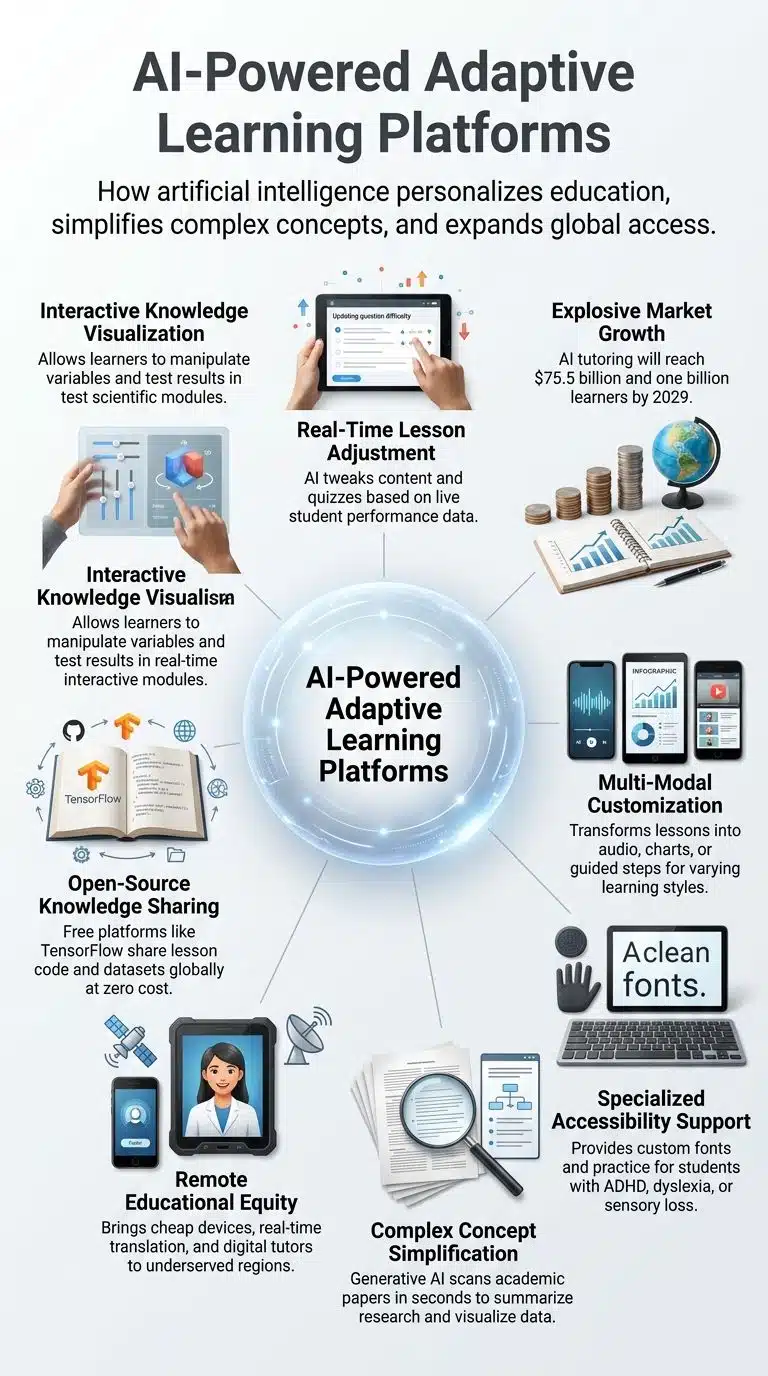
Rural schools often lack tutors, so a digital tutor built on machine learning fills the gap. This tutor rewrites a science paper at grade level and adds videos or quizzes on demand.
Feedback features adapt questions to each student’s skill and personalize the pace, boosting engagement. Analytics track progress, point out weak spots, and suggest extra resources.
Instructional design tools guide differentiation by mixing math drills, projects, and readings. Students stay challenged, not left behind.
How Can AI Simplify Advanced Educational Concepts
Generative AI models condense research into clear summaries. They use natural language processing and machine learning. Those systems scan thousands of pages in seconds. A research assistant tool flags outliers and biased data.
It draws charts with knowledge visualization. Learners see tough ideas fall into view. It walks users through small sample size issues and overfitting risks. Interactive Learning lets users change variables and test results right away.
An educational technology platform adapts to each user’s skill level. It can spot confounding factors in data analysis, so readers see bias. This adaptive learning cuts cognitive load theory barriers.
It uses content simplification and user-centric design to boost grasp.
What AI tools help summarize complex academic information?
Language model platforms let non-experts handle data analysis. They process large volumes of academic research articles, reports, and raw data then craft clear, brief summaries. OpenAI’s ChatGPT flags flaws in methods sections and highlights key insights.
Google’s Bard performs information synthesis on raw datasets, speeding insight extraction. Tools like Elicit and Semantic Scholar drive automated summarization through machine learning.
Each system logs analysis steps and guides you through data quality checks, so you spot errors fast.
How Does AI Enhance Learning in Underserved Areas
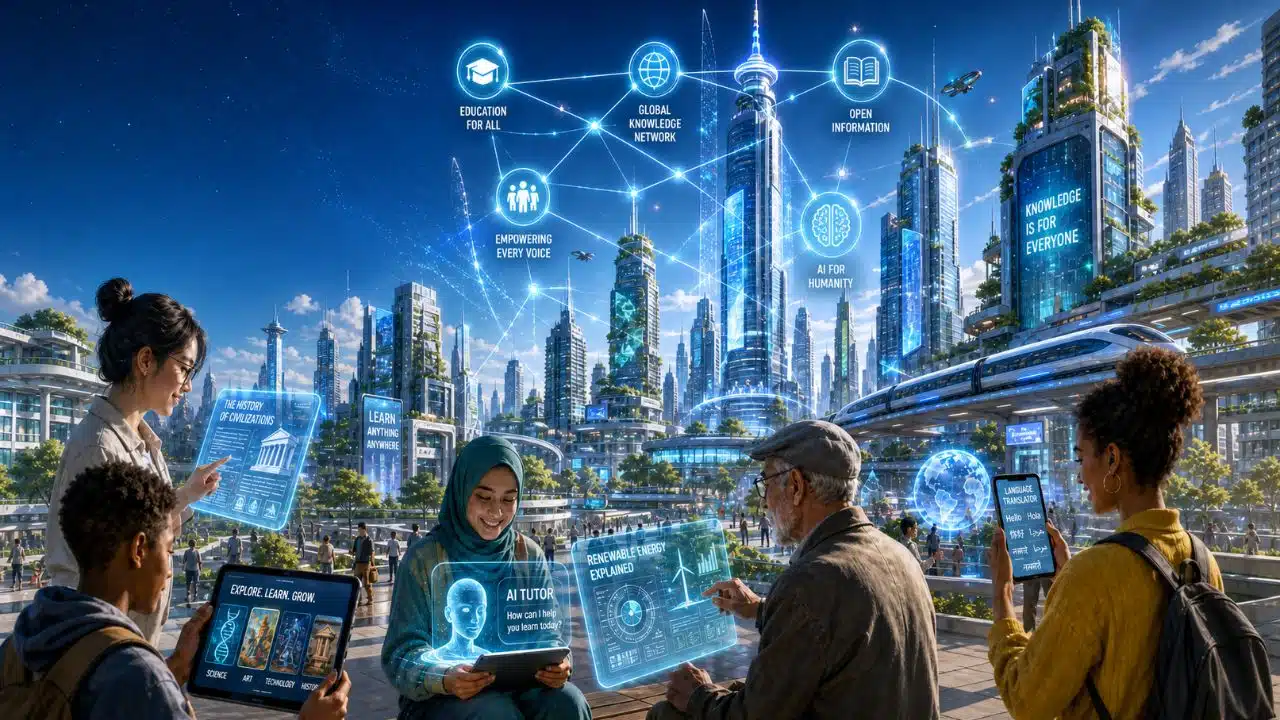
AI cuts information barriers in remote regions. Cheap tablets and phones bring learning technologies to users. Real-time translator apps break language walls in classrooms. Online platforms will reach one billion learners by 2029, many in underserved areas.
Voice guides and captions serve students with hearing or sight loss. This boosts accessibility, equity, and inclusivity across communities.
Local groups use predictive analytics to spot resource gaps in schools. An adaptive learning system adjusts lessons for each student. This supports remote learning and personalized education at scale.
Small businesses and farmers learn new skills and market trends with AI insights. Such data tools drive community empowerment and lower socioeconomic barriers.
Educators share community-driven AI tools like Google’s TensorFlow and PyTorch on GitHub at near zero cost. Students and teachers grab lesson code, data sets, and interactive learning modules in Jupyter Notebook, Python, and R.
These resources fuel openaccess and educational equity on every continent.
Built-in defaults in scikit-learn guide novices through data analysis tasks. Shared AI platforms spark collaborative learning projects across time zones. Governments, educators, policymakers, and developers join forces to boost inclusivity.
Learners in remote regions gain hands-on insights without pricey licenses.
How Does AI Enable Creative Content Generation
Creators use ChatGPT and Bard to sketch fresh ideas. These programs craft outlines for blogs or apps within seconds. People learn a topic, dream up an app idea, then watch GitHub Copilot spin code.
This cuts tough barriers to accessibility for digital products. Automation frees minds for real creativity. Generative AI churns out drafts fast, but it lacks true vision. Human imagination adds the spark.
Teachers run A/B tests on resume designs in minutes. Job seekers tweak phrases, then compare results. Artists try prompts on DALL·E to explore novel visuals. Rapid prototyping leads to bold experimentation that users shape.
Learners pick up technical skills along the way. Machines handle the grunt work, so people focus on innovation. This mix fosters inclusivity across backgrounds.
How can AI-driven platforms make technical skills more accessible?
AI-driven platforms let non-experts analyze data, code, and build apps without special training. ChatGPT and Google Colab guide users through complex analysis, flag errors, and validate datasets.
They use machine learning and automated analysis to unlock insights across business, healthcare, education, and civil society. Users enjoy user-friendly interfaces that boost technical literacy, even with no prior coding experience.
A teacher in Iowa cut her prep time in half with ChatGPT.
Personalized learning adapts lessons for each student in real time. AutoML on Google Cloud and TensorFlow Playground let learners explore machine learning without writing code. Educators plus small companies can gain insights fast, with no need for data analysts.
These adaptive learning systems expand data accessibility and spark knowledge empowerment while driving skill development in high-demand fields.
Final Words
Learners can ask a chatbot like ChatGPT for help fast. It shapes lessons to match each need. This tech, mixing generative AI, adaptive learning and interactive study, turns big ideas into simple steps.
Language apps crush barriers so kids in Peru or Poland can study side by side. Even a bot might flag its blind spots and call in a tutor when stuck. We still need our own wild thoughts, but tech can keep pace.
Education without borders feels within reach, thanks to fair access, open platforms, and low costs.