Imagine this: You’re caring for a loved one with a chronic disease like heart failure, and you worry about sudden health drops when they’re alone at home. It’s tough to keep watch all day, right? Doctors and nurses face the same challenge, juggling many patients without constant checks.
Remote patient monitoring steps in here, but old ways often miss early signs, leading to rushed hospital trips.
Did you know? Advancements in artificial intelligence are changing remote patient monitoring, making healthcare more patient-centered and efficient.
This blog post explores key research breakthroughs, from machine learning algorithms spotting vital signs like heart rate variability to predictive analytics forecasting risks in high blood pressure.
We’ll explore how AI powers wearable sensors, internet of medical things devices, and even virtual assistants for better care.
Stick around; you might just find the spark for smarter health watching.
Key Takeaways
- AI uses machine learning to spot early signs in heart rate and blood pressure, as shown in remote patient monitoring research.
- Fadhil in 2018 showed AI reminders boost medication adherence in chronic disease management.
- Predictive analytics with k-nearest neighbors forecasts risks like heart attacks from wearable data.
- AI chatbots with natural language processing offer 24/7 symptom checks to cut hospital stays.
- ResearchGate provides free studies and an iOS app for AI monitoring stats.
Early Detection of Health Deterioration
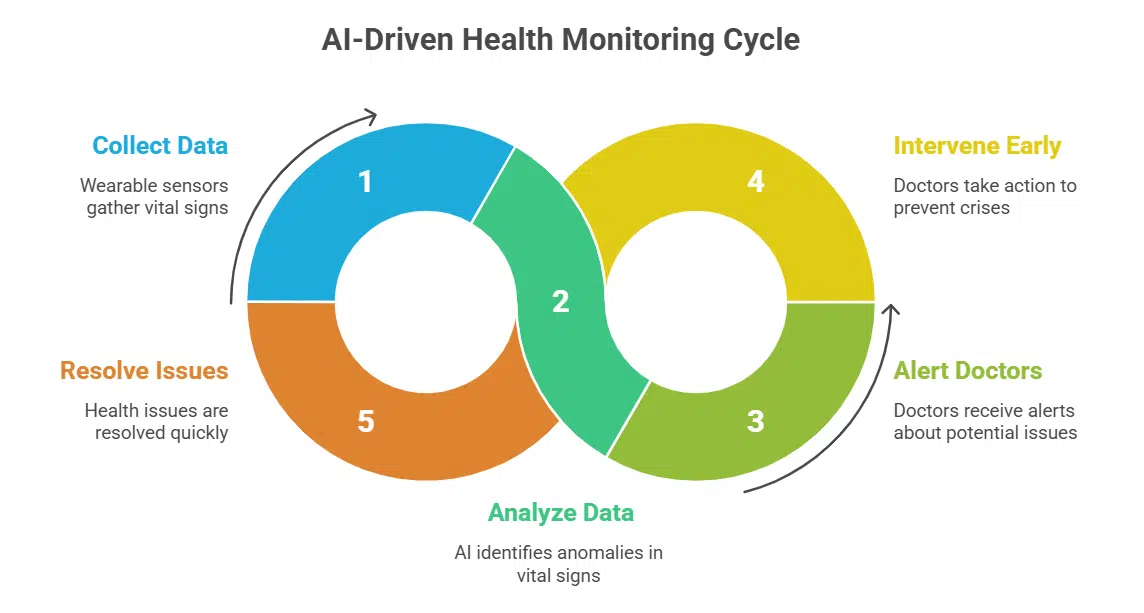
Imagine AI as a vigilant watchdog, spotting tiny shifts in your vital signs before trouble brews, like a heart rate spike or odd breathing patterns from wearable sensors. Doctors use these neural networks to jump in fast, turning what could be a crisis into just a quick fix, and hey, that could save lives without the drama.
Role of AI in identifying early warning signs
AI spots trouble before it hits hard in remote patient monitoring. Think of it as a watchful friend, always scanning health data for odd shifts. This tech uses machine learning to catch anomaly detection in heart rate or blood pressure.
Doctors get alerts fast, stopping issues like heart attacks in their tracks. Patients feel safer, knowing AI watches oxygen levels around the clock.
Deep learning models dig into datasets from wearable devices. They find patterns that signal infections early. Neural networks power this predictive analytics, turning raw info into action.
Imagine your watch whispering, “Hey, check that chest discomfort now.” Healthcare systems benefit big time, with fewer hospital trips and better chronic disease management.
Key components of AI-enabled early detection systems
AI grabs data from wireless body sensors. These sensors track heart rates and blood pressure, like silent guardians on your wrist. Machine learning spots odd patterns fast. Think of it as a smart detective, piecing clues together before trouble hits.
Genetic algorithms tweak the system, making it sharper over time. Expert systems guide decisions with proven rules. Neural networks dig deep into the info, uncovering hidden risks.
IoT methodologies power telehealth apps for smooth data flow. Artificial neural networks handle the heavy lifting in analysis. Predictive analytics forecasts issues using trends from internet of things devices.
Deep-learning models, with their hidden layers and backpropagation, refine accuracy. Convolutional neural networks scan images from wearables, catching early signs of cardiovascular disease.
Random forest methods boost reliability in risk checks. This setup keeps patients safe, cutting down on sudden hospital stays.
Benefits of early detection in improving patient outcomes
Early detection spots health issues before they worsen. Doctors use AI for this in remote patient monitoring. Think of it like a watchful friend who notices trouble early. This approach catches early anomaly detection through predictive analytics.
Patients avoid big problems that way. Their quality of life gets better with less worry.
Fewer trips to the hospital happen thanks to this tech. AI analyzes data from wearable devices and IoT systems. It predicts risks in chronic disease management. Imagine dodging a hospital stay, like sidestepping a pothole on your daily drive.
Reduced hospitalizations save time and money. Patient outcomes improve with proactive care, keeping folks healthier at home.
Predictive Analytics for High-Risk Patients
AI-powered predictive models for risk assessment
Doctors use AI-powered predictive models to spot risks in high-risk patients. These tools look at patient data from remote patient monitoring systems. They find patterns that signal trouble ahead.
Picture a smart watchdog that barks before danger hits, that’s how AI works here. It enables early anomaly detection, catching issues like heart problems before they worsen.
Machine learning (ML) drives these models, using things like convolutional neural networks (CNN) and transformer models. They analyze data from IoT devices and wearable tech. This setup predicts hospitalization risks for folks with chronic diseases.
Hey, it’s like having a crystal ball for health, helping doctors act fast and keep patients safe. Predictive analytics boosts proactive care, cutting down on surprises.
Identifying patterns and trends in patient data
AI spots patterns in patient data like a detective on a case. It sifts through numbers from wearables and sensors. Machine learning in remote patient monitoring predicts disease development, you see.
This tech uses neural networks for data processing and interpretation. Imagine your smartwatch buzzing, hey, something’s off with your heart rate trend. Doctors get alerts fast. Predictive analytics turns raw info into smart insights.
It finds trends in chronic disease management, like rising blood sugar levels.
Consider a patient with diabetes. AI examines their daily logs, spotting odd spikes before trouble hits. Neural network models crunch the matrix of vitals. They use attention mechanisms to focus on key markers.
This way, healthcare delivery gets a boost. Data analysis reveals social determinants of health too, like stress from work. Cloud-based systems make it all seamless. Internet of things devices feed in real-time bits.
It’s like having a guardian angel in your pocket, keeping watch.
Benefits of predictive analytics in proactive care
Predictive analytics acts like a sharp-eyed watchdog in remote patient monitoring. It spots early anomaly detection through AI-powered models, catching health slips before they turn bad.
Doctors jump in fast, boosting patient care quality. Think of it as dodging a storm by reading the clouds, folks stay healthier at home.
This tool cuts down hospitalizations big time. AI sifts through data patterns with things like k-nn and convolutional neural networks, flagging risks in chronic disease management.
Patients get proactive care that feels like a personal shield, easing worries and saving trips to the ER. Imagine your health data whispering warnings, AI listens and acts, keeping you on track.
Role of AI in tailoring individual treatment plans
AI spots patterns in your health data fast. It uses machine learning to craft treatment plans just for you. Think of it like a smart coach, watching your vital signs around the clock.
This setup fits chronic disease management needs perfectly. Doctors get real-time updates through EHR systems, making care more personal.
Patients feel more in control with this approach. AI tracks activity levels and suggests tweaks, like better medication adherence tips. It’s all about patient-centered care in remote patient monitoring.
Imagine dodging a health scare because AI flagged a tiny change early. That kind of help builds trust and keeps you on track.
Adaptive algorithms for monitoring patient progress
AI uses machine learning to power adaptive algorithms in remote patient monitoring. These tools track patient progress like a watchful friend, adjusting on the fly. Your health data flows in, and the system tweaks plans right away.
It spots small changes, keeps things on track. Doctors get real-time updates, making care feel personal.
Predictive analytics aids personalized treatment plans with these adaptive setups. Applying machine learning, they learn from patterns in chronic disease management. Think of it as a smart coach, nudging you to better habits.
Transformers and convolutional neural networks (CNN) crunch the numbers, predict risks. This boosts patient engagement, cuts down on hospital stays. Internet of Things (IoT) devices feed in data, making monitoring seamless.
Benefits of personalized interventions
Personalized interventions, powered by artificial intelligence, transform remote patient monitoring into a game-changer for chronic disease management. Think of it like a custom-fit suit that hugs your body just right, these AI-driven plans use predictive analytics to spot risks early and adjust care on the fly.
Patients feel more in control, boosting their engagement and motivation. Proactive steps, like timely tweaks to meds or lifestyle tips, cut down on hospital stays and surprise health dips.
This approach leads to better quality of life, with folks enjoying more good days without constant worry. Cost savings pile up too, as it slashes unnecessary doctor visits and meds gone wrong.
Imagine chatting with your AI buddy about symptoms, getting tips that fit your life, and dodging medication non-adherence pitfalls. For mental health, it offers gentle nudges, making support feel like a trusted friend rather than a chore.
Medication Adherence Monitoring
AI tracks your pill schedules like a watchful friend, spotting misses before they turn into big problems. Imagine smart apps sending fun nudges via wireless sensor networks, boosting your stick-to-it game and slashing hospital trips.
AI’s role in tracking medication schedules
AI spots missed doses fast in remote patient monitoring. It uses smart reminders to keep folks on track with pills. Your phone buzzes like a friendly nudge, saying, hey, time for that heart med.
Artificial intelligence scans schedules and sends alerts via apps. This cuts forgetfulness in chronic disease management.
Those AI-enhanced sensors catch odd patterns right away. They tie into wireless sensor networks for quick checks. Patients feel supported, not alone, with these tools boosting adherence.
Think of it as a digital buddy watching your back, reducing trips to the doc. Predictive analytics even flags risks before they hit.
AI-enabled reminders and adherence tools
AI tools send smart reminders to help patients stick to their meds. For example, you’re busy with life, and your phone buzzes with a friendly nudge, “Hey, time for your pill.” Fadhil explored this in 2018, showing how artificial intelligence boosts medication adherence in remote patient monitoring.
These AI-based systems track schedules like a watchful friend, spotting misses right away. They use real-time monitoring to catch slips before they turn into big problems.
Patients love these adherence tools because they feel supported, not nagged. Imagine a virtual coach in your pocket, using predictive analytics to foresee when you might forget. It adapts to your habits, sending alerts via apps or wearables.
In chronic disease management, this setup cuts hospital stays by keeping folks on track. Doctors get updates too, making care more like a team effort.
Benefits of improved compliance with treatment
Patients stick to their meds better with AI help in remote patient monitoring. This boosts chronic disease management, like a trusty sidekick keeping things on track. Doctors see improved patient care quality right away.
Folks avoid trips to the hospital, cutting down on those scary stays. Think of it as dodging a bullet before it fires.
Costs drop with early disease prevention, saving money for everyone involved. Predictive analytics spot issues fast, leading to smarter choices. Imagine your health data as a crystal ball, showing risks ahead of time.
Reduced hospitalizations mean more time at home, feeling good. AI makes sure you follow through, turning tough days into wins.
Mental Health Monitoring Using AI
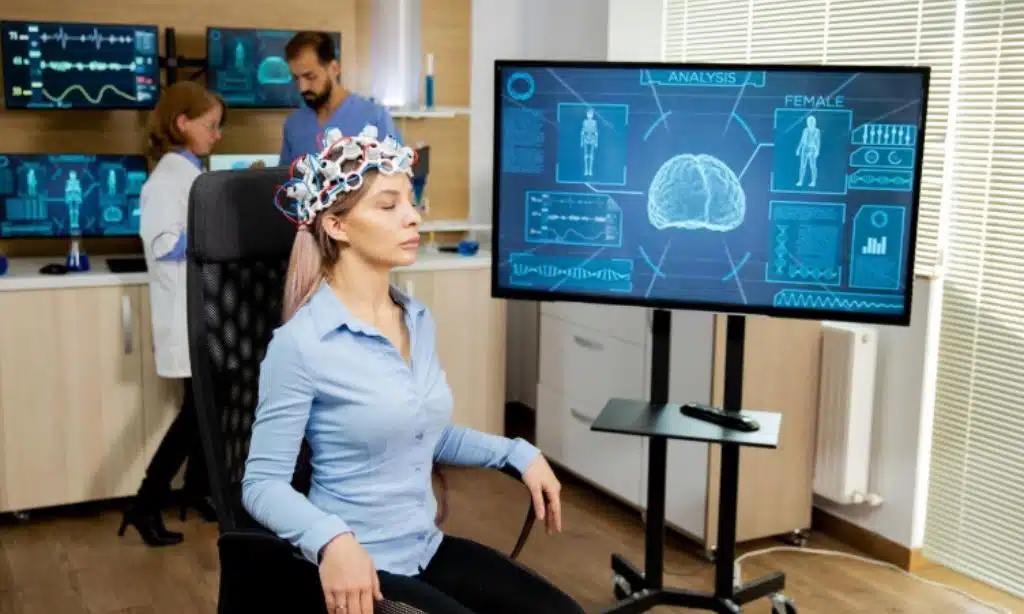
Role of AI in detecting early signs of mental health issues
AI spots early signs of mental health issues through remote monitoring. It uses predictive analytics to scan data from apps and wearables. This tech catches subtle changes in mood or sleep patterns before they worsen.
Picture a quiet alarm bell ringing in your phone, alerting you to seek help early. Doctors rely on these AI tools for remote health monitoring, offering support without office visits.
Predictive analysis helps in chronic disease management too, but for minds, it flags risks like anxiety spikes. AI fights biases in AI by learning from diverse data sets. Patients get personalized alerts, boosting engagement in their care.
Think of it as a watchful friend, always checking in to keep things steady. This approach cuts down on sudden crises, making remote patient monitoring a game-changer for mental well-being.
AI-powered tools for personalized mental health support
AI powers tools that give personal support for mental health. These tools fit each person’s needs, like a custom-fit glove. Imagine a patient feels down, and the system spots it fast through daily check-ins.
Enhanced chatbot technology steps in here. It chats like a friend, asking about moods and offering tips. This boosts remote patient monitoring for folks at home.
Doctors use predictive analytics in these AI tools to spot risks early. Chatbots track patterns in talks, much like reading tea leaves but with data. They send alerts if stress builds up.
Patients get personalized advice, improving chronic disease management. One user said, “It feels like having a pocket therapist.” Such support cuts hospital visits and lifts spirits.
Benefits of AI in enhancing mental health care
AI spots early signs of mental health slips through remote patient monitoring. It watches data streams from apps and wearables, catching odd patterns before they grow big. This continuous monitoring leads to proactive interventions, like quick chats with doctors.
Think of your phone as a watchful friend, nudging you to help just in time. Patients feel more in control, boosting their quality of life.
Predictive analytics in AI digs into trends for chronic disease management. Tools use natural language processing to assess moods from voice or text. They offer personalized tips, improving patient engagement.
Think of AI as a gentle coach, saying, “Hey, let’s tackle that stress head-on.” Such steps cut risks and foster better days ahead.
AI’s role in analyzing data from IoMT devices
AI pulls data from Internet of Medical Things devices, like sensors in wearables. These gadgets track heart rates, steps, and sleep patterns in real time. Think of it as a vigilant friend, always watching for odd changes.
Software platforms crunch this info using artificial intelligence. They spot trends that humans might miss. For example, a wireless sensor network feeds data into AI models. This setup boosts remote patient monitoring for chronic disease management.
Doctors get alerts from predictive analytics in these systems. AI uses IoT methods, such as telehealth apps, to analyze vital signs. It flags risks before they worsen, cutting down on hospital stays.
Patients wear devices that form a body area network, sending info straight to the cloud. Convolutional neural networks process images from point-of-care tools. This integration makes care smarter, more proactive.
Imagine your watch whispering warnings about your health; that’s the magic here.
Continuous real-time monitoring through wearables
Wearables track your heart rate, steps, and sleep patterns without a break. Artificial intelligence powers these devices in remote patient monitoring. It spots odd changes fast, like a sudden spike in blood pressure.
Imagine your smartwatch buzzes to alert you before trouble hits. AI applications enable real-time monitoring of health metrics, keeping tabs on vital signs around the clock.
This setup uses wireless sensor networks to send data straight to doctors. They see continuous monitoring of vital signs and activity, no waiting required. Predictive analytics kicks in, guessing risks from your daily moves.
You feel safer, like having a guardian angel on your wrist. Doctors adjust care on the fly, thanks to this tech. Patients with chronic diseases manage better, dodging trips to the hospital.
Benefits of integrated monitoring systems
Integrated systems blend AI with IoMT devices and wearables for seamless remote patient monitoring. Doctors spot issues fast, like a hawk eyeing its prey. This setup boosts predictive analytics, catching patterns in chronic disease management before they worsen.
Patients get early disease prevention, dodging big scares. Think of it as your health’s personal bodyguard, always on duty.
Proactive interventions shine here, cutting hospitalizations and lifting patient care quality. AI crunches data from wireless sensor networks, offering real-time insights. You feel empowered, not alone in the fight.
Such tools reduce manual work, letting care flow smooth as silk. Everyone wins with lower risks and smarter chronic disease management.
Enhanced Communication with Virtual Assistants
Imagine chatting with a helpful bot that never sleeps, ready to lend an ear when you feel off. AI-powered chatbots use natural language processing to assess symptoms on the spot, offering quick support and easing worries, like a trusty sidekick in your.
Role of AI-powered chatbots in patient support
AI-powered chatbots step in like a friendly neighbor, always ready to lend an ear in remote patient monitoring. They use natural language processing to understand your words, just as a doctor might during a quick chat.
Imagine: you feel off, so you type your symptoms, and the chatbot jumps in with questions to assess them fast. This tech, part of artificial intelligence in RPM, improves patient engagement by offering support anytime, day or night.
These chatbots track your progress with improved technology, spotting issues before they grow big. They send reminders for meds or check-ins, making chronic disease management feel less like a chore.
With AI leading the way, they analyze data from wearables, turning it into helpful advice that fits your life. Patients love this setup; it cuts down on hospital visits and keeps care proactive, like having a personal health coach in your pocket.
Natural Language Processing (NLP) for symptom assessment
Patients chat with AI tools, and these systems understand their words. Natural language processing, or NLP, plays a big role here in remote patient monitoring. It lets virtual assistants grasp symptoms from casual talk, like describing a headache or fatigue.
Think of it as a smart friend who listens closely, spots key details, and flags issues fast. AI uses expert systems and neural networks to analyze this data, turning everyday chats into useful health insights.
For example, a patient might say, “My chest hurts when I walk,” and NLP breaks it down to alert doctors.
This tech boosts patient engagement, making folks feel heard around the clock. In chronic disease management, NLP helps with automated diagnosis by picking up patterns in speech. It ties into predictive analytics too, forecasting risks from symptom reports.
Doctors get quick updates without extra hassle, cutting down on hospital stays. Imagine joking with a chatbot about your day, and it slyly checks your health, like a sneaky guardian angel.
Such tools use convolutional neural networks to process voice data, ensuring quality of service in wireless sensor networks.
Benefits of 24/7 patient interaction tools
AI-powered chatbots offer round-the-clock support, like a trusty sidekick that never sleeps. They boost patient engagement in remote patient monitoring, spotting issues fast with natural language processing.
You feel off at midnight, and the tool jumps in with quick symptom checks. This leads to continuous monitoring and early anomaly detection, cutting down on sudden health scares. Doctors see improved patient care quality, with fewer trips to the hospital.
Predictive analytics in these tools crunch data, predicting risks before they hit hard.
Folks love the empathy these virtual assistants bring, almost like chatting with a caring friend. They handle questions on chronic disease management, using convolutional neural networks to analyze patterns.
Interoperability lets them link with wireless sensor networks, pulling in real-time info from wearables. You can dodge hospitalization because the system flagged a tiny change early.
Patient outcomes soar, with better utilization management and less guesswork in care. Tools like these foster proactive steps, making health feel less like a battle and more like a team effort.
Ethical Considerations in AI-Powered RPM
Doctors worry about protecting patient data in remote monitoring systems, where hackers could sneak in like thieves in the night. We tackle bias in these smart algorithms, making sure they.
Addressing data privacy and security issues
AI handles patient data in remote patient monitoring with care. Think of it like guarding a treasure chest full of secrets. Teams focus on strong locks to keep info safe from hackers.
They use tools that scramble data, making it tough for bad guys to peek. This builds trust, you know, like a reliable friend watching your back.
Legal rules step in to guide this work, such as the EU AI Act adopted in March 2024. It sets standards for artificial intelligence in health tech. Experts tackle algorithmic bias too, spotting unfair patterns in predictive analytics.
They test systems with methods like k-fold cross-validation to make sure fairness wins. Patients get better care without worries, feeling secure in chronic disease management.
Mitigating algorithmic bias and ensuring fairness
Doctors face big ethical challenges with artificial intelligence in remote patient monitoring. Bias in algorithms can sneak in, like a hidden glitch in a video game, hurting fair care for everyone.
Teams work hard to spot these biases early. They use diverse data sets to train predictive analytics models. This helps avoid unfair results in chronic disease management. Strong regulatory frameworks guide this process in AI healthcare applications.
Picture a watchdog keeping things honest, you know?
Experts audit convolutional neural networks often. They check for patterns that favor one group over another. Fairness comes from tweaking hyperparameters with care. Patients deserve equal shot at good outcomes, no matter their background.
Think of it as leveling the playing field in a friendly match. Wireless sensor networks feed clean data into systems. This cuts down on errors. Education plays a key role too. It teaches teams to build fair AI tools for all.
Balancing AI innovation with ethical standards
AI pushes remote patient monitoring forward, but we must keep ethics in check. Think of it like walking a tightrope, you need balance to avoid a fall. The EU AI Act, adopted in March 2024, sets rules for fairness and safety in tools like predictive analytics.
This law helps stop bias in convolutional neural networks that spot health risks. We see how it guards patient data in chronic disease management. Fair play keeps trust alive.
Safety comes first in artificial intelligence for patient engagement. Ethical issues stress fairness, like making sure algorithms treat everyone right. Picture a doctor using AI chatbots without hidden biases, that’s the goal.
We balance innovation with these standards to cut hospitalisation rates. Tools like wireless sensor networks thrive under this watch. Patients win when we prioritize ethics, no shortcuts allowed.
AI-enhanced EHR integration for comprehensive care
Doctors use artificial intelligence to link remote patient monitoring with electronic health records. This setup creates a full view of patient health. AI applications pull data in real time, like vital signs from wearables.
Picture a busy nurse spotting issues fast, thanks to this smart merge. It cuts down on paperwork and speeds up care.
Predictive analytics shine here, spotting risks before they grow big. Integration with clinical systems lets teams act quick on trends. Patients feel safer, knowing their info flows smooth to doctors.
Think of it as a safety net, catching problems early in chronic disease management. This boosts outcomes and keeps everyone in the loop.
Streamlined workflows and reduced manual data entry
AI-enhanced sensors in remote patient monitoring systems change the game. They pull data straight into electronic health records, no fuss needed. Like a well-oiled machine, AI handles the heavy lifting.
Doctors get info fast, cutting out piles of paperwork. This setup streamlines workflows, so teams focus on care, not typing. Reduced manual data entry means fewer errors, plain and simple.
Patients win too, with quicker responses to their needs.
Think of artificial intelligence as your trusty sidekick in chronic disease management. It spots patterns using predictive analytics, all from wearable gadgets. Integration feels seamless, like chatting with an old friend.
Nurses save time, dodging that endless data chase. AI boosts patient engagement, sending alerts through wireless sensor networks. Envision ditching those old matrices of notes; now, it’s all automated flow.
Benefits of unified patient data systems
Unified patient data systems bring big wins to healthcare, like improved patient care quality and reduced hospitalizations. Doctors get a full picture of your health history in one spot, thanks to artificial intelligence (AI) linking electronic health records with remote patient monitoring tools.
This setup spots issues fast, you know, like catching a storm before it hits. Predictive analytics dig into patterns from chronic disease management data, helping with early disease prevention and proactive interventions.
Imagine your doc saying, “Hey, let’s tweak this plan now,” based on real-time info from wearable devices and wireless sensor networks (WSN).
Patients feel more in control too, with less mix-ups from scattered records. AI-powered systems cut down on manual work, so teams focus on you instead of paperwork. Think of it as a smooth road trip, no detours, leading to better outcomes.
Tools like convolutional neural networks (CNN) analyze arrays of data for spot-on insights, boosting patient engagement. This all ties into a smarter way to handle care from afar.
Advancements in predictive modeling and analytics
Scientists push forward with predictive analytics in remote patient monitoring. They use artificial intelligence to spot health issues early, like a watchful guard dog sensing trouble before it bites.
AI sifts through data from wireless sensor networks, catching patterns that predict chronic disease flare-ups. Convolutional neural networks play a key role here, their convolutional layers analyzing images and signals for quick diagnoses.
This tech boosts patient engagement, letting folks manage their health from home.
Consider blending in emerging technologies, such as virtual and augmented reality, to make monitoring feel like a video game adventure. Doctors optimize hyperparameters in these models for sharper predictions, all on the client-side for privacy.
Such advancements mean proactive care for high-risk patients, turning data into lifesaving alerts. It’s like having a crystal ball for health, but powered by smart algorithms instead of magic.
Emerging technologies like virtual and augmented reality
Imagine this, folks. Virtual reality steps in to change remote patient monitoring. It lets patients enter virtual worlds for therapy sessions right at home. Doctors use it to guide exercises or check symptoms without travel.
Augmented reality overlays data on real views, like showing heart rates on a smart glass display. These tools pair with artificial intelligence to spot issues fast.
AI boosts these with predictive analytics. It sifts through data from wearables and wireless sensor networks. Think of it as a smart sidekick that predicts chronic disease flares before they hit.
Patients get real-time tips, improving engagement in their care. This setup feels like having a doctor in your pocket, making health management a breeze.
Vision for a more patient-centered healthcare system
AI-enhanced remote patient monitoring systems pave the way for a healthcare world that puts patients first. Picture a setup where artificial intelligence tracks your health from home, spotting issues before they grow big.
These systems use predictive analytics to warn doctors early, cutting down on hospital stays. You feel in control, like the captain of your own ship, with tools that boost patient engagement.
Chronic disease management gets a boost too, thanks to wireless sensor networks and convolutional neural networks that analyze data in real time. Doctors diagnose problems faster, leading to better care quality.
Hyperparameter optimization fine-tunes these AI models, making them sharp and reliable. It’s like having a smart buddy watching over you, reducing trips to the ER and improving your daily life.
Takeaways
We’ve covered how AI spots health dips early, predicts risks for tough cases, and crafts custom care plans in remote patient monitoring. These tools make tracking meds and mental health simple, blending with wearables for round-the-clock checks.
You can put them to work right away, saving time and boosting results without the hassle. What if you tried AI chatbots for better talks with your doc? Platforms like ResearchGate offer free access to fresh studies, plus their iOS app keeps you in the loop on stats.
Get started, folks, because adopting these AI advances could slash hospital stays and put patients first, like a trusty sidekick in your health journey.
FAQs on Remote Patient Monitoring Using AI
1. Hey, what’s the big deal with research breakthroughs in remote patient monitoring using artificial intelligence?
Well, picture this, like a watchful guardian angel, artificial intelligence now spots health issues early through predictive analytics, helping folks with chronic disease management stay one step ahead. Researchers use convolutional neural networks (CNN) to crunch data from wireless sensor networks (WSN), making sure patients get diagnosed faster than you can say “doctor’s orders.” It’s all about keeping you engaged and healthy from home, no fluff involved.
2. How does AI boost patient engagement in remote patient monitoring?
Artificial intelligence makes it feel like chatting with a caring friend, sending reminders and tips that fit your life. This ramps up involvement in chronic disease management, turning boring check-ins into something you actually look forward to.
3. Can you explain hyperparameter optimisation in AI for remote patient monitoring?
Sure thing, it’s like fine-tuning a radio to get the clearest signal; researchers tweak settings in convolutional neural networks to make predictive analytics super accurate for spotting when someone’s been diagnosed with a flare-up.
4. What’s the story behind creative commons attribution-noncommercial-noderivatives in this AI research?
Oh, it’s a bit like sharing a family recipe but with rules – this license lets folks use breakthrough studies on artificial intelligence for non-commercial stuff, as long as they credit the source and don’t tweak it. It keeps the knowledge flowing for better remote patient monitoring without anyone profiting off it wrongly.