In the digital age, managing supplier relationships efficiently is crucial for any business aiming to scale. One of the most transformative strategies to streamline procurement, communication, and payments is supplier portal integration. At Montopay, we specialize in helping businesses bridge the gap between their internal systems and external supplier portals, delivering seamless, automated, and compliant interactions that reduce friction and boost performance across the supply chain.
What Is Supplier Portal Integration?
Supplier portal integration refers to the process of connecting a company’s internal systems—such as ERP, accounting, procurement, or invoicing tools—with the various supplier-facing portals used by their vendors or third-party platforms. These portals might include platforms like SAP Ariba, Coupa, Oracle iSupplier, or custom-built solutions developed by enterprise clients.
By integrating these portals with internal workflows, companies can automate the flow of information—purchase orders, invoices, delivery confirmations, and payment statuses—eliminating manual entry and ensuring consistency across systems.
Why Supplier Portal Integration Matters
With globalization and remote supply chain operations becoming the norm, businesses increasingly rely on multiple supplier platforms. However, managing each one separately is time-consuming and error-prone. Supplier portal integration brings these disparate systems together, unlocking key benefits:
- Reduced manual effort
- Minimized invoice and data entry errors
- Accelerated procure-to-pay cycles
- Improved visibility across the entire supply chain
- Stronger supplier relationships
Montopay enables supplier portal integration that works across a variety of systems, helping companies synchronize operations and scale without adding complexity.
Key Benefits of Supplier Portal Integration
1. Time and Cost Efficiency
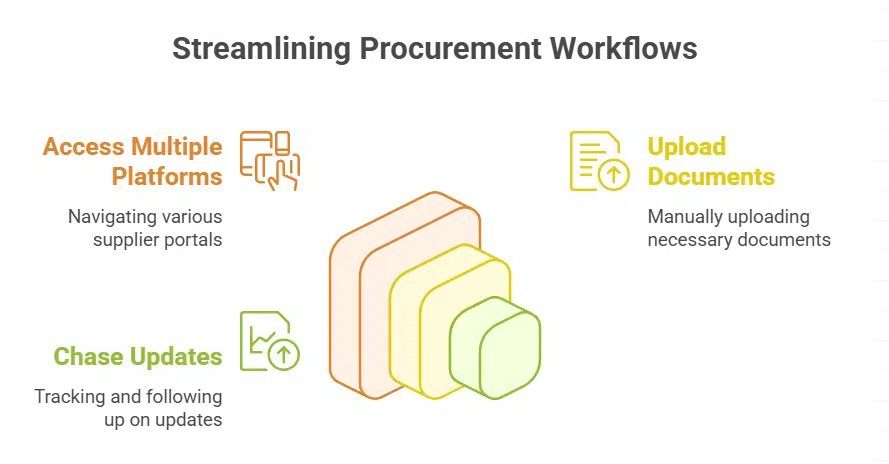
Manual data entry across supplier portals is a resource drain. Integration reduces time spent logging into multiple platforms, uploading documents, and chasing updates. With Montopay’s intelligent automation, teams can manage procurement workflows from a single interface.
2. Faster Invoice Processing and Payment
Integrated portals ensure invoices are submitted correctly and on time. Automated checks help validate the invoice format, match it to purchase orders, and track approval statuses, speeding up the payment process. This not only improves supplier satisfaction but also enhances cash flow planning.
3. Real-Time Data Syncing
When your ERP and supplier portals communicate automatically, you get accurate, real-time updates on order status, shipment progress, and invoice approvals. This transparency reduces miscommunication and the risk of disputes.
4. Improved Compliance and Auditability
Different suppliers and regions have unique compliance requirements. Montopay’s portal integration engine enforces mandatory fields, validates data against business rules, and logs every transaction for audit readiness—helping you stay compliant effortlessly.
5. Scalability for Growing Businesses
As your supplier network grows, manual methods break down. Montopay’s integration solutions are built to scale, handling increased volume without extra headcount or delays.
Common Use Cases for Supplier Portal Integration
Supplier portal integration benefits a wide range of industries and use cases:
- Manufacturers can streamline raw material procurement and track parts from multiple suppliers.
- Retailers can integrate directly with product vendors for real-time inventory updates and restocking.
- Pharmaceutical and medical companies can ensure supplier compliance with strict regulatory standards.
- Construction and engineering firms can coordinate material delivery and payment milestones efficiently.
No matter your industry, if your suppliers use portals to communicate, Montopay can help integrate them with your systems.
How Montopay Makes Supplier Portal Integration Easy
At Montopay, we take a technology-agnostic, user-first approach. Our platform connects with over 50 major supplier portals and adapts to custom or industry-specific ones. Here’s how our solution stands out:
1. Custom Integration Layer
Our integration layer maps data between your ERP (SAP, Oracle, NetSuite, Microsoft Dynamics, etc.) and supplier portals. We handle file transformations (CSV, XML, EDI, JSON) and support both API-based and browser-based integration methods.
2. Smart Automation Engine
Trigger-based automation ensures that actions such as invoice creation or PO acknowledgment happen automatically once your internal system generates a transaction.
3. Two-Way Communication
Integration isn’t just about pushing data—it’s also about pulling updates. Montopay captures status changes, rejection notes, and payment information from portals and feeds them back into your internal system in real-time.
4. Role-Based Access & Security
We prioritize security with encrypted data transmission, audit trails, and role-based permissions, ensuring that only authorized users access sensitive financial or supplier data.
Real-World Impact: Montopay in Action
One of Montopay’s clients, a global electronics distributor, was working with over 200 suppliers through 12 different portals. Their procurement and accounts payable teams were overwhelmed by manual uploads, formatting errors, and inconsistent payment statuses.
After implementing Montopay’s supplier portal integration solution, the company experienced:
- A 75% reduction in invoice rejections
- A 40% increase in on-time payments
- A 60% decrease in man-hours spent on portal tasks
- Enhanced data visibility across departments
Integration turned their procurement process from reactive to proactive, giving teams the ability to track, forecast, and respond with confidence.
Supplier Portal Integration and the Future of Procurement
As AI, machine learning, and real-time analytics advance, supplier portal integration will become even more intelligent. Predictive ordering, automated dispute resolution, and smart risk analysis are just the beginning. Businesses that invest in integration today will be better positioned to leverage these future innovations.
Moreover, sustainability and ESG initiatives are increasingly being tied to supplier management. Integrated systems allow for better tracking of supplier compliance with ethical sourcing, carbon reporting, and labor standards—further aligning procurement with corporate values.