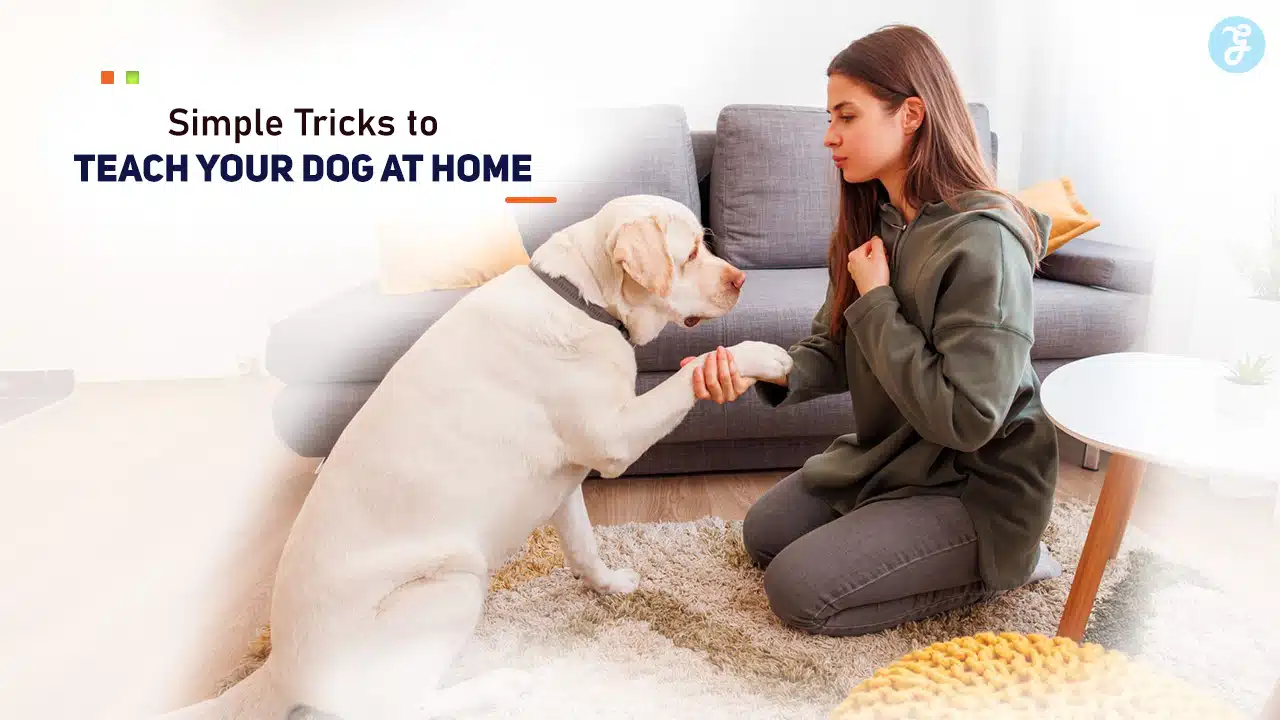
Training your dog is one of the most rewarding activities for both you and your furry friend. Teaching tricks not only enhances their obedience but also strengthens your bond and provides mental stimulation for your pet.
The best part? You don’t need to be a professional trainer or have access to expensive facilities to teach your dog new tricks—all you need is some time, patience, and a bag of tasty treats.
This guide covers 10 simple tricks to teach your dog at home, complete with step-by-step instructions and helpful tips. These tricks range from basic commands that improve safety and communication to fun stunts that will impress your friends and family.
1. Sit
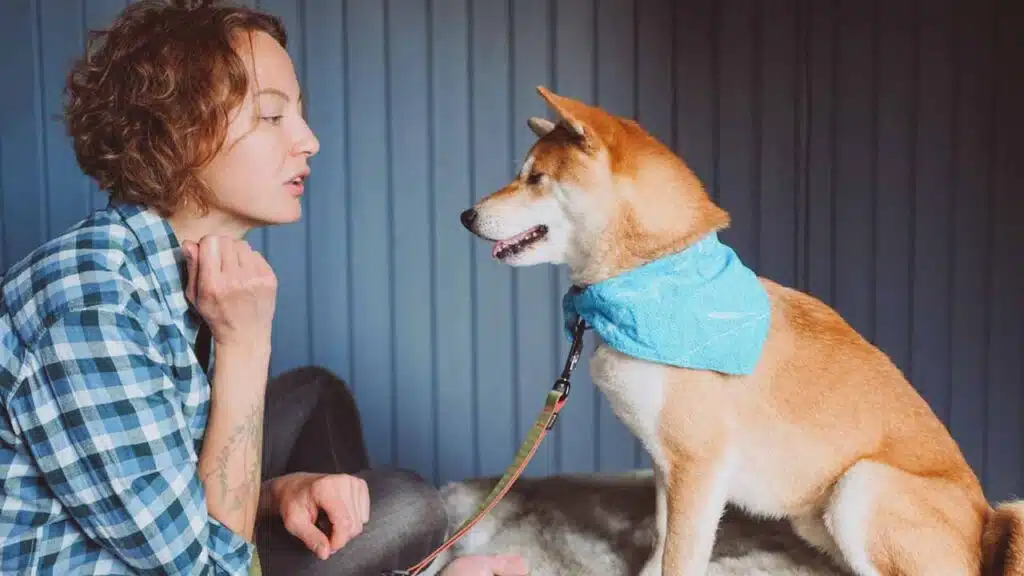
Teaching your dog to sit is one of the most fundamental and essential tricks. This command is often the starting point for more advanced training and helps your dog understand basic obedience.
How to Teach It:
- Hold a treat close to your dog’s nose.
- Slowly move the treat upward, causing your dog’s head to follow and their bottom to lower.
- Once they sit, say “sit” clearly and give them the treat.
- Repeat this process several times daily until they associate the word with the action.
Why It’s Useful:
The “sit” command is a practical tool for managing your dog’s behavior, whether it’s during mealtime, when guests arrive, or while waiting at traffic lights.
2. Stay
The “stay” command teaches your dog self-control, which is essential for their safety and your convenience. It’s particularly helpful in situations where your dog needs to remain still, such as during grooming or at the vet.
How to Teach It:
- Start with your dog in the sitting position.
- Hold your palm up like a stop sign and say “stay” firmly.
- Take one step back, then quickly return and reward your dog if they remain in place.
- Gradually increase the distance and duration as your dog becomes more comfortable.
Why It’s Useful:
This command ensures your dog doesn’t bolt into dangerous situations and helps with managing their excitement in public places.
3. Come
“Come” is a lifesaving command that ensures your dog returns to you immediately, whether they’re off-leash at the park or exploring a new area.
How to Teach It:
- Put a leash on your dog and let them wander a short distance.
- Say “come” in a cheerful tone while gently pulling the leash.
- Reward them with a treat and praise when they reach you.
- Practice in safe, enclosed areas and gradually move to larger spaces.
Why It’s Useful:
This trick is vital for your dog’s safety, especially in off-leash situations or when they’re approaching hazards.
4. Shake Hands
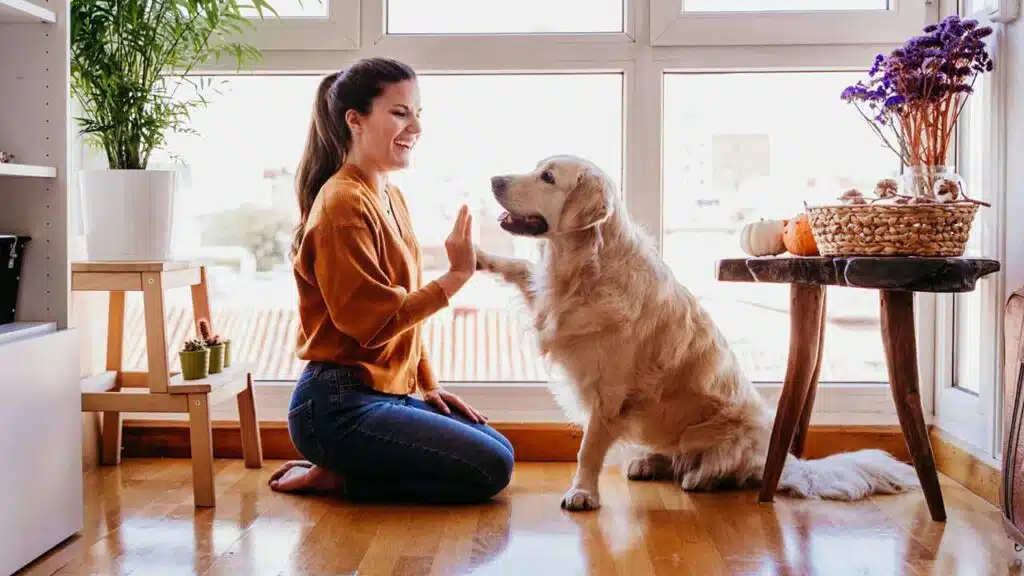
Teaching your dog to shake hands is a fun way to entertain guests while building their trust and obedience. It’s also a great trick to start with if you’re new to dog training.
How to Teach It:
- Ask your dog to sit.
- Hold a treat in your closed hand near their paw.
- When they lift their paw to investigate, gently shake it and say “shake.”
- Reward them and repeat until they understand the cue.
Why It’s Fun:
This trick not only showcases your dog’s playful side but also helps improve their socialization skills.
5. Roll Over
Rolling over is a delightful trick that keeps your dog mentally and physically active. It’s a bit more complex, but with patience, your dog can master it in no time.
How to Teach It:
- Start with your dog in the “down” position.
- Hold a treat near their nose and move it in a circular motion.
- Encourage them to follow the treat with their head and body until they roll over.
- Say “roll over” as they complete the motion and reward them generously.
Why It’s Fun:
This trick is great for showing off your dog’s agility and intelligence. Plus, it’s excellent for stretching their muscles.
6. Spin
The spin command is an enjoyable trick that adds variety to your dog’s training routine. It’s simple yet impressive and helps improve their coordination.
How to Teach It:
- Hold a treat near your dog’s nose.
- Slowly guide them in a circular motion, encouraging them to follow the treat.
- Once they complete the spin, say “spin” and reward them.
- Practice in both directions for balance.
Why It’s Useful:
This trick is perfect for burning off excess energy and keeping your dog entertained.
7. Fetch
Teaching your dog to fetch is not only entertaining but also provides excellent physical exercise. It’s a fantastic way to bond with your pet and keep them active.
How to Teach It:
- Choose a toy or ball your dog loves.
- Throw it a short distance and say “fetch.”
- Encourage your dog to pick it up and bring it back to you.
- Reward them when they return the toy and gradually increase the distance.
Why It’s Fun:
Fetch is a timeless game that stimulates your dog mentally and physically while reinforcing good behavior.
8. Speak
Teaching your dog to speak on command is a fun way to manage their barking habits. It allows you to control when they bark and helps prevent excessive noise.
How to Teach It:
- Wait for your dog to bark naturally.
- Say “speak” and reward them immediately after they bark.
- Repeat until they associate the command with the action.
Why It’s Useful:
This trick is helpful for alerting you to potential dangers or simply adding entertainment to your training sessions.
9. Take a Bow
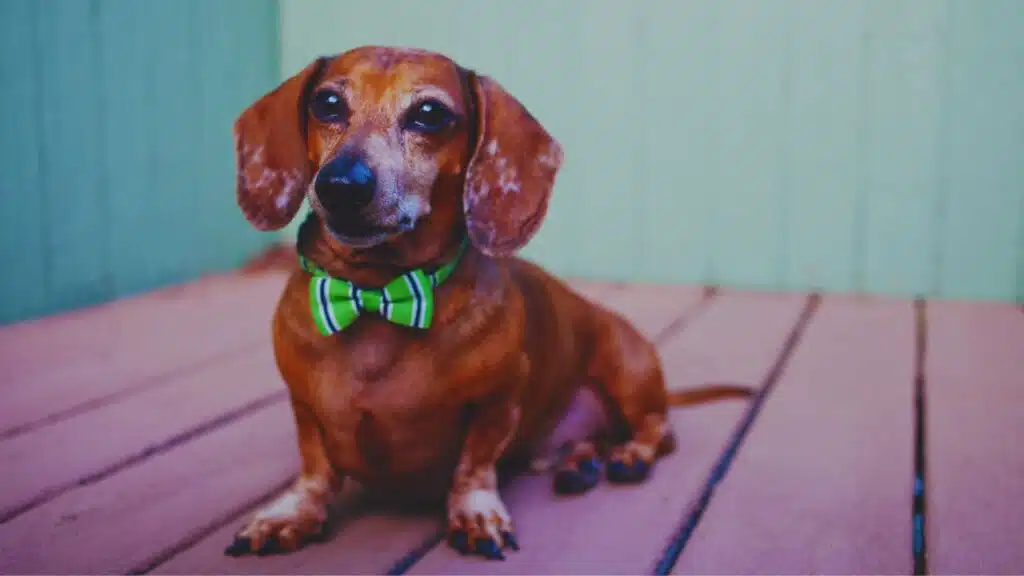
“Take a bow” is a charming trick where your dog lowers their front legs while keeping their hindquarters up, mimicking a bow. It’s a delightful way to conclude training sessions.
How to Teach It:
- Start with your dog standing.
- Hold a treat near the ground between their front paws.
- Encourage them to lower their chest while keeping their hind legs straight.
- Say “bow” and reward them when they hold the position briefly.
Why It’s Fun:
This trick adds flair to your dog’s repertoire and serves as a cute way to wrap up a performance.
10. Wait
The “wait” command helps your dog develop patience, whether it’s waiting at the door or before eating their meal.
How to Teach It:
- Ask your dog to sit.
- Hold your hand up like a stop sign and say “wait.”
- Gradually increase the duration before rewarding them.
- Practice in different scenarios, such as waiting before crossing the street.
Why It’s Useful:
This command ensures safety and helps manage your dog’s excitement during daily activities.
Conclusion
Teaching your dog tricks at home is a fantastic way to enhance your bond, improve their behavior, and keep them mentally stimulated. These 10 simple tricks are easy to learn with consistent practice and positive reinforcement.
Start with the basics like “sit” and “stay,” then progress to more advanced tricks like “roll over” and “speak.”
Remember, patience and rewards are keys. Celebrate small victories, and don’t forget to make training sessions fun for both you and your dog. With time and effort, you’ll have a well-trained, happy pup who’s ready to impress!