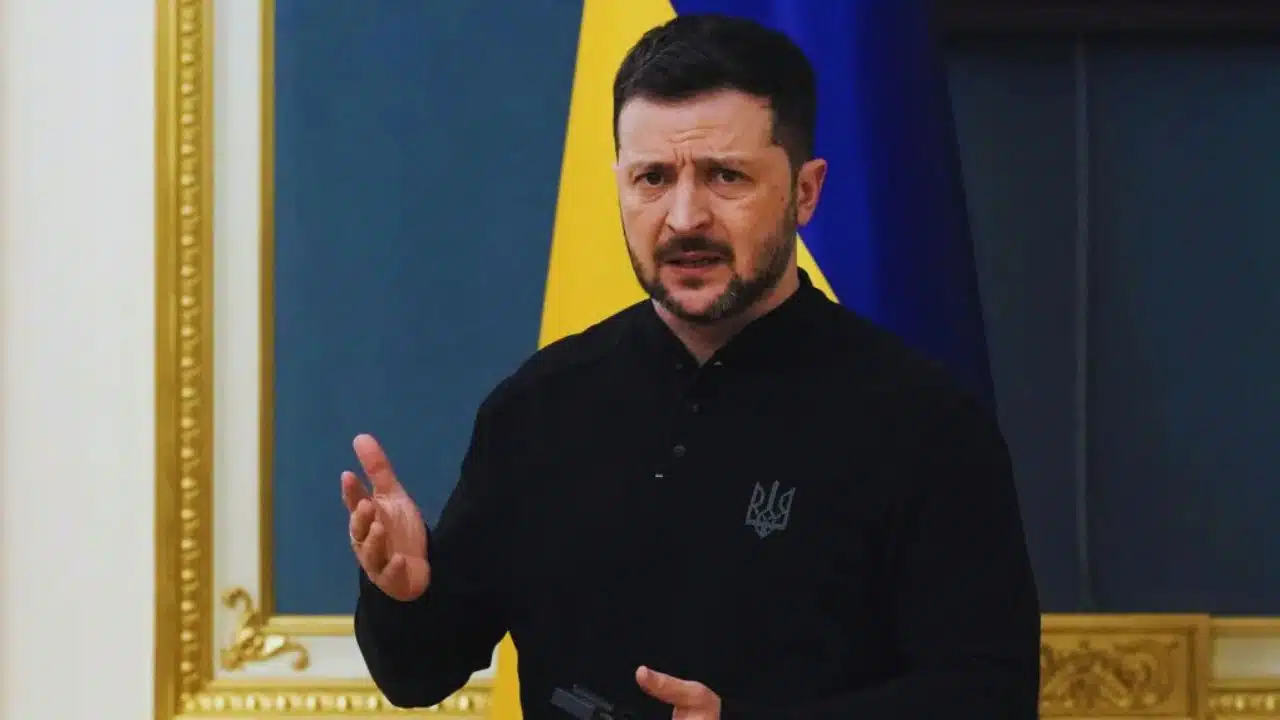
Ukrainian President Volodymyr Zelensky has initiated steps for wartime elections, urging parliament to amend laws despite ongoing martial law from Russia’s invasion. He conditions polls on security guarantees from the US and allies, responding to President Donald Trump’s calls for a vote. This marks a shift as Zelensky’s term expired in May 2024, extended under wartime rules.
Background on Ukraine’s Election Delay
Russia’s full-scale invasion in February 2022 triggered martial law, which bans elections under Ukraine’s constitution and laws. The Verkhovna Rada has extended this regime repeatedly, most recently until February 3, 2026, to maintain stability and mobilization.
Zelensky’s five-year term ended in May 2024, but Article 83 of the constitution extends mandates until new polls after martial law lifts. Parliament affirmed this in resolutions, rejecting wartime votes as risky amid daily Russian strikes.
Public and political consensus opposes elections now, citing dangers to voters, soldiers, and displaced citizens—over 6 million abroad. Opposition figures like Petro Poroshenko back extensions for defense needs.
Zelensky’s Recent Announcements
On December 9, 2025, Zelensky declared readiness for elections in 60-90 days if allies provide security like air defenses and sanctions enforcement. He plans to ask parliament for legislation allowing polls under martial law.
Speaking after meetings in Italy, Zelensky tied this to peace talks, including a 20-point plan, security guarantees, and reconstruction—documents shared with the US. He discussed options with parliament leaders on December 10.
This follows Trump’s Politico interview claiming Ukraine uses war to dodge democracy. Zelensky countered by seeking US help, not pressure, amid revised US peace proposals criticized as Russia-favorable.
Legal and Constitutional Hurdles
Ukraine’s Martial Law Law (Article 19) and Electoral Code prohibit national elections during emergencies. The constitution implies polls only post-martial law, with no amendments possible under it.
Parliament must draft changes for wartime polls, a complex process needing consensus. Experts warn rushed votes risk illegitimacy, failing international standards for free expression amid war fears.
A ceasefire emerges as key; Zelensky noted on December 11 that polls require one for safety. Parliament’s foreign policy committee sees no domestic push, viewing elections as Putin’s internal disruption tactic.
| Timeline of Martial Law Extensions in Ukraine (2025) | Date Extended | New Expiry Date | Key Notes |
| January 15 | May 9, 2025 | Mobilization included | |
| April 16 | August 6, 2025 | 357 votes in Rada amid US/Russia pressure | |
| July 14 | November 5, 2025 | Zelensky submits bills for 90 days | |
| October 20 | February 3, 2026 | Latest extension post-consultation |
International Pressure and Reactions
US President Trump, reelected in 2024, questions Zelensky’s legitimacy, pushing polls as part of peace deals. This unites Ukrainians, boosting Zelensky temporarily despite dips.
Russia’s Putin calls Zelensky illegitimate, echoing delays to undermine Kyiv. European leaders from Britain, France, Germany back Ukraine but prioritize security over immediate votes.
Allies like the EU stress guarantees—military aid, defenses—for feasible polls. Zelensky met Pope Leo and Italy’s PM, refining plans sent to Washington by December 10.
Public Opinion and Zelensky’s Ratings
Zelensky’s approval hovers at 65-67% in late 2025 polls, down from 2022 peaks but stable. A June KIIS survey showed 65% trust (+35 balance), lowest since March, with regional divides: 73% west, 61% south/east.
Recent polls indicate electoral intent shifts: only 20% back Zelensky if voting now, with Valerii Zaluzhnyi at 19%. War fatigue, ceasefire calls, and US tensions factor in declines from May’s 74% high.
Trust ties to territorial views—Zelensky supporters (55%) oppose concessions; distrusters (46%) open to them. Gallup notes two-thirds support amid leadership shifts.
| Zelensky Approval Ratings (Select 2025 Polls) | Date | Approval % | Source Notes |
| February | 57% | KIIS, post-Trump claims | |
| June | 65% | KIIS, +35 trust balance | |
| August | 67% | Gallup, stable post-invasion | |
| December | ~20% voting intent | Recent, Zaluzhnyi close second |
Challenges of Wartime Voting
Practical issues loom: Russian attacks hit cities daily, front lines displace voters, and occupied areas block access. Costs divert from defense; logistics for 90-day polls strain resources.
Civil society and experts argue wartime polls invite backsliding, eroding institutions. International observers demand safe, free conditions—hard without ceasefire.
Parliament’s December moves signal willingness, but doubts persist on timelines. Vice Chairman Korniyenko noted readiness for documents on December 11.
Peace Talks and Election Links
Zelensky links elections to a “workable” peace draft discussed in Berlin December 16, not perfect but viable. It covers ceasefire, security, recovery—pressuring Putin soon.
US mediation favors Russia per critics, but revisions ongoing. Elections could legitimize post-deal leadership, countering Putin narratives.
European support aligns with guarantees; no firm timeline yet.
Final Thoughts
Zelensky’s preparations test Ukraine’s resilience, balancing democracy with survival. Success hinges on allies’ security aid and legal reforms, potentially paving ceasefire paths.
Elections, if held, reshape legitimacy amid 65%+ approval but voting hesitance. Watch parliament votes and US responses in early 2026 for next steps.