
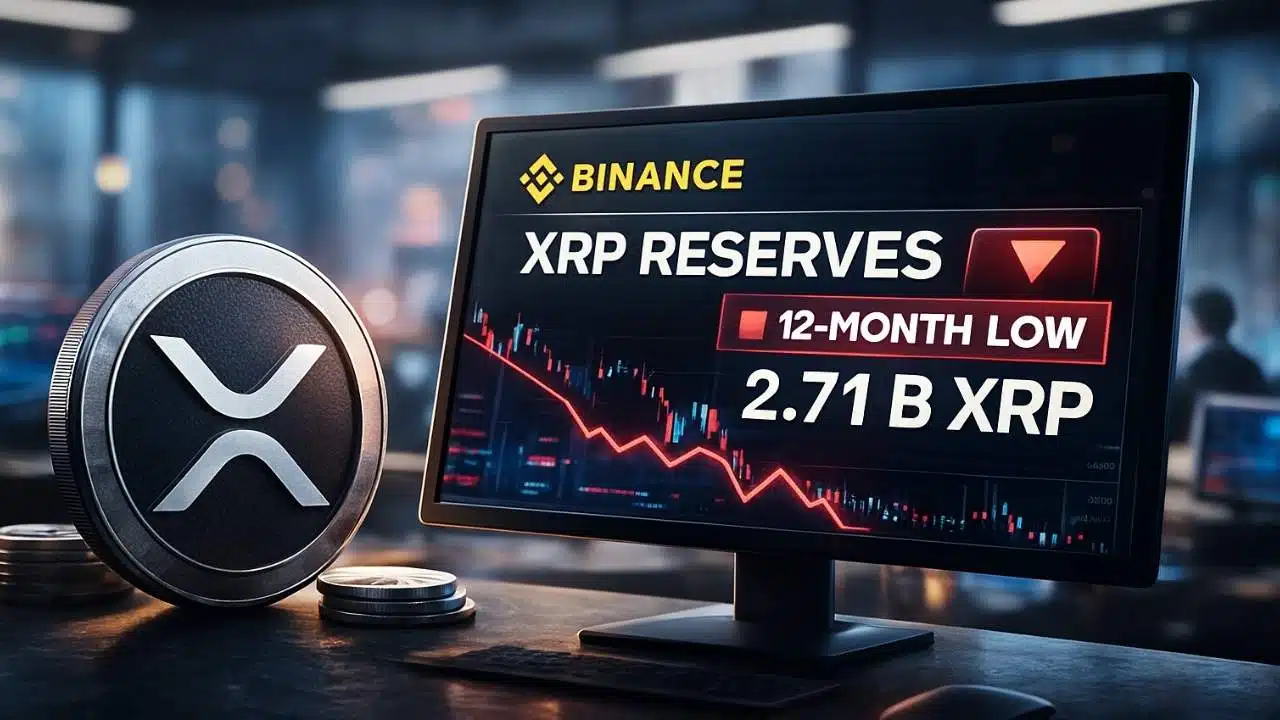
XRP reserves on Binance have dropped to a 12-month low, reaching approximately 2.71 billion XRP as of November 27, 2025. This marks a sharp decline of nearly 300 million XRP in less than two months, signalling a significant tightening of the token’s liquid supply on one of the world’s largest cryptocurrency exchanges. The rapid depletion indicates that fewer tokens are now available for trading, which is a notable development in a market where supply levels on centralized platforms often influence short-term price dynamics.
The decline in exchange balances began accelerating in early October but intensified throughout November. Analysts tracking exchange flows note that this downtrend is not isolated to Binance alone, but the platform’s size makes the decline especially important. Binance historically holds one of the deepest XRP liquidity pools globally, and a prolonged reduction in its reserves typically suggests substantial capital movement, either into self-custody or institutional vehicles. The speed and scale of the drop point toward meaningful structural changes in how XRP is being accumulated, stored, and traded in the current macro environment.
On-chain data platforms monitoring wallet activity indicate that the majority of these outflows originate from centralized entities and not short-term trader wallets. This pattern supports the idea that long-term holders and institutional allocators may be quietly absorbing circulating supply, contributing to a broader trend of exchange-to-self-custody migration that has been unfolding across major cryptocurrencies in 2025.
Spot XRP ETFs Trigger Strong Institutional Inflows and Intensify Liquidity Drain
The sharp contraction in Binance’s XRP supply aligns closely with the launch of multiple U.S.-listed spot XRP exchange-traded funds (ETFs) in mid-November 2025. These ETFs, introduced by major financial institutions including Canary, Bitwise, Grayscale, and Franklin Templeton, have opened new regulated pathways for investors to gain exposure to the asset. The arrival of these products represents one of the most significant milestones for XRP since the resolution of its legal uncertainties in previous years.
Since their debut, the ETFs have seen nine consecutive days of net inflows, bringing in more than $670 million in combined assets. This surge of demand has directly contributed to the drain of exchange liquidity because spot ETFs must acquire physical XRP on the open market. Unlike some traditional commodities where ETF issuers can source supply through institutional arrangements, XRP fund managers are required to purchase tokens in the secondary market. They cannot access Ripple’s escrow or private holdings due to regulatory restrictions governing fair market access.
This structural limitation forces each ETF to buy XRP from the same pool used by everyday traders, thereby amplifying competition for available supply. One fund, the Bitwise XRP ETF, posted a standout performance by recording a single-day inflow of over $7 million on November 26. Meanwhile, Canary’s ETF has accumulated more than $300 million in assets within a matter of days, showcasing broad and sustained market interest.
Market researchers highlight that one of the key factors behind these impressive inflows is investor preference for regulated, custodial investment vehicles. These products eliminate the friction of managing private keys, reduce perceived counterparty risk associated with offshore exchanges, and offer exposure through traditional brokerage accounts. As a result, long-term investors — especially institutional allocators that require compliance-checked products — are increasingly turning to ETFs rather than direct exchange purchases.
According to blockchain analysts observing reserve flows, most of the XRP being withdrawn from Binance is not reappearing on other exchanges. Instead, the tokens are moving into cold storage solutions associated with ETF custodians and large private wallets, indicating longer-term holding strategies. Such movement stands in contrast to typical cyclical trading behaviour where tokens may rotate between exchanges. This time, much of the supply appears to be exiting the liquid market entirely.
Supply Crunch Strengthens Bullish Case but Near-Term Risks Continue to Loom
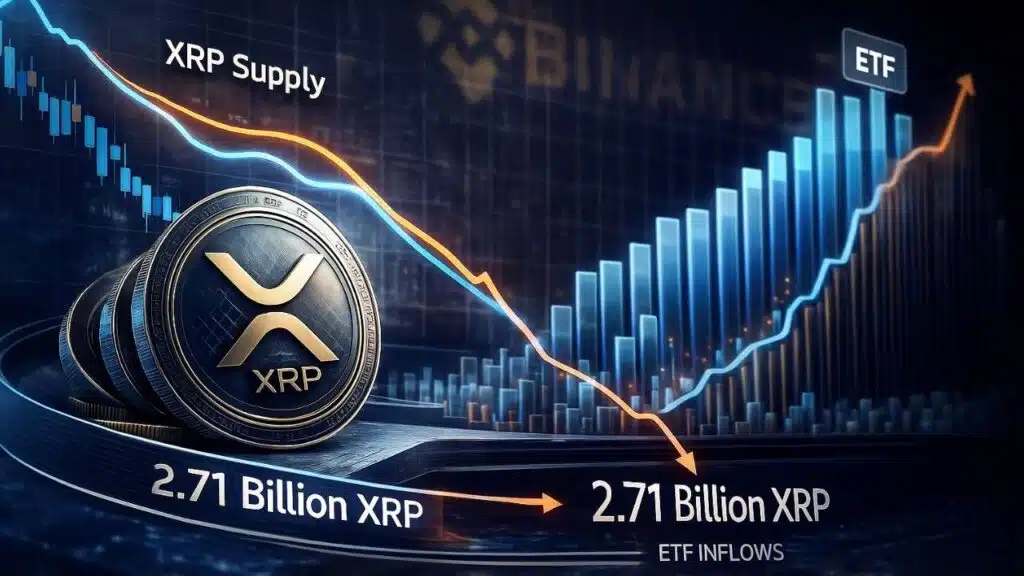
The combination of surging ETF demand and rapidly dwindling exchange reserves has created what many analysts describe as a textbook setup for a potential supply shock. In digital asset markets, a pronounced decline in the liquid supply — especially on centralized exchanges — often precedes stronger price movements because fewer tokens are available for traders during periods of rising demand. Historical cases across other major cryptocurrencies demonstrate that when liquidity tightens, price reactions can become more exaggerated.
For XRP, the current environment suggests that the token could experience upward pressure if institutional inflows remain consistent. With ETFs needing to purchase XRP daily to match investor orders and exchange reserves hitting yearly lows, the market may be entering a phase where even moderate demand produces outsized price volatility.
However, the bullish outlook is tempered by several near-term risks. Broader macroeconomic conditions remain unstable, and sentiment across risk assets is cautious as global markets navigate inflation trends, interest rate expectations, and fluctuating liquidity conditions. XRP is not immune to these external pressures.
In the technical landscape, traders are closely watching the critical $2.15–$2.24 support zone. This range has acted as a foundation for recent price action. If XRP loses this area decisively, momentum could shift toward a bearish short-term structure despite the strong fundamentals underlying supply dynamics. A breakdown below this band might attract short-term sellers, algorithmic traders, and liquidation events that could temporarily overshadow the positive ETF-driven narrative.
Analysts caution that for a sustainable rally, XRP needs not only ongoing ETF inflows and reduced exchange supply but also stability in the broader crypto market. Volatility in Bitcoin or macro-sensitive assets could spill over into XRP, delaying or muting any supply-driven upside. Nonetheless, the overall sentiment remains cautiously optimistic, with many experts noting that the current setup is materially stronger than earlier phases of speculative XRP cycles.
Market Outlook: A Structural Shift in Access, Demand, and Long-Term Holding Patterns
The rapid contraction of Binance’s XRP reserves is more than a short-term anomaly; it signals a deeper structural change in how XRP is being accessed and accumulated. The introduction of spot ETFs is fundamentally transforming the asset’s investor base. Traditional financial entities, wealth managers, and regulated institutions — groups that previously avoided direct cryptocurrency exposure due to custody and compliance hurdles — now have a straightforward and regulated avenue to buy XRP.
This shift has profound long-term implications. As more capital flows through ETFs, fewer tokens remain on centralized exchanges. Reduced exchange liquidity often results in a more stable supply profile because tokens held in custody by ETF issuers or in self-custody are less likely to re-enter the market quickly. Over time, this dynamic can reshape volatility patterns, making XRP behave more like a traditional asset with deeper institutional participation.
The market is also anticipating the arrival of additional ETF products, including the expected launch of the 21Shares XRP ETF. If these new funds attract even a fraction of the inflows seen by the first wave of ETFs, the supply-demand imbalance could intensify further. With Ripple’s escrowed holdings remaining off-limits and secondary market supply steadily tightening, the environment is increasingly favourable for price appreciation — provided broader market conditions remain supportive.
Many analysts believe that XRP is entering a new phase defined by maturing infrastructure, regulatory clarity, and institutional pathways that did not exist in previous market cycles. While short-term volatility remains likely, the medium-to-long-term outlook appears structurally stronger as exchange liquidity dries up and long-term holders dominate the supply landscape.
A Market Entering Transformation as Institutional Demand Rises
The sharp decline in XRP reserves on Binance, paired with robust inflows into newly launched U.S. spot ETFs, marks a pivotal turning point for the asset. This transition reflects more than simple market rotation — it highlights a deeper move toward institutional adoption, regulated access, and long-term holding strategies. With exchange liquidity shrinking, ETF demand rising, and new investment products on the way, the XRP market may be entering one of its most transformative periods yet.