As we approach the close of 2023, the world economy ranking 2023 is on track to reach a gross domestic product (GDP) of $105 trillion. This represents a significant increase of $5 trillion compared to the previous year, as outlined in the latest projections from the International Monetary Fund (IMF) in its 2023 World Economic Outlook report.
In simple terms, this amounts to a 5.3% rise in global GDP when measured in nominal figures. When accounting for inflation, the real increase is estimated at 2.8%.
The beginning of the year brought its fair share of challenges for the global economy. The financial markets experienced turbulence due to the collapse of several mid-sized U.S. banks. In addition to this, there were persistent concerns about inflation, and many countries faced tighter monetary conditions.
Despite these initial setbacks, it’s worth noting that certain economies have displayed remarkable resilience and are expected to show positive growth compared to the previous year, starting from 2022.
Country Economic Top 10 Size Ranking 2023
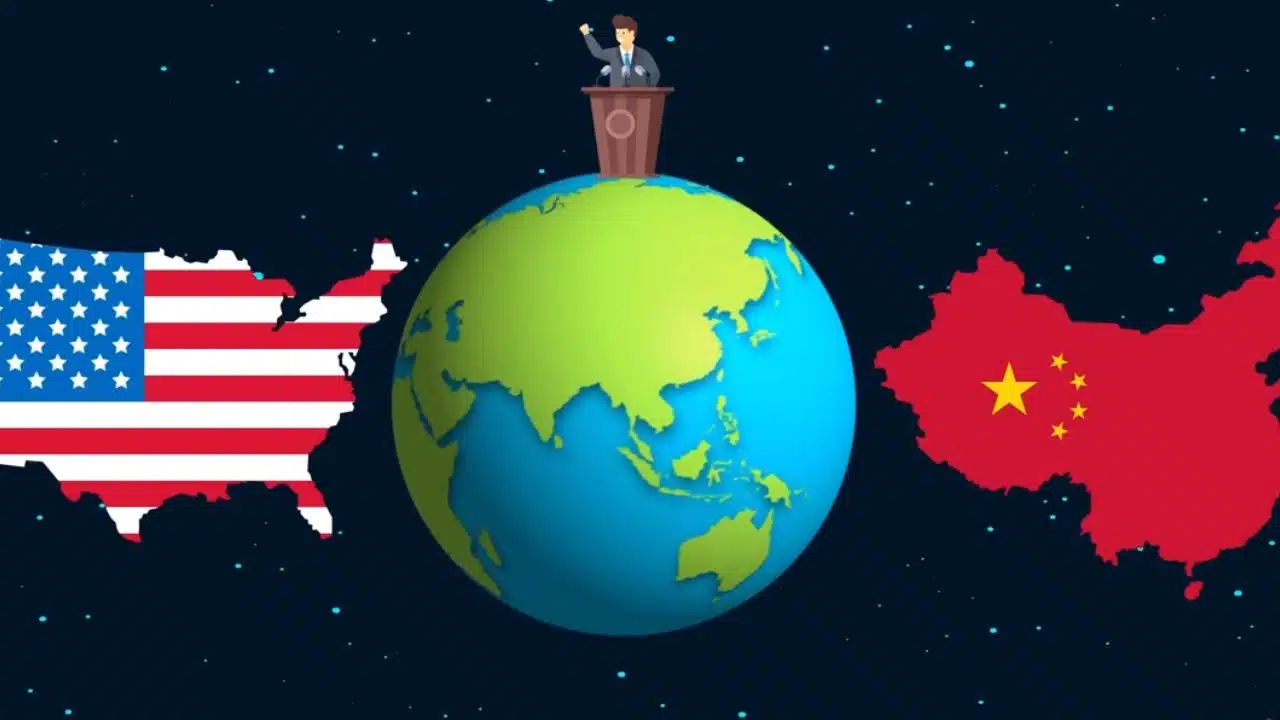
In 2023, the United States is set to maintain its position as the world’s largest economy, boasting a projected GDP of $26.9 trillion for the year. To put this into perspective, that figure surpasses the combined GDPs of a whopping 174 countries, ranging from Indonesia, ranking 17th, all the way down to Tuvalu at 191st place.
China, meanwhile, holds its ground in the second spot, with an anticipated GDP of $19.4 trillion in 2023. Most of the top-five economies are expected to maintain their positions from the previous year, with one notable exception.
India is poised to make a significant leap, surpassing the United Kingdom to claim the title of the fifth-largest economy. It is projected to achieve a GDP of $3.7 trillion in 2023.
- America, US$ 25.035 trillion
- China, US$ 18.321 trillion
- Japan, US$ 4.301 trillion
- Germany, US$ 4.031 trillion
- India, US$ 3.469 trillion
- UK, US$ 3.199 trillion
- France, US$ 2.778 trillion
- Canada, US$ 2.2 trillion
- Russia, US$ 2.113 trillion
- Italy, US $ 1.99 trillion
World Regions’ Largest Economies are Listed Here
- Africa: Nigeria ($506.6 billion)
- Asia: China ($19.4 trillion)
- Europe: Germany ($4.3 trillion)
- Middle East: Saudi Arabia ($1.1 trillion)
- North & Central America: U.S. ($26.9 trillion)
- Oceania: Australia ($1.7 trillion)
- South America: Brazil ($2.1 trillion)
List of 2023’s Shrinking Economies
Interestingly, 29 economies are currently facing projections of contraction in 2023, resulting in a collective loss of nearly $500 billion in output.
Among these nations, Russia is expected to experience the most substantial decline, with a projected contraction of $150 billion for the year. Remarkably, this amounts to approximately one-third of the total decline seen across all 29 countries with shrinking economies.
Egypt and Canada, in combination, contribute another significant one-third to this loss in output. In Egypt’s case, part of this decline can be attributed to the devaluation of the Egyptian pound, which has lost about 50% of its value against the U.S. dollar since mid-2022.
Both Russia and Canada hold prominent positions as major oil producers, and they have been affected by the decline in oil prices since 2022. Adding to Russia’s challenges, Western sanctions have compelled the country to sell its oil at a considerable discount.
These are the predicted GDP changes for all countries experiencing year-over-year declines:
- Russia
- Egypt
- Canada
- Saudi Arabia
- Bangladesh
- Norway
- Kuwait
- Oman
- Colombia
- UAE
- South Africa
- Ghana
- Qatar
- Angola
- Zimbabwe
- Ukraine
- Sudan
- Iraq
- East Timor
- Gabon
- Equatorial Guinea
- Malawi
- Laos
- Brunei
- Yemen
- South Sudan
- Burundi
- Sierra Leone
- Suriname
The inclusion of Saudi Arabia, Norway, Kuwait, and Oman among the top 10 nations experiencing the most significant GDP contractions underscores the potential repercussions for oil-producing countries, as indicated by the IMF’s projections.
In more recent times, these oil-producing nations have been reducing their oil supply in an attempt to bolster prices. However, despite these efforts, concerns about a sluggish Chinese economy, which happens to be the world’s second-largest consumer of oil, have continued to exert downward pressure on oil prices, keeping them lower compared to 2022.
World Economy Ranking 2023 Top 50 List
|
1 |
United States of America |
23.3 trillion |
|
2 |
People’s Republic of China |
17.7 trillion |
|
3 |
Japan |
4.9 trillion |
|
4 |
Germany |
4.3 trillion |
|
5 |
India |
3.2 trillion |
|
6 |
United Kingdom |
3.1 trillion |
|
7 |
France |
3 trillion |
|
8 |
Italy |
2.1 trillion |
|
9 |
Canada |
2 trillion |
|
10 |
South Korea |
1.8 trillion |
|
11 |
Russia |
1.8 trillion |
|
12 |
Brazil |
1.6 trillion |
|
13 |
Australia |
1.6 trillion |
|
14 |
Spain |
1.4 trillion |
|
15 |
Mexico |
1.3 trillion |
|
16 |
Indonesia |
1.2 trillion |
|
17 |
Netherlands |
1 trillion |
|
18 |
Saudi Arabia |
834 billion |
|
19 |
Turkey |
819 billion |
|
20 |
Switzerland |
801 billion |
|
21 |
Poland |
679 billion |
|
22 |
Sweden |
636 billion |
|
23 |
Belgium |
594 billion |
|
24 |
Thailand |
506 billion |
|
25 |
Ireland |
504 billion |
|
26 |
Israel |
489 billion |
|
27 |
Argentina |
487 billion |
|
28 |
Norway |
482 billion |
|
29 |
Austria |
480 billion |
|
30 |
Nigeria |
441 billion |
|
31 |
South Africa |
419 billion |
|
32 |
Bangladesh |
416 billion |
|
33 |
United Arab Emirates |
415 billion |
|
34 |
Egypt |
404 billion |
|
35 |
Denmark |
398 billion |
|
36 |
Singapore |
397 billion |
|
37 |
Philippines |
394 billion |
|
38 |
Malaysia |
373 billion |
|
39 |
Hong Kong |
369 billion |
|
40 |
Vietnam |
366 billion |
|
41 |
Iran |
360 billion |
|
42 |
Pakistan |
348 billion |
|
43 |
Chile |
317 billion |
|
44 |
Colombia |
314 billion |
|
45 |
Finland |
297 billion |
|
46 |
Romania |
284 billion |
|
47 |
Czech Republic |
282 billion |
|
48 |
Portugal |
254 billion |
|
49 |
New Zealand |
250 billion |
|
50 |
Peru |
223 billion |
GDP Forecast Footnote
It’s important to keep in mind that while organizations like the IMF have become quite adept at predicting GDP trends, these are still forecasts and assumptions made at the beginning of the year, which might not hold true when we reach the end of 2023.
For instance, consider JP Morgan, which has already altered its forecast for China’s 2023 real GDP growth a remarkable six times in just as many months. These changes came about because the expected robust pandemic-recovery spending in the country didn’t materialize as anticipated.
The key message from the IMF’s 2023 GDP projections revolves around how effectively countries can manage inflation without hampering economic growth, all in the midst of challenging liquidity conditions.