Are you tired of high energy bills and a home that never feels quite comfy, no matter the season? Did you know that wool insulation offers amazing thermal performance with R-values between 3.5 and 3.89 per inch, beating many standard options? In this blog, we’ll show you 11 awesome benefits of wool insulation for all US climate zones, helping you save on heating and cooling costs.
Stick around to learn more!
Key Takeaways
- Wool insulation has an R-value of 3.5 to 3.89 per inch, offering great thermal performance across all US climate zones.
- It absorbs up to 35% of its weight in water without losing thermal power, perfect for humid areas.
- Wool blocks 90 to 95 percent of airborne sound, cutting noise in busy or loud spots.
- This material is non-toxic, hypoallergenic, and cleans pollutants like formaldehyde from indoor air.
- Wool helps save energy, reducing heating and cooling costs while cutting CO2 emissions by up to 282 million tons yearly.
Superior Thermal Performance Across Climate Zones
Hey there, let’s talk about how wool insulation excels in keeping your home cozy, no matter where you are in the US. With an R-value of 3.5 to 3.89 per inch, this material delivers impressive thermal performance.
That means it tackles heat loss effectively, whether you’re facing freezing winters in the Midwest or humid summers in the South. It’s a reliable choice for wall insulation or even attic insulation, performing well across all climate zones.
Now, imagine this: wool insulation holds its ground compared to other options like fiberglass batts, which provide R-15 for 2×4 walls and R-21 for 2×6 walls. Wool’s ability to regulate heat flow maintains a comfortable indoor environment with ease.
It’s like having a dependable barrier against extreme temperature changes. Plus, it boosts energy efficiency, reducing those annoying heating and cooling expenses. Choose wool, and your HVAC system won’t need to overwork!
Natural Moisture Management for Humid Regions
Living in humid regions can feel like a never-ending battle with dampness, huh? Wool insulation steps up as your reliable ally against moisture troubles. It soaks up to 35% of its weight in water without losing its thermal performance.
That’s right, folks, it keeps your home cozy even when the air feels like a swamp. This natural material manages indoor air quality with ease, preventing condensation from forming.
Imagine, when humidity reaches 65%, wool takes in and releases moisture to maintain balance. Say goodbye to mold growth creeping into your walls. Unlike fiberglass insulation or spray foam insulation, wool doesn’t just stay passive; it actively counters dampness.
So, for those steamy climate zones across the US, this insulation material brings a refreshing solution for wall insulation and ceiling insulation.
Excellent Sound Insulation Properties

Hey there, folks, let’s chat about how wool insulation can quiet down your home. It’s a real game-changer for blocking out noise, especially if you live near a busy street or have loud neighbors.
Wool can soak up 90 to 95 percent of airborne sound, making your space feel like a peaceful hideaway. Imagine kicking back after a long day without hearing every car horn or chat outside your window.
Now, get this, wool boosts sound transmission loss in walls by 6 decibels or more. That might not sound like much, but it’s a big deal for indoor air quality and home comfort. Whether you’re adding wall insulation or upgrading attic insulation, wool cuts down on annoying echoes.
So, crank up your favorite tunes or enjoy some quiet time, and let wool handle the rest with top-notch insulation performance.
Fire Resistance for Added Safety
Fire safety matters a lot in any home. Wool insulation stands out for its natural fire resistance, keeping you safer across all climate zones. Thanks to its high nitrogen and water content, wool doesn’t catch fire easily.
Instead, it smolders slowly, helping to slow down the spread of flames. That’s a big deal for protecting your family and property.
Imagine a small spark in your wall insulation. With wool, that spark won’t turn into a raging blaze fast. This building material gives you precious time to react. Plus, it fits well with other safety measures like air sealing.
So, choosing wool means extra peace of mind for your home comfort.
Sustainable and Eco-Friendly Material
Hey there, folks, let’s chat about why wool insulation is a fantastic green choice for your home. It’s not just good at keeping you cozy; it’s also kind to our planet. Wool is biodegradable and compostable, meaning it breaks down naturally without harming the earth.
Compare that to other options like fiberglass, which has 40 to 60 percent recycled material, or mineral wool with about 75 percent recycled content. Wool stands out as a renewable resource that doesn’t pile up in landfills.
Now, think of wool as Mother Nature’s gift for sustainable living. It cuts down on environmental impact across all climate zones in the US. Using it for wall insulation or attic insulation helps build homes with a smaller carbon footprint.
Plus, it supports a circular economy by reducing waste. So, choosing wool is like giving a high-five to the planet while boosting your home’s energy efficiency. Stick with this eco-friendly pick, and you’re making a smart move for both comfort and the environment.
Durability and Longevity of Wool Insulation
Wool insulation stands out for its tough, lasting nature. It doesn’t break down or sag over time like some other materials. Think of it as a sturdy old oak tree, standing firm through storms.
This stuff fights off mold, mildew, and even pesky dust mites. So, your home stays protected, no matter the years that pass.
Guess what makes wool even cooler? It keeps its thermal performance, even if it gets damp. In fact, it can generate a bit of heat when wet, acting like a cozy blanket for your walls.
Whether it’s in your attic insulation or wall insulation, wool holds strong. You get long-term home comfort without constant fixes or replacements.
Adaptability to Hot and Cold Climates
Hey there, let’s chat about how wool insulation shines in any weather. It’s a real champ, keeping your home cozy in freezing winters and cool during scorching summers. No matter if you’re in a chilly northern state or a steamy southern spot, this stuff works across all climate zones.
Its thermal performance stays solid, blocking heat loss when it’s cold and resisting hot air in warm months.
Think of it like a trusty friend who’s always got your back. Wool insulation maintains performance in both hot and cold climates, cutting down on energy use big time. In fact, it has a carbon payback period of under one year.
So, you save on heating and cooling systems while helping the planet. Plus, it pairs well with tools like vapor barriers to boost home comfort in any region.
Non-Toxic and Allergen-Free Insulation Option
Folks, let’s chat about something vital for your home’s health. Wool insulation stands out as a non-toxic choice for keeping your space cozy. It’s hypoallergenic, meaning it won’t trigger sneezes or itchy eyes.
Plus, it doesn’t release harmful chemicals into your indoor air quality. Think of it as a breath of fresh air, quite literally, for your family.
Now, here’s the cool part. Wool actually cleans up pollutants like formaldehyde, nitrogen dioxide, and sulfur dioxide by absorbing and neutralizing them. Imagine it as a silent guardian, protecting your home from sneaky air pollutants.
If you’re after safe building materials for wall insulation or attic insulation, wool offers pure peace of mind. Stick with this, and you’re dodging the nasty stuff that other insulation materials might bring.
Easy Installation and Maintenance
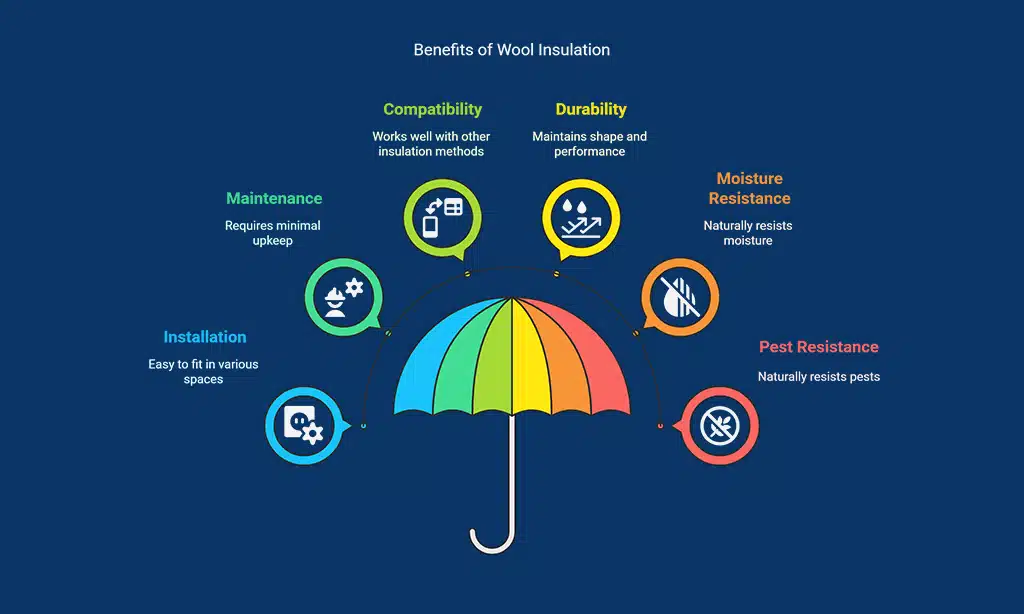
Let’s talk about wool insulation. It’s a breeze to install and maintain, making it a top pick for your home.
- First off, wool insulation comes in handy forms like batts and loose-fill, just like other insulation materials. This means you can fit it into walls, attics, or floors without a big hassle. Whether you’re tackling wall insulation or attic insulation, it slots right in with ease. No need for fancy tools or tricks; it’s as straightforward as pie.
- Next up, installing it is a snap for both new builds and older homes. You can roll out batts for a snug fit or blow in loose-fill for those tricky spots. This flexibility matches the methods used for cellulose insulation, such as dense-packed or damp-sprayed options. Pick what works for your space, and you’re good to go.
- Also, maintaining wool insulation takes almost no effort at all. Unlike some materials that sag or settle over time, wool holds its shape and keeps its thermal performance. You won’t be climbing into the attic every year to fluff it up. It stays put, saving you time and worry.
- On top of that, it pairs well with other building insulation tricks like air sealing. Combining wool with proper sealing stops heat loss and boosts energy efficiency in your home. Imagine cutting down on those heating bills while staying cozy. That’s a win in any climate zone.
- Finally, wool doesn’t demand special care to keep up its insulation r-value. It resists moisture and pests naturally, so you’re not stuck with constant upkeep. For anyone looking to improve home comfort without extra work, this is a solid choice. Stick with it, and your house stays snug year-round.
Energy Efficiency for Lower Heating and Cooling Costs
Hey there, folks, ever thought about slashing those pesky heating and cooling bills? Wool insulation is your secret weapon for energy efficiency, especially when buildings gulp down 40% of U.S. energy and 75% of electricity.
This natural material traps heat in winter and keeps it out in summer, cutting down on heat loss and saving you big bucks on energy costs.
Stick with wool for attic insulation or wall insulation, and watch your home comfort soar. It’s like wrapping your house in a cozy blanket that blocks the flow of heat. Plus, better insulation could trim annual CO2 emissions by a whopping 282 million tons.
So, pop in this eco-friendly choice, boost your climate control, and keep your wallet happy with real energy savings.
Reduced Environmental Impact in All Climate Zones
Let’s chat about how wool insulation cuts down on environmental impact, no matter where you live in the US. It’s a game-changer for sustainable building, especially since 89% of homes here are under-insulated.
That’s a huge chance to lower energy use and shrink our carbon footprint with better choices like this natural material. Wool helps slash heat loss, keeping your home comfy without wasting power across all climate zones.
Think of it as a green shield for your place. This insulation material trims down embodied carbon, unlike some options such as spray foam insulation or polyurethane foams. It pairs well with other eco-friendly picks like air sealing to boost energy efficiency.
So, you’re not just saving on bills, you’re also helping the planet breathe easier with less environmental impact.
Takeaways
Wrapping up, wool insulation stands out as a top pick for homes across US climate zones. Think of it like a cozy sweater for your house, keeping you snug no matter the weather. I’ve shared eleven solid reasons to give it a shot, from energy savings to eco-friendly vibes.
Got a drafty attic or chilly walls? Try wool insulation, and feel the difference fast!
FAQs on Wool Insulation Benefits for US Climate Zones
1. Why should I pick mineral wool insulation for my home in different climate zones?
Hey there, if you’re wrestling with wild weather swings across US climate zones, mineral wool insulation, like rock wool or slag wool, is your trusty shield. It boasts top-notch thermal performance and heat resistance, keeping your home snug no matter the forecast. Plus, it pairs well with air sealing to lock in that conditioned air and slash heat loss.
2. How does wool insulation boost energy efficiency?
Listen up, wool insulation is like a cozy blanket for your house, trapping heat with high insulation R-values. It cuts down on energy savings by reducing the need for constant heating or cooling, as per the Department of Energy guidelines.
3. Can wool insulation improve my indoor air quality?
Absolutely, pal, wool insulation helps keep indoor air pollutants at bay. Unlike some spray foam insulation or sprayed foam options, it doesn’t off-gas nasty stuff, making your home a healthier spot to breathe easy.
4. What’s the deal with wool insulation and environmental impact?
Well, buddy, choosing wool insulation, especially types like loose-fill insulation or blanket insulation, is like giving Mother Earth a high-five. It often has a lower environmental impact compared to polyurethane foam insulation or phenol-formaldehyde products, since it’s made from natural or recycled materials.
5. How does wool insulation stack up against other insulation materials for home comfort?
Hey, let’s chat about feeling comfy at home; wool insulation, whether it’s board insulation or loose-fill, outshines many insulation materials like expanded polystyrene or extruded polystyrene for pure coziness. It acts as a thermal barrier, cuts airflow issues, and keeps heat loss low, so your wall insulation or attic insulation works overtime. Think of it as a warm hug for your house, way better than cold, drafty spots with just reflective insulation or radiant barriers.
6. Is wool insulation good for floor insulation or other tricky spots?
You bet, my friend, wool insulation fits like a glove in floor insulation, slab areas, or even around a water heater for hot water efficiency. It matches up with insulating concrete forms or structural insulated panels to stop thermal conductivity cold in its tracks.