Picking the right decor can feel tough. You may love nice pillows but then fret about waste or harsh chemicals. Many mass-made items release volatile organic compounds and harm your indoor air quality.
Fact: Using reclaimed wood cuts your carbon footprint by up to 90 percent.
In this post, you will find 10 reasons why sustainable home decor is the future of interior design. We will cover energy-efficient lighting, low-voc paints, recycled materials, biophilic design, and circular economy ideas.
You will learn to make your space last longer and keep your air clean. Keep reading.
Key Takeaways
- Reclaimed wood can cut your home’s carbon footprint by up to 90% and strong pieces often last 10 years or more.
- LED bulbs use 75% less power than old bulbs and last 25 times longer, and simple passive design can trim heating and cooling needs by up to 30%.
- Low-VOC paints, organic cotton, hemp, and recycled glass boost indoor air quality and keep your space healthy.
- Upcycling, recycling, and local artisan crafts feed a circular economy and help stop 9 million tons of furniture from hitting U.S. landfills each year.
- Energy-efficient lighting, dual-flush toilets, and greywater recycling systems lower utility bills, cut waste, and raise property value.
How Does Sustainable Home Decor Reduce Environmental Impact?
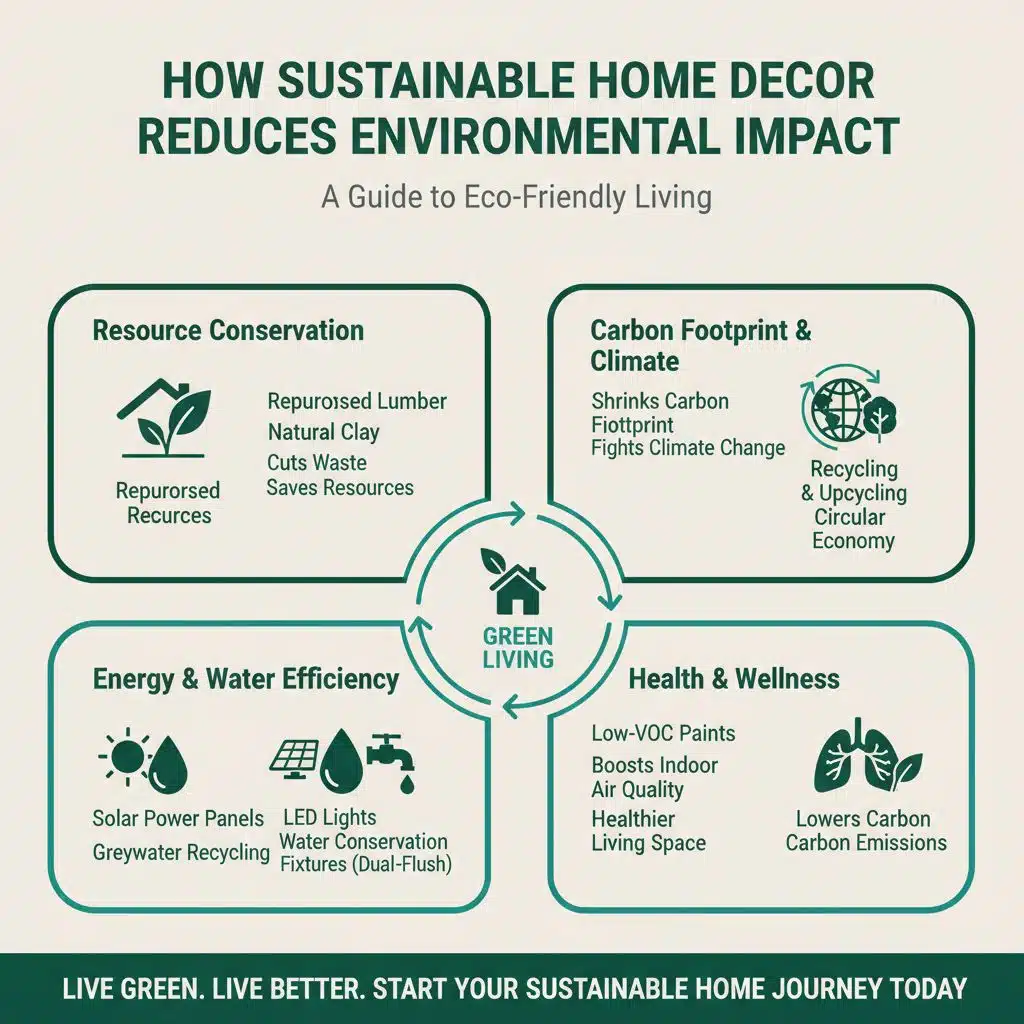
Sustainable design cuts waste and saves resources. It uses repurposed lumber and natural clay from deconstruction. Those choices shrink a home’s carbon footprint and fight climate change.
Recycling, upcycling, and waste reduction feed a circular economy.
Solar power panels and greywater recycling trim energy use. LED lights and low-VOC paints boost indoor air quality. Water conservation fixtures, like dual-flush toilets, cut water waste.
Homeowners lower carbon emissions and enjoy a healthier space.
Why Should You Choose Sustainable Materials in Home Decor?
Eco-friendly items like bamboo, reclaimed wood, and recycled glass slash waste and cut carbon footprints. Acacia wood, mango wood, MDF, and natural clay lower the impact on the environment.
Organic cotton, hemp, linen, and wool make healthy fabrics for pillows and throws. Low-VOC paints reduce fumes and guard indoor air quality. These materials save forests and water, so future families enjoy clean, green homes.
Selecting second-hand furniture or sustainable furniture marked by the Forest Stewardship Council backs fair trade and ethical sourcing. Energy-efficient appliances and smart lighting trim electric bills and shrink your energy footprint.
Biophilic design and natural light add life to rooms and cut energy use. Green living can lift mood, ease allergies, and keep kids and pets safe. This approach pairs timeless design with a circular economy model.
How Can You Ensure Ethical Sourcing in Interior Design?
Interior designers build green homes with ethical sourcing. They pick reclaimed wood and organic cotton, or recycled glass with FSC Certification. This step cuts carbon footprint and backs fair trade.
Aari – Beyond Decor pays Rajasthani artisans to weave natural fiber rugs and stitch cotton throws, so local communities thrive and fast fashion slows.
Low-VOC paints, non-toxic materials and renewable resources must pass a Life Cycle Assessment. Consumers scan labels for Energy Star or BIFMA e3 data on energy use. They ask about fair wages and no child labor.
Forget flimsy mdf cabinets that fall apart like a house of cards. Choose suppliers who use post-consumer recycled materials, greywater recycling systems or energy-efficient lighting to back true corporate sustainability.
How Does Supporting Local and Artisan Craftsmanship Benefit You?
Skilled artisans shape reclaimed wood into warm shelves, clay into artful bowls, and plush natural fiber rugs. Every sale empowers these makers, fuels economic growth, and protects cultural heritage.
It also shrinks your carbon footprint, as shorter trips cut transport emissions. Craftsmen use hand saws, chisels, and water-based dyes that keep your indoor air quality healthy.
High-grade joinery and durable natural materials mean your pieces last for decades. Shops often work with bamboo panels and reclaimed stone, tapping renewable resources. You gain a meaningful decor item that mass-produced goods can’t match.
Local furniture shops thrive and your town enjoys community development. This choice blends sustainable home decor with real stories from local artisans.
Why Are Durable and Long-Lasting Products Important in Home Decor?
Strong pieces made from sustainable materials last for years, cutting down on trips to the landfill. A sofa built with reclaimed wood and renewable resources can survive a decade or more.
Mass-produced items often wear out after two to three years, and they drive up waste and carbon footprint. Natural fibers and low-voc paints also resist wear, keeping color and texture fresh.
Quality decor may cost more at first, but it saves money in the long haul. You pay once, then avoid constant replacements. Good choices align with a circular economy, as they curb resource consumption and carbon emissions.
Timeless design stops you chasing trends every season; it feels right year after year.
How to Incorporate Upcycled and Recycled Elements in Your Home?
You can breathe new life into old items with simple hacks. Sustainable home decor feels good and shrinks your carbon footprint.
- Source reclaimed wood pieces from salvage yards or decommissioned barns to craft shelves or coffee tables. Each board carries history and cuts carbon emissions for lasting style.
- Turn recycled glass bottles into pendant lamps or vases, and swap in energy-efficient lighting. Shards of green or amber glass shine under LED bulbs, and they curb waste.
- Install cork insulation made from leftover bark or recycled cellulose behind drywall or under a natural fiber rug. It traps heat in winter, cool air in summer, and muffles noise.
- DIY throw pillows from upcycled organic cotton tees or scrap fabric using a basic sewing machine. Bright patterns on the couch cut landfill buildup and add a splash of color.
- Repurpose wooden crates as floating shelves or bedside tables to free up garage space. These storage bins lend a rustic touch and champion sustainable practices.
- Set up a home compost bin in your kitchen for vegetable peels and coffee grounds. It slashes food waste, feeds your garden, and mirrors a circular economy.
- Frame old maps or vintage textile swatches in salvaged metal or wood frames to spark conversation. Each piece tells a story and showcases recycled materials.
How Does Sustainable Decor Enhance Health and Wellness at Home?
Low-VOC paints boost indoor air quality. Non-toxic finishes block harmful compounds. Organic cotton drapes use natural fibers to cut allergens. Natural fiber rugs soften floors while reducing indoor air pollution.
Sustainable home decor uses recycled glass and renewable resources to create safer surfaces.
Skylight panels flood rooms with natural light and reduce energy needs. Enhanced ventilation moves stale air outside. Pothos, snake plants, peace lilies filter pollutants. Biophilic design lifts mood and trims stress.
This plan nurtures wellness for both current and future generations.
How Does Sustainable Design Align with Minimalist and Timeless Trends?
Sustainable home decor and minimalism share the same roots. They favor durable, high-quality pieces that last decades. A reclaimed wood sideboard, recycled glass vase or organic cotton throw anchors a clutter-free zone.
Such items cut waste, boost green living and shrink your carbon footprint. Timeless design also trims redecorating costs and new purchases.
A smart thermostat and solar panels drive energy efficiency in these rooms. Ample natural light and energy-efficient lighting replace harsh artificial lighting, creating a healthy home environment.
Handcrafted accents add warmth, while non-toxic finishes improve indoor air quality. The mix of biophilic design and renewable resources supports a circular economy.
How Can Efficient Design Features Save Energy?

Careful window placement, proper insulation and cross ventilation slash heating and cooling loads. Passive design strategies, such as orienting a home toward the sun and adding vents, keep air moving and cut energy needs by up to 30 percent.
LED bulbs use 75 percent less power than old bulbs and they last 25 times longer. Energy-efficient appliances and a smart thermostat trim utility bills and carbon emissions. Low-flow faucets, dual-flush toilets and greywater recycling systems save water.
A greener interior can drop a household’s carbon footprint and shrink utility costs.
What Makes Sustainable Decor Unique and Personalized?
Household spaces gain soul from reclaimed wood shelves crafted by local artisans. Each handcrafted item reflects a maker’s culture and skill. Recycled glass vases and natural fiber rugs tell a home’s story in vivid detail.
Upcycled textiles, like algae-based textiles or organic cotton throws, deliver bright color and texture, inviting guests to start a conversation.
Creative expression takes center stage in sustainable home decor. Owners pair second-hand furniture with glassware rescued from old factories to share personal values. This approach supports mindful consumption, cuts carbon emissions, and feeds a circular economy.
It sparks fresh ideas while it helps build a healthy home environment.
How Does Sustainable Home Decor Adapt to Changing Consumer Preferences?
Consumers shift their taste toward green furniture. They seek living rooms with reclaimed wood tables, recycled glass lamps, and low-voc paints on walls. They check a carbon tracker or impact study to cut their carbon footprint.
They trust brands that share renewable materials sources and ingredient lists. Rising interest in mindful consumption shapes market trends.
Brands update catalogs each season to meet new demands. They add organic cotton throws, natural fiber rugs, and living plant corners that align with biophilic design. They show green standard mark certificates or Energy Star tags on lighting.
They pack in smart home systems, dual-flush toilets, greywater recycling systems. Market moves fast as tastes evolve.
How Is Innovation Driven by Sustainable Interior Design?
Sustainable interior design sparks new ideas. Designers mix reclaimed wood with recycled glass and bamboo composites, like chefs blending spices. They test algae-based textiles and natural fiber rugs to trim carbon footprint, enhance indoor air quality.
Smart home systems nudge homeowners to dim lights, cut energy consumption. Innovative recycling techniques turn packing foam into plant pots.
Sustainable home decor draws on renewable resources. Biodegradable materials dress furniture and trim waste. Packaging shifts to compostable wraps, ditching plastic boxes. Circular economy principles guide each choice, from dual-flush toilets to greywater recycling systems.
Natural light plans team with energy-efficient lighting to slash energy bills. Local artisans craft pieces that sing of green living.
How Does Sustainable Design Reduce Manufacturing Waste?
Factories wrap goods in biodegradable packaging to cut delivery waste, they swap plastic for fiber that breaks down quickly. Design teams choose reclaimed wood and recycled glass, and cut waste in production.
They apply lean manufacturing steps and use life cycle assessment tools to track material flow. Some brands link each item to the One Product, One Tree drive to offset carbon footprint.
Circular economy plans push recycling and upcycling, with fresh ideas for low-voc paints and renewable materials. Companies build waste reduction tactics into each phase of the supply chain, to save resources and slash trash.
CNC machine shops and 3D printing labs help craft parts with zero scrap.
What Is the Role of Sustainable Decor in a Circular Economy?
Sustainable decor drives a circular economy by cutting waste and boosting reuse. Roughly 9 million tons of furniture hit U.S. landfills each year. Upcycled chairs and reclaimed wood shelves keep products in use.
Designers mix recycled glass with biodegradable materials. They run lifecycle assessments to boost future recyclability. This method slashes carbon footprint by up to 70 percent compared to linear models.
It keeps natural resources in rotation and boosts green living.
Local artisans in Portland or Austin shape tables from salvaged beams. Craftspeople apply organic cotton fabrics and low-voc paints. Short supply chains chop carbon emissions and energy consumption.
Some brands add energy-efficient lighting to show circular design in action. Makers embed smart technology in sustainable furniture. Biophilic design flows inside, improving indoor air quality and health.
These steps turn waste reduction into a full cycle of reuse.
Why Does Sustainable Home Decor Appeal to Eco-Conscious Homeowners?
Eco-conscious homeowners pick sustainable home decor that reflects their green values, keeping nature front and center. They favor items made with reclaimed wood, organic cotton, recycled glass and biodegradable materials.
Low-voc paints and non-toxic finishes keep indoor air clean, boosting wellness. Ethical labels help buyers support local artisans.
Carbon footprint drops when a house uses energy-efficient lighting, dual-flush toilets and greywater recycling systems. Natural fiber rugs and plant-based design elements connect rooms to outdoor calm.
Buyers enjoy decor that does good, it feels as fresh as wild air.
How Can Sustainable Features Increase Property Value?
Homes with eco-friendly features attract buyers and boost property value. Energy efficient appliances and fixtures lower utility costs and enhance marketability. Insulation upgrades cut carbon emissions and improve energy management.
Greywater recycling systems and dual flush toilets curb water wasted in daily use. Smart technology paired with energy efficient lighting curbs energy consumption.
Durable elements like reclaimed wood and recycled glass keep a timeless design. Natural fiber rugs and non toxic, low VOC paints improve the indoor environment. Renewable materials, including organic cotton and algae based textiles, show commitment to sustainable interior design.
Green certifications signal environmental responsibility and boost resale price.
How Does Sustainable Decor Encourage Biophilic Design?
Sustainable decor invites plant life and raw materials into your rooms. Reclaimed wood and recycled glass craft natural focal points. Cotton textiles add soft textures. Paints cut harmful volatile organic compounds.
Rugs boost cozy comfort. Earthy tones echo forest floors and riverbeds.
Indoor plants, like ferns or succulents, improve indoor air quality and cut carbon emissions. A green corner brightens moods and lowers stress. More daylight and energy-efficient lighting connect you to daily cycles.
Sustainable furniture from local artisans blends style with green living. These biophilic elements support mental health and boost productivity. This approach links to a circular economy by favoring recycled materials and reducing waste.
How Does Sustainable Home Decor Promote a Responsible Lifestyle?
Choosing green decor shows your values. You pick items that cut waste. Reclaimed wood and recycled glass act as art and resource savers. Organic cotton throws, low-voc paints, and non-toxic materials keep air clean.
You trim your carbon footprint and curb carbon emissions each day.
Supporting local artisans drives ethical living. You invest in renewable materials and eco-friendly furniture to feed a circular economy. Greywater recycling systems and low-flow toilets curb water waste.
Home automation and LED bulbs cut energy consumption. This eco-minded setup inspires others and nurtures green living.
Takeaways
Homes shine with green style and bold ideas. This path slashes carbon footprint. Reclaimed wood slabs and recycled glass vessels shape your style. Biophilic design touches bring calm to every room.
Energy-efficient lighting and non-toxic paints keep your air pure. Handcrafted finds boost local craft and spark stories. Built to last, these pieces cut waste and raise home value.
You shape a happy house and a healthy planet side by side.
FAQs on Why Sustainable Home Decor Is the Future of Interior Design
1. What makes sustainable home decor the future of interior design?
It cuts carbon emissions, trades non-renewable resources for renewable resources, uses recycled materials, boosts energy efficiency, and supports green living.
2. How does using reclaimed wood and recycled glass help?
It cuts waste, tones down environmental impact, backs circular economy, and these materials last with a timeless design.
3. Can I get style and health with non-toxic materials?
Yes, pick sustainable furniture from local artisans, or second-hand furniture. Add organic cotton cushions, eco fabrics, natural fiber rugs, and low-voc paints. This avoids flame retardants, boosts indoor air quality, and supports a healthy home environment.
4. How can I save water in eco-friendly decor?
You can fit water-saving toilets, add water reuse systems for plants, and cut water waste.
5. Is biophilic design part of green building materials?
Yes, bring in natural light, use natural materials, recycled materials, and you get a living space that feels like the outdoors.
6. Will smart technology boost energy savings?
Yes, energy-efficient lighting, smart thermostats, and smart technology track energy consumption, cut bills, and shrink your carbon footprint.