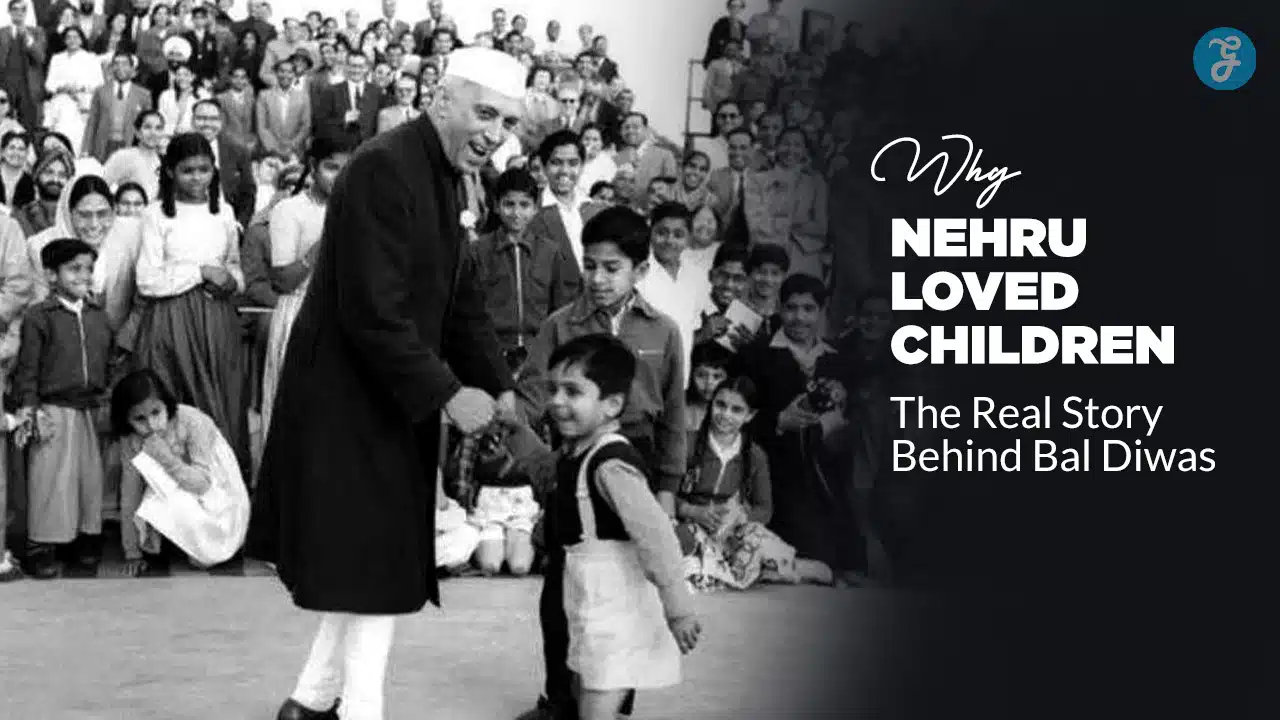
You know what? We’ve all wondered at some point how to inspire kids to dream bigger. Maybe you’re searching for ways to help children feel special and cared for. Today is the 136th birth anniversary of Jawaharlal Nehru. Happy birthday!
Here’s something beautiful: Jawaharlal Nehru earned the nickname “Chacha Nehru” because he truly believed that every child is precious, full of potential, and deserving of love.
This blog will show you exactly why Nehru cherished children so deeply, how his vision shaped Bal Diwas, and what his famous red rose symbolized.
Let’s explore together what made Chacha Nehru’s connection with children so special.
Key Takeaways
- More than 50,000 schoolchildren celebrated the first official Children’s Day at Delhi’s National Stadium in 1954. This shows how much Nehru meant to India’s kids.
- Nehru founded the Children’s Film Society India in 1955 to create movies that would educate and entertain young minds across the country.
- He wore a red rose every day after 1936 in memory of his wife, Kamala Nehru, but it also came to represent his love for children’s innocence and hope.
- Children’s Day officially became a national observance in 1957, and after Nehru’s death in 1964, November 14th was chosen as the permanent date to honor his legacy.
- Schools celebrate Bal Diwas with cultural programs, games, and speeches, reminding everyone that children deserve quality education regardless of their background.
Nehru’s Vision for Children
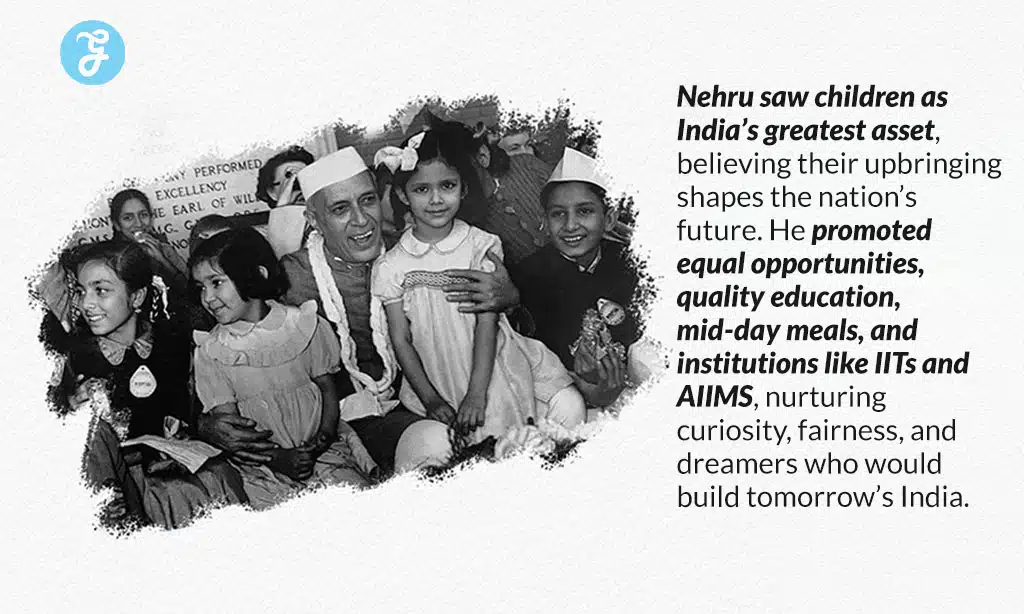
Nehru saw kids as India’s greatest treasure. He believed that how we raise them today decides what kind of country we’ll have tomorrow.
Why did Nehru believe children are the future of India?
Nehru had a crystal-clear belief: children hold the key to India’s destiny.
He once said, “The children of today will make the India of tomorrow. The way we bring them up will determine the future of the country.” He compared kids to flower buds that need sunshine, water, and care to bloom into strong citizens.
In a 1958 interview with Ram Narayan Chaudhary, Nehru explained that he had always felt that children were not just cute faces but the actual builders of the nation. According to M. O. Mathai, Nehru’s secretary, “Nehru saw in their innocent faces and sparkling eyes the future of India.”
Nehru was convinced that no amount of money spent on children and their mothers was too much, and that it was a sound investment for the future.
He didn’t just talk about it either. Boys and girls from every village, city, rich family, or poor household deserved the same chances to learn and grow. That’s why he pushed for policies that made education accessible to all, not just a privileged few.
How did Nehru advocate for quality education and values?
Education was Nehru’s favorite tool for change. He launched the Mid-Day Meal Scheme in 1953 to make sure hungry kids could focus on learning, not empty stomachs.
His vision went beyond classrooms. Nehru founded world-class institutions like the Indian Institutes of Technology, the All India Institute of Medical Sciences, and the Indian Institutes of Management. These institutions aimed to stimulate scientific thinking and creativity, not merely memorization.
He established the National Children’s Fund to support equal access to schools for children from disadvantaged backgrounds. For Nehru, education meant teaching fairness, curiosity, health, and respect for all faiths, not just reading textbooks.
Let’s look at some of the major steps he took:
| Initiative | Year Launched | Purpose |
|---|---|---|
| Mid-Day Meal Scheme | 1953 | Provided free meals so kids could attend school |
| Children’s Film Society India | 1955 | Created educational movies for children |
| IITs & AIIMS | 1950s | Built world-class institutions for higher learning |
Nehru wanted every child to think, question, and chase their dreams, no matter how big or small. He believed that giving kids wings to fly high was the same as giving India a chance to soar.
The Significance of the Red Rose
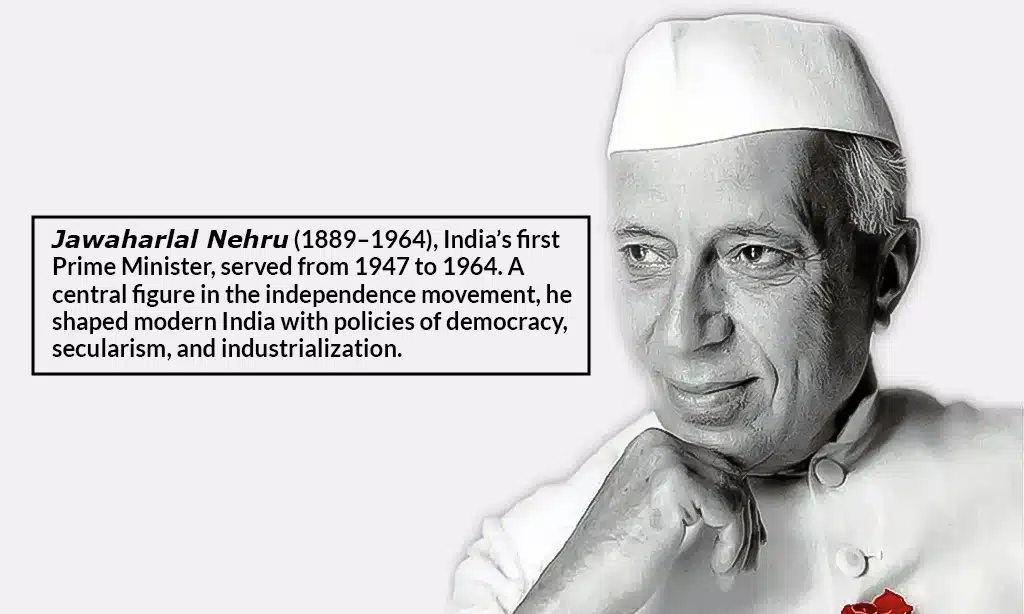
You’ve probably seen pictures of Nehru with that signature red rose pinned to his coat. But have you ever wondered why? That little flower carried a powerful message about childhood and hope.
What does the red rose symbolize in relation to children?
The red rose wasn’t just a fashion choice for Nehru. It stood for innocence, freshness, and the purity he saw in every child’s face.
According to records from the Indian National Congress, Nehru pinned a fresh red rose to his coat every day after 1936 as a reminder of his life with his wife, Kamala Nehru, who passed away in 1938 after a prolonged illness. The tradition became inseparable from his identity.
But here’s the beautiful part: that rose also symbolized his affection for children. He frequently equated children to flower buds in a garden, requiring careful nurturing to blossom into future Indian citizens.
Some stories say that a young girl gifted him a rose during a rally, and he decided to carry one from that day forward. Whatever the origin, the rose became a symbol that everyone recognized.
When children saw that iconic red flower pinned close to his heart, they knew Chacha Nehru valued them as much as that delicate bloom.
Why Nehru Was Called Chacha Nehru
The name “Chacha Nehru” wasn’t given by adults at a political rally. Kids gave him that title because he genuinely made them feel loved.
How did Nehru show his affectionate bond with children?
Nehru’s love for children showed in his actions, not just his words. He laughed with them, played games, and treated each child like they mattered.
He would pause big political rallies if a child wanted to talk or needed help. Storytelling was one of his favorite ways to spend time with kids. He could spin tales for hours, making learning feel like the most fun adventure.
Here’s what made Nehru different:
- He respected every child the same way, whether they came from a wealthy city family or a small village.
- He encouraged children to be curious, ask questions, and pursue their dreams with enthusiasm.
- He encouraged them to be kind to others and believe in fairness.
According to Britannica, children affectionately called him “Chacha” (Uncle) Nehru, and their faith in him was a constant source of happiness for him. He wanted to “create an atmosphere in the country where the attention is constantly focused on children and their welfare.”
One popular explanation is that Nehru was very close to Mahatma Gandhi, who was known as “Bapu” (father of the nation). Because Gandhi was like an elder brother to Nehru, people began calling Nehru “Chacha,” meaning uncle.
Children’s Day and Its Legacy
Children’s Day, or Bal Diwas, is more than just a school holiday. It’s a day to remember Nehru’s dream of a country where every child can flourish.
How is Children’s Day celebrated to honor Nehru’s love for children?
Every year on November 14th, schools across India burst with energy and joy. Teachers and students swap roles for the day, creating laughter and fresh perspectives. Skits, dances, singing, and drawing competitions fill the auditoriums.
Children share speeches about child welfare and Nehru’s vision for education. Schools organize essay contests, storytelling sessions, and art workshops focused on children’s rights. Some institutions host talent shows where kids showcase singing, dancing, or acting skills.
Health camps and free checkups line up in schoolyards. Community centers buzz with activities led by cultural organizations and NGOs. Families go for picnics or play games at home to appreciate childhood together.
Here’s what a typical Children’s Day celebration includes:
| Activity Type | Examples |
|---|---|
| School Programs | Cultural performances, role reversals, games |
| Competitions | Speech contests, drawing, essay writing |
| Community Events | Rallies, fairs, storytelling, health checkups |
| Home Celebrations | Outings, picnics, quality family time |
Groups highlight the rights of children through fun rallies filled with cheers, reminding everyone that each child deserves safety, care, and a chance to grow strong in mind and body. Teachers often perform special acts or distribute sweets to make the day memorable.
Many schools allow kids to ditch their uniforms and wear party clothes. It’s a joyous occasion that celebrates the innocence and potential of childhood.
Takeaways
Jawaharlal Nehru’s love for children continues to light up Bal Diwas celebrations today.
He saw each child as a builder of India’s future, brimming with ideas and hope. His big dream was simple yet powerful: give every boy and girl the chance to learn, play, and grow strong.
Today on Children’s Day, families across the country remember his warmth and embrace his faith in young hearts to shape tomorrow.
That’s why Nehru stays close to kids’ dreams every single year.
FAQs on Jawaharlal Nehru
1. Why did Nehru love children so much?
Nehru saw children as the living embodiment of India’s future, famously saying, “The children of today will make the India of tomorrow.” He believed their potential was the nation’s greatest asset and invested his time in listening to them. His affection was genuine, earning him the title “Chacha Nehru” or Uncle Nehru.
2. What is Bal Diwas and how is it connected to Nehru?
Bal Diwas is India’s Children’s Day, celebrated on November 14th to honor Nehru’s birthday and his immense love for children. After his death in 1964, India shifted its Children’s Day celebration to this date as a national tribute.
3. Did Nehru actually spend time with children or was it just politics?
He truly enjoyed being around children, and the iconic rose he wore on his jacket was often a gift from one of them.
4. What did Nehru do to help children in India?
Nehru championed the establishment of institutions like the All India Institute of Medical Sciences (AIIMS) and the Indian Institutes of Technology (IITs) to provide world-class healthcare and education. He also pushed for free primary education and nutrition programs, such as the Midday Meal Scheme, to ensure every child had a chance to thrive.