

Home offices no longer sit on the margins of working life. They have become a core work infrastructure. As remote and hybrid arrangements mature, homes now act as satellite offices, meeting rooms, and creative studios. That is why home offices will keep evolving in 2026 rather than fading as a pandemic-era experiment.
Employees expect flexibility, employers chase productivity, and technology keeps reshaping what “a desk job” looks like. At the same time, architects, interior designers, and real-estate developers all treat the home office as a permanent feature of the modern home. Against that backdrop, understanding why home offices will keep evolving in 2026 helps workers, companies, and designers plan smarter spaces and smarter policies.
Why Home Offices Will Keep Evolving in 2026: From Temporary Fix to Core Infrastructure
In many economies, remote work has settled at a much higher baseline than before the pandemic. The share of people teleworking for pay remains elevated and continues to edge upward. Global estimates show that roughly a quarter to a third of workers now perform at least some of their duties from home. In remote-capable roles, a large majority expect flexibility as a standard condition of employment.
For employers, remote and hybrid work began as a continuity strategy and has now evolved into a core retention tactic. People switch jobs more easily when work can follow them home. That reality makes the home office more than a temporary setup—it becomes a long-term investment in employability.
Why Home Offices Will Keep Evolving in 2026 for Hybrid and Remote Workers
A clear gap persists between what many employers want and what many employees prefer. Research shows more companies plan to increase the required in-office days by 2026. Yet, workers with remote-capable jobs still place a high value on having at least some home-based workdays. Many say they would reconsider roles that eliminate work-from-home options.
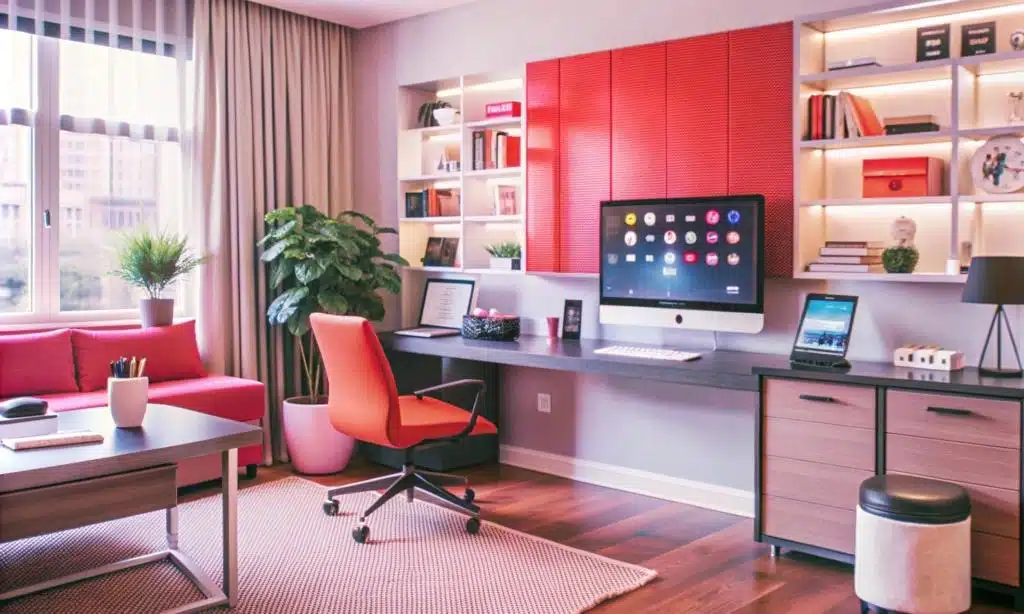
This tug-of-war is one of the biggest reasons why home offices will keep evolving in 2026. Even as firms tighten return-to-office requirements, employees continue to invest in better home setups—assuming flexible work will remain a part of their career paths. The result is a growing market for high-quality furniture, better lighting, enhanced connectivity, and purpose-built home office spaces designed for long-term use.
Home Office Trends 2026: Smart, Connected and AI-Assisted Spaces
Technology plays a critical role in shaping home office trends. Artificial intelligence, automation, and advanced collaboration tools are now embedded in everyday work. Many workers save hours each week thanks to generative AI, and the gains are most visible in digital-first home work environments.
As a result, home offices function more like smart studios that support high-quality video calls, cloud-based workflows, and continuous collaboration. This shift makes home office upgrades essential for productivity.
AI-Powered Home Offices Will Keep Evolving in 2026
AI copilots draft emails, summarize meetings, generate code, and support research tasks. Other tools handle scheduling, task prioritization, and document review. This reshapes how people spend their time in home offices. Routine tasks shift to AI assistance, while human focus moves to decision-making, creative thinking, and relationship-driven work.
These changes require supportive environments: multiple monitors, reliable connectivity, strong bandwidth, and high-quality cameras and microphones. As AI becomes more deeply integrated into daily workflows, home offices will keep evolving in 2026 to handle heavier digital demands. Workers invest more in cable management, power access, acoustic treatment, and furniture designed for long periods of knowledge work.
Smart Home Office Technology and Collaboration Tools
Smart displays and integrated home office devices are becoming standard. Workers use these tools to manage lighting, security, video calls, and environmental controls. Noise-cancelling headsets, room-scale microphones, and interactive digital boards influence workstation layouts and furniture placement.
Desks are often positioned to optimize natural light without causing on-camera glare. Backgrounds are curated to present a professional image. Home office trends for 2026 point toward spaces where hardware, software, and interior design merge to create seamless, connected work environments.
Design-Led Home Office Trends 2026: From Makeshift Corners to Multi-Purpose Rooms
Improvised home offices—such as working from kitchen counters or living room sofas—are becoming outdated. Today’s home office trends highlight bold design choices, integrated storage, and spaces that feel calming and residential rather than corporate.
Workers spend more time in these rooms, so they want them to support focus, comfort and identity. Designers now view home offices as essential extensions of the home’s living environment.
Future of Home Offices: Ergonomics, Health and “Quiet Tech”
Ergonomics now sits at the heart of the future of home offices. Adjustable chairs, sit-stand desks, eye-level monitors, and thoughtful lighting have become the gold standard. Accessories like footrests, monitor arms, and external keyboards refine comfort and reduce physical strain.
“Quiet tech” is also rising in popularity. Low-noise purifiers, fans, and cooling systems help maintain comfort without distracting sounds. These upgrades support deep work, reduce fatigue, and reinforce the home office as a long-term workspace.
Biophilic and Sustainable Home Office Design
Biophilic design—bringing nature into the workspace—drives many home office trends in 2026. Natural materials, indoor plants, warm wood textures, and sunlight-filled layouts improve mood, reduce stress, and enhance creativity.
Sustainability also guides purchasing decisions. Homeowners seek low-VOC paints, energy-efficient lighting, and eco-friendly furniture. Designers favor materials with a smaller environmental footprint and pieces that can adapt to different uses if work routines change.
Not every household has space for a dedicated office. This challenge fuels innovation in compact and multi-use designs: fold-away desks, wall-mounted stations, pocket doors, and cabinetry that hides technology after work hours.
In larger homes, dual home offices are increasingly common as both partners work remotely. Space-efficient layouts allow a single room to shift roles throughout the day—from office to guest room to family space. These solutions underscore why home offices will keep evolving in 2026: work patterns change, and spaces must adapt without major renovations.
The Economics Behind Home Office Trends 2026
Economic factors play a major role in the evolution of home offices. Commuting remains costly, both in time and money. Office leases impose significant expenses on companies. Remote and hybrid arrangements help manage these pressures.
In many roles, hybrid schedules serve as a balance between organizational needs and employee preferences. When workers split time between home and the office, a well-equipped home office becomes a core part of the overall workplace ecosystem.
Employer Policies, Remote Work Trends, and the 2026 Tipping Point
Reports suggest that by 2026, more companies will increase on-site requirements, sometimes mandating full-week attendance. Yet remote work remains a major factor in employment decisions. Many workers say they would reconsider roles that eliminate home working.
This tension creates what some analysts describe as a “flexibility tipping point.” Workers continue upgrading home offices to secure future job transitions. Companies offer equipment stipends, home office guidance, and productivity tools to retain staff. Home offices evolve further as a result of these competing pressures.
Home Offices, Real Estate, and Residential Upgrades
Home offices influence not only individual homes but also broader real estate trends. Homeowners invest in soundproofing, built-in shelving, underused room conversions, and backyard work studios.
Commercial real estate is also shifting. Some developers propose converting underused office buildings into housing to reflect reduced demand for daily office attendance. As more households treat home offices as essential living spaces, residential markets adjust accordingly. These changes reinforce long-term hybrid and remote work trends.
Future of Home Offices Across Regions and Demographics
Home office trends differ across countries. Workers in English-speaking regions often enjoy more remote days than their peers elsewhere. In cities where commuting times are long, demand for home-based work remains especially strong.
In other regions, cultural norms favor office presence. Housing constraints and labor regulations also shape remote work adoption. Even so, home offices continue evolving everywhere—only their forms differ.
Home Offices Will Keep Evolving in 2026 Across Different Countries
Commuting patterns, housing stock, and local infrastructure determine how home offices look and function. Dense cities with limited space often adopt compact setups. Suburban or rural areas may mix home offices with co-working hubs.
Income levels also influence remote work. Higher-income, knowledge-based professions are more likely to offer flexible work, enabling larger or more advanced home office setups. Designers and policymakers face the challenge of ensuring inclusive access to flexible work environments.
Caregivers, Accessibility, and Inclusive Home Offices
Caregivers, parents, and people with disabilities often rely heavily on flexible work. However, they face specific challenges at home, from accessibility needs to interruptions. Inclusive design addresses these gaps through step-free layouts, safe mobility spaces, proper lighting, noise control, and flexible storage.
Mental health also remains a central concern. Home offices that allow separation between work and personal life—through zoning, design cues, or adaptable furniture—help create healthier routines. As organizations refine flexible work policies, inclusive home office design becomes even more essential.
How to Future-Proof Your Home Office for 2026
Individuals can take meaningful steps to keep their home office aligned with evolving work trends. These improvements improve productivity and well-being while ensuring the space remains relevant.
Practical Steps to Align with Home Office Trends 2026
Start with ergonomics. A supportive chair, quality desk, and eye-level monitor setup prevent long-term strain. Accessories like footrests and external keyboards enhance comfort.
Next, strengthen connectivity. A reliable router, wired connections, and high bandwidth support cloud-based tools, video calls, and AI-driven workflows. Backup mobile hotspots ensure continuity during outages.
Create work zones within the home. Even small visual cues—such as rugs, screens, or lighting changes—signal the start and end of the workday. This separation supports mental well-being.
Improve acoustics and lighting. Soft furnishings reduce echo. Adjustable lamps improve focus and on-camera clarity. These small changes create a more professional environment.
Finally, optimize storage. Closed cabinets hide clutter, support concentration, and make it easier to “end the day” visually.
What Employers and Designers Should Do Next
Employers must refine policies around hybrid work. Clear expectations, equipment support, IT kits, AI tool training, and ergonomic guidance help staff remain productive.
For designers, the home office has become a permanent part of the modern home. Flexible layouts, tech-ready wiring, sustainable materials, and natural light create spaces that adapt to changing work tools and routines.
Conclusion: Why Home Offices Will Keep Evolving in 2026
The evolution of home offices is no longer a temporary trend. It reflects bigger changes in how people work, where they live, and how technology integrates into everyday life. That is why home offices will keep evolving in 2026, driven by hybrid work, AI tools, shifting real estate patterns, and rising expectations for healthier, more efficient living spaces.
Workers seek flexibility and balance. Employers seek performance and stability. Cities and housing markets adapt to new demands. Designers rethink homes as multi-functional ecosystems. The home office sits at the center of these forces. Investing in it—practically, creatively, and sustainably—ensures readiness for whatever the next wave of work brings.































