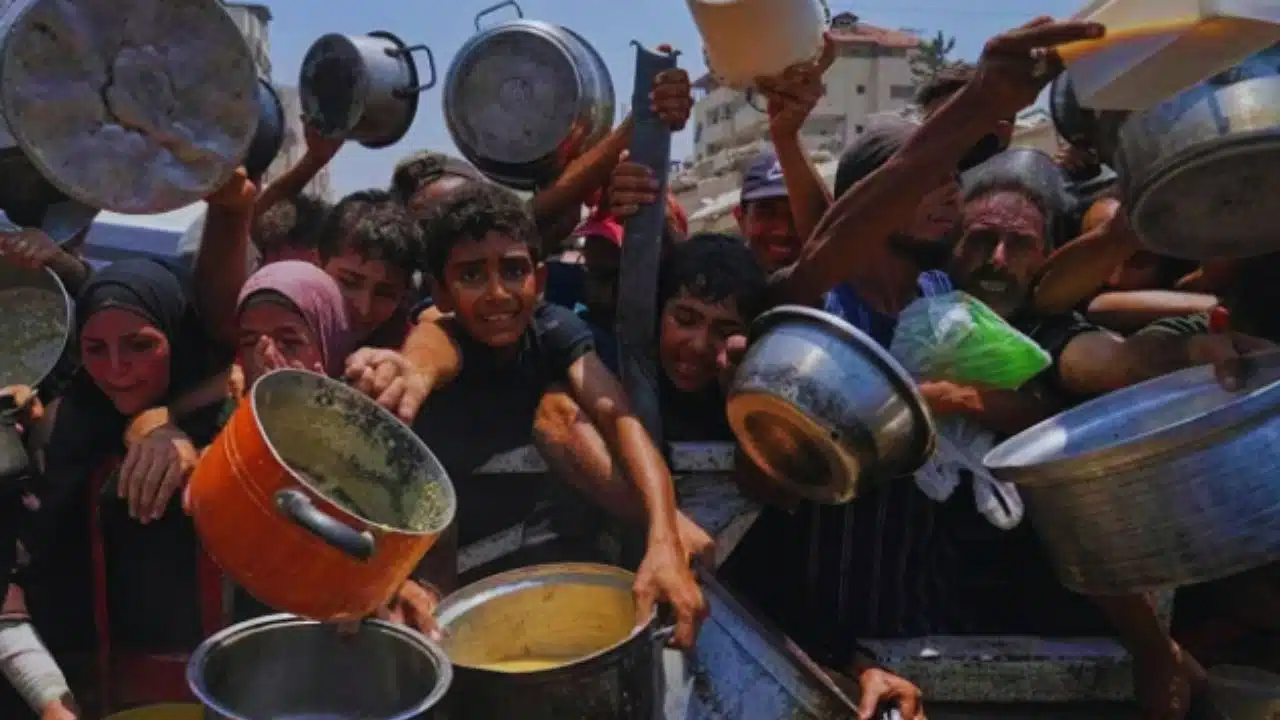
The United States is stepping up its involvement in Gaza’s growing humanitarian emergency. On Friday, US Special Envoy Steve Witkoff is scheduled to visit the war-torn enclave to assess the deteriorating conditions on the ground, particularly focusing on the distribution of food aid, according to an official statement by White House Press Secretary Karoline Leavitt.
Witkoff will be joined by US Ambassador to Israel Mike Huckabee. The delegation plans to visit food distribution centers, observe the situation firsthand, and develop an actionable plan to increase and secure food deliveries. Additionally, they aim to engage with local Palestinians affected by the crisis to understand their needs directly.
Leavitt stated that the envoy’s trip is an extension of diplomatic efforts aimed at addressing the worsening humanitarian conditions and comes a day after Witkoff held a meeting with Israeli Prime Minister Benjamin Netanyahu. Their discussion, according to the press secretary, focused on “complex dilemmas” regarding humanitarian aid flow, border logistics, and potential security solutions for safe aid delivery.
Deadly Chaos Near Aid Trucks as Gazans Try to Feed Their Families
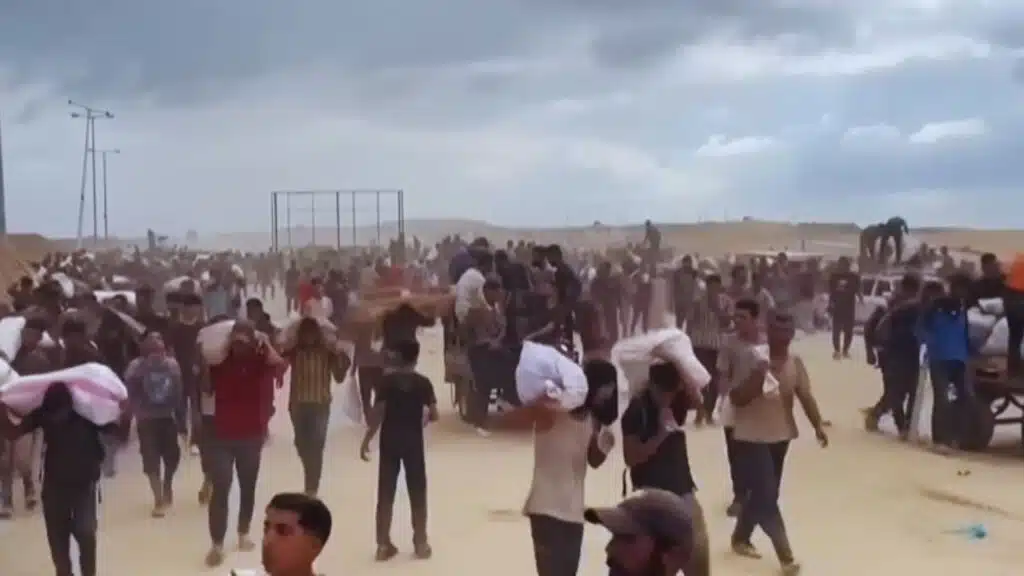
The visit comes amid harrowing scenes of violence, death, and desperation in Gaza. On Wednesday, dozens of Palestinians were killed and hundreds injured while attempting to receive food aid at the Zikim crossing in northern Gaza.
According to Gaza’s Civil Defence agency, which is overseen by Hamas, Israeli forces opened fire on a large crowd gathered near aid lorries. Footage shared by local journalists shows residents using carts to carry dead bodies and severely wounded individuals to al-Shifa hospital in Gaza City.
The hospital’s director, Dr. Mohammed Abu Salmiya, told the BBC that his facility received 54 bodies and treated 412 injured people in the aftermath of the Zikim incident. Other hospitals, including the al-Saraya field hospital and al-Quds Hospital, reported six additional deaths and 274 wounded from the same event.
Despite these claims, the Israel Defense Forces (IDF) stated that its troops only fired warning shots, not directed at the crowd, in response to what it described as a “potential threat.” An initial IDF statement said it was not aware of any casualties caused by its actions and emphasized that the matter remains under investigation.
Eyewitness Accounts Paint Grim Picture of Desperation and Loss
Local residents described scenes of utter desperation. One man, interviewed by a freelance journalist for the BBC, recounted how a teenage boy from his neighborhood was killed by a gunshot to the head while trying to collect flour. “He was just trying to bring food for his family. They brought him back in the flour bag,” the man said, visibly shaken.
Another victim, Abu Taha al-Kafarneh, a father of two and the sole breadwinner for his family, was also killed. A neighbor described him as a man who simply wanted to bring home a bag of flour, not to sell or profit from it. “He wasn’t looting. He just wanted to feed his children. What was his crime?” the neighbor asked.
The Zikim incident is not isolated. On the same day, six Palestinians were killed near another aid center operated by the Gaza Humanitarian Foundation (GHF) in Rafah, according to hospital sources. The IDF again said it had fired warning shots but claimed they were aimed hundreds of meters away from civilians and only at groups it deemed suspicious.
Death Toll from Malnutrition Reaches 159, Including 90 Children
In a separate update on Thursday, Gaza’s health ministry reported that two additional people had died of malnutrition, bringing the total number of starvation-related deaths to 159, including 90 children, since the beginning of the conflict in October 2023.
The escalating food crisis has become a central concern for global humanitarian organizations. On Tuesday, UN-backed food security experts issued a chilling warning: “The worst-case scenario of famine is currently playing out in Gaza.” The report emphasized that 2.1 million people in the strip are now at imminent risk of starvation.
UN Accuses Israel of Creating Man-Made Starvation
The United Nations humanitarian agencies, including the World Food Programme (WFP) and OCHA, have accused Israel of restricting the flow of essential supplies into Gaza. While Israel insists that it is not blocking aid and denies any presence of widespread starvation, the UN has directly contradicted this, labeling the hunger crisis as a “man-made famine”.
According to Israel, it has no restriction on aid convoys entering Gaza. Four days ago, the Israeli government introduced “tactical pauses” in military activity in three areas and opened designated humanitarian corridors to support aid distribution.
The IDF also announced it airdropped 43 food packages into northern and southern Gaza on Thursday and promised to continue such operations. However, UN humanitarian officials argue that these measures are insufficient, citing a lack of continuity and security in supply chains. Aid convoys are frequently overrun by desperate civilians, and many distribution centers remain inaccessible or unsafe.
UN: Over 1,370 Palestinians Killed While Trying to Access Aid
According to the UN Human Rights Office, at least 1,373 Palestinians have died while trying to get food aid since the Gaza Humanitarian Foundation (GHF) began its operations in late May. Alarmingly, 859 of these deaths occurred near the GHF’s four main distribution centers, which are managed by US private security contractors inside Israeli military zones.
The remaining 514 individuals died along routes used by UN and other aid convoys. The UN emphasized that there is no evidence any of these individuals were involved in hostilities or posed any threat. “Each person killed or injured had been desperately struggling for survival,” the report stated.
The UN has refused to cooperate with the GHF, arguing that its system violates humanitarian principles of neutrality, impartiality, and independence. Meanwhile, the GHF claims it has distributed over 98 million meals in just two months and accused the UN of relying on “false data” from Gaza’s Hamas-run health ministry.
Israel Holds Hamas Responsible for Violence at Aid Sites
The Israeli military and government continue to argue that the violence surrounding aid distribution is largely provoked by Hamas. Officials claim that Israeli troops are operating with restraint and only using force when confronted by what they call “threatening activity.
However, international observers, humanitarian groups, and eyewitnesses on the ground have consistently reported incidents of Israeli fire into unarmed crowds, particularly at key crossing points such as Zikim and Rafah.
Broader Conflict Context: From Hostage Crisis to Military Campaign
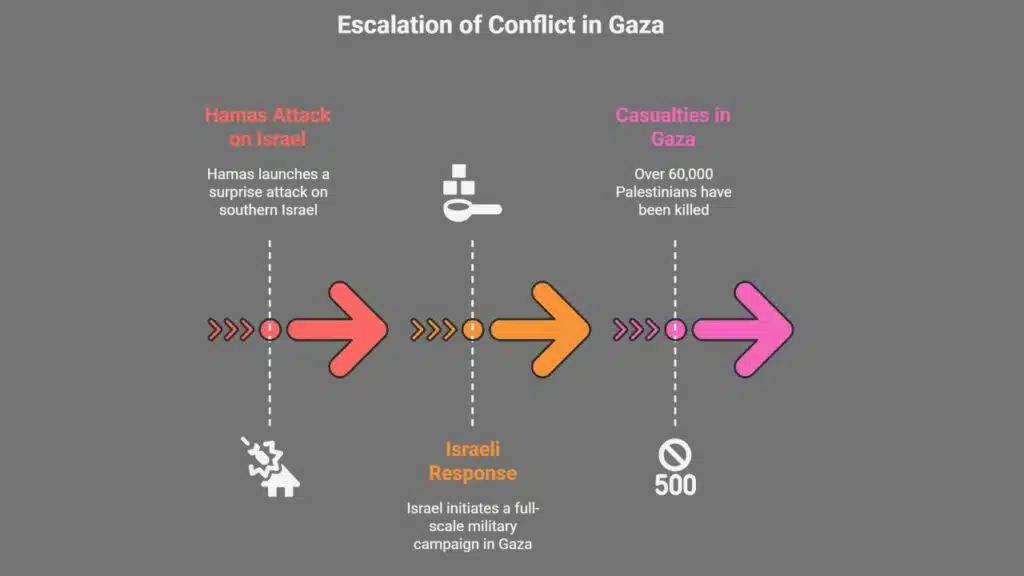
This humanitarian disaster unfolds against the backdrop of the ongoing conflict that began on October 7, 2023, when Hamas launched a surprise attack on southern Israel, killing approximately 1,200 people and taking 251 hostages. Israel responded with a full-scale military campaign in Gaza, which has now lasted for nearly 10 months.
According to Gaza’s health ministry, at least 60,249 Palestinians have been killed since then, with 111 deaths reported just in the past day.
Trump Calls for Hamas to Surrender to End Crisis
Reacting to his envoy’s deployment, US President Donald Trump posted on social media that the “fastest way to end the humanitarian crisis in Gaza” is for “Hamas to surrender and release the hostages.”
This remark underscores growing US frustration with the prolonged conflict and the lack of progress in ceasefire and hostage negotiations. Israeli media reports have suggested that, without significant progress soon, Israel may consider more drastic steps, including the annexation of parts of Gaza.
Gaza’s Future Hinges on Ceasefire and Secure Aid
As Steve Witkoff heads into Gaza, the stakes are extraordinarily high. The region is in the grip of a multifaceted catastrophe—mass casualties, famine, and political gridlock. The success of this diplomatic mission may determine whether future humanitarian operations are safer, better coordinated, and able to prevent further civilian suffering.
Unless international agencies, local actors, and both sides of the conflict work together, thousands more lives may be lost—not only to bombs and bullets, but to starvation, disease, and systemic failure.
The Information is Collected from BBC and Yahoo.