
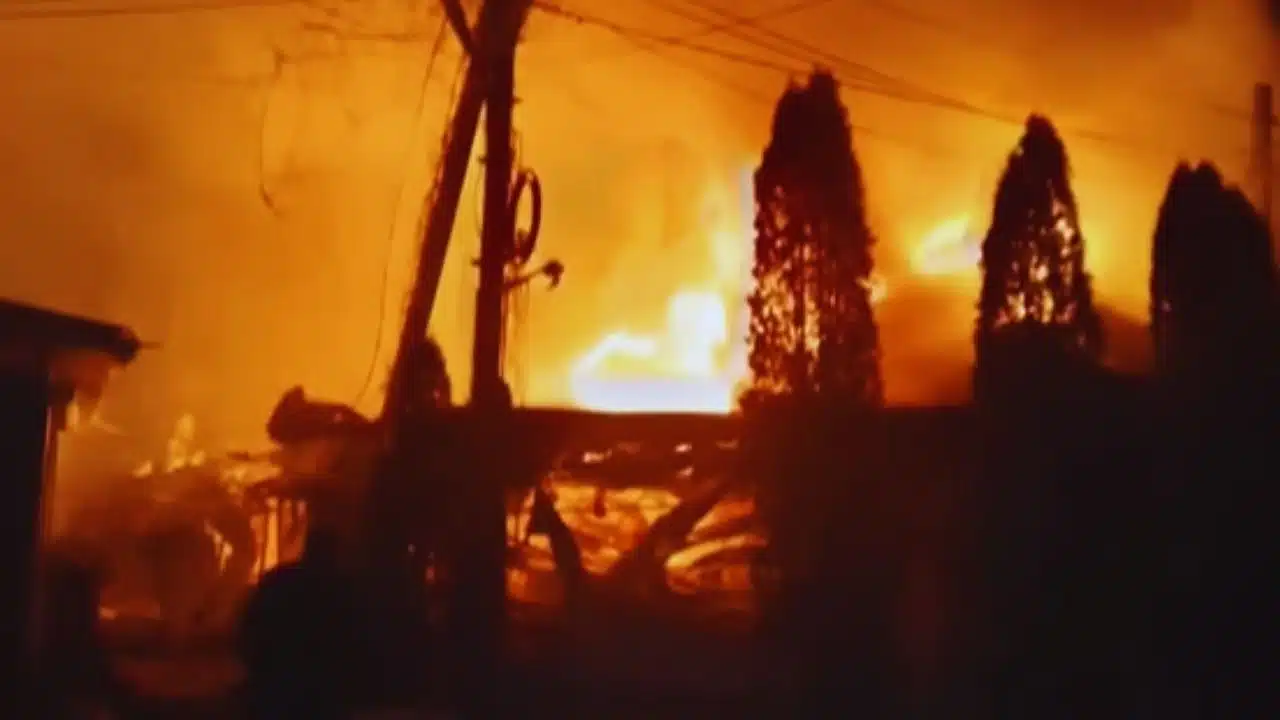
Ukraine said it struck two Russian oil facilities overnight from Dec. 31 to Jan. 1, triggering fires at sites in Krasnodar and Tatarstan in an escalation of Kyiv’s long-range campaign to disrupt Moscow’s fuel and revenue base.
What Ukraine Says It Hit, And Where
Ukraine’s military said its drones targeted two pieces of Russia’s oil infrastructure in the early hours of New Year’s Day:
- The Ilsky oil refinery in Russia’s Krasnodar region, in the country’s south.
- The Almetyevskaya oil preparation facility in Tatarstan, an energy-producing region along the Volga.
Ukrainian officials said both strikes caused fires that were later extinguished. Russian regional authorities also reported drone activity and emergency responses around the same timeframe.
If confirmed in full, the strike on Tatarstan is one of Ukraine’s deepest publicly acknowledged energy attacks. Almetyevsk and nearby oil facilities sit roughly 1,400 kilometers (about 870 miles) from Ukraine, underscoring how Kyiv’s drone program has expanded beyond border regions and front-line logistics hubs.
Why These Targets Matter
Russia’s oil system is not a single point of failure—it is a chain. Refineries, storage bases, and oil “preparation” facilities each play different roles, but they connect directly to:
- fuel supply for military logistics
- domestic market stability
- export volumes and budget revenue
Oil preparation facilities typically handle processes such as separating oil, water, and gas; stabilizing crude before shipping; and ensuring consistent feedstock quality. That makes them valuable choke points even if they are not headline-grabbing “refineries.”
Key Facility Snapshot
| Facility | Region | Reported Owner/Operator | What It Does | Why It’s Sensitive |
| Ilsky Oil Refinery | Krasnodar | Industrial operator in southern Russia | Refines crude into fuels and other products | Fuel output supports regional supply and military-linked logistics |
| Almetyevskaya Oil Preparation Facility | Tatarstan (Almetyevsk area) | Linked to Tatneft’s production network | Prepares crude for transport and further processing | Disruption can ripple into production and deliveries |
Ilsky Refinery: A Repeat Pressure Point In Southern Russia
The Ilsky refinery has appeared repeatedly in reporting and analysis about Russian refining vulnerabilities. Industry sources have previously described Ilsky as a significant southern producer with total refining capacity around 6.6 million tons per year, and with key units that, if damaged, can temporarily reduce throughput.
Located in the wider Krasnodar area, Ilsky also sits in a region that matters strategically because it supports fuel movement in southern Russia and logistics channels that connect toward occupied territories and military supply routes.
Even when a fire is extinguished quickly, the operational impact depends on what was hit:
- a storage tank fire may be contained with limited long-term disruption
- a processing unit, power subsystem, or control node can take longer to restore
- safety shutdowns alone can halt output for inspection periods
Tatarstan: A Long-Range Signal
The reported strike on the Almetyevskaya facility is notable for geography as much as for industrial significance. Tatarstan is a core oil region with major companies, industrial plants, and a long-standing role in Russian production and refining networks.
By reaching this far, Ukraine appears to be signaling three things at once:
- Operational reach: drones can threaten energy assets far beyond border oblasts
- Strategic intent: the campaign is not limited to tactical battlefield support
- Economic pressure: targets are tied to the broader energy value chain
In practical terms, a successful deep strike forces Russia to spend more on layered air defense, dispersion, and hardening of industrial sites—costs that compound over time.
A Record Tempo Of Energy Strikes In Late 2025
The New Year’s attacks came after a heavy December. Publicly tracked tallies of Ukrainian strikes suggested December 2025 had the highest monthly number of attacks on Russian oil and gas assets since the full-scale war began.
Ukraine’s strategy has been widely interpreted as aiming to:
- cut refining output and complicate fuel distribution
- increase Russia’s domestic costs and insurance burdens
- pressure export reliability and revenue
- force Moscow to divert air defenses away from the front and major cities
The campaign has also evolved. Earlier in the war, attacks were often limited by range and payload. By late 2025, Ukraine’s long-range drones were increasingly associated with deeper targets and more complex mission planning.
Mutual New Year’s Strikes: Russia Targets Ukraine’s Power System
The exchange happened amid another wave of Russian drone attacks on Ukraine. Ukrainian officials said Russia launched more than 200 drones overnight, with energy infrastructure among the targets across multiple regions.
Ukrainian authorities reported widespread outages, including a major impact in the Volyn region, where officials said over 100,000 households lost power at one point. Emergency crews worked through the night to stabilize the grid and restore supply.
President Volodymyr Zelensky condemned the timing, arguing that Russia deliberately struck energy targets during the holiday period to maximize civilian hardship and strain emergency services.
How Energy Warfare Fits Into The Bigger War
Both sides increasingly treat energy infrastructure as part of strategic pressure:
- Russia has repeatedly targeted Ukraine’s grid, substations, and generation nodes to create outages, damage industrial capacity, and undermine winter resilience.
- Ukraine has intensified strikes on Russian oil and fuel systems to reduce Moscow’s war-funding cushion and complicate logistics.
Energy warfare doesn’t always produce immediate front-line movement. Instead, it shapes endurance:
- fuel availability affects troop transport, aviation tempo, and supply chains
- electricity stability affects defense production, rail traffic, and civilian morale
- budget resilience affects how long a state can sustain high-intensity operations
Peace Talk Backdrop: Diplomacy Continues Amid Escalation
The New Year exchange also played out as diplomatic efforts continued. Zelensky has said Ukraine is close to a framework agreement but insists that any deal must include credible security guarantees and avoid locking in outcomes that would invite renewed aggression.
Reports in late December described a meeting between Zelensky and U.S. President Donald Trump in Florida, where officials discussed a multi-point framework for a possible settlement. Public messaging from Kyiv emphasized progress, while also warning that “the last mile” of negotiations is typically the hardest—especially on questions of territory, enforcement, and security guarantees.
What To Watch Next
Several near-term indicators will show whether the New Year strikes are a one-off signal or the opening move in another high-tempo month:
- Operational impact: any sustained downtime at Ilsky or disruptions in Tatarstan logistics
- Russian response: tighter air-defense coverage, new restrictions, or retaliation patterns
- Energy export pressure: shipping delays, refinery run-rate changes, or fuel market stabilization steps
- Diplomacy: whether negotiations slow, accelerate, or fragment into parallel tracks
Ukraine’s decision to begin 2026 with long-range drone strikes highlights how the war has expanded into a contest of endurance—industrial, economic, and logistical. Even when individual fires are extinguished, the strategic effect can accumulate: higher defense costs, disrupted planning, and growing uncertainty around energy flows. With diplomacy continuing in parallel, the next weeks will test whether escalation and negotiation can coexist—or whether one forces the other off the table.