
UK and France Deliver Precision Strike on ISIS Weapons Cache in Syria, Signaling Renewed Vigilance Against Terror Resurgence
In a coordinated military operation, the United Kingdom and France targeted an underground ISIS facility north of Palmyra, Syria, destroying key access tunnels to a suspected weapons depot. The airstrike, executed on Saturday evening, underscores ongoing Western efforts to dismantle remnants of the Islamic State group amid signs of its attempted revival in the region.
Operation Details: A Surgical Strike in the Syrian Desert
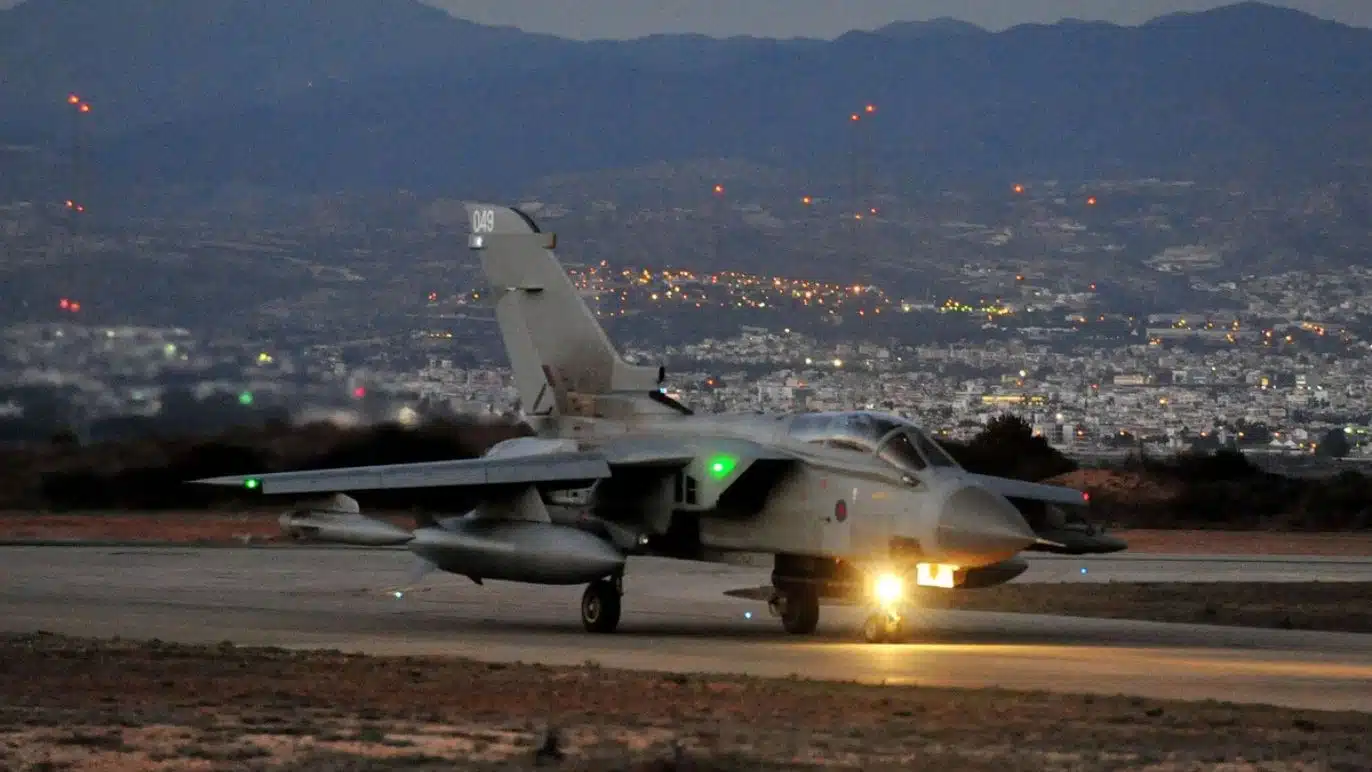
Royal Air Force Typhoon FGR4 jets, supported by a Voyager refueling tanker, joined French aircraft in the mission, deploying Paveway IV precision-guided bombs to seal off multiple tunnels leading to the underground site. Located in the rugged mountains north of the ancient city of Palmyra, the facility was identified through meticulous intelligence analysis as a former ISIS storage hub for weapons and explosives. UK Ministry of Defence officials emphasized that the surrounding area is devoid of civilian habitation, ensuring no risk to non-combatants, with initial assessments confirming the target was successfully engaged.
The operation unfolded seamlessly, with all British and French aircraft returning safely to base, demonstrating the high level of interoperability between the two NATO allies. This joint effort highlights advancements in real-time intelligence sharing and precision weaponry, allowing strikes with minimal collateral damage in challenging terrain. Detailed battle damage assessments are ongoing, but preliminary reports suggest the destruction of critical infrastructure that ISIS could have used to rebuild its arsenal.
Strategic Context: Why Palmyra Remains a Hotbed for ISIS Activity
Palmyra, the UNESCO World Heritage site once ravaged by ISIS in 2015, continues to symbolize the group’s enduring shadow over Syria’s central deserts. The targeted facility’s proximity to this historic area points to ISIS’s tactic of exploiting remote, mountainous hideouts for logistics and resupply. Recent intelligence had flagged the site as active, likely stocked with munitions left over from the group’s caliphate era, posing a threat for insurgent attacks.
This strike follows a pattern of ISIS probing vulnerabilities in post-Assad Syria, where political transitions have created security gaps. Just weeks prior, on December 13, 2025, an ISIS gunman attacked a joint US-Syrian patrol near Palmyra, killing two American soldiers and wounding others, exposing infiltration risks even in secured zones. Syrian authorities have also thwarted ISIS plots targeting New Year’s celebrations in Aleppo, including churches, indicating a spike in operational tempo as the group seeks to capitalize on instability.
The Badia desert region, stretching from Homs to Deir ez-Zor, serves as ISIS’s primary sanctuary, with an estimated 2,500 fighters active across Syria and Iraq. Coalition patrols, including those by the RAF since the 2019 defeat at Baghuz Fawqani, have kept pressure on these cells, preventing territorial gains but not eliminating the insurgent threat.
ISIS in 2026: From Caliphate to Insurgency
Despite losing its self-proclaimed caliphate in 2019, ISIS has adapted into a resilient network of sleeper cells and provincial branches, conducting over 120 attacks in Syria in 2025 alone. The group’s strategy now emphasizes infiltration of local forces, such as the “new Syrian army,” allowing fighters to operate under official cover. This evolution, coupled with recruitment via online propaganda, has enabled sporadic but lethal operations, from ambushes to suicide plots.
Syria’s fragmented landscape—marked by SDF control in the northeast, HTS influence elsewhere, and transitional government challenges—provides fertile ground for resurgence. US Central Command reported killing over 20 ISIS operatives in 2025, yet the group exploits delays in political settlements and military integrations. The Palmyra strike addresses this by neutralizing a key enabler: weapons caches that sustain hit-and-run tactics.
Experts warn that waning international focus, amid great power rivalries, risks emboldening ISIS, whose global affiliates continue to inspire lone-wolf attacks. In Syria, the group’s shift from dormant to empowered phase threatens regional stability, necessitating sustained coalition action.
Voices from London and Paris: Leadership and Resolve
UK Defence Secretary John Healey hailed the mission as a demonstration of “UK leadership and determination to stand shoulder to shoulder with our allies.” He praised the Armed Forces’ professionalism, noting their deployment over the holiday period to counter threats year-round. This rhetoric aligns with Britain’s post-Brexit emphasis on European security partnerships, particularly with France.
French officials, while more reserved in public statements, confirmed participation via Rafale jets, framing the strike within Operation Chammal, their long-standing anti-ISIS campaign. The joint nature of the op reflects deepening Franco-British defense ties, including the Lancaster House Treaties, which facilitate such combined operations. Analysts see this as a signal to adversaries: Europe remains committed to Middle East counterterrorism despite domestic pressures.
Historical Precedent: Western Coalitions Against ISIS
This operation echoes the US-led Operation Inherent Resolve, launched in 2014, which included UK and French airstrikes that degraded ISIS’s caliphate. Britain began Syrian strikes in 2015, while France intensified after the Paris attacks, bombing oil facilities and command nodes. Post-2019, focus shifted to persistent patrols, with RAF Typhoons logging thousands of hours over Syria and Iraq.
Recent US actions, destroying 15 ISIS sites in late 2025, set the stage for this Anglo-French effort, illustrating coalition synergy. Unlike broader 2018 strikes on Syrian chemical sites, this targeted terror infrastructure precisely, avoiding escalation with Damascus.
Regional Reactions and Syrian Government Stance
Syrian transitional authorities welcomed the strike indirectly, having shared intel on ISIS threats previously. President Ahmed al-Sharaa faces pressure to integrate forces like the SDF, but ISIS exploits resulting vacuums. Neighboring Iraq reports similar regrouping, raising cross-border concerns.
Russia and Iran, traditional Assad backers, have not commented sharply, possibly viewing ISIS as a mutual foe amid their reduced Syrian footprint. Kurdish SDF forces, detaining seven ISIS suspects days before the strike, praised coalition efforts but urged more ground support.
Technical Edge: Weapons and Tactics in Play
The Paveway IV, a laser-guided bomb with GPS backup, offers pinpoint accuracy, ideal for tunnel networks. RAF Typhoons, multi-role fighters, integrated seamlessly with French Rafales, using Voyager for extended range. Intelligence likely stemmed from satellite imagery, drones, and human sources, honed by years of coalition ops.
This tech edge contrasts ISIS’s low-tech insurgency, relying on captured arms and IEDs from sites like the destroyed cache.
Broader Implications for Global Security
The strike disrupts ISIS logistics at a pivotal moment, post-Assad transition and amid US drawdown signals under President Trump. It reassures allies of Europe’s proactive stance, potentially deterring affiliates in Africa and Asia. However, experts call for enhanced ground intel and local capacity-building to prevent full resurgence.
For Syria’s civilians, weary after 14 years of war, such ops promise safer reconstruction, though economic woes persist. The mission reinforces that defeating ISIS requires enduring vigilance, not just victory parades.
Future Outlook: Sustained Pressure on the Horizon
Coalition leaders vow continued patrols, with RAF commitments extending into 2026. France’s Chammal operation persists, eyeing ISIS’s Sahel branches too. Success metrics will include reduced attacks and dismantled networks, but political stability in Syria is key.
This Palmyra strike may prove a turning point, blunting ISIS momentum before it escalates. As Healey noted, it stamps out “dangerous ideologies,” safeguarding the Middle East and beyond. Yet, the desert sands hold secrets; only time will reveal if this precision blow echoes through the group’s fractured ranks.