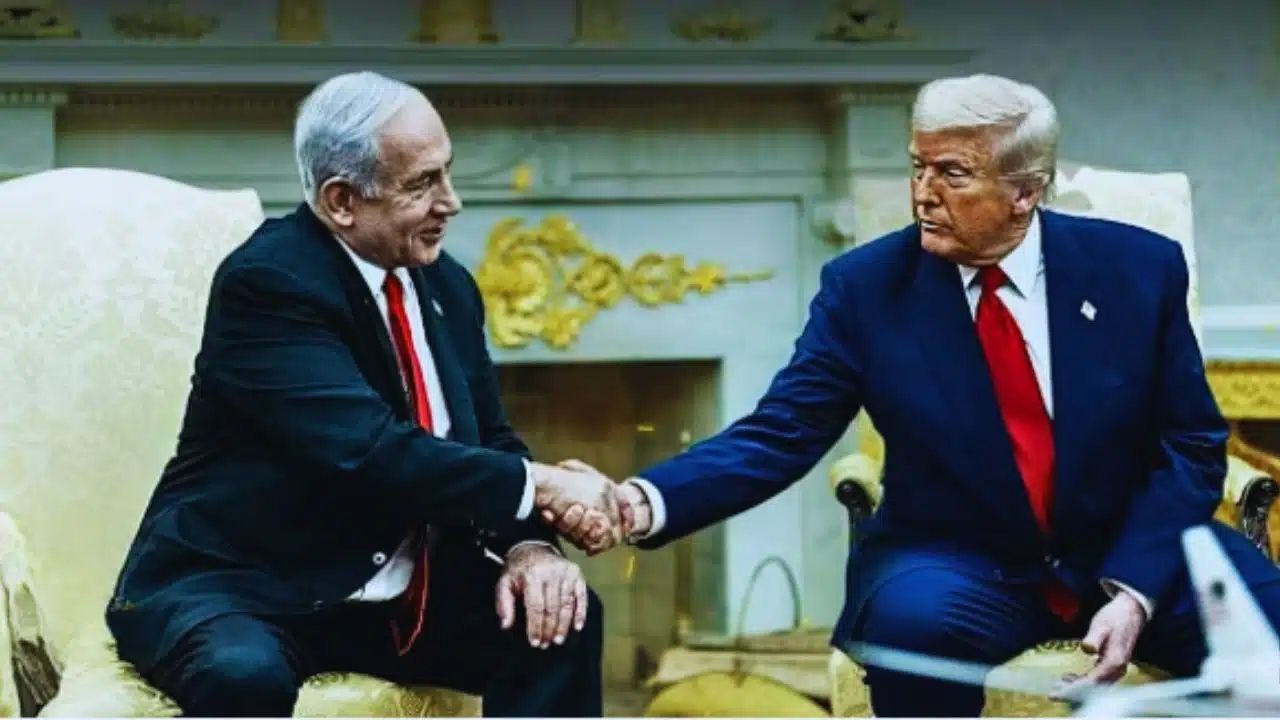
In a significant diplomatic moment, former U.S. President Donald Trump hosted Israeli Prime Minister Benjamin Netanyahu for a private dinner at the White House on July 7, 2025, as Washington intensifies efforts to broker a new ceasefire between Israel and Hamas.
The event marks a major step in a broader U.S.-led strategy to de-escalate the conflict in Gaza, which has raged for nearly 21 months and resulted in catastrophic humanitarian consequences.
The dinner was not just ceremonial. It served as a high-profile platform for renewed peace dialogue, signaling Trump’s personal investment in restoring stability to the region.
U.S. Proposes 60-Day Ceasefire to End Bloodshed in Gaza
As part of its diplomatic initiative, the Trump administration has proposed a 60-day ceasefire agreement aimed at halting the Israeli military campaign in Gaza and facilitating the safe return of hostages held by Hamas.
The proposed plan includes:
- A phased release of Israeli and foreign hostages held in Gaza.
- A gradual withdrawal of Israeli Defense Forces (IDF) from key sectors of the territory.
- An opening for long-term negotiations aimed at ending the war permanently.
Trump emphasized that he is “very firm” in his commitment to push Israel toward accepting this ceasefire framework, even as tensions remain high on the ground. “We’re hopeful this deal can be finalized this week,” he said, while acknowledging the complexity of the situation.
Netanyahu’s ICC Arrest Warrant and Limited Global Mobility
Prime Minister Netanyahu’s presence in the United States is also notable due to his current International Criminal Court (ICC) arrest warrant. While he remains under investigation for alleged war crimes and crimes against humanity, the U.S. does not recognize the ICC’s jurisdiction and has allowed him safe passage for diplomatic talks.
Because of the ICC warrant, Netanyahu’s international travel is severely restricted, making his extended stay in the U.S.—where Israel and Hamas representatives are engaging in indirect negotiations—strategically critical.
Netanyahu Nominates Trump for Nobel Peace Prize
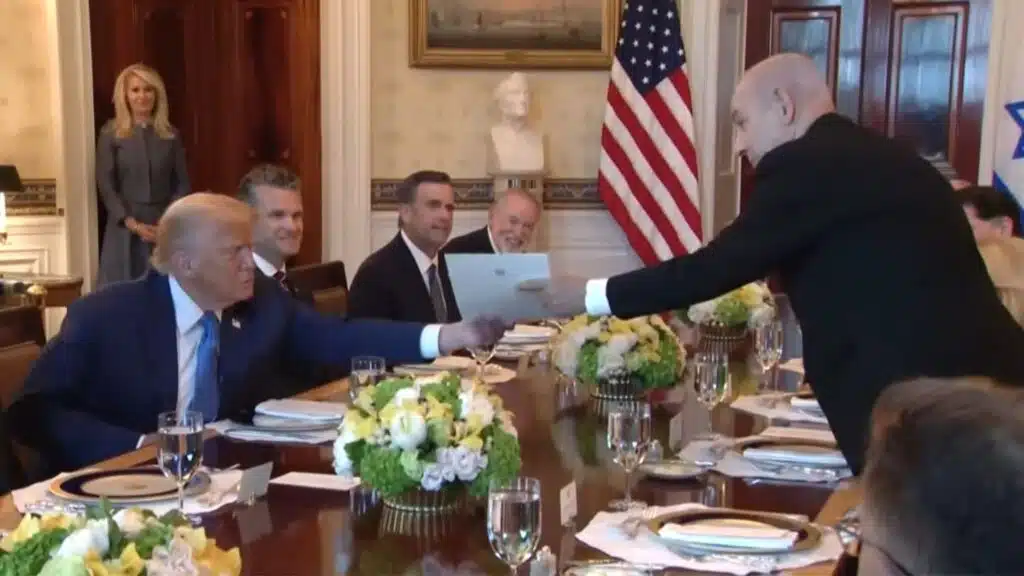
During a press conference held at the White House dining table, Netanyahu surprised the audience by nominating Trump for a Nobel Peace Prize. He praised Trump’s leadership in the Middle East, stating:
“I think we can work out peace between us and the entire Middle East with President Trump’s leadership.”
The Israeli leader reiterated his long-standing position that Israel is open to peaceful coexistence—but only with Palestinians who do not seek the destruction of Israel.
“We will work out a peace with our Palestinian neighbors, those who don’t want to destroy us,” Netanyahu said. “And we’ll work out a peace in which our security, the sovereign power of security, always remains in our hands.”
The Devastation in Gaza: 60,000+ Killed, Famine Looms
The war in Gaza has left the coastal enclave in ruins. According to the Gaza Health Ministry, more than 60,000 Palestinians have been killed since Israel began its military operation following the October 2023 attacks. Thousands more have been injured, and the majority of the 2.3 million residents have been displaced.
Entire neighborhoods have been flattened by airstrikes. Basic infrastructure—hospitals, water facilities, schools—has been decimated. Aid groups, including the World Food Programme (WFP) and UNRWA, warn that Gaza is facing famine-like conditions, with children and the elderly particularly at risk.
The recent implementation of a U.S.-supported aid distribution system in late May, following an 11-week Israeli blockade, has only marginally improved conditions. Hundreds of Palestinians have been killed in the chaos surrounding food aid deliveries, according to the UN Office of the High Commissioner for Human Rights (OHCHR).
In a statement last week, OHCHR confirmed that 613 people were killed near aid sites or humanitarian convoys within a month.
Hamas and Israel: Irreconcilable Demands?
Despite growing international pressure for peace, Hamas and Israel remain far apart on key issues:
- Israel refuses to halt its military operations until Hamas is dismantled and all hostages are released.
- Hamas demands guarantees that any ceasefire will end the war completely and allow for the full withdrawal of Israeli forces before they consider releasing remaining hostages.
These opposing positions represent a major challenge for Qatar and Egypt, who are co-mediating the talks. U.S. special envoy Steve Witkoff is expected to travel to Doha later this week to rejoin the discussions.
According to Palestinian officials cited by Reuters, Israel’s refusal to allow free and consistent entry of humanitarian aid into Gaza remains one of the largest roadblocks to a breakthrough in negotiations.
U.S.-Iran Nuclear Talks to Resume After Military Strikes
In a related development, Trump also confirmed that the United States will resume nuclear negotiations with Iran, following a U.S. military operation last month that targeted three of Iran’s nuclear sites.
“We have scheduled Iran talks, and they want to talk,” Trump said. He indicated that the meetings would likely happen “very quickly, in the next week or so,” though he declined to confirm the exact location. However, sources told Axios and Israel’s Channel 12 that the discussions may take place in Norway, possibly in Oslo.
The objective of these talks is to revive a framework where the U.S. eases economic sanctions in return for Iran halting its nuclear program. This comes after months of diplomatic stalemate and rising tensions in the Gulf region.
Trump acknowledged past skepticism about the need for such talks but said:
“They’ve requested a meeting and I’m going to go to a meeting, and if we can put something down on paper, that would be fine.”
Strategic Timing and Global Stakes
The U.S. now finds itself deeply entangled in two interconnected Middle East crises:
- The urgent need for a ceasefire in Gaza to prevent further humanitarian collapse.
- The delicate restart of nuclear diplomacy with Iran, which has regional security implications for Israel, Saudi Arabia, and the broader Gulf.
For President Trump, who has re-entered the global spotlight in the run-up to the 2026 U.S. elections, success in either domain could significantly enhance his diplomatic credentials.
Is Peace Within Reach?
While many observers remain skeptical, the presence of top leaders, renewed U.S. engagement, and growing international outrage over the humanitarian toll in Gaza may push all sides closer to a resolution.
But as Netanyahu doubles down on security and Hamas remains firm on ending occupation, the chances of a durable peace deal still hang in the balance.
Both Iran and the Israel-Palestine conflict remain unresolved flashpoints that could either ignite further violence—or, if diplomacy prevails, signal a new chapter in Middle East politics.
The Information is Collected from ABC News and BBC.