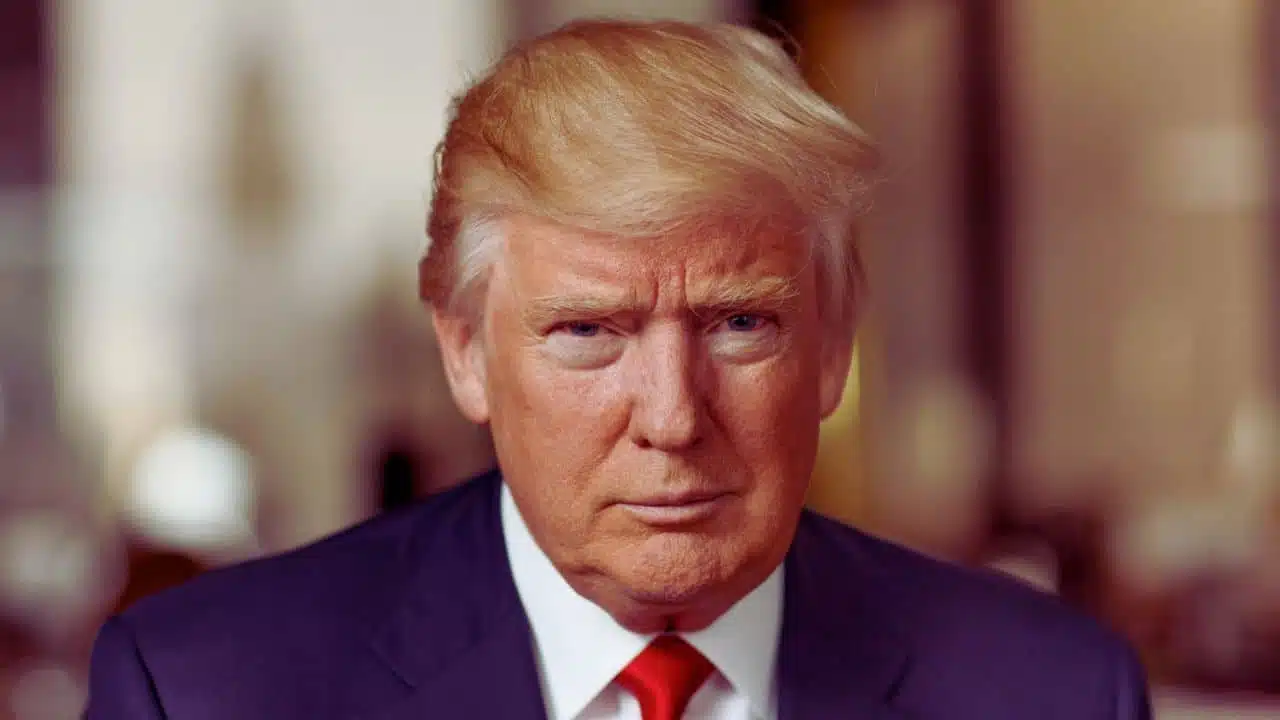
U.S. President Donald Trump announced Saturday he raises tariffs on Canadian goods by an additional 10%, a dramatic escalation in the ongoing 2025 trade war. The move is in direct retaliation for a Canadian-sponsored television advertisement that used anti-tariff remarks from former President Ronald Reagan, which Mr. Trump labeled a “fraud”.
The announcement, made via the Truth Social platform, came just hours after the controversial ad aired during Game 1 of the MLB World Series and two days after Mr. Trump terminated all trade talks with Ottawa over the same issue.
- New Tariff Announced: President Trump declared an additional 10% tariff “over and above what they are paying now” on Canadian imports. The White House has not specified which goods will be affected or when the levy takes effect.
- The Catalyst: The move is retaliation for a $75 million ad campaign by the Ontario government. The ad featured a 1987 speech by President Ronald Reagan warning that “high tariffs… trigger fierce trade wars” and lead to job losses.
- Existing Trade War: This hike adds to a bitter 2025 trade dispute that has already seen the U.S. impose tariffs of 35% on many Canadian goods and 50% on steel and aluminum.
- USMCA Status: Approximately 85% of U.S.-Canada trade remains tariff-free under the United States-Mexico-Canada Agreement (USMCA), though the new announcement creates massive uncertainty.
- Diplomatic Freeze: Trump, currently in Asia for the ASEAN summit, told reporters he has “no plan” to meet with Canadian Prime Minister Mark Carney, who is also attending the summit.
The Announcement: A ‘Hostile Act’
The trade dispute between the two neighbors and allies took a sharp downturn Saturday, October 25, 2025. President Trump, traveling on Air Force One for a five-day Asia tour, posted his decision following the broadcast of the contentious ad during the World Series game between the Toronto Blue Jays and the Los Angeles Dodgers.
Their Advertisement was to be taken down, IMMEDIATELY, but they let it run last night during the World Series, knowing that it was a FRAUD,” Mr. Trump wrote on Truth Social shortly after 10:00 PM Eastern Time.
“Because of their serious misrepresentation of the facts, and hostile act, I am increasing the Tariff on Canada by 10% over and above what they are paying now. Thank you for your attention to this matter!”
— President Donald Trump, via Truth Social, Oct 25, 2025.
The White House did not immediately clarify the legal authority for the new levy or whether it would apply to the 15% of goods currently subject to high tariffs, or if the administration would seek to bypass USMCA rules to apply it more broadly.
The ‘Reagan Advert’ at the Center of the Storm
The dispute stems from an ad campaign funded by the government of Ontario, Canada’s most populous province and industrial heartland. The ad, which ran on major U.S. networks, uses audio and video from a 1987 radio address by President Ronald Reagan, an icon of the Republican Party.
In the clip, Mr. Reagan is heard warning against protectionism. High tariffs inevitably lead to retaliation by foreign countries and the triggering of fierce trade wars,” Mr. Reagan says in the ad. “Then the worst happens. Markets shrink and collapse. Businesses and industries shut down, and millions of people lose their jobs.”
A ‘Fraudulent’ Misrepresentation?
President Trump has insisted the ad misrepresents Mr. Reagan’s position, stating on Thursday that the former president “LOVED TARIFFS” and used them for national security.
The Reagan Presidential Foundation and Institute also issued a statement on Thursday, which Mr. Trump quickly amplified. The foundation stated the Ontario ad used “selective audio and video” and “misrepresents” the 1987 address, adding that it was “reviewing its legal options”.
Analysts note that while Mr. Reagan did impose some limited tariffs on Japan in 1987, the speech used in the ad was explicitly delivered to explain why he was “loath” to use trade barriers and viewed them as a last resort that harmed economies.
Timeline of a Rapid Escalation
This weekend’s tariff hike is the culmination of a rapidly deteriorating situation that began earlier in the week.
- Thursday, Oct 23: President Trump abruptly terminated all trade negotiations with Canada. In a post, he called the Reagan ad “egregious behavior” and accused Canada of trying to influence an upcoming U.S. Supreme Court case on presidential tariff authority.
- Friday, Oct 24 (Day): In an attempt to de-escalate, Ontario Premier Doug Ford announced his government would “pause” the ad campaign, effective Monday, October 27, hoping to restart trade talks.
- Friday, Oct 24 (Night): The ad, its media buy not yet canceled, runs during the widely watched Game 1 of the World Series.
- Saturday, Oct 25: En route to Asia, President Trump, angered that the ad was not pulled “IMMEDIATELY,” announces the new 10% tariff hike.
The Economic Stakes: An Uncertain Future
This new 10% levy throws profound uncertainty into one of the world’s largest trading relationships. The U.S. and Canada traded over $900 billion in goods and services in 2024.
The context for this dispute is the “2025 United States trade war with Canada and Mexico,” which began in February 2025 when the Trump administration imposed sweeping new tariffs.
The Current Tariff Landscape (Pre-Oct 25)
- General Tariffs: Since August 2025, many Canadian goods not covered by USMCA have faced a 35% tariff.
- Sectoral Tariffs: Key Canadian industries face even higher rates, including a 50% tariff on steel and aluminum and 10% on energy products
- The USMCA Shield: The United States-Mexico-Canada Agreement (USMCA), signed during Mr. Trump’s first term, protects the majority of cross-border trade. An estimated 85% of Canadian exports to the U.S. remain tariff-free under this agreement.
The critical, unanswered question is how the new 10% will be applied. If it is added to the existing 35% tariff, it would push the rate on many goods to 45%. If the administration attempts to apply it to USMCA-exempt goods, it would represent a full-scale breach of the agreement and likely trigger massive Canadian retaliation and legal challenges.
Official Responses and Analysis
Canadian officials, who had hoped to de-escalate the conflict, were left scrambling. Prime Minister Mark Carney, who took office in March 2025, recently described the U.S. tariffs as being at “levels last seen during the Great Depression” and warned that Canada’s “economic strategy needs to change dramatically.
White House National Economic Council adviser Kevin Hassett told reporters on Friday that the Canadians have been “very difficult to negotiate with” and that the president’s “frustration has built up over time.
The Supreme Court Shadow
Analysts point to a crucial piece of context: the U.S. Supreme Court is scheduled to hear arguments next month on cases challenging the president’s broad, unilateral authority to impose tariffs under national security pretenses.
President Trump himself linked the ad to this legal battle, claiming Thursday the “sole purpose of this FRAUD was Canada’s hope that the United States Supreme Court will come to their ‘rescue’ on Tariffs.The ad campaign, in this light, was seen by the White House not just as a trade irritant, but as an attempt to sway public and judicial opinion.
With President Trump and Prime Minister Carney both in Malaysia for the ASEAN summit—but with no meeting planned—the diplomatic channel appears frozen.
The immediate focus will be on the U.S. Trade Representative’s office for a formal clarification on the scope and timing of the new 10% tariff. Markets are expected to react negatively on Monday to the instability in the North American supply chain.
For Canada, the move forces a difficult choice: retaliate with new tariffs of its own, further harming both economies, or wait for the U.S. Supreme Court’s pending decision, which could fundamentally alter the president’s power to wage this trade war.
The Information is Collected from BBC and NDTV.