Trump Ukraine Peace Plan talks are moving toward a possible ceasefire, but Russia and Ukraine are still fighting and lobbying hard to shape U.S. terms. Leaders say most elements are drafted, yet territory, sanctions, and security guarantees remain the core obstacles.
What Trump Is Signaling And Why It Matters Now?
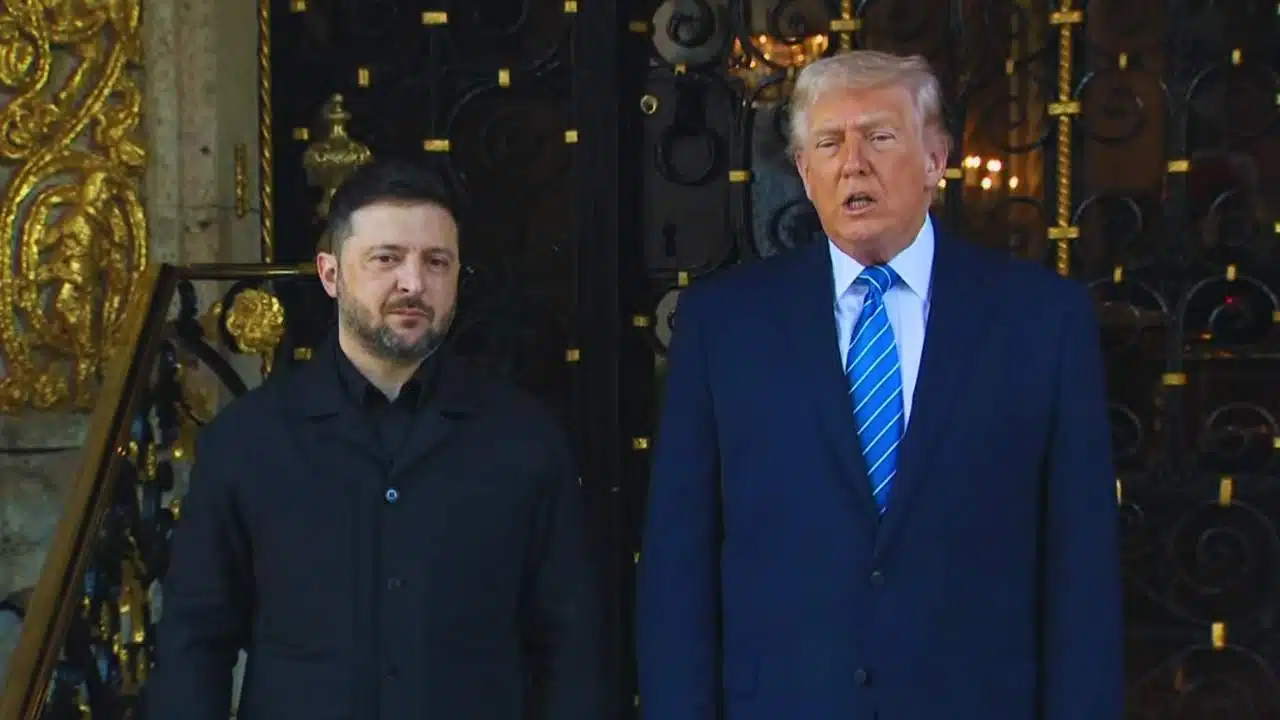
President Donald Trump has put a Ukraine ceasefire at the center of his foreign-policy agenda, and recent public remarks from Trump and Ukrainian President Volodymyr Zelenskyy suggest negotiations have narrowed to a short list of unresolved issues. That kind of language matters because it raises expectations—among governments, markets, and ordinary citizens—that a pause in the war could be within reach.
But “close” does not mean “settled.” In high-stakes conflicts, the final stretch often collapses over details that sound technical but decide the future: where a ceasefire line runs, who monitors it, what happens if one side violates it, and what guarantees exist to prevent the war from restarting months later.
Both Moscow and Kyiv appear to be working two angles at the same time:
- Influence Washington’s definition of a “realistic deal.” Each side wants Trump to view its red lines as reasonable and the other’s as the true blocker.
- Protect domestic politics. Leaders cannot sign an agreement that looks like surrender at home, especially after years of casualties, displacement, and economic strain.
- Keep leverage alive. Even while talks advance, neither side wants to give up pressure that could improve its position if the deal freezes current front lines.
This is why the Trump Ukraine Peace Plan has become more than a diplomatic proposal. It is now the central arena where battlefield realities, alliance politics, and economic pressure are being converted into bargaining power.
Why The Battlefield Still Shapes The Trump Ukraine Peace Plan?
When ceasefire talks gain momentum, what happens on the ground often becomes more—not less—intense. That is because any pause can lock in a map, even if leaders avoid saying it publicly. If a ceasefire freezes positions, then every village, rail line, bridge, or high ground captured before the pause can matter for years.
Russia has continued to argue for “buffer zones” near the border, framing them as a defensive necessity to reduce cross-border strikes and protect Russian regions. Ukraine rejects that logic and says it is simply a new justification for territorial expansion. This dispute is not only about geography. It is about the story each side wants Washington to accept:
- Russia’s framing: more territory as “security.”
- Ukraine’s framing: more territory as “occupation.”
Even without agreeing on a final settlement, the battlefield impacts the negotiating table in practical ways:
- It affects ceasefire enforcement. A stable line is easier to monitor than a shifting front with constant small assaults.
- It changes humanitarian risk. Fighting near cities, ports, or energy nodes increases civilian harm and infrastructure damage, which shapes public pressure for a deal.
- It affects military aid debates. If a partner believes the war is near a pause, some actors push for “hold steady,” while others push for “surge support” to strengthen leverage before talks finalize.
Another key reality is that Russia still controls a significant portion of Ukrainian territory. That fact alone keeps the territorial issue at the center of any plan, because a ceasefire without clarity can become a long-term freeze that neither side fully accepts.
The Three Issues That Decide Whether A Deal Holds Or Breaks
The Trump Ukraine Peace Plan has been described publicly as nearing completion, yet the remaining disputes are the ones that historically derail agreements. They can be summarized in three buckets: territory, security guarantees, and sanctions sequencing.
1) Territory and political legitimacy
Ukraine has repeatedly signaled it cannot accept a deal that forces permanent surrender of land as the price of peace. That position is rooted in sovereignty and fear of future aggression. Kyiv’s concern is simple: if Russia keeps what it seized, the invasion becomes a precedent rather than a warning.
Russia’s public posture has centered on recognition of gains and demands tied to areas it claims. Even when Moscow uses different language—“new realities,” “security needs,” “protecting Russian speakers”—the practical outcome remains a map question.
2) Security guarantees that prevent a restart
Ukraine’s demand is not only to stop shooting. It wants confidence that Russia cannot regroup and invade again. That pushes negotiations toward hard questions: Will Ukraine get formal guarantees, who provides them, and what happens automatically if Russia violates the deal?
Security guarantees can range widely:
- A full alliance-style commitment (politically difficult and escalatory in many capitals).
- A coalition guarantee (multiple states committing defined support if attacked).
- A long-term military support framework (less formal, but still meaningful).
- A monitoring and verification regime (useful, but not a deterrent by itself).
Ukraine’s leadership has publicly warned against “weak deals” that look peaceful on paper but simply pause the war until Russia chooses a better time to strike.
3) Sanctions relief and timing
Sanctions are leverage. Russia wants sanctions eased or removed as part of any settlement, arguing economic normalization is required for stability. Ukraine and many of its partners argue that sanctions relief must be earned through compliance and credible security arrangements, not promised up front.
This produces the classic negotiation fight over sequencing:
- Russia’s preference: relief early, tied to signatures and initial steps.
- Ukraine/partner preference: relief later, tied to verified compliance over time.
Key Deal Questions At A Glance
| Issue | Ukraine’s Core Position | Russia’s Core Position | Why The Gap Is Hard To Close |
| Territory | No forced surrender of sovereignty; avoid locking in losses as “final” | Recognition of gains or limits on Ukraine’s future control | Any perceived concession can trigger domestic backlash |
| Security Guarantees | Strong, clear deterrence to prevent repeat invasion | Opposition to Western-backed guarantees seen as hostile | Guarantees must be credible without expanding war risk |
| Sanctions | Keep pressure until compliance is proven | Link a deal to major sanctions relief | “Trust vs. verify” becomes the central dispute |
These are not abstract disagreements. They determine whether the ceasefire becomes a bridge to a durable peace—or a pause before the next offensive.
Europe, Aid, And Sanctions: The Other Negotiating Table
Even if Washington leads the diplomacy, Europe is deeply involved because it carries much of the long-term economic and political weight around Ukraine. The durability of any plan depends on what happens after signatures: funding, weapons replenishment, air defense, refugee support, budget stability, and reconstruction planning.
European institutions and member states have maintained extensive assistance across military and financial lines. That support is not only humanitarian. It functions as strategic backing that affects Ukraine’s ability to hold its position in negotiations. When Ukraine believes long-term support is stable, it is less likely to accept risky shortcuts. When support appears uncertain, pressure for a quick ceasefire grows.
Sanctions also sit in Europe’s domain in crucial ways. Even if the U.S. adjusts its posture, many restrictions and economic pressures depend on European decisions and coordination. That means any Trump Ukraine Peace Plan that includes sanctions changes must consider:
- Unity across European capitals. A split approach can weaken enforcement.
- Legal and political timing. Many measures require procedural steps, not just announcements.
- Linkage to compliance. Governments will want a clear mechanism that explains why relief is justified and how it is reversed if violated.
A related pressure point is reconstruction. Ukraine faces immense rebuilding needs: housing, energy systems, roads, schools, hospitals, and industrial capacity. A ceasefire can reduce damage, but it can also create uncertainty that scares away private investment if security is not credible.
Selected Public Support Figures Often Cited In Negotiations
| Support Measure | Amount Cited Publicly | What It Typically Includes |
| EU + Member States support made available since the full-scale invasion | About $197 billion (latest public update) | Military, financial, humanitarian and refugee-related support |
These figures matter because they show how much is already invested—and how high the political stakes are for Europe if a ceasefire collapses.
What Comes Next If Talks Advance: The Tests That Follow Any Announcement
If negotiators reach a framework, the hardest phase often begins after the press conference. A plan must survive implementation, and implementation is where mistrust becomes operational.
The next steps typically include:
- Defining the ceasefire line clearly. Vague language invites disputes within days.
- Setting enforcement rules. What counts as a violation, and what happens immediately after one?
- Monitoring and verification. Who watches, what technology is used, and where monitors can safely operate.
- Sequencing concessions. What steps happen first, what is conditional, and what is reversible.
- Managing domestic expectations. Leaders must explain why the deal is not betrayal, especially in Ukraine, where the war is existential, and in Russia, where the conflict has been framed as a historical mission.
There are also near-term risks that can derail progress:
- A major strike or mass-casualty event can harden positions overnight.
- Disinformation spikes can poison public support and constrain leaders.
- Alliance disagreements can weaken credibility, especially on guarantees and sanctions.
The Trump Ukraine Peace Plan may be “90% drafted” in broad terms, but the last “10%” often contains the clauses that decide whether a ceasefire becomes peace—or becomes a pause that sets the stage for renewed war.