Soil health is the foundation of sustainable agriculture and environmental balance in New Zealand. From dairy farms to vineyards and home gardens, maintaining fertile and productive soil is crucial. However, many challenges such as soil erosion, nutrient depletion, and compaction threaten soil quality across the country.
This guide explores ten practical and science-backed help farmers, gardeners, and landowners tips for managing soil health in New Zealand. Whether you own a small backyard garden or manage a large farm, these strategies will help you enhance soil fertility, retain moisture, and promote biodiversity in your land.
Understanding Soil Health in New Zealand
New Zealand has diverse soil types, ranging from volcanic soils in the North Island to sedimentary and alluvial soils in the South Island. Each region faces unique challenges, such as excessive rainfall leaching nutrients or dry conditions leading to soil degradation.
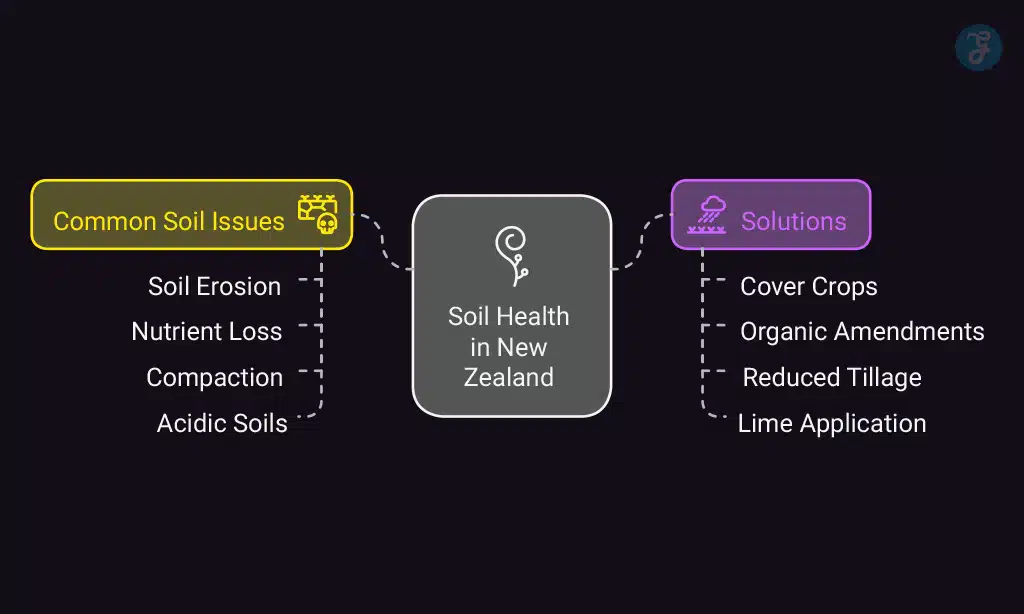
Common Soil Issues in New Zealand
| Issue | Description | Solution |
| Soil Erosion | Wind and water erosion deplete topsoil, reducing fertility. | Use cover crops and plant windbreaks. |
| Nutrient Loss | Heavy rainfall can wash away essential nutrients. | Regular soil testing and organic amendments. |
| Compaction | Machinery and overgrazing compact soil, reducing root penetration. | Reduce tillage and use deep-rooted plants. |
| Acidic Soils | Some NZ soils are naturally acidic, affecting plant growth. | Lime application to balance pH levels. |
Now, let’s explore ten expert-approved tips for managing soil health in New Zealand to enhance soil health effectively.
10 Tips for Managing Soil Health in New Zealand
Healthy soil is the backbone of productive farming and gardening. By implementing the right strategies, you can improve soil fertility, retain moisture, and enhance microbial activity. The following ten tips for managing soil health in New Zealand will help you maintain and restore soil health, ensuring sustainable land use for years to come.
Healthy soil is the backbone of productive farming and gardening. By implementing the right strategies, you can improve soil fertility, retain moisture, and enhance microbial activity. The following ten tips will help you maintain and restore soil health, ensuring sustainable land use for years to come.
1. Regular Soil Testing
Regular soil testing provides essential insights into nutrient levels, pH balance, and soil composition. In New Zealand, several government agencies and private laboratories offer soil testing services.
Pro Tip: Conduct soil testing at least once a year, preferably before planting season, to optimize nutrient application.
How to Conduct a Soil Test
- Collect soil samples from different areas of your land.
- Send samples to a local soil testing lab (e.g., Hill Laboratories, Eurofins, or Soil & Health Association NZ).
- Interpret results and apply amendments accordingly.
Quick Guide to Soil Testing
| Test Parameter | Ideal Range |
| pH Level | 5.8 – 7.0 (varies by crop) |
| Nitrogen (N) | 20-40 mg/kg |
| Phosphorus (P) | 15-30 mg/kg |
| Potassium (K) | 100-250 mg/kg |
2. Improve Soil Organic Matter
Organic matter improves soil fertility, water retention, and microbial activity. Composting, manure application, and mulching are great ways to increase organic content.
Pro Tip: Rotate different types of organic matter applications to ensure balanced soil nutrients and avoid over-reliance on a single source.
Best Organic Materials for Soil Health
| Material | Benefits |
| Compost | Enhances microbial life and soil structure |
| Animal Manure | Provides nitrogen and phosphorus |
| Cover Crops | Improves nitrogen fixation |
| Mulch (wood chips, straw) | Reduces evaporation and suppresses weeds |
3. Implement Crop Rotation Strategies
Rotating crops helps prevent soil depletion, disease buildup, and pest infestations. Each plant utilizes different nutrients, so alternating crops helps maintain soil balance.
Pro Tip: Plan crop rotations at least two years in advance to ensure diversity in soil nutrient uptake and pest management.
Best Crop Rotation Strategies for New Zealand
| Crop Type | Follow-Up Crop |
| Legumes (peas, beans) | Leafy greens (lettuce, spinach) |
| Brassicas (cabbage, broccoli) | Root crops (carrots, potatoes) |
| Grains (wheat, oats) | Nitrogen-fixing plants (clover, alfalfa) |
4. Reduce Soil Erosion
Soil erosion reduces productivity by stripping away nutrient-rich topsoil. Planting windbreaks, contour farming, and mulching can help minimize soil loss.
Pro Tip: Incorporate buffer strips of native vegetation around fields to reduce runoff and enhance biodiversity.
Effective Soil Erosion Control Methods
| Method | Benefits |
| Mulching | Prevents topsoil loss |
| Contour Farming | Slows water runoff |
| Windbreaks (trees, shrubs) | Reduces wind erosion |
| Terracing | Prevents hillside erosion |
5. Use Cover Crops and Green Manure
Cover crops like clover, ryegrass, and mustard improve soil fertility, prevent erosion, and enhance microbial life.
Pro Tip: Choose fast-growing cover crops to maximize soil coverage and organic matter return.
Top Cover Crops for NZ Farmers
| Cover Crop | Benefits |
| Clover | Fixes nitrogen, improves soil structure |
| Ryegrass | Prevents erosion, increases organic matter |
| Buckwheat | Attracts pollinators, suppresses weeds |
6. Optimize Irrigation and Drainage
Water management plays a key role in maintaining healthy soil. Overwatering can leach nutrients, while poor drainage causes waterlogging.
Pro Tip: Use moisture sensors to optimize irrigation frequency and reduce water wastage.
Water Conservation Techniques
| Method | Benefit |
| Drip Irrigation | Reduces water wastage |
| Rainwater Harvesting | Uses natural rainfall efficiently |
| Swales | Enhances water absorption |
7. Avoid Over-Tillage
Excessive tillage disrupts soil structure and destroys beneficial microorganisms. No-till farming and minimal disturbance techniques can improve soil health.
Pro Tip: Use cover crops and organic mulch to reduce the need for tillage while improving soil aeration.
| Tillage Method | Benefit | Recommendation |
|---|---|---|
| No-Till Farming | Preserves soil structure and reduces erosion. | Use cover crops to control weeds and reduce the need for tilling. |
| Minimal Tillage | Keeps beneficial organisms intact and improves soil health. | Add organic mulch and cover crops to keep soil aerated and healthy. |
| Strip Tillage | Minimizes soil disturbance while preparing planting rows. | Tillage only in the planting rows, leaving the rest of the soil undisturbed. |
| Conservation Tillage | Helps retain moisture and prevent soil erosion. | Use mulch or cover crops between rows to protect the soil. |
| Subsoiling | Breaks up compacted soil layers without disturbing the whole field. | Use only in areas with compacted soil to improve water penetration. |
8. Incorporate Beneficial Microorganisms
Adding soil probiotics like mycorrhizal fungi and bacteria enhances nutrient availability and soil structure.
Pro Tip: Use compost teas and biofertilizers to introduce beneficial microorganisms naturally.
| Microorganism | Benefit |
| Mycorrhizal Fungi | Improves root water absorption |
| Rhizobia Bacteria | Fixes nitrogen in legumes |
9. Manage Livestock Grazing Effectively

Rotational grazing allows pastures to recover, preventing overgrazing and soil compaction.
Pro Tip: Introduce multi-species grazing to optimize land usage and reduce parasite build-up.
| Grazing Method | Benefit |
| Rotational Grazing | Prevents overgrazing |
| Mixed Livestock Grazing | Balances soil nutrient distribution |
10. Reduce Chemical Inputs and Use Sustainable Fertilizers
Synthetic fertilizers can lead to soil acidification and reduced microbial activity. Switching to organic fertilizers ensures long-term soil health.
Pro Tip: Test soil nutrient levels before applying any fertilizers to avoid over-fertilization and environmental impact.
| Fertilizer Type | Benefit |
| Compost Tea | Enhances microbial life |
| Bone Meal | Provides phosphorus naturally |
| Seaweed Extract | Improves soil nutrients |
Takeaways
By following these ten expert-backed tips for managing soil health in New Zealand, farmers and gardeners can ensure long-term agricultural success and sustainability.
Maintaining soil health in New Zealand is essential for long-term agricultural success, environmental sustainability, and food security. By testing soil regularly, incorporating organic matter, reducing erosion, optimizing irrigation, and practicing responsible grazing, farmers and gardeners can significantly improve soil quality. Implementing cover crops, microbial amendments, and reduced chemical inputs will further enhance soil fertility and resilience.
Healthy soil not only benefits plant growth but also protects biodiversity, improves water retention, and mitigates climate change. With these ten expert tips, you can create a sustainable soil management plan that ensures long-term productivity and environmental balance.
Start applying these best practices today and make a positive impact with these ten tips for managing soil health in New Zealand, ensuring a healthier and more fertile future. If you have questions or insights to share, feel free to leave a comment or connect with local agricultural experts.