

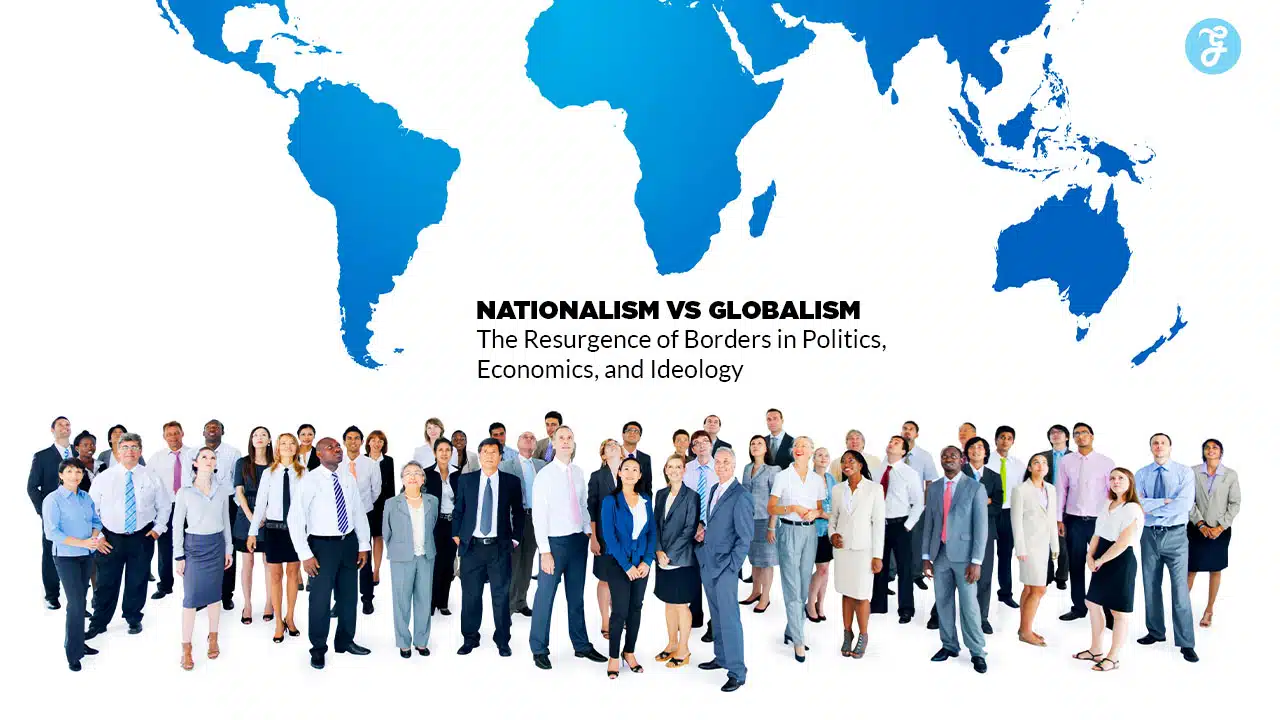
In a world more connected than ever before, the cracks are becoming increasingly visible. Nationalism and globalism—two opposing visions for the future—are locked in a fierce ideological tug-of-war. One champions sovereignty, tradition, and cultural roots. The other envisions a borderless world driven by trade, technology, and shared global goals.
From Brexit and “America First” to the European Union, climate accords, and the rise of digital nomads, every global trend today is framed through the lens of this conflict. The resurgence of borders in politics, protectionist policies in economics, and identity debates in culture reflect a broader question: Are we heading toward a fragmented world of fortified borders—or simply recalibrating how we relate to each other globally?
This article explores the tensions between nationalism and globalism across politics, economics, and ideology—and why the resurgence of borders might not mean the end of global cooperation.
The Resurgence of Borders: Identity, Sovereignty, and Self-Reliance
Nationalism is the belief that a nation—defined by shared language, culture, history, or ethnicity—should govern itself without external interference. While nationalism can be civic (rooted in laws and shared values) or ethnic (based on bloodline or religion), both forms emphasize national pride, cultural preservation, and territorial sovereignty.
Historically, nationalism played a powerful role in anti-colonial independence movements, the formation of modern nation-states, and the rebuilding of war-torn societies. However, it has also fueled exclusion, xenophobia, and violence.
In recent years, nationalism has staged a dramatic comeback:
-
The United Kingdom’s Brexit campaign focused on “taking back control” from Brussels.
-
India’s Atmanirbhar Bharat initiative promotes economic self-reliance and indigenous manufacturing.
-
The United States under Donald Trump pursued isolationist trade policies and stricter immigration laws under the banner of “America First.”
Supporters argue nationalism safeguards local jobs, enhances security, and strengthens cultural identity. Critics warn that excessive nationalism leads to isolationism, distrust of outsiders, and a breakdown of international cooperation.
What Is Globalism? Trade, Technology, and Cultural Exchange
Globalism, on the other hand, sees nations as parts of a larger, interconnected ecosystem. It promotes open borders, international institutions, and cooperation on global challenges like climate change, pandemics, and terrorism.
After World War II, globalism flourished through institutions like the United Nations, World Bank, IMF, and later the World Trade Organization (WTO). The fall of the Soviet Union and the digital revolution of the 1990s only accelerated this trend.
Key hallmarks of globalism include:
-
Free trade agreements (like NAFTA or RCEP)
-
Global supply chains—where products are designed in the U.S., manufactured in China, and sold in Africa
-
Multilateralism—such as the Paris Climate Agreement or G20 summits
-
Open borders, especially in the EU’s Schengen Zone
-
Technological exchange, fostering innovation through shared research
Globalism brings economic growth, cultural diversity, and peace through shared interest. But critics argue it benefits multinational corporations more than local workers, erodes traditional values, and gives too much power to unelected global institutions.
Why Borders Are Making a Comeback
In the 2020s, the return of borders has been both literal and ideological.
Post-Pandemic Priorities
The COVID-19 pandemic forced countries to shut borders, hoard vaccines, and prioritize national interests—even at the expense of international solidarity.
Supply Chain Crises
From microchip shortages to food inflation, the vulnerabilities of hyper-globalized supply chains were exposed. Nations are now reconsidering the wisdom of relying on distant production hubs.
Political Populism
Working-class resentment, especially in post-industrial regions, has fueled populist leaders who reject globalism in favor of nationalism. Think Trump in the U.S., Bolsonaro in Brazil, or Marine Le Pen in France.
Information Bubbles and Identity Fear
Social media algorithms often reinforce nationalist sentiments, while fear of cultural erasure drives conservative backlash against global integration.
Realignment of Global Powers
China’s rise, Russia’s military aggression, and growing U.S. skepticism of global institutions are redefining global power dynamics, favoring bilateral or regional diplomacy over global cooperation.
Borders, once thought obsolete, are again seen as essential tools of governance and identity.
Nationalism vs Globalism in Practice: Key Flashpoints
Here’s how nationalism and globalism diverge across different domains:
| Domain | Nationalist Approach | Globalist Approach |
|---|---|---|
| Politics | Border control, national sovereignty, populism | Supranational bodies (EU, UN), global treaties |
| Economics | Protectionism, local industries, tariffs | Free trade, multinational investments |
| Culture | Heritage preservation, language laws | Multiculturalism, cultural exchange |
-
Immigration: Nationalists push for strict borders; globalists see migration as economic enrichment.
-
Technology: Countries like China build firewalls; globalists advocate open internet access.
-
Energy: Some pursue energy independence (e.g., U.S. shale), while others rely on international grids and agreements.
Each side claims to protect national interest—but their definitions of “interest” vary widely.
The Impact: Who Wins and Who Loses?
Like any ideological divide, nationalism and globalism create winners and losers:
Beneficiaries of Nationalism:
-
Domestic manufacturers and farmers
-
Local businesses that rely on import restrictions
-
Voters concerned about immigration or cultural change
Victims of Nationalism:
-
Refugees, migrant workers, and asylum seekers
-
Global NGOs and international students
-
Export-driven industries
Beneficiaries of Globalism:
-
Tech giants and transnational corporations
-
International students, expats, and digital nomads
-
Investors and financial institutions
Victims of Globalism:
-
Workers in declining industries
-
Regions without internet access or global exposure
-
Citizens who feel disconnected from elite-driven globalization
Case in point: Post-Brexit UK has faced both reduced immigration and slowed trade, while U.S. tariffs on China raised domestic prices. Meanwhile, global vaccine inequality highlighted how nationalism can hinder humanitarian collaboration.
The Future: Toward a New Balance or Continued Polarization?
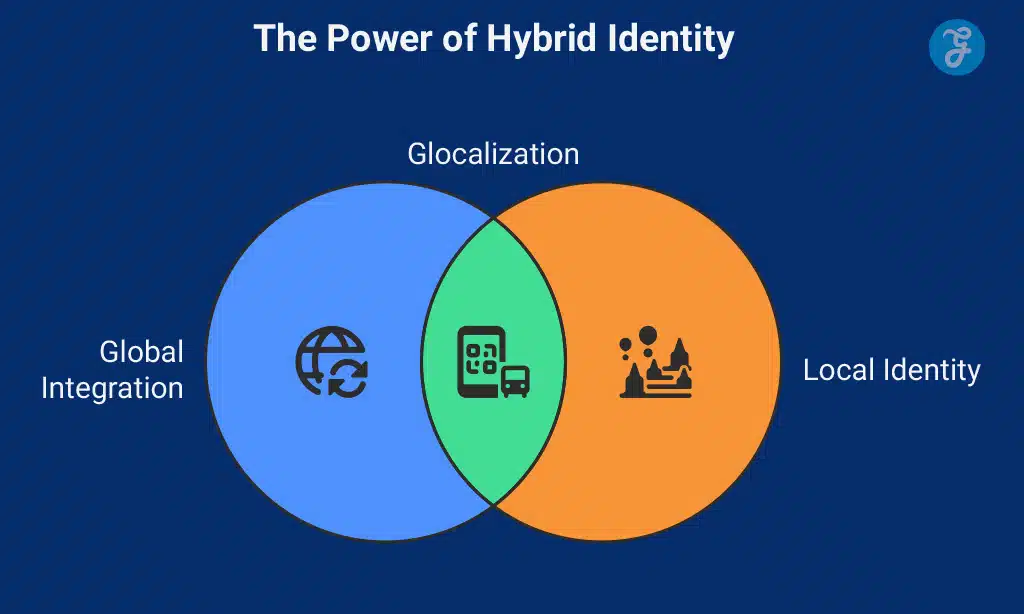
The future may not be a zero-sum game between nationalism and globalism.
A concept called “glocalization”—think global, act local—seeks to blend the benefits of both. Countries can preserve cultural identity while participating in global trade. Digital tools allow for global collaboration, even as communities double down on local pride.
Emerging trends point to
-
Regionalism: The African Union’s AfCFTA, ASEAN’s economic bloc, and Latin America’s Mercosur show that cooperation is increasingly regional.
-
Climate cooperation: Global problems like climate change require multilateral responses, even among nationalist states.
-
Youth and tech: Digital natives often hold dual identities—rooted in culture but connected to global movements and values.
The real challenge lies in managing global problems without erasing local identities. A hybrid model may be the only sustainable path forward.
Takeaways
Nationalism and globalism are not just political strategies—they’re competing visions for how humanity should organize itself in the 21st century.
Borders are returning, but they need not divide us. They can instead act as frameworks for cooperation, reflection, and renewal.
As the world navigates pandemics, AI, economic volatility, and ecological crises, we must ask: How do we draw borders that protect without isolating? That honor identity without excluding others?































