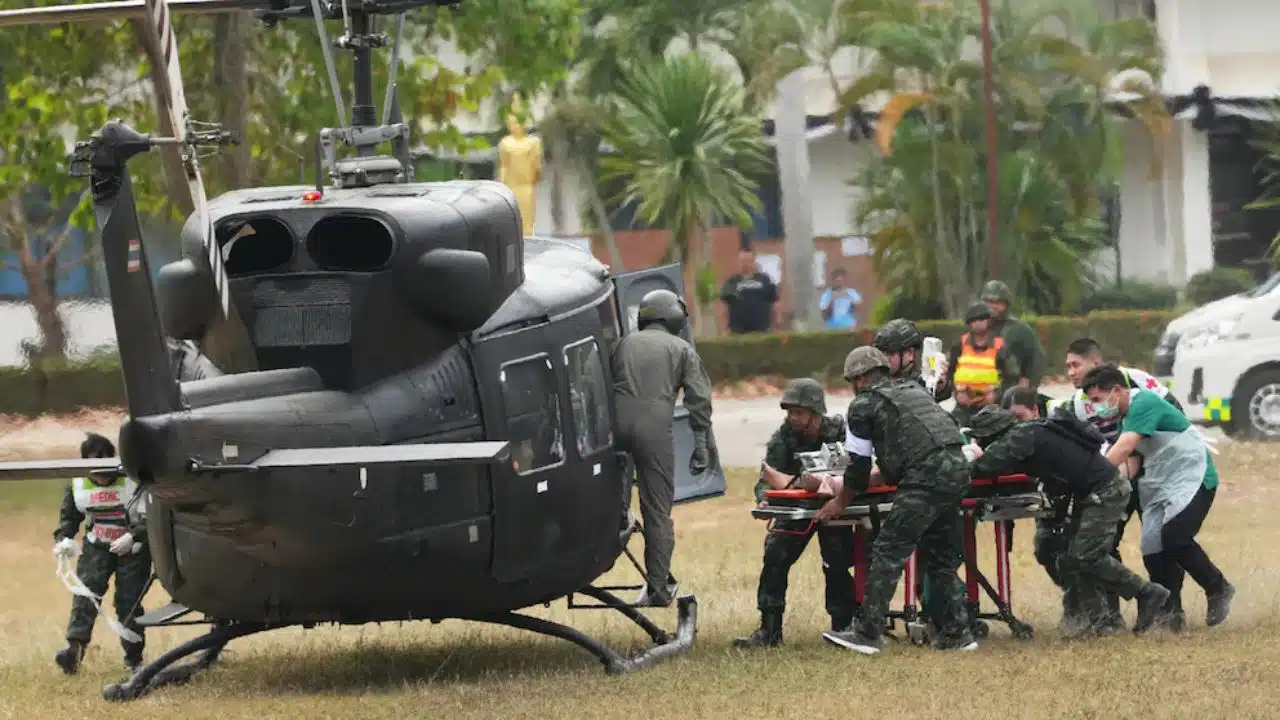
Tensions between Thailand and Cambodia have surged along their disputed 817-kilometer border, prompting Thailand to impose new curfews in coastal provinces amid deadly clashes that have claimed numerous lives. Fighting, rooted in longstanding territorial disputes over ancient temples like Preah Vihear, has displaced hundreds of thousands and defied recent ceasefire efforts brokered by U.S. President Donald Trump. As artillery exchanges and airstrikes continue, both nations trade accusations of targeting civilians, raising fears of a broader regional crisis.
Historical Roots of the Conflict
The Cambodia-Thailand border dispute traces back to the early 20th century, originating from the 1904 and 1907 Franco-Siamese treaties that ambiguously demarcated boundaries between Siam (modern Thailand) and French Indochina (including Cambodia). In 1962, the International Court of Justice awarded the 11th-century Preah Vihear Temple to Cambodia, but surrounding lands remained contested, fueling nationalist fervor on both sides.
Clashes intensified during 2008-2011, when UNESCO’s designation of Preah Vihear as a Cambodian World Heritage site sparked skirmishes that killed at least 20 people and displaced thousands. The ICJ reaffirmed Cambodia’s claim in 2013, yet ambiguities persisted, exacerbated by domestic politics and colonial-era maps. Tensions simmered until 2025, when a May skirmish in the Emerald Triangle killed a Cambodian soldier, reigniting hostilities.
Timeline of 2025 Escalations
The crisis began on May 28 with a brief firefight near Preah Vihear province, where both sides blamed the other for aggression. A Thai soldier lost a leg to a PMN-2 landmine on July 23 in Ubon Ratchathani, prompting Thailand to accuse Cambodia of violating the Ottawa Treaty. Full-scale fighting erupted on July 24 across multiple sites, including Ta Muen Thom and Ta Krabey temples, with Thailand launching F-16 airstrikes and “Operation Yuttha Bodin.”
By July 27, casualties mounted: Thailand reported 19 deaths (six soldiers, 13 civilians) and over 140,000 displaced; Cambodia tallied 13 fatalities (five soldiers, eight civilians) and 134,707 evacuees. A July 28 ceasefire in Malaysia held unevenly, violated by sporadic fire, landmine incidents, and drone incursions through August. Paetongtarn Shinawatra’s leaked call with Hun Sen triggered Thailand’s political crisis, leading to her ouster and Anutin Charnvirakul’s rise.
Renewed violence hit December, with clashes since December 7 killing at least 34 overall, including recent BM-21 rocket strikes. Trump claimed a renewed truce on December 13, but gunfire persisted, prompting Thailand’s Trat province curfew on December 14.
Recent Clashes and Curfew Expansion
On December 14, Thailand declared a curfew in Trat province’s five districts bordering Cambodia’s Koh Kong, banning movement from 7 p.m. to 5 a.m., excluding tourist islands like Koh Chang. This follows a Sa Kaeo curfew and martial law in border areas, as Thai forces destroyed a Cambodian bridge and targeted artillery positions.
Cambodia closed all border crossings on December 13, accusing Thailand of civilian strikes via jets and shells; Thailand insists operations hit military targets only. Rear Admiral Surasant Kongsiri reported “continuous clashes,” with a Thai soldier and civilian killed by Cambodian rockets. Fighting spread to coastal zones, involving drones, snipers, and naval alerts on fuel shipments.
Displacement has surged: Thailand evacuated nearly 400,000, Cambodia over 331,000 into 234 sites. Reports cite 23-34 deaths since early December, with hundreds injured.
| Aspect | Thailand Reports | Cambodia Reports |
|---|---|---|
| Recent Casualties | 1 soldier, 1 civilian (Dec 14 rockets); 12 total in Trat | 11 civilians, 1 soldier killed since Dec 7 |
| Displacement | 138,000+ in 300 centers; 400,000 total | 331,158; 246,210 in sites |
| Military Actions | Bridge destroyed, artillery ops in Koh Kong | Ceasefire offer rejected; accuses civilian hits |
Humanitarian and Economic Toll
Hundreds of thousands languish in shelters, with Thailand providing health services and relief. Cambodia reports shelling of schools, pagodas, and hospitals, including Phnom Dongrak facility damage. Over 700,000 displaced overall, straining resources amid fears of disease from uncollected bodies and unexploded ordnance.
Economically, border closures halt trade in fruits, goods, and tourism. Thailand eyes fuel blockades; Cambodia banned Thai imports earlier. Stock markets dipped post-leaks, reflecting instability. Aid groups like the Humanitarian Response Forum urge demining and access.
Civilians bear the brunt: A Thai gas station strike killed eight, including a child; Cambodian infants among dead. Evacuations continue in seven Thai provinces.
Diplomatic Efforts and Trump’s Role
U.S. President Donald Trump mediated a July ceasefire and October “peace deal” ceremony in Malaysia, warning of trade penalties. Yet December fighting undermined his December 13 claim of renewed truce after calls with Anutin and Hun Manet.
Thailand rejects third-party mediation, favoring bilateral talks; Cambodia seeks ICJ intervention. ASEAN’s Anwar Ibrahim proposed observers with U.S. satellites, but Bangkok demurs. A September General Border Committee pact removed heavy weapons and resumed some trade, yet violations persist.
Both downgraded ties post-July, recalling envoys. Hun Manet congratulated Anutin in September, signaling thaw attempts.
Military Strategies and Accusations
Thailand deploys F-16s, Gripens, and naval task forces, claiming successes like capturing Phu Makeua and downing Cambodian drones. Cambodia counters with BM-21 Grads, tanks, and RCAF units, holding temples amid claims of Thai cluster bombs and white phosphorus.
Landmines—new PMN-2s—maimed multiple Thai soldiers, breaching treaties. POW exchanges occurred, with Thailand releasing some under Geneva protocols; ICRC visited captives. Thailand accuses “human shields”; Cambodia decries UNESCO site damage at Preah Vihear.
| Weaponry | Thailand Use | Cambodia Use |
|---|---|---|
| Airpower | F-16 strikes on command posts | Drones, AA guns alleged |
| Artillery | Destroyed PHL-03, tanks | BM-21 rockets on civilians |
| Other | White phosphorus (denied as chem) | PMN-2 mines (Ottawa violation) |
Regional and International Reactions
ASEAN unity frays, with Malaysia mediating but Thailand insisting on bilateralism. UN appeals for restraint followed shelling into Laos. China and U.S. urged de-escalation; Pakistan sought Security Council session.
Human rights groups condemn hospital strikes as war crimes potential. Evacuees strain neighbors; tourism plummets near Koh Kong and Trat.
Path Forward Amid Uncertainty
Caretaker PM Anutin vows defense until security; Hun Manet offers ceasefires conditional on withdrawals. Trump holds parties accountable, eyeing tariffs. September pacts hint progress, but curfews signal distrust.
Demining, trade resumption, and ICJ compliance offer hope, yet nationalism and politics hinder. Border communities yearn for stability after months of fear