Have you ever noticed how many companies buy from the exact same suppliers year after year? They stick with what they know. But here is a secret I found: staying in that comfort zone actually leaves money on the table. When you purchase from just a few familiar vendors, you miss out on fresh ideas and better prices. You also miss a huge chance to support small businesses and marginalized communities.
Opening your procurement doors to new businesses changes everything. Companies with strong diversity programs see higher innovation rates and better financial performance. I am going to share everything I know about supplier diversity, why it matters, and how to implement it, so you can build a program that actually works.
Grab a cup of coffee, and let’s go through it together.
What is Supplier Diversity?
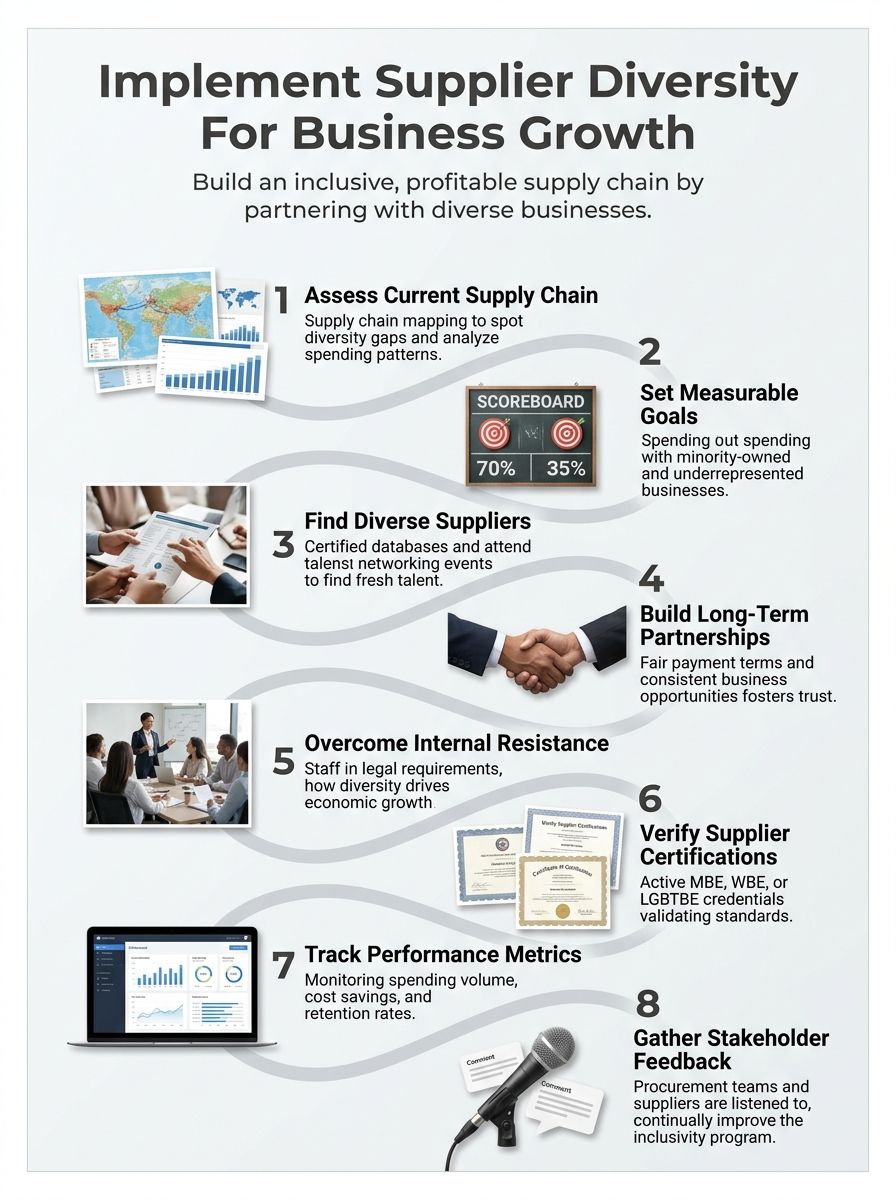
Definition of supplier diversity
Supplier diversity simply means working with businesses owned by people from different backgrounds and communities. These companies often come from marginalized groups, including women, minorities, veterans, and people with disabilities.
Organizations practice diversity in procurement by intentionally buying goods and services from these varied suppliers instead of sticking with the same old vendors. This approach breaks down barriers that kept certain entrepreneurs out of the business world for decades.
Think of supplier diversity as opening your company’s doors to fresh talent and new perspectives. Your procurement team actively seeks out minority-owned businesses, women-owned enterprises, and small businesses that bring different ideas to the table.
Economic growth happens when you give these companies real opportunities to compete and succeed. Inclusion becomes a concrete action that lifts up entire communities.
Key components of a supplier diversity program
Now that you understand what this means, we should explore the essential building blocks that make these programs work. A strong program needs several key parts working together to create real change in your supply chain.
- Leadership commitment: Executive sponsorship forms the foundation of any successful program. Company leaders must actively support diversity goals, allocate resources, and hold teams accountable for results.
- Clear diversity goals: Measurable targets give your program direction and purpose. You should set specific numbers for spending with minority-owned businesses and women-owned enterprises.
- Supplier identification: Outreach efforts help you find diverse businesses in your market. Your team should actively search for small business partnerships and engage with organizations that certify diverse suppliers.
- Procurement policies: Processes must change to support inclusivity across your supply chain. Your buying team needs new guidelines that give diverse suppliers a fair shot at contracts.
- Supplier engagement: Relationship building creates lasting partnerships with diverse vendors. A great example is Target’s Forward Founders program, which actively supports early-stage Black-owned businesses to help them scale and succeed.
- Training and awareness: Educational programs teach your workforce why diversity matters for business strategy. Employees learn how social impact and economic empowerment benefit everyone.
- Compliance monitoring: Reporting tracks whether your program meets legal requirements and goals. You collect data on spending, supplier performance, and program outcomes to ensure transparency.
Why Supplier Diversity Matters
Diverse suppliers inject fresh capital into local communities and create jobs across different regions. Minority-owned businesses, women-owned enterprises, and other marginalized groups bring energy to markets that traditional vendors often overlook.
A 2024 report from the National Minority Supplier Development Council shows exactly how big this impact is in the United States. They found that certified minority-owned businesses generate over $400 billion in annual economic output.
“These diverse businesses also support 2.2 million jobs, proving that supplier diversity is a major engine for the US economy.”
Procurement decisions ripple outward. They touch families, schools, and local infrastructure in meaningful ways.
Strategic sourcing from diverse suppliers generates competition that lowers costs for everyone. Your company’s purchasing power becomes a tool for real change, lifting entrepreneurs and strengthening the foundation of our economy.
Supplier diversity programs tackle real problems that marginalized communities face every day. Minority-owned businesses often struggle to get their foot in the door with large corporations.
These companies lack access to procurement opportunities that could transform their futures. Social equity means giving these businesses a fair shot at success.
You create pathways to economic empowerment when you work with diverse suppliers. A perfect example of this in action is Microsoft, which recently invested $2.9 billion with minority-owned and women-owned suppliers.
Small business partnerships with underrepresented groups generate wealth that stays local. Your procurement choices send a powerful message about what you value as an organization.
Inclusion goes beyond checking boxes on a diversity form. It means building real relationships with suppliers from different backgrounds and cultures.
Enhancing innovation and creativity
Beyond building a fair marketplace, diverse suppliers bring fresh ideas to your organization. Companies that work with minority-owned businesses and small business partnerships gain access to completely different perspectives.
These varied viewpoints spark creativity in product development, service delivery, and problem-solving. A 2024 study by the Hackett Group revealed a fascinating statistic: companies with mature supplier diversity programs achieve a 133% greater return on their procurement investments than those without them.
This proves that working with marginalized communities is a highly effective business strategy. Innovation naturally thrives in this environment for several reasons:
- Niche Market Access: Diverse businesses often serve specific communities, uncovering product needs that massive vendors miss entirely.
- Agile Problem Solving: Smaller suppliers adapt quickly to unexpected supply chain disruptions.
- Creative Cost Solutions: Introducing new voices into competitive bidding naturally forces all vendors to offer better rates.
Their resourcefulness and determination translate directly into better products and services for your company.
Benefits of Implementing Supplier Diversity Programs
By implementing supplier diversity programs, companies can improve their business reputation, expand their supplier network, and gain competitive market advantages.

Expanding supplier networks
Your supplier network grows stronger when you bring in diverse businesses. By casting a wider net, you tap into talent pools you might have overlooked before.
Your supply chain becomes far more resilient because you are not relying on the exact same vendors. The federal government is leading the way in this exact expansion.
The US Small Business Administration awarded a record-breaking $183 billion in prime federal contracts to small businesses in fiscal year 2024. That massive figure represents 28.8% of all federal contracting dollars.
Building a larger supplier base takes intention, but the payoff deeply matters. You will discover new capabilities, better pricing options, and suppliers who genuinely understand your market.
Improving business reputation
Companies that embrace supplier diversity build much stronger reputations in their markets. Customers, investors, and employees all notice when businesses commit to working with minority-owned businesses.
This commitment shows that your company takes corporate social responsibility seriously. Major US brands are making this a very public priority right now.
| Company | Public Diversity Commitment |
|---|---|
| Walmart | Pledged to source $10 billion annually from diverse suppliers. |
| Microsoft | Invested $2.9 billion with minority-owned and women-owned suppliers. |
| Target | Increased spending with Black-owned businesses by over 50% compared to 2020. |
Industry leaders recognize this effort immediately. Stakeholders feel proud to associate with organizations that create real economic empowerment and social impact.
Gaining a competitive market advantage
Diverse suppliers bring fresh ideas and new ways of thinking to your business. Your organization gains a sharp edge when you work with companies owned by minorities, women, and other underrepresented groups.
These businesses operate with an incredible agility that larger corporations simply cannot match. Your supply chain becomes stronger because you tap into different experiences.
Customers notice this difference right away. They see your commitment to inclusivity and economic empowerment, and your brand reputation grows as a direct result.
Your competitors who stick with the same old supplier networks will quickly fall behind. Market conditions shift fast, and a flexible, diverse supply chain adapts much quicker than a rigid one.
Steps to Implement Supplier Diversity
By following the proper steps below, you can implement supplier diversity for long-term business goals and diverse businesses.
Step 1: Assess your current supply chain
Start by mapping out your entire supply chain from top to bottom. List every supplier you work with right now, including their business type, location, and what they provide.
Many companies struggle with messy data during this stage. I highly recommend using a supplier data platform like TealBook. This software uses artificial intelligence to automatically cleanse your vendor master list and fill in missing diversity certifications.
This foundation matters because you cannot improve what you do not measure. Talk directly with your supply chain team about their awareness of diverse suppliers to spot any early resistance.
Step 2: Set measurable goals
Your supply chain strategy needs clear targets. Goals give your team direction and help track progress over time. You might aim to spend 15% of your procurement budget with minority-owned businesses within two years. Measurable goals transform supplier diversity from a nice idea into real action.
Breaking down your goals into smaller pieces makes them much easier to hit. Your team could set quarterly targets for onboarding new diverse suppliers or increasing spending with existing partners.
Step 3: Identify and onboard diverse suppliers
Finding diverse suppliers starts with knowing exactly where to look. Attend industry events, trade shows, and networking sessions that focus on minority-owned businesses.
You can also use specialized sourcing databases to speed up the process. A great tool for this is Supplier.io, which maintains a constantly updated database of over 20 million suppliers.
Onboarding these new partners requires a structured, friendly approach:
- Set Clear Expectations: Discuss payment terms and delivery schedules during the very first meeting.
- Start Small: Issue a pilot contract to build mutual trust before scaling up the order volume.
- Provide a Dedicated Contact: Assign a specific team member to answer the supplier’s questions and resolve issues quickly.
- Share Success Stories: Celebrate early wins publicly with your team to build momentum.
Step 4: Foster long-term partnerships with diverse businesses
Building strong relationships with diverse suppliers takes time and genuine commitment. Your company should invest in regular communication, fair payment terms, and consistent business opportunities.
Minority-owned businesses and small business partnerships thrive when they know you value their contributions. Share your business strategy with these partners so they understand your goals and can grow right alongside you.
Your procurement team should meet with these partners quarterly, ask for their feedback, and act on their suggestions. This economic empowerment creates a massive social impact in their communities.
Overcoming Challenges in Supplier Diversity
There are multiple challenges that come along the way. But overcoming the challenges in supplier diversity reassures businesses and builds awareness within the organization.
Addressing resistance to change
People often resist change because they fear the unknown. Your team might worry that new suppliers will disrupt current operations or that shifting procurement practices will create extra work.
Talk openly with your staff about why supplier diversity matters for your business strategy. I always find it helpful to share hard data.
Showing your team that mature diversity programs generate a 133% greater ROI is a great way to win them over quickly. Listen to their concerns without dismissing them.
Involve your team early in planning your diversity and inclusion initiatives. When someone on your team helps identify a great new supplier, recognize that effort immediately.
Ensuring compliance with legal requirements
Your procurement team must follow federal and state laws when building a diverse supply chain. Title VII of the Civil Rights Act protects against discrimination in hiring and contracting.
In the United States, the Small Business Administration (SBA) offers formal certifications for minority-owned businesses, women-owned businesses, and service-disabled veteran-owned businesses. Your company needs to track all supplier diversity activities and keep detailed records.
Documentation protects you if anyone questions your program later. Work with your legal team to create contracts that support economic empowerment for small business partnerships.
Building awareness and commitment within the organization
Your team members need to understand why supplier diversity matters to your business. Start by sharing real stories about how diverse suppliers have improved your company’s performance.
Host meetings where employees learn about the social impact and economic growth that come from working with minority-owned businesses. Let people ask questions, voice concerns, and share their own ideas.
“Supplier diversity transforms from a compliance checkbox into a true business advantage when executive leaders actively champion the program and share its successes.”
Leadership must model this commitment from the top down. Executives should publicly support inclusivity and hold departments accountable for hitting diversity goals.
Understanding Supplier Diversity Certifications
Supplier diversity certification is another important thing for businesses.
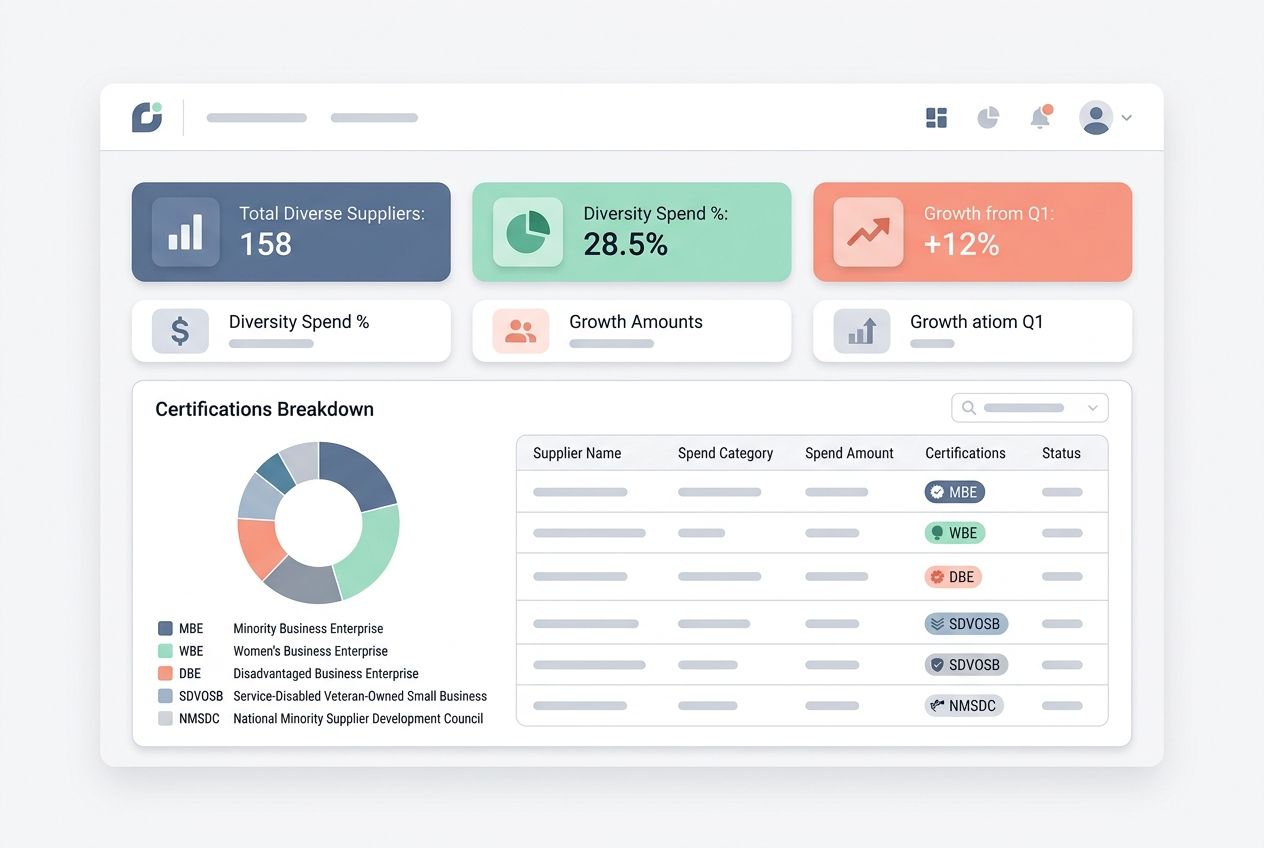
Overview of Available Certifications
Various certifications exist to validate your commitment to supplier diversity, and they carry real weight in the marketplace. Here is a breakdown of the most common certifications you will encounter:
| Certification Type | Issuing Organization | Focus Area | Key Benefit |
|---|---|---|---|
| Minority Business Enterprise (MBE) | National Minority Supplier Development Council (NMSDC) | Businesses owned by minorities | Opens doors to major corporate procurement opportunities |
| Women Business Enterprise (WBE) | Women’s Business Enterprise National Council (WBENC) | Businesses owned and controlled by women | Connects women entrepreneurs with Fortune 500 companies |
| Disadvantaged Business Enterprise (DBE) | U.S. Department of Transportation | Socially and economically disadvantaged businesses | Qualifies for federal transportation contracts |
| Service-Disabled Veteran-Owned Small Business (SDVOSB) | U.S. Small Business Administration (SBA) | Businesses owned by service-disabled veterans | Accesses federal contracting set-asides and preferences |
| Lesbian, Gay, Bisexual, Transgender Business Enterprise (LGBTBE) | National LGBT Chamber of Commerce | LGBTQ-owned businesses | Builds visibility and credibility in corporate supply chains |
| Asian Pacific American Business Enterprise (APABE) | Pan-Asian American Chamber of Commerce | Businesses owned by Asian Pacific Americans | Facilitates connections with major purchasing organizations |
| Hispanic Business Enterprise (HBE) | U.S. Hispanic Chamber of Commerce | Businesses owned by Hispanic entrepreneurs | Expands market reach and corporate partnerships |
| Small Business Enterprise (SBE) | Various state and local agencies | Small businesses meeting size standards | Qualifies for government contracts and local initiatives |
Each certification carries its own specific requirements, fees, and renewal timelines. For example, getting NMSDC certification demands rigorous documentation and annual audits.
Obtaining these credentials is not a simple one-time event. Your diverse suppliers must stay current with their paperwork to maintain eligibility.
The Importance of Certifications in Enhancing Programs
Now that you know what certifications exist, we should talk about why they actually matter for your program. Certifications act like an official seal of approval.
They tell the world your diverse suppliers meet strict, verified standards. They give your procurement team absolute confidence that these businesses have the skills to deliver quality work.
Your company gains immense trust with customers who deeply care about social impact and equity. Certifications transform your supplier diversity program from a good idea into a highly measurable strategy.
When you work with certified diverse suppliers, you show stakeholders that your economic empowerment efforts are entirely real.
Measuring the Success of Supplier Diversity Programs
Minority-owned businesses bring distinct perspectives that spark incredible creativity and drive a true competitive advantage. Companies that build diverse supply chains create massive ripple effects across entire industries.
Tracking key performance indicators (KPIs)
Measuring supplier diversity requires tracking specific metrics that show real progress and impact.
| KPI Category | Metric | Why It Matters | Measurement Method |
|---|---|---|---|
| Spending Volume | Total procurement dollars spent with diverse suppliers | Shows financial commitment and scale of program reach | Annual procurement reports; supplier payment records |
| Supplier Growth | Number of new diverse suppliers added yearly | Reflects expanding supplier network and opportunities | Supplier database tracking; onboarding documentation |
| Percentage Share | Percentage of total spend going to diverse businesses | Demonstrates program integration into a complete procurement strategy | Monthly or quarterly procurement analysis |
| Supplier Retention | Rate of repeat business with diverse suppliers | Indicates quality, reliability, and partnership strength | Contract renewal records; vendor performance reviews |
| Cost Savings | Pricing competitiveness and savings achieved | Shows diverse suppliers deliver financial value | Price comparison analysis; invoice audits |
| On-Time Delivery | Percentage of on-time shipments from diverse vendors | Measures operational performance and reliability | Delivery tracking systems; supplier scorecards |
| Quality Standards | Defect rates and quality compliance scores | Confirms diverse suppliers meet product standards | Quality inspection reports; ISO certifications |
| Certification Status | Number of suppliers holding recognized diversity certifications | Validates supplier legitimacy and program credibility | NMSDC, WOSB, LGBTBE database verification |
Tracking these metrics gives your organization concrete data. Numbers tell powerful stories that intuition simply cannot match. Set your baseline measurements before launching your program to create a clear starting point. Compare your quarterly results against your targets to spot trends early.
Rising spending percentages signal strong momentum and organizational support. Performance dashboards make this data visible across all departments.
Gathering feedback from stakeholders
Your stakeholders hold the keys to understanding whether your supplier diversity program actually works. Talk to your procurement team, finance leaders, diverse suppliers themselves, and employees across your organization.
Ask them what is working, what is broken, and where they see critical gaps. Their feedback tells you if your economic empowerment efforts hit the mark or completely miss the target.
Set up regular conversations with these groups, not just one-time annual surveys. Host casual focus groups with minority-owned businesses to hear directly about their experiences. This continuous feedback loop keeps your program honest, grounded in reality, and moving in exactly the right direction.
The Closing Thoughts
Supplier diversity stands as a powerful tool that transforms how companies operate, grow, and contribute to their communities. Organizations that commit to inclusive procurement practices gain access to fresh talent, innovative ideas, and stronger market positions.
This shift to inclusivity is a remarkably smart business strategy that pays real dividends. Taking action on supplier diversity requires courage, commitment, and consistent effort from leadership teams.
Corporations that prioritize economic empowerment through strategic sourcing demonstrate genuine corporate social responsibility. The path forward involves honest conversations, measurable goals, and real accountability.
Frequently Asked Questions
1. What is supplier diversity, and why does it matter for companies?
Supplier diversity is the practice of actively sourcing from businesses owned by underrepresented groups in the US, like those certified by the Women’s Business Enterprise National Council. It matters because a recent Hackett Group study found that companies dedicating significant spend to diverse suppliers can attribute up to 15 percent of their annual sales directly to those programs. Inviting everyone to the table gives you access to better ideas and significantly stronger financial returns.
2. How do I start a supplier diversity program in my business?
You can kick things off by auditing your current vendors using a tracking platform like Supplier.io to spot any immediate representation gaps. Next, set clear purchasing goals and reach out to organizations like the US Small Business Administration to find certified minority-owned vendors who perfectly fit your needs.
3. What challenges might pop up when adding supplier diversity?
Finding certified vendors can take a little extra time upfront. You might also face some internal resistance from team members who are simply used to doing things the old way. Just stay patient and use a clear onboarding process to help everyone adjust to the new vendors.
4. Can supplier diversity really help my company grow?
Yes, partnering with diverse suppliers opens up completely new local markets and builds massive customer trust that directly boosts your bottom line.