Student loan debt can feel like a heavy backpack you just cannot take off. You might see your monthly payment and wonder how you will ever pay it all back, with interest rates chipping away at your savings every month.
Are those long statements from your loan servicer giving you a headache? You’re not the only one who feels lost about repayment plans or worried about defaulting.
Here’s a fact that might shock you: The average student owes about $30,000 after college. Some folks owe much more, especially doctors and lawyers. This blog post gives simple hacks to help pay down your student loans faster and smarter—things no one explained in college admissions talks or during financial aid meetings.
Ready for hope on the horizon? Keep reading for tips that could save real money and years off your education loans.
Key Takeaways
- The average student loan debt is about $30,000 after college. Becky Blake paid off $68,000 in less than two years by using smart repayment tricks.
- Organize all your loans with their balance and interest rate. Tackle high-interest loans first using the debt avalanche method to save money over time.
- Extra payments lower your principal and help pay off loans faster. Even small side jobs or skipping coffee can add up for extra student loan payments.
- Refinancing can drop your rate from over 8% to as low as 3.94%, saving big on interest charges, but check if you lose federal benefits like Public Service Loan Forgiveness (PSLF).
- Some employers give monthly payments toward student loans, and tax laws let you deduct up to $2,500 in interest each year—always ask about these options when repaying debt.
Organize Your Student Loan Debt

Gather your federal student loans, credit cards, and private lender info into one spot. A clear snapshot of all your debts helps you breathe easier and gives you a plan for tackling that mountain.
List out all your loans and their details
Pull out your statements, email alerts, and online accounts. Write down each student loan you have. Note if it’s a federal direct loan, private lender debt, Parent PLUS Loan, subsidized or unsubsidized.
Jot the loan servicer for each one—like MOHELA or another company.
Mark the balance for every single loan and its interest rate. Becky saw her Parent PLUS Loans had high rates—some even hit 9.08%. She refinanced any with rates above 8% and took that number down to just 3.94%.
If you track which loans are eating up more money in interest, tackling repayment gets easier. Use this list as your roadmap before thinking about debt avalanche methods or refinancing options later on.
Prioritize loans based on interest rates and balances
Tackle student loans by sorting them. List out your federal student loans and private student loans. Check the interest rate and principal balance for each loan. High-interest rates mean you pay more over time, so put those at the top of your list.
Suppose you have a Direct Unsubsidized Loan from 2020 with a 6 percent interest rate and a private lender loan from 2019 at 7 percent—target the private loan first.
Focus on balances next. A higher balance grows faster with interest, so it can eat away at your wallet if ignored. Use tools like your credit report or online calculators to track these details easily.
The Debt Avalanche Method works here—it says to attack high-interest debt while making minimum payments on others, saving money in the long run. Your bank account will thank you as those numbers drop!
Use the Debt Avalanche Method
Wave goodbye to wild interest rates by wiping out your highest ones first, using the debt avalanche. Grab a calculator, plug in your student loans, and watch some big numbers crumble fast—math really can feel like winning a game show.
Focus on paying off high-interest loans first
High-interest student loans grow fast, like weeds after rain. Tackling them first saves you money. Becky shaved her private loan rate to 3.94 percent by refinancing with a bank, proving it can help cut costs quickly.
The Federal Reserve dropped rates two times in 2024, so checking for lower rates is extra smart this year.
Target high-interest federal loans or private student debt before lower-rate ones like subsidized loans or personal loan options with fixed interest rates. If you owe on direct unsubsidized loans at sky-high interest, pay as much as possible above the monthly payment each time you get cash—think tax refunds or cashback rewards from your visa card.
Aiming at those big-money eaters lets you watch your total balance shrink faster than if you split funds across every account evenly.
Make Additional Payments
Toss a little extra cash at your principal balance, and you might watch those federal student loans melt away faster than ice cream on a sunny day—stick around for some clever ways to pay less interest!
Apply extra funds directly to the loan principal
Placing extra funds on your loan principal works like magic. Becky used cashback rewards and even surprise money, such as tax refunds, for this trick. She paid more than her regular monthly payment.
Each dollar went straight to the principal balance of her student loans, not just the interest. Over time, this lowered what she owed and saved a big pile in interest charges.
Tell your loan servicer that your extra money is for the principal only. This step makes sure you are shrinking your debt faster with every bit you pay. Even biweekly payments or sending small amounts from side hustles can make a dent in both federal student loans and private student loans.
The less you owe on the main chunk—the principal—the quicker you reach freedom from debt’s grip!
Consider biweekly payments to reduce interest
Switching to biweekly payments reduces your loan interest faster. You pay half of your monthly payment every two weeks instead of one full payment each month. Over the year, this equals 26 half-payments, or 13 full ones—one extra payment compared to the usual 12.
This method cuts more off your principal balance and helps save on total interest.
Suppose you have private student loans with a high interest rate. Biweekly payments gradually reduce that debt while lowering what you owe in fees over time. Loan servicers for federal student loans often allow this setup too.
Even a small change now can put money back in your pocket by shrinking both the term and total cost of repayment options such as income-driven repayment plans or standard repayment schedules.
Refinance for Better Rates
Swap your higher-rate student loans for a new one with lower interest, and see if your credit score or recent job might snag you a rate worth bragging about—there’s more to this trick just ahead!
Explore lower interest rate options
Lower interest rates can save you money on your student loans. Many private lenders and banks offer loan refinancing options with lower interest rates than federal student loans. In 2023, some people cut their loan rates from over 7 percent to as low as 4 percent by switching to a new lender.
Each drop in rate means less spent over the life of a loan and often leads to faster pay off.
You may also choose between fixed or variable rates during refinancing, depending on what works for you. A strong credit score helps get better terms from private lenders or your bank.
Combine several loans through consolidation for easier management and one monthly payment. Keep an eye on offers that match your needs—saving big is not just for coupons at the grocery store!
Combine multiple loans for easier management
Loan consolidation puts your federal student loans into one neat package. Instead of paying many loan servicers every month, you make just a single payment. This can help if you juggle several direct subsidized loans and direct unsubsidized loans with different rates and due dates.
For example, say you have four separate monthly bills from three lenders, all with their own interest rates—now all those hassles go away at once. Refinancing does the same thing for private student loans or mixes both federal and private debts together but be careful: switching could mean losing some benefits like income-driven repayment plans or public service loan forgiveness programs.
Many students find that this simple change reduces stress, keeps them on track, and helps improve their credit score over time since missed payments become less likely when there is only one to keep track of.
Leverage Loan Forgiveness Programs
Check if you qualify for student loan forgiveness, like public service loan forgiveness (PSLF) or pay as you earn (PAYE), and see if wiping out some debt is easier than you think—curious how it works? Keep reading.
Check eligibility for federal loan forgiveness or repayment plans
Federal student loans have some sweet options for debt forgiveness. Income-driven repayment plans can wipe out the rest of your balance after 20 to 25 years, which feels like a light at the end of a long tunnel.
Public service loan forgiveness (PSLF) also exists, but only about 2% get approved—so look carefully at the rules before you count those chickens.
Work in public service? Teachers, nurses, and government workers may qualify for programs that erase what you owe faster. The Pay As You Earn (PAYE) plan is popular too, capping your monthly payment based on income and family size.
Talk to your loan servicer or check StudentAid.gov to find out if any repayment options fit you like a glove. If you hold private student loans though—those usually cannot be forgiven by federal programs.
Consider options for public service workers and teachers
Public service loan forgiveness (PSLF) offers big help for workers in jobs like firefighting, law enforcement, health care, or teaching. After making 120 qualifying monthly payments on federal student loans while working full-time at a government or nonprofit job, you can get the rest of your balance wiped out.
Many people miss this because they forget to submit their yearly employment certification forms to their loan servicer.
Teachers have extra options. Teacher Loan Forgiveness may cancel up to $17,500 from direct subsidized loans or direct unsubsidized loans if you work five straight years at a low-income school.
Special plans also exist for the military and groups tied to Perkins Loan Teacher Cancellation. Both public service and teacher programs shave years off repayment time and can save thousands in interest over your career.
Increase Your Income
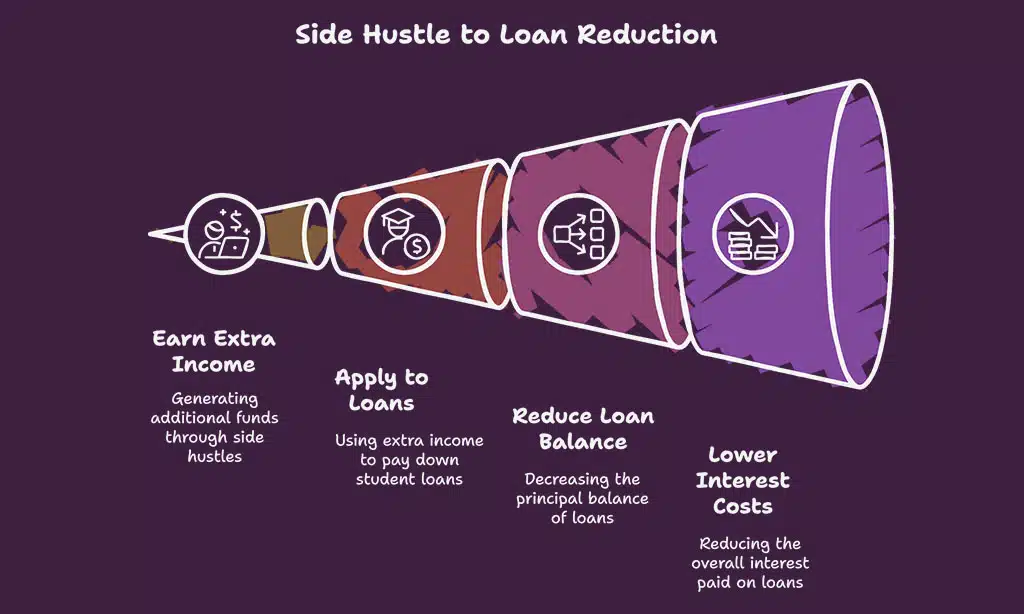
Boost your cash flow with a side gig or pick up extra shifts, and watch those student loans shrink—stick around for more smart ideas!
Take on a side hustle or freelance work
Becky worked a side job and paid up to $2,500 each month toward her student loans. Small jobs can fill your checking account fast. Drive for rideshare companies like Uber, deliver food with DoorDash, or sell crafts online.
Freelance gigs use skills you already have — try writing, tutoring math, or graphic design for extra cash. Put these new dollars directly toward your principal balance on private student loans or federal student loans.
A good side hustle makes the monthly payment less scary and helps lower interest costs over time. Many students now pay bills by teaching music lessons, babysitting weekends, or walking dogs in their free time.
Even small steps help chip away at that loan servicer’s bill bit by bit — just watch those numbers shrink faster than you thought possible!
Monetize hobbies or skills
Turn your hobby into real cash. Love painting? Sell art online. Play guitar? Teach music on weekends or start a YouTube channel. Take great photos? People pay for pet portraits, family shoots, and Instagram content.
Freelance gigs add up fast—walk dogs, fix websites, knit scarves. Each extra dollar can hit your loan principal right in the gut.
Use those earned wages to knock down monthly payments on federal student loans or private student loans faster than if you waited until tax refunds rolled around. A side hustle—from babysitting to creating digital art—can slice months off repayment plans like Pay As You Earn (PAYE) or income-driven repayment plans.
Even small jobs build up over time and help keep collection agencies away from your door while boosting that credit score bit by bit.
Reduce Unnecessary Expenses
Cutting out fancy coffee runs and unused streaming services can help you stretch every dollar, so keep reading for more clever ways to pay off those student loans faster.
Create a strict budget to free up repayment funds
A strict budget acts like a fence for your cash. List out every dollar you make and spend, down to snacks and those subscription services that sneak up on your bank account. Using apps like EveryDollar helps track each purchase fast, so nothing slips through the cracks.
Drop luxury items or unused streaming services, freeing more money for monthly payment toward student loans.
Even skipping one fancy coffee a week could save $20 a month—enough to zap extra funds at your principal balance. Apps show where leaks happen in your wallet, making it easier to shift spending from wants to loan repayment options or saving on a valuable education.
With federal student loans hanging over your head, every little bit counts toward shrinking what you owe—and maybe boosting your credit score along the way.
Cut back on luxury items and subscriptions
Cutting your streaming services or skipping that daily coffee can make a big dent in your student loans. Many people pay $100 or more each month for online platforms, box deliveries, and designer brands they rarely use.
Trimming just two or three of these subscriptions can quickly free up funds for loan payments. That latte habit? At $5 per weekday, this adds up to about $100 monthly—enough to lower the principal balance on federal student loans.
Luxury shopping apps, gym memberships with extra fees, and premium music accounts often slip under the radar. Try using tools like budgeting calendars or spending trackers to spot these expenses fast.
Directing new savings straight at high-interest private student loans helps you save even more over time by avoiding extra interest charges and making faster progress tackling debt avalanche style.
Explore Employer Repayment Assistance
Ask your boss if the company offers student loan help, and you might start stacking up extra payments faster than coffee perks—curious what other tricks could boost your payoff game? Keep reading.
Ask if your employer offers student loan repayment benefits
Some employers help pay student loans as a perk. This repayment assistance can take a big bite out of your balance. Many companies add money every month, sometimes $100 or more, straight to your loan servicer.
Over one year, that could be as much as $1,200 in extra payments. Major brands like PricewaterhouseCoopers and Aetna offer this benefit.
Check the employee handbook or talk with human resources about loan repayment options or income-driven repayment plans tied to job benefits. Federal loans and private student loans may both qualify for these programs, but rules differ company by company.
Some jobs even work with public service loan forgiveness (PSLF) for those in non-profit or government roles—it’s worth asking about every chance you get!
Take Advantage of Tax Deductions
The IRS lets you deduct some student loan interest each year, even if you do not itemize. Grab your tax forms, talk to a tax preparer or use software—this little move might fatten your refund check, without breaking a sweat.
Deduct student loan interest during tax filing
Tax laws let you knock off up to $2,500 each year for interest from your federal student loans or private student loans. This tax break works like a small shield, lowering your taxable income and giving you some breathing room every April.
For many borrowers, that means more cash back as tax refunds or less money owed on taxes.
Your loan servicer sends a 1098-E form if you paid more than $600 in interest last year. Put that number right into your taxes. Even if you use an income-driven repayment plan like Pay As You Earn (PAYE), those monthly payments may qualify too.
Don’t forget about this deduction—your wallet will thank you in the long run!
Takeaways
Student loan debt can feel like a never-ending treadmill. Becky Blake knocked out $68,000 in less than two years using tricks most people skip. List your loans, use the right repayment plan, and look into options like income-driven repayment or even public service loan forgiveness (PSLF).
Keep your eyes open for lower rates with loan refinancing. With grit and smart moves, student aid doesn’t have to weigh you down forever.
FAQs on Student Loan Repayment Hacks
1. How does loan consolidation help with student loans?
Loan consolidation combines your federal student loans into one big loan. You get a single monthly payment, which can be easier to track than juggling many bills. Sometimes, you might score a lower interest rate, but not always.
2. What is public service loan forgiveness (pslf) and who gets it?
Public service loan forgiveness is for folks working in certain jobs like teachers or nurses at nonprofits or the government. If you make 120 on-time payments under an income-driven repayment plan, the rest of your direct subsidized and unsubsidized loans may vanish.
3. Can I use income-based repayment if my job pays less?
Yes, income-based repayment plans adjust your monthly payment based on what you earn and family size. This helps when money feels tight after college but those federal student loans keep knocking.
4. Should I try refinancing or stick with my current loan servicer?
Refinancing can drop your interest rate if you have good credit scores and steady paychecks from work outside school. But watch out—if you refinance federal student aid into private student loans, perks like forbearance or tax credits could disappear faster than socks in the dryer.
5. What happens if I fall behind on payments?
If life throws curveballs and you miss payments, debt collectors might call or send letters about unpaid principal balances plus extra fees from collection agencies. Credit counseling can guide you back on track before things spiral toward bankruptcy court—or worse—a mortgage application nightmare years down the road!