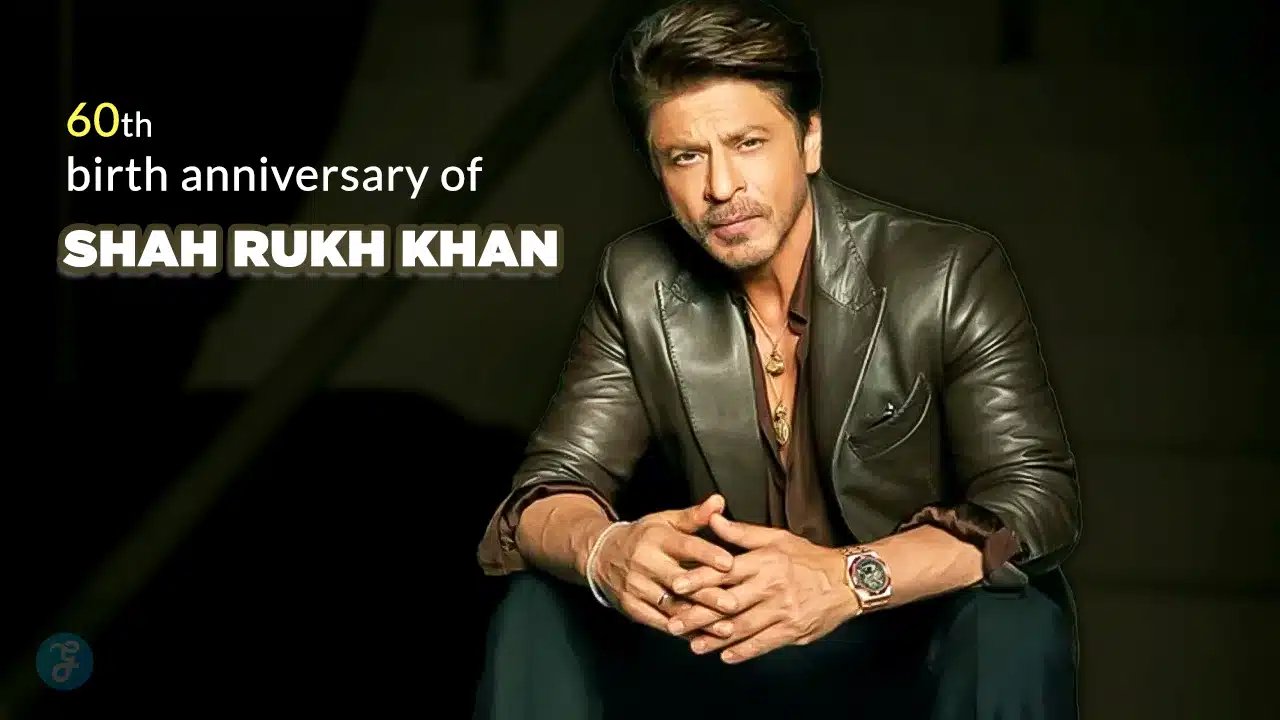
From a modest Delhi boy to the face of global Indian cinema—Shah Rukh Khan’s story could easily be one of his own films. On November 2, 2025, as he turns 60, SRK remains not merely an actor but an idea—one that embodies persistence, intellect, and heart.
Happy Birthday Shah Rukh Khan.
For over three decades, he has redefined what it means to be a star—combining the warmth of an everyman with the precision of a strategist. His stardom is not built on lineage but on learning, not inheritance but intelligence.
At 60, Shah Rukh Khan stands as a living parable of self-made success—one that transcends film, geography, and even time.
The Making of a Dream: From Delhi Streets to Film Sets
Born on November 2, 1965, in New Delhi, Shah Rukh Khan grew up in a middle-class household. His father, Meer Taj Mohammed Khan, was a freedom fighter; his mother, Lateef Fatima, a strong-willed woman who encouraged his curiosity.
At St. Columba’s School, SRK excelled in academics, sports, and drama. His teachers called him the “Perfectionist of Expression.” He later graduated from Hansraj College in economics and joined Barry John’s theatre group, where his confidence found a stage.
But tragedy struck early—he lost both parents before his 25th birthday. With just ₹1,500 and a suitcase full of dreams, he moved to Mumbai, saying, “I came to act—and if I fail, I’ll pack my bags and go back.”
He never went back.
Television roles in Fauji and Circus in the late 1980s showcased his effortless charisma. But what truly defined him was his unshakable drive. SRK didn’t wait for Bollywood to welcome him—he broke down the door, smiling all the way.
Rise of a Reluctant Romantic: Reinventing the Hindi Hero
When Shah Rukh entered films in the early 1990s, Bollywood’s formula was fixed: heroes were flawless, villains were wicked, and romance was ornamental. SRK shattered that binary.
His early hits—Deewana (1992), Baazigar (1993), and Darr (1993)—featured him as morally complex anti-heroes. He wasn’t the savior; he was human, restless, and unpredictable.
Then came 1995. Dilwale Dulhania Le Jayenge changed not just his career but Indian pop culture forever. As Raj Malhotra, SRK embodied the new Indian man—global yet rooted, charming yet emotional. The film ran for over 25 years at Mumbai’s Maratha Mandir theatre.
In Dil To Pagal Hai, Kuch Kuch Hota Hai, and Kabhi Khushi Kabhie Gham, he transformed love into philosophy. He didn’t just play lovers—he reshaped masculinity with tenderness and depth.
As critics noted, “SRK didn’t act romance; he made romance an act of intelligence.”
Stardom with Substance: The Brain Behind the Brand
Unlike most stars, Shah Rukh Khan approached fame as a strategic craft. Every gesture, quote, and appearance was calibrated yet sincere.
He built his empire through Red Chillies Entertainment, a production and VFX powerhouse that transformed Indian cinematic visuals. His IPL team, Kolkata Knight Riders, became one of the most profitable sports franchises in India.
SRK’s business acumen extended beyond entertainment—his global partnerships with Hyundai, Dubai Tourism, and TAG Heuer turned him into an international brand ambassador. In 2023, Forbes ranked him among Asia’s top-earning entertainers, proving that longevity is not luck; it’s intelligent reinvention.
He once said, “I’m not arrogant; I’m ambitious. Arrogance closes doors—ambition keeps them open.” That line could easily serve as the blueprint of his empire.
The Global Ambassador: Taking India to the World
To the world, Shah Rukh Khan is not just a film star—he is India’s cultural diplomat.
From Germany to Egypt, from Morocco to Malaysia, SRK’s fans see him as more than an actor; they see him as an emotion. My Name Is Khan (2010) made him a global voice for empathy and identity, while Chennai Express and Pathaan bridged commercial cinema with mass appeal.
He received France’s Légion d’honneur, UNESCO’s award for philanthropy, and invitations to speak at Yale, Harvard, and TED Talks—a rare achievement for an Indian entertainer.
“Don’t try to be the next me,” he once told students, “Try to be the next you.”
In an era of fleeting fame, SRK remains a global constant—India’s soft-power ambassador whose language of love needs no translation.
Reinvention at 60: The Comeback King
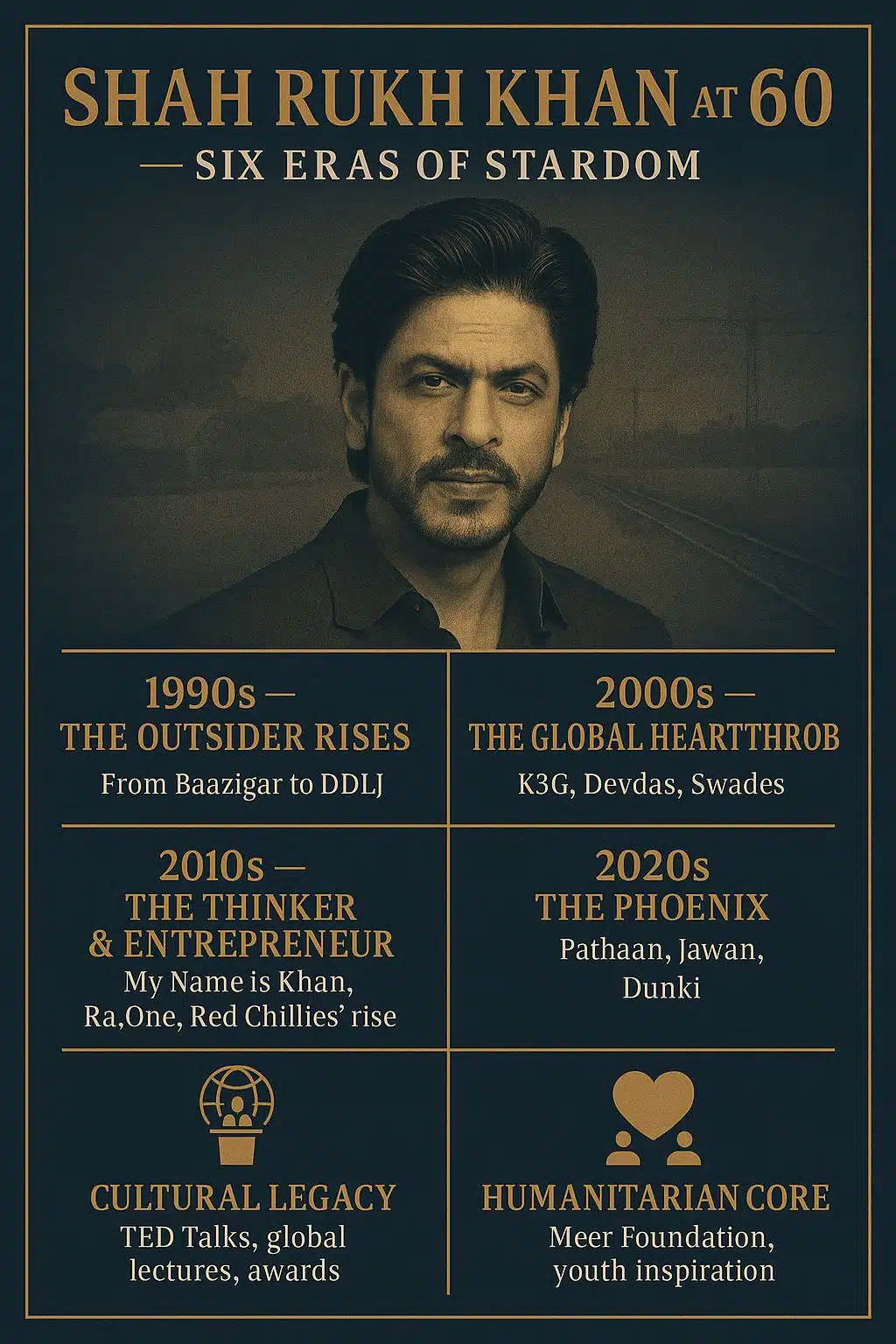
After a quiet period post-2018, critics whispered that Shah Rukh’s era had ended. But true kings never retire—they regroup.
2023 became his year of resurrection. Pathaan exploded at the box office, crossing ₹1,000 crore globally. Jawan broke records within weeks, while Dunki showed his emotional side again.
At nearly 60, SRK returned not as nostalgia, but as relevance reborn. His ability to adapt—from romance to action to social drama—reflects a rare artistic agility.
When asked about his comeback, he smiled, “I never went anywhere. I was just learning how to fly differently.”
That humility, paired with resilience, is what sets him apart—he turned age into authority and experience into evolution.
The Man Behind the Myth: Philosophy, Family, and Humanity
Behind the glamour lies a disciplined man—fiercely private, deeply reflective. His marriage to Gauri Khan has endured over three decades; his children, Aryan, Suhana, and AbRam, remain his grounding force.
Off-screen, SRK’s Meer Foundation funds healthcare for acid-attack survivors, child cancer patients, and disaster victims. He rarely publicizes his charity work, saying, “Real kindness doesn’t need applause.”
Even after global superstardom, he speaks of gratitude, not entitlement. “I am just a middle-class boy who got lucky,” he told David Letterman—and yet, everyone knows luck alone couldn’t build a legend.
His humility coexists with sharp wit—whether debating at Yale or joking on Koffee with Karan, SRK proves intellect can be charismatic.
In an age of manufactured celebrity, he remains authentically human.
Legacy: The Idea of Shah Rukh Khan
What makes Shah Rukh Khan timeless isn’t merely his films, but his philosophy of living.
He personifies aspiration for millions who dare to dream beyond their postcode. He teaches that stardom isn’t about perfection—it’s about persistence. He made empathy fashionable, failure forgivable, and ambition universal.
His influence extends beyond Bollywood: CEOs quote him, authors study him, and brands emulate his storytelling genius.
He once said, “Success is not a good teacher; failure makes you humble.”
That humility, forged through struggle and intellect, is the cornerstone of his empire.
At 60, SRK’s greatest achievement isn’t his fame—it’s that he made millions believe in their own stories. He redefined stardom not as distance from people, but as a bridge to them.
Final Words
In an industry obsessed with youth and trends, Shah Rukh Khan remains India’s most enduring brand—one powered not by vanity, but by vision. Sixty years on, his smile still carries the warmth of possibility; his presence, the promise of excellence.
He isn’t just the man who made us fall in love—he’s the man who made us believe that we could rise.
Long live the King.