Russia has issued one of its most serious warnings since the outbreak of the war in Ukraine, declaring that it will “retaliate decisively” if European nations decide to deploy their troops on Ukrainian soil. The statement, delivered through the Kremlin and reinforced by several high-ranking officials, marks an escalation in rhetoric that could reshape the already volatile security dynamics in Eastern Europe.
The warning, which came amid reports of growing discussions within NATO countries about direct military assistance to Kyiv, signals that Moscow sees any Western troop deployment as a direct threat to its national security and sovereignty. This development rekindles fears of a broader confrontation between Russia and the West — a scenario European leaders have long sought to avoid.
Background: The War at a Critical Juncture
The war in Ukraine, nearing its fourth year, continues to devastate large swaths of the country and strain global diplomacy. Since Russia’s invasion in February 2022, the conflict has drawn in immense international involvement through arms supplies, sanctions, intelligence support, and humanitarian aid — but not direct combat troops from NATO countries.
Initially, Western support focused on supplying Kyiv with defensive weaponry and financial assistance. Over time, the scope of aid expanded to include advanced tanks, long-range missiles, and air defense systems such as Patriot and IRIS-T. Despite these measures, Ukraine continues to face mounting pressure on the frontlines after months of attritional warfare.
As Russia consolidates its territorial control over parts of eastern and southern Ukraine, Ukrainian President Volodymyr Zelensky has repeatedly appealed for stronger international backing — including the possible deployment of allied troops for support and training missions. It is this discourse, reported in several European capitals, that triggered Moscow’s latest warning.
Kremlin: “Red Lines Must Not Be Crossed”
Kremlin spokesperson Dmitry Peskov told reporters in Moscow that the deployment of European troops would mark a “dangerous and irresponsible provocation.” He emphasized that Russia views such a move as tantamount to direct involvement in the conflict.
“If European nations send their troops to Ukraine, they must understand that these forces will become legitimate targets for our military. This will fundamentally change the nature of the conflict,” Peskov said.
Russian Foreign Minister Sergey Lavrov also reinforced the warning, calling it “a direct threat to Russia’s national interests” and accusing NATO of “testing Moscow’s patience.” In a televised interview, Lavrov claimed that the West’s continued escalation “leaves little room for diplomacy.”
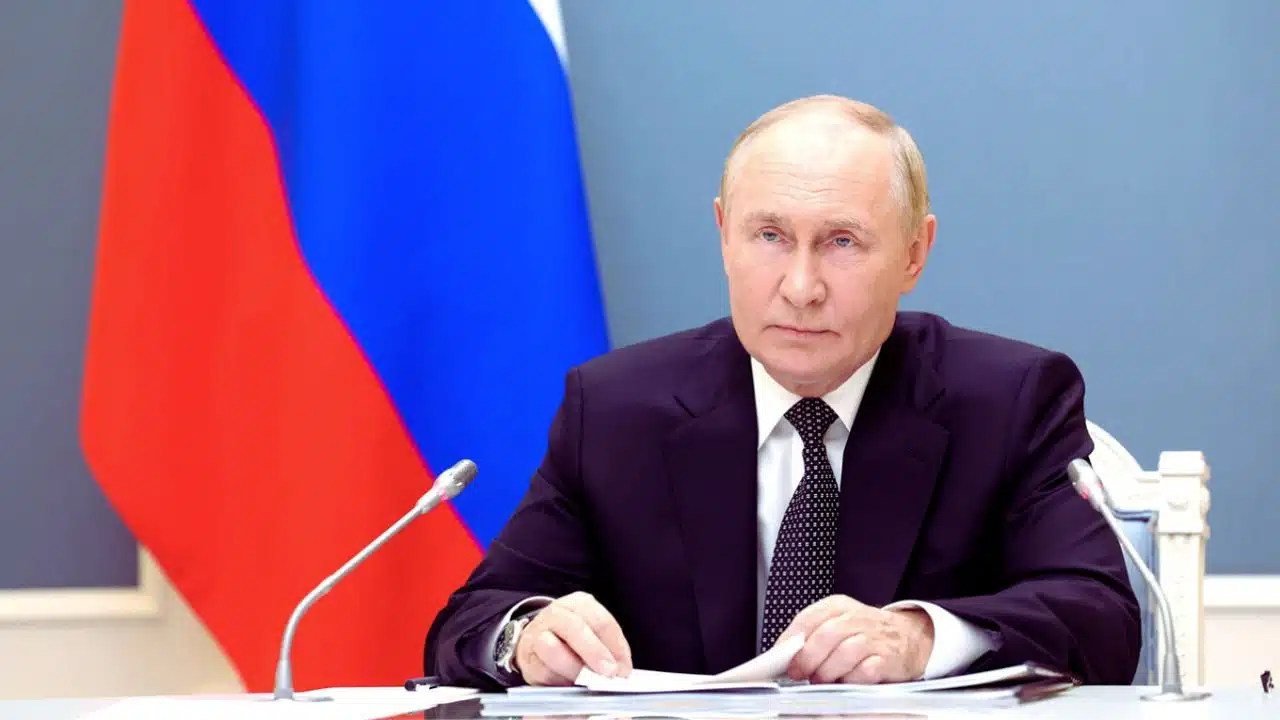
President Vladimir Putin, during a meeting with defense officials, echoed these sentiments and instructed the Russian military to “remain on high alert.” He argued that Western involvement “undermines the possibility of peace” and accused NATO of transforming Ukraine into a “proxy battlefield.”
European Leaders Divided Over Troop Deployment
In Europe, the idea of deploying Western troops to Ukraine remains deeply divisive. Some nations, particularly in Eastern Europe, have floated the concept as a necessary measure to deter further Russian aggression. Others — especially within Western Europe — remain cautious, fearing a direct confrontation with a nuclear-armed Russia.
French President Emmanuel Macron has emerged as one of the more vocal proponents of reconsidering Europe’s military posture. Earlier this week, Macron stated that “nothing should be ruled out” if Russia continues to expand its military operations. His comments drew mixed reactions across the continent.
Poland and the Baltic states, which have historically warned about Moscow’s ambitions, echoed Macron’s warning but stopped short of pledging immediate deployment. Meanwhile, Germany, Italy, and Spain urged restraint, favoring continued arms deliveries and diplomatic efforts over direct military intervention.
German Chancellor Olaf Scholz warned that “any escalation involving NATO troops on the ground would risk plunging Europe into a war none of us want.”
Britain, one of Ukraine’s staunchest backers in the alliance, confirmed that it has no plans to send combat troops but would continue its training missions outside Ukraine’s borders.
NATO’s Delicate Balancing Act
The tension over troop deployment underscores NATO’s difficult balancing act — supporting Ukraine without triggering a direct war with Russia. Since the start of the invasion, NATO has maintained that it is not a party to the conflict, even as it supplied Kyiv with the equipment and intelligence vital to Ukraine’s defense.
NATO Secretary General Jens Stoltenberg reiterated that the alliance has no immediate plans for troop deployments inside Ukraine. “We will continue to support Ukraine with weapons, training, and intelligence, but NATO forces will not participate directly in combat operations,” he said.
Nevertheless, Stoltenberg acknowledged that “the situation remains fluid” and that NATO continues to prepare for “contingencies that could arise if the security of member states is threatened.”
Behind closed doors, however, sources in Brussels say some NATO members are quietly discussing limited deployments — such as peacekeeping or humanitarian protection missions — if Russia were to stage a major new offensive.
Ukraine’s Plea: “We Need Boots on the Ground”
Ukrainian officials, facing mounting battlefield losses and energy shortages, welcomed the debate over troop assistance. President Zelensky, speaking at a press conference in Kyiv, said that Western troop involvement “would send a powerful message to Moscow that Europe will not abandon Ukraine.”
“We are fighting for our survival, for the security of Europe, and for the principles of freedom and sovereignty,” he said. “If Europe recognizes this, then our defense must become a shared responsibility.”
Ukraine’s defense ministry has repeatedly appealed for more direct involvement, particularly in air defense operations, training missions, and logistics protection. Kyiv argues that Russian advances in Donetsk and Zaporizhzhia regions have stretched its army to the brink.
While Western nations have pledged more funds and weaponry, Ukrainian officials insist that without physical deployment or direct air support, their capacity to resist prolonged Russian offensives may erode.
Moscow’s Military Posture and Nuclear Undertones
Russia’s response to the troop-deployment debate has included not just diplomatic warnings but military posturing. Over the past week, Russian state media showcased new footage of missile drills and naval maneuvers in the Black Sea, intended to emphasize Moscow’s readiness for escalation.
Experts note that these displays serve both as deterrent signaling and domestic propaganda. The Kremlin maintains that the “special military operation” remains under control, but Western intelligence reports suggest Russia is reinforcing its positions and mobilizing additional units near the Ukrainian border — possibly in anticipation of new developments.
Perhaps most concerning are renewed hints of nuclear rhetoric. Dmitry Medvedev, deputy chairman of Russia’s Security Council, warned that Western involvement “could lead to catastrophic consequences, including the use of all available means of defense.” This language, reminiscent of the early stages of the war, has reignited global anxieties about potential nuclear escalation.
Reactions from Washington and NATO Allies
The United States, while reaffirming its support for Ukraine, distanced itself from discussions about European troop deployments. A White House spokesperson said the U.S. “has no plans to send American personnel” to Ukraine and continues to focus on supplying Kyiv with matériel and financial assistance.
U.S. Secretary of State Antony Blinken urged both sides to avoid “steps that could lead to wider war,” emphasizing the need to maintain unity among allies while managing escalation risks.
“We understand Ukraine’s need for support, but it’s vital that we prevent this conflict from spreading beyond its current boundaries,” Blinken said in Brussels following a meeting of NATO foreign ministers.
Analysts say Washington’s cautious stance reflects concerns about domestic fatigue after nearly four years of supporting Ukraine, alongside growing political divisions in Congress over defense spending.
Rising Concern in Global Capitals
Beyond Europe and the U.S., global reactions have varied. China called for restraint, warning that “European militarization of the Ukraine conflict will only deepen global instability.” Beijing repeated its earlier proposal for peace negotiations, which the West largely dismissed as biased toward Moscow.
India, maintaining its non-aligned position, urged both sides to pursue dialogue and reiterated its call for “a peaceful and sustainable outcome to the conflict.” Meanwhile, Turkey — a NATO member with strong ties to both sides — expressed concern about “unpredictable consequences” if European troops were to enter Ukraine.
In the Middle East, countries like Iran and Syria voiced support for Russia’s position, framing it as a pushback against Western “interventionism.” Such statements highlight how the war has become an arena for competing geopolitical narratives.
Economic Pressures and the Energy Factor
The crisis continues to send ripples through the global economy. European economies remain deeply affected by the energy disruptions and supply-chain instability linked to the war. Natural gas prices have fluctuated sharply following renewed Russian threats to limit exports through pipelines that still supply parts of Central and Eastern Europe.
Analysts warn that if hostilities intensify or spread to NATO-controlled territories, the European economy could face a new wave of inflation and recessionary pressure. The European Central Bank has already signaled concern that prolonged instability could undermine the continent’s post-pandemic recovery.
Moreover, markets in Asia and North America have reacted nervously to reports of Russian warnings, with oil prices briefly surging after Moscow’s latest statements. Investors fear that a broader European war would deepen the global energy crunch.
Information Warfare and Propaganda Battles
As rhetoric intensifies, the conflict has also entered a heightened phase of information warfare. Moscow has accused Western countries of pushing “false narratives” about the nature of the war, while Western media and intelligence agencies continue to expose Russian disinformation campaigns targeting European audiences.
Cyberattacks attributed to Russian-linked groups have spiked in recent months, striking critical infrastructure in Poland, Slovakia, and the Baltic states. European cybersecurity agencies warn that Moscow is using hybrid warfare tactics — combining cyber agitation, disinformation, and economic disruption — to erode unity among NATO members.
At the same time, Russia’s state-controlled media continues to portray the war as a defensive effort against Western aggression, echoing decades-old narratives of encirclement that resonate with many Russians.
Voices from the Frontline
Inside Ukraine, the mood among soldiers and civilians is one of weary determination. In cities like Kharkiv, Dnipro, and Mykolaiv, locals say they hope Western allies will not back down under Russian threats. Soldiers in the eastern frontlines describe daily artillery exchanges and drone attacks as “relentless.”
“We have held on for this long, but our ammunition and morale are stretched,” said a Ukrainian artillery officer near Avdiivka. “If the Europeans truly understand what’s happening here, they will realize that their future security depends on ours.”
Humanitarian agencies report that over 8 million Ukrainians remain displaced, with winter conditions exacerbating the crisis. The UN warns that the conflict’s escalation could trigger a new refugee wave toward Central and Western Europe if the situation deteriorates further.
Analysts: A Dangerous Game of Escalation
Political analysts and military experts are united in warning that both sides are entering dangerous territory. The Russian warning, they note, is not purely rhetorical; it reflects genuine concerns in Moscow that Western intervention could decisively shift the battlefield balance.
Dr. Fiona Hill, a renowned Russia expert and former U.S. National Security Council adviser, said in a recent interview that Moscow’s reaction follows a predictable pattern: “Each time the West increases its involvement — whether through weapons or intelligence — Russia raises the stakes. This is both strategic signaling and an effort to deter further action.”
Conversely, some European policymakers believe that failure to act decisively now might embolden Moscow to expand beyond Ukraine — possibly toward Moldova or the Baltic states in the long run.
“Fear of escalation cannot be our only policy,” said Estonian Defense Minister Hanno Pevkur. “If we allow Russia to dictate where our limits are, we have already lost.”
Possible Scenarios Ahead
Experts outline several potential scenarios emerging from the current standoff:
-
Continued Proxy Support: European and NATO nations maintain current levels of assistance — weapons, training, and intelligence — without deploying troops. This would keep the conflict contained but unresolved.
-
Limited Deployment: Certain European nations send non-combat units, such as engineers or medics, to Ukrainian territory. Russia may respond with intimidation but avoid direct engagement initially.
-
Full Military Involvement: NATO-backed troops enter Ukraine in a defensive capacity, prompting large-scale Russian retaliation, potentially involving missile strikes and cyber warfare across Europe.
-
Negotiated Pause: Diplomatic intermediaries (possibly China or Turkey) broker temporary ceasefire terms to prevent deployment escalation and allow for humanitarian operations.
None of these paths promises an easy outcome. Each carries profound military, political, and humanitarian consequences for the region.
The Road Ahead: Europe’s Strategic Dilemma
Europe now faces its most serious decision since the end of the Cold War: whether to risk direct confrontation with Russia or to maintain its current strategy of support from a distance. The debate goes beyond Ukraine — it touches the core of Europe’s defense doctrine and its future security architecture.
If European troops step into Ukraine, even on a limited basis, they would cross a line that both sides have carefully avoided since 2022. Such a move might deter Moscow or, conversely, ignite a broader conflict across the continent.
For now, European capitals continue to weigh the costs. The Kremlin’s warning has effectively turned troop deployment from speculation into a global crisis point — one that could define 21st-century geopolitics.
Final Words
As winter deepens and the war grinds into yet another year, the standoff between Russia and Europe reveals both the fragility of peace and the limits of deterrence. Moscow’s threat to retaliate against European troop deployment underscores how precarious the situation has become.
Diplomats hope cooler heads will prevail before a miscalculation turns the regional war into a continental catastrophe. Yet, with each passing week of bloodshed, the distance between diplomacy and disaster narrows — and the world watches to see which path Europe and Russia will choose next.