
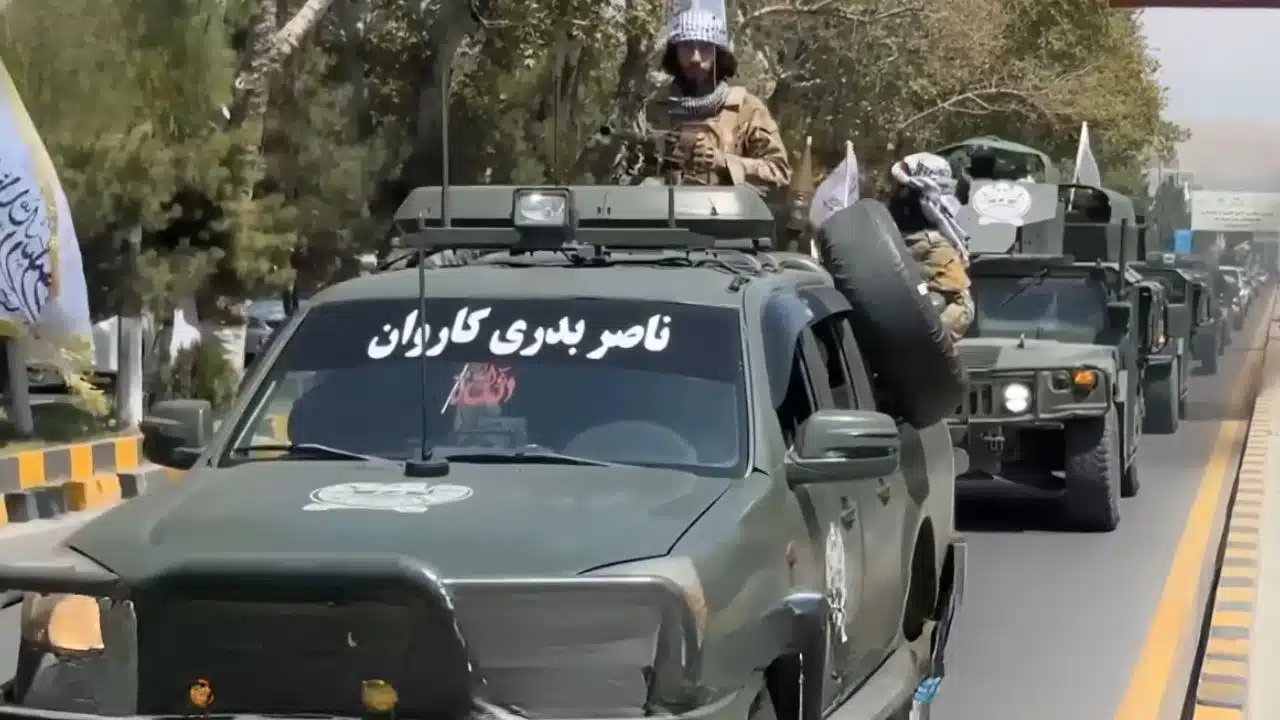
Tensions along the volatile Afghanistan-Pakistan border have reached a boiling point following deadly cross-border attacks, sparking fears of a wider conflict. As Pakistan battles Afghan Taliban-affiliated militants it claims are operating from safe havens in Afghanistan, retaliatory military strikes and a sharp diplomatic fallout have pushed the two nations to their most perilous juncture since the Taliban’s return to power in 2021.
The latest escalation began after a sophisticated ambush on a Pakistani military convoy in North Waziristan late last week, which claimed the lives of over a dozen soldiers. Islamabad has unequivocally blamed the Tehrik-i-Taliban Pakistan (TTP), alleging the attack was planned and directed from sanctuaries inside Afghanistan. In response, Pakistan conducted what it termed “intelligence-based anti-terrorist operations” in Afghanistan’s Khost and Paktika provinces, a move the Afghan Taliban government has condemned as a flagrant violation of its sovereignty. This cycle of violence now threatens to unravel regional stability, with profound implications for security and trade.
The Escalating Crisis
- Surge in Violence: Terrorist attacks in Pakistan have increased by over 60% in the first three quarters of 2025 compared to the same period in 2024, with the majority claimed by or attributed to the TTP.
- Military Retaliation: Pakistan confirmed carrying out airstrikes inside Afghanistan on October 12, 2025, targeting alleged TTP command-and-control centres. This is the third such publicly acknowledged operation since 2023.
- Kabul’s Denial: The Islamic Emirate of Afghanistan (IEA) denies providing sanctuary to the TTP and has warned of “dire consequences” for Pakistani aggression, placing its border forces on high alert.
- Economic Fallout: The key border crossings at Torkham and Chaman have been intermittently sealed, causing a near-complete halt to bilateral trade estimated at over $2 billion annually and stranding thousands of civilians and cargo trucks.
- Diplomatic Deadlock: High-level talks have stalled, with Islamabad demanding Kabul take “verifiable action” against the TTP, a demand the Taliban government insists it is already meeting.
An Alliance Unravels
The relationship between Islamabad and the Afghan Taliban has always been complex, marked by decades of covert support during the US-led war in Afghanistan. Pakistan had hoped the Taliban’s victory in 2021 would grant it “strategic depth” and help contain anti-Pakistan militancy. However, that hope has soured.
The core of the dispute lies with the Tehrik-i-Taliban Pakistan (TTP), an ideological offshoot of the Afghan Taliban. While distinct entities, they share a common Pashtun ethnic base and jihadi ideology. Pakistan accuses the Afghan Taliban of turning a blind eye, or even providing tacit support, to the TTP, which has waged a bloody insurgency against the Pakistani state for over a decade. Since the Taliban’s takeover of Kabul, the TTP has become emboldened, regrouping and re-arming in the ungoverned spaces of eastern Afghanistan.
Strikes and Counter-Strikes
The recent escalation cycle began on October 10, 2025, when a TTP suicide squad ambushed a Pakistani military convoy near the border town of Miranshah in Khyber Pakhtunkhwa. According to a press release from the Inter-Services Public Relations (ISPR), the attack resulted in 14 soldiers killed, including a senior officer.
The response from Pakistan was swift and severe. In the pre-dawn hours of October 12, Pakistani fighter jets and drones reportedly struck multiple targets in Afghanistan’s Barmal district in Paktika and Spera district in Khost. Pakistani military sources claimed the strikes successfully neutralized key TTP commanders, a claim that remains unverified.
Kabul’s reaction was furious. Zabihullah Mujahid, the chief spokesperson for the Afghan Taliban, issued a statement condemning the attacks. “The Islamic Emirate of Afghanistan will not allow any aggressor to violate its territory,” he stated. Such reckless actions are detrimental to the relations between the two countries. Pakistan should not blame Afghanistan for its own lack of control and security failures on its own soil”.
By the Numbers: A Deepening Security Crisis
The current crisis is underpinned by alarming statistics that paint a picture of deteriorating security in Pakistan, directly linked to cross-border militancy.
Surge in Terrorist Incidents (2024 vs. 2025)
Data compiled by the Islamabad-based Pakistan Institute for Peace Studies (PIPS) shows a dramatic rise in attacks. In the first nine months of 2025, Pakistan witnessed 512 terrorist attacks, resulting in over 780 fatalities. This represents a 62% increase in attacks and a 55% increase in fatalities compared to the same period in 2024.
Casualties Among Pakistani Security Forces
The cost to Pakistan’s security apparatus has been immense. According to figures released by the Ministry of Interior, 345 security personnel (from the Army, FC, and police) were martyred in militant attacks between January 1 and September 30, 2025. This is the highest nine-month toll since 2017
Bilateral Trade Collapse at Torkham
The economic repercussions are severe. The frequent closures of the Torkham border crossing have decimated trade. Data from Pakistan Customs shows that the value of goods passing through Torkham in September 2025 fell to just $15 million, down from a monthly average of over $120 million in the previous year—a drop of nearly 90%.
Expert Analysis: A Dangerous New Phase
Security analysts believe Pakistan’s policy of “strategic patience” has definitively ended, replaced by a more muscular, interventionist approach.
Islamabad has concluded that diplomatic engagement with the Afghan Taliban has failed to produce results on the TTP issue,” said Michael Kugelman, Director of the South Asia Institute at the Wilson Center in Washington D.C., in a recent analysis. The Pakistani military establishment is now signalling that it will unilaterally act to protect its national security interests, even if it means violating Afghan sovereignty. This is a high-risk strategy that could easily spiral out of control.”
Experts suggest the Afghan Taliban are in an ideological bind. A full-scale crackdown on the TTP—their ideological brethren—could trigger infighting within their own ranks. Yet, failing to act invites repeated and deeper Pakistani military incursions. This dynamic creates a perilous security dilemma with no easy solution.
Impact on People: A Human Catastrophe in the Making
Caught in the crossfire are the millions of people whose lives depend on the border. In the dusty, chaotic no-man’s-land near Chaman, thousands of traders and labourers are stranded.
My entire family’s livelihood depends on transporting fruit from Kandahar to Quetta,” said Rahimullah, a truck driver who has been stuck for over a week, in a phone interview. “My goods are rotting. We are running out of money and food. We are not Taliban or army; we are just poor people. Why are they punishing us?”.
The border closures also disrupt the supply of essential medicines and food to landlocked Afghanistan, worsening an already dire humanitarian crisis.
What to Watch Next
The coming weeks are critical. Key developments to monitor include:
- Further Military Action: Will Pakistan launch more extensive ground or air operations if TTP attacks continue?
- Taliban’s Response: How will the Afghan Taliban respond to further Pakistani strikes? Will their border forces engage Pakistani troops?
- International Mediation: Will regional powers like China, a key ally to both nations, or international bodies like the UN step in to de-escalate the crisis?
- TTP’s Strategy: Will the TTP moderate its attacks to ease pressure on its Afghan hosts, or will it exploit the chaos to intensify its campaign?
The escalating conflict between Pakistan and the Afghan Taliban marks a grave new chapter in the region’s long history of instability. The facade of a strategic alliance has crumbled, replaced by open hostility. With rigid positions on both sides, a communication breakdown, and an active insurgency fueling the fire, the Durand Line is no longer just a disputed border but the potential frontline of a new war. A miscalculation by either side could unleash a conflagration that would destabilize not only the two nations but the entire region.
The Information is Collected from CNN and BBC.