
Have you watched a good trade turn bad and saw your money slip away? Many traders blame the market, but weak risk management hurts more.
The one percent rule limits each trade to one percent of your capital to curb big losses. This guide shows simple steps, from stop-loss orders and take-profit orders to hedging strategies and portfolio diversification, so you can keep losses small and trade with calm.
Read on.
Key Takeaways
- Limit each trade to 1–2% of your capital. For a $10,000 account, 1% risks $100, 2% risks $200. Fifty straight losses at 2% wipe your account, but 73 losses at 1% do.
- Place stop-loss and take-profit orders before you trade. For example, buy at $50, set a stop at $48, and aim for $52. A 5% trailing stop on a $50 entry moves your stop to $52.25.
- Diversify across 10–15 stocks, commodities, currency pairs, or bonds. Use Modern Portfolio Theory to keep each position below 2% of your equity and curb systemic and liquidity risks.
- Hedge core bets with options or futures. For example, buy a six-month $80 put on a $100 stock for $1. Run scenario tests like a 2008 crash or a 500-pip forex swing, and follow CFTC Rule 4.41 on past-performance limits.
Use the 1-2% Rule to Limit Risk Per Trade
Traders use the 1-2% rule for smart position sizing and to protect their trading capital. A $10,000 account risks only $100 at 1% or $200 at 2% per trade. Fifty straight losses at 2% wipes out your balance, while a 1% cap takes 73 losing trades to zero you out.
A string of 14 losses at 2% cuts 25% of equity, but only 13% at 1%. Keeping ten to fifteen positions limits your total risk to 15% or 22.5% of account equity.
Small accounts under $100,000 often stretch to a 2% limit, though big balances face heavier bruises when markets tumble. A risk calculator or spreadsheet software helps you set each stop-loss order.
Tracking loss streaks in a trading journal strengthens money management habits. Strong risk tolerance and a clear risk-reward ratio make this trading strategy more robust.
Implement Position Sizing for Precision
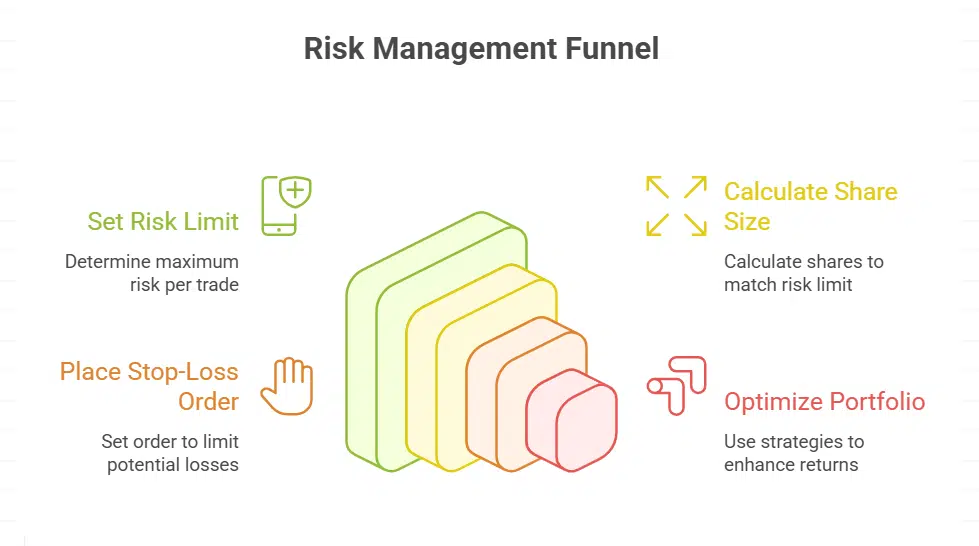
A strict risk management rule caps risk at 1 percent of trading capital. A trader with a $10,000 account limits each trade to $100 risk. They buy at $100 per share then drop a stop-loss order at $95.
They size in 20 shares so the max loss stays at $100. This simple step wards off big drawdowns.
Modern Portfolio Theory and technical analysis boost portfolio optimization across currency pairs and equities. A trading calculator or spreadsheet helps nail the right share count.
A 1:2 risk-reward ratio gives room for price fluctuations. Hard stops and take-profit orders protect both gains and capital. Only risk money you can afford to lose.
Set Clear Stop-Loss Orders
Traders define stop-loss points before they enter a trade. A preset exit level sets a price that triggers a sell to cap potential losses. Placing a stop order at least 1.5 times the high-to-low range cuts false alarms, and traders link it to the first failure point in their trading plan.
Guaranteed stop-loss orders (GSLO) serve as a risk management tool; they close positions at a specified price for a small fee.
A trader buys at $50 and sets the exit at $48, risking $2 per share. That cap shields trading capital in volatile markets and trims emotional trading moments. Backtests using a stop point at two times the 10-day ATR show profits dropping from $1.19 million to $0.764 million, yet traders save more on down days.
Technical analysis and entries in a trading journal help day traders track these exits, so they can meet risk tolerance and maintain healthy risk-reward ratios.
Establish Take-Profit Targets
An archer aims at a bullseye before pulling back the bow. A trader sets take-profit points before entering equities, to lock in trading profits and fight market volatility. That step keeps positions from dangling in a downturn, and stops emotional trades.
Equities often hit resistance, so sell near those lines, using support and resistance analysis and simple moving averages. Write entry and exit points in a trading journal, then stick to the plan.
Successful traders measure potential returns and likelihoods with historical data analysis before execution. They plan a risk-reward ratio of 1:2, risking $1 to seek $2. That formula, (Take Profit % Gain), shows expected return.
Common risk management tools include take-profit orders, stop-loss orders, trailing stops and position sizing. Add portfolio management, stress testing and technical analysis on resistance levels.
Include option contracts to hedge upside swings. This design guards trading capital, lifts win rate and fights systemic risks.
Diversify Your Portfolio for Risk Reduction
Traders spread risk across stocks, commodities and currency pairs. They avoid putting all eggs in one basket to stop big hits. Shares in big firms, bullion in London and euro in the foreign exchange market guard against systemic risk.
Modern Portfolio Theory guides portfolio optimization to match each risk tolerance and manage potential losses.
Diversified strategies link to a clear trading plan. Small stakes in futures, options or bonds can offset drops in tech or energy markets. Smart position sizing keeps each bet below two percent of capital.
They watch spreads on illiquid names to curb liquidity risk. This mix forms a balanced trading strategy for volatile financial markets.
Hedge Against Market Uncertainty
Hedging fights market volatility in financial markets with opposing trades. You buy a protective put and short-sell shares to shield core bets. If you own ABC stock at $100, buying a six-month $80 put for $1 caps your loss below $79.
You can also short a futures contract or trade exchange-rate pairs to cover currency swings. This tactic guards trading capital from sudden drops, especially near earnings or central bank rate decisions.
Options trading and futures contracts act like insurance on long positions. You tweak strike price and premium to match your risk tolerance and risk-reward ratio. This method ties into portfolio management and modern portfolio theory, mixing with position sizing, stop-loss orders, and take-profit targets.
It cuts potential losses and keeps account equity intact through balanced risk mitigation.
Apply a Favorable Risk-to-Reward Ratio
Traders lock a 1:2 risk-reward ratio before any buy or sell. This core metric tells you to risk $1 to chase $2 profit. A clear setup uses stop-loss and take-profit orders. Position sizing and risk calculators work hand in hand to refine your trading strategy.
This approach guards trading capital in volatile markets.
Investors plug past breakout data or educated guesses into the expected return formula: (Probability of Gain x Take Profit % gain) + (Probability of Loss x Stop-Loss % loss). A 60 % win rate, 2 % profit target and 1 % stop-loss yield a 0.8 % average return per trade.
That margin absorbs short-term losses and keeps account equity healthy. Bold ratios like these can shine during backtesting or demo trading.
Adjust Risk Based on Market Volatility
Market volatility can hit your trading capital like a sudden hailstorm. Volatility-based position sizing cuts risk percent in choppy sessions, for example you can shrink your risk from two percent to one.
Stop-loss orders ride the wind; you widen them in violent moves to keep your risk-reward ratio intact and tighten them when bars grow smaller. A longer moving average tool tames a roller coaster stock; large targets call for wider trend filters.
Earnings reports feel like a thunderstorm. You size stops by using true range from technical analysis. Mean reversion setups and trend following runs can trigger stops before a bounce.
Surviving short-term losses builds long run success.
Use Trailing Stop Orders for Dynamic Protection

Trailing stop orders shift with price climbs. They set a stop-loss order a fixed percentage or dollar amount under the peak price since entry. This tool locks gains without a set profit target, so traders avoid turning wins into losses as soon as a reversal hits.
It protects trading capital when market volatility spikes.
A trader buys at $50 and sets a 5 percent trailing stop. If price peaks at $55, the stop moves to $52.25, securing $2.25 per share. That step trims risk and fits many trading strategies from day trading to long position holds.
Technical analysis signals like moving averages can trigger these stops for dynamic protection.
Allocate Risk Capital Wisely
Traders carve out chunks of money they can afford to lose. A new trader can set 10 percent of account equity aside for demo accounts to test a trading strategy without real stakes.
This method uses stop-loss orders and simulated trades to sharpen skills without risking real funds.
Pros keep margin allocation below 20 percent of all positions. They carve that stake into smaller lots, putting just a sliver into high risk ideas like derivative instruments or crypto trades.
Traders track the risk-reward ratio and spread bets across derivatives, equities, and forex to protect trading capital in volatile markets.
Conduct Scenario Analysis and Stress Testing
Scenario analysis pushes a trading strategy in financial markets to face odd conditions. It uses historical data analysis to model past downturns, price shocks, sudden rate jumps, and currency swings.
A trader can run a 2008 financial crisis drop or a sharp interest rate hike. He tests a buy rule for the S&P 500 when the 3-day RSI dips below 20, then sells once it tops 70. A stop loss at twice the 10-day ATR cut backtested profits from $1.19 million to $0.764 million.
This test digs out hidden risks before any real capital goes live.
Stress testing adds another risk layer. It models extreme volatility or sudden liquidity risk. One scenario adds a 500 pip swing for forex, or simulates a margin call on a contract for difference.
Modern Portfolio Theory helps tweak asset allocation under these shocks. Results show if a plan can handle sharp falls or wild market moves. This tactic protects trading capital, account equity, and supports long-term trading success while sharpening risk management skills.
Manage Leverage to Avoid Overexposure
Many traders grab high leverage and burn through capital. Such settings can let a 10% swing erase 100% of trading capital. Margin calls hit fast when swings go wrong. Leverage can boost gains and losses.
Margin allocation in your trading plan must cap each bet to guard equity.
Risk management calls for tight stop orders and strict risk controls. Traders must watch market volatility before they boost leverage. They align position sizing to their risk-reward ratio.
Chart tools from technical analysis help spot volatile swings. This approach cuts potential losses.
Backtest Your Trading Strategies Before Execution
You test a strategy on past data. For example, buy a stock index when a short-term momentum oscillator dips below 20. Sell when it crosses above 70. A stop-loss at twice the average true range indicator cuts gains from $1.19 million to $0.764 million.
That result shows how stop-loss orders reshape trading profits. Stress testing and scenario analysis via trading software reveal hidden risks.
Test results remain educational and informational only, and past performance fails to guarantee future gains, as CFTC Rule 4.41 warns. Hypothetical performance results have limits, so you treat them with caution.
A solid trading plan grows from these insights, with a clearer path to capital preservation. You craft better position sizing, refine take-profit orders, and set clearer stop-loss levels.
Then you face milder market volatility and systemic risk. Backtesting cuts potential losses, and sharpens long-term trading success.
Avoid Emotional Trading with a Disciplined Mindset
Emotional trading drains your trading capital fast. A scalper lost $2,000 in one session after revenge trading. He ignored his entry and exit points. He moved from a practice platform into live trades too soon.
The scalper logs every trade in his performance log, using a stop-loss limit before each entry. He sets a risk-reward ratio of 1:3 and caps position sizing at 2 percent of account equity.
Active trading does not guarantee steady profits or let you quit a day job. Calm focus tames fear and greed. Strong habits beat wild swings.
Identify and Manage Liquidity Risk
Liquidity risk costs traders money fast when they cannot exit a position. Micro-cap shares and late-night currency exchange trades pose high slippage threats. Price gaps can skip take-profit orders and spike potential losses.
Spread investments across stocks, forex pairs, and digital coin trades to curb this hazard. Use cut-loss orders and trailing stops for solid risk management and to guard trading capital.
Active traders run system risk checks with stress testing or scenario analysis daily. They watch bid-ask spreads and volume data, reading chart signals alongside moving averages to spot thin markets.
A solid trading plan covers volatile market conditions and adapts position sizing to fit risk tolerance. This habit shows up in any smart portfolio management toolkit and boosts long-term trading success with better capital preservation.
Analyze Systemic Risks in the Market
Systemic risk hits many assets at once. It emerges from broad market crashes and bank failures. It differs from market dips and liquidity crunches. Diversification across equities, bonds, and real estate tames that threat.
Mean variance models help balance returns and risk. Technical indicators alone cannot sniff out this danger. Scenario analysis shines light on crisis level losses.
Hedging with protective puts acts like an emergency brake. Stress tests reveal weak spots before a sell off. Risk management tools guard your capital during a crisis. Monitoring GDP trends, interest rates, and inflation guides better capital preservation.
Traders find that including macro data in their trading plan cuts potential losses.
Avoid Overleveraging in Your Trades
Traders often borrow extra funds to boost gains, but 10x leverage can wipe out all capital on a 10% market move. Too much margin use leads to margin calls and large losses. Excess leverage drains trading capital fast and kills long-term success.
Limit open positions to keep leverage in check. You need hard stops and stop-loss orders to protect your account. Only risk a small share of trading capital per trade, and adjust margin allocation to match your risk management plan.
Leverage Technical Analysis for Risk Management Decisions
Price charts glow with simple lines, they whisper buy or sell signals. A 50-day moving average marks trend shifts. Stocks often fall below support, it triggers stop-loss orders. Average true range reads market volatility, it sets stops at pips levels.
Earnings reports spark big moves, price can jump or plunge. Technical analysis cuts guesswork, it guides both stop-loss and take-profit orders. Support and resistance levels from past highs help set exit points, they back a tighter trading strategy.
Monitor Correlations Between Assets
Traders run a correlation grid in their spreadsheet to track links across stocks, bonds, and currencies in the financial markets. Market crises often push correlations above 0.8, which can spike market risk.
Technical analysis, like moving average crossovers, can highlight periods of high sync. Modern portfolio theory uses these data to lower systemic risk and save trading capital.
Smart investors spread assets across sectors, market caps, and regions to cut correlated risk. They hedge with put options or future contracts that move opposite to core holdings. Scenario charts in stress testing account for shifts in sync under volatile market conditions.
Risk management stays sharp when traders track these moving links in their trading plan.
Regularly Review and Adjust Your Trading Plan
Review your trading plan every week to adapt to market changes. Log trades in a journal to track performance and refine strategies. Apply risk analysis and stress testing to spot weak spots.
Define entry and exit points before each trade.
Track performance metrics like win rate and losses to find areas for improvement. Adjust risk parameters as your account balance or market volatility shifts. Check stop-loss orders and take-profit orders after each update.
Lean on technical analysis tools and indicators to guide tweaks.
Use Risk Management Tools and Calculators
Traders use risk calculators to limit potential losses. Brokers supply analytical tools that tame market volatility.
- Use a position-sizing calculator to risk just 1-2% of trading capital per trade, fitting your risk tolerance.
- Run exit-trigger tools to set protective exits, based on technical analysis and support levels.
- Input targets into profit-locking calculators to place take-profit orders with a 1:3 risk-reward ratio.
- Leverage guaranteed exit orders calculators to weigh GSLO fees against capital preservation.
- Access scenario modeling tools to simulate severe market shocks, such as the 2008 collapse or 2020 crash.
- Employ stress-testing software to test your strategy against past volatility spikes, refining your trading plan.
- Tap a volatility-based sizing tool to adjust stake size in choppy conditions, limiting account equity drawdowns.
- Deploy a portfolio optimization interface grounded in modern portfolio theory to balance assets and cut market risk.
Stay Updated on Market Trends and News
Scan financial markets news feeds each morning, focusing on Federal Reserve rate decisions and monthly jobs reports. Earnings reports, central bank updates, or geopolitical events can spike market volatility or hit liquidity.
Macro data like inflation numbers helps you spot market risk and systemic risk. Tailor your trading plan and position sizing around fresh info to manage potential losses.
Use scenario analysis in your trading journal to stress test strategies for news shocks. Add historical data analysis and technical analysis with moving averages to your risk management tools.
Watch major stock indices, currency pairs, or commodity prices in real time. Adjust stop-loss and take-profit orders on active positions to preserve trading capital.
Use Diversified Trading Strategies for Balance
Traders split trading capital across stocks, commodities, and currencies. They use modern portfolio theory to optimize returns for a given risk. Spread risk across asset classes to curb drawdowns in volatile markets.
Diversifying investments keeps market risk and liquidity risk in check. A mix of trading strategies can smooth returns across different conditions.
Investors add hedging to protect gains and manage systemic risk. They apply position sizing and risk reward ratio rules in each trade. Traders track support and resistance levels using technical analysis in their trading plan.
Some include fundamental analysis or options trading tactics. This layered risk management reduces potential losses and aids long term trading success.
Takeaways
Reviewing key tactics will boost your confidence. You can use trailing stops, lot sizing, and spread bets to guard your funds. Chart patterns can guide your exit and entry spots. Sector spread and options hedge cut your risk in tough swings.
Reward-to-risk math helps you choose smart trades. Keep a trade log and follow your plan. You will trade with calm, and it will grow your capital.
FAQs on Painless Risk Management Strategies for Every Trader
1. What are stop loss orders and take profit orders, and how do they help with risk management?
Stop loss orders close a trade when price moves too far, take profit orders lock in gains at your profit target. They work in all financial markets, from forex trading to cryptocurrency trading, they cut potential losses, boost capital preservation, and calm nerves in volatile market conditions.
2. How do I use position sizing to guard my trading capital?
You pick a small share of your account equity for each trade, you weigh your risk tolerance, your trading plan, and your risk reward ratio. This stops one bad trade from hurting your overall trading capital, lets you test strategies, and builds trading discipline.
3. How can a trading plan tame emotional trading on a wild market day?
A clear plan lists your entry rules, your profit target, and your stop loss orders, it sets your trading goals, your win rate goals, and your take profit orders. Stick to the rules, log moves in a trading journal, review technical analysis and historical data analysis each day, and you dodge rash moves when market volatility spikes.
4. Why does the risk reward ratio matter for long term trading success?
The risk reward ratio compares how much you risk to how much you hope to make. A 1 to 3 ratio means you risk $1 to make $3. With a solid ratio, you can win less often yet still earn trading profits. It ties to your position sizing, your capital allocation, and modern portfolio theory for neat portfolio management.
5. How do I use technical analysis and fundamental analysis to avoid big losses?
Technical analysis spots buy and sell zones using moving averages, support and resistance levels, and trading tools. Fundamental analysis checks news, earnings, and systemic risk in the financial markets. Use both and add stress testing to dodge liquidity risk and major swings.
6. When should I call a financial advisor for risk mitigation?
If your trades face high foreign exchange risk, or you trade contracts for difference or options trading, talk to a financial advisor. They guide you on capital preservation, portfolio optimisation, and when to hedge a long position. They match your strategies to your trading goals with clear financial advice.